

We may earn a commission when you buy through links on this page, at no extra cost to you. Learn more.
Mosel wine comes from steep slate vineyards along the Mosel, Saar and Ruwer river valleys in western Germany, and it is dominated by Riesling, which covers nearly 60 percent of the planted area. The wines are typically light, crisp and high in acidity, with mineral notes and low alcohol, and they range from bone-dry to very sweet depending on the style and the producer.
This guide explains what makes Mosel wine distinctive, how the region’s slate slopes shape the glass, which Riesling styles to look for on a label, and how to serve and pair these wines. It is written for American drinkers who know Riesling by name but are not sure what separates a Mosel bottle from the rest of the German wine map.
Where the Mosel is and how it is organized
The Mosel is one of Germany’s thirteen wine regions and covers the Mosel, Saar and Ruwer river valleys in Rhineland-Palatinate. Based on 2008 figures, the region had about 9,034 hectares of vineyards, which made it the fifth-largest German region at that time. Its rivers wind through deep valleys, and the vineyards follow those bends, so a single valley can contain sun-facing slopes, shaded bends and a wide mix of exposures.
The region is commonly divided into districts. The Upper Mosel, around Trier, includes the Saar and Ruwer. The Middle Mosel is the main wine-producing area, with villages such as Bernkastel and Piesport. The Lower Mosel, also called Untermosel or Terrassenmosel, is known for its terraced vineyards and a higher share of dry wines. Obermosel and Moseltor, along the Luxembourg border, complete the list. Knowing the district helps you understand a label, because the same grape can taste noticeably different from one stretch of river to another.
Slate, steep slopes and the mineral character
The slate soils are the signature of Mosel wine. They hold warmth in the day and release it at night, and they give many wines a mineral, stony character that visitors often describe as flinty or savory. The vineyards are often extremely steep, and the Bremmer Calmont, at roughly 65 degrees, is described as the steepest in the world. That slope makes the work demanding, because harvesting on such terrain is labor-intensive, and many vineyards are still tended largely by hand.
Steep slopes also explain why Mosel producers have built their reputation on quality rather than volume. The work is expensive, the yields are limited, and the best sites are carefully chosen. When you taste a Mosel Riesling with bright acidity and a mineral finish, you are tasting the result of a landscape that has shaped the region for centuries.
| Mosel feature | What it means for your glass |
|---|---|
| Vineyard area | About 9,034 hectares in 2008, per the Wikipedia summary |
| Main grape | Riesling, covering nearly 60 percent of vineyards |
| Soils | Slate, which adds a mineral, stony character |
| Steepest slope | Bremmer Calmont, roughly 65 degrees |
| Typical style | Light, crisp, high acidity and low alcohol |
Riesling, the grape that defines the region
Riesling is the region’s defining grape. It is an aromatic white variety that can be made in many styles, from bone-dry wines to very sweet dessert bottlings. The variety is mostly grown in cool climates, and Germany is widely regarded as the most important producer of Riesling in the world. The Mosel’s combination of slate, river light and cool nights gives its Riesling a particularly fresh profile.
Other varieties have a place too. Elbling is an old local variety that produces light, tart wines, and Müller-Thurgau is also significant. Spätburgunder, or Pinot noir, has grown in the region since the mid-1990s, and some producers now make lighter red wines from it. Most visitors, though, will taste Riesling first, and it is the best place to learn the region’s style.
When you taste a Mosel Riesling, look for the balance between sugar and acidity. Dry wines can feel sharp and mineral, while sweeter bottles still keep a lively edge because of the acidity. That balance is what makes the region’s wines so food friendly and so easy to enjoy in small pours.
How to read Mosel Riesling labels
German labels can look intimidating, but a few terms help. Many Mosel bottles state the grape, the village and the vineyard on the label, which tells you a great deal about the wine’s origin. Style terms are usually given on the label as well, and they signal the wine’s ripeness and sweetness rather than its quality alone.
Look for the word “trocken” if you want a dry wine, and check the producer’s description for the sweetness level. Kabinett and Spätlese are common style names on Mosel labels, and they usually indicate wines with more ripeness and richness than the entry-level bottlings. Ask the seller to explain any term you do not recognize, since the shop staff are often happy to help.
Some bottles use the word “Eiswein,” which refers to wine made from grapes harvested while frozen on the vine. The Mosel produces Eiswein in cold years, and these wines are sweet, concentrated and expensive to make. They are usually served in small glasses as a dessert wine.
Vineyard work on these slopes also shapes the calendar. Crews often need to manage each row by hand, and the choice of which terraces or sections to harvest first can change the style of the year’s wines. Ask a producer how their slopes are worked, because the answer often explains why one bottle tastes brighter or richer than another.
Serving and pairing Mosel wine
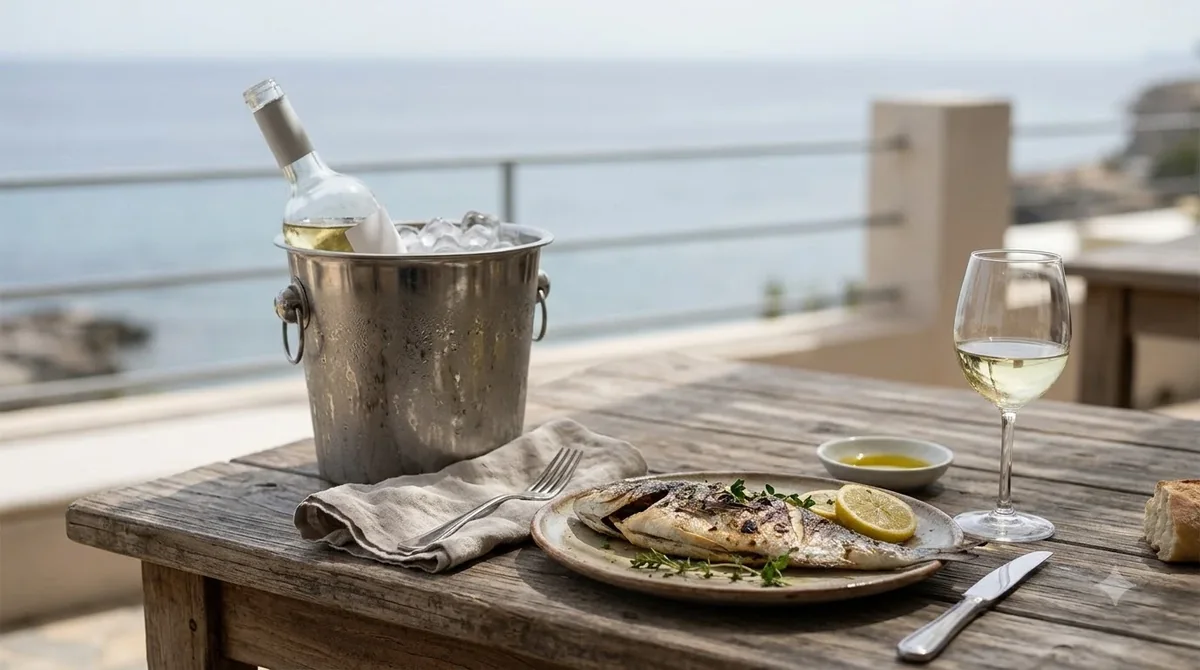
Serve Mosel Riesling well chilled, but not so cold that the aromas disappear. Dry styles often show best just below the temperature of a standard fridge, while sweeter bottles can be served a little colder. Use a white wine glass with a narrow bowl to keep the aromas focused.
Food pairing is one of Riesling’s great strengths. Off-dry Riesling pairs well with spicy Indian and Asian cuisine, according to the Wine Folly profile of Riesling, and it also suits duck, pork, bacon, shrimp and crab. Dry Mosel wines work well with lighter fish dishes, soft cheeses and vegetable-based meals. Sweeter bottles can be served with fruit desserts or with salty cheeses for contrast.
Tip: If you are new to Mosel wine, try a dry style first and then a slightly sweeter one from the same producer. The comparison shows you how sugar changes the balance of the wine.
Visiting the region and buying bottles
The Mosel’s river towns make it a pleasant destination for visitors who enjoy walking, boat trips and village tastings. Many estates welcome guests to taste in their cellars, and small family wineries often explain their slopes in detail. If you plan to visit, check opening hours in advance, since many smaller estates keep limited schedules.
Buying bottles is easiest in specialty wine shops and from importers that list Mosel producers. Search for the village name or the producer, and look at the back label for the importer. Mosel wines age well when they come from good vintages, but many are meant to be opened young and enjoyed fresh.
For a deeper look at the producers you are likely to find, our Mosel wineries guide covers the estates and villages worth noting. If you want to compare the region with another river-valley wine destination, our Douro wine guide shows how a very different landscape shapes its own styles.
Frequently Asked Questions
What is Mosel wine?
Mosel wine comes from the Mosel, Saar and Ruwer river valleys in Germany. It is mostly Riesling, grown on steep slate slopes, and the wines are known for their crisp acidity, mineral character and low alcohol.
Is Mosel Riesling sweet?
Not always. Riesling from the Mosel ranges from dry to sweet. Check the label and the producer’s description to see where a bottle sits, since the style terms tell you how much sugar the wine carries.
What grape is the Mosel known for?
Riesling is the region’s signature grape and covers nearly 60 percent of the vineyard area. Elbling, Müller-Thurgau and Spätburgunder are also grown, but Riesling defines the Mosel’s wines.
How should I serve Mosel wine?
Serve Mosel Riesling well chilled and use a narrow white wine glass. Dry styles show best slightly warmer than sweet bottles, and both pair well with food, especially lighter dishes and spicy cuisine.
Mosel wine rewards patient drinkers who want to understand a landscape through its glass. Start with a dry Riesling, learn the district names and label terms, and taste a few styles side by side. The slate, the slopes and the river light will make more sense with every bottle you open.
More in Wine Regions
 Willcox Wine Trail: Discover Arizona’s High-Elevation Wine CountryUpdated Nov 20, 2026
 Yakima Valley Wine Region: Find the Best Styles to TryUpdated Nov 20, 2026
 Vosne Romanee Wine Tasting: Identify Aromas and Choose Better PairingsUpdated Nov 20, 2026
 Yakima Valley Wine Festival: Find the Best Seasonal Wine EventsUpdated Nov 20, 2026
 Wales Vineyards: Discover Cool-Climate Wines and Where to VisitUpdated Nov 20, 2026
 Yountville Wine Festival: Discover Napa Wines and Local FoodUpdated Nov 20, 2026