

We may earn a commission when you buy through links on this page, at no extra cost to you. Learn more.
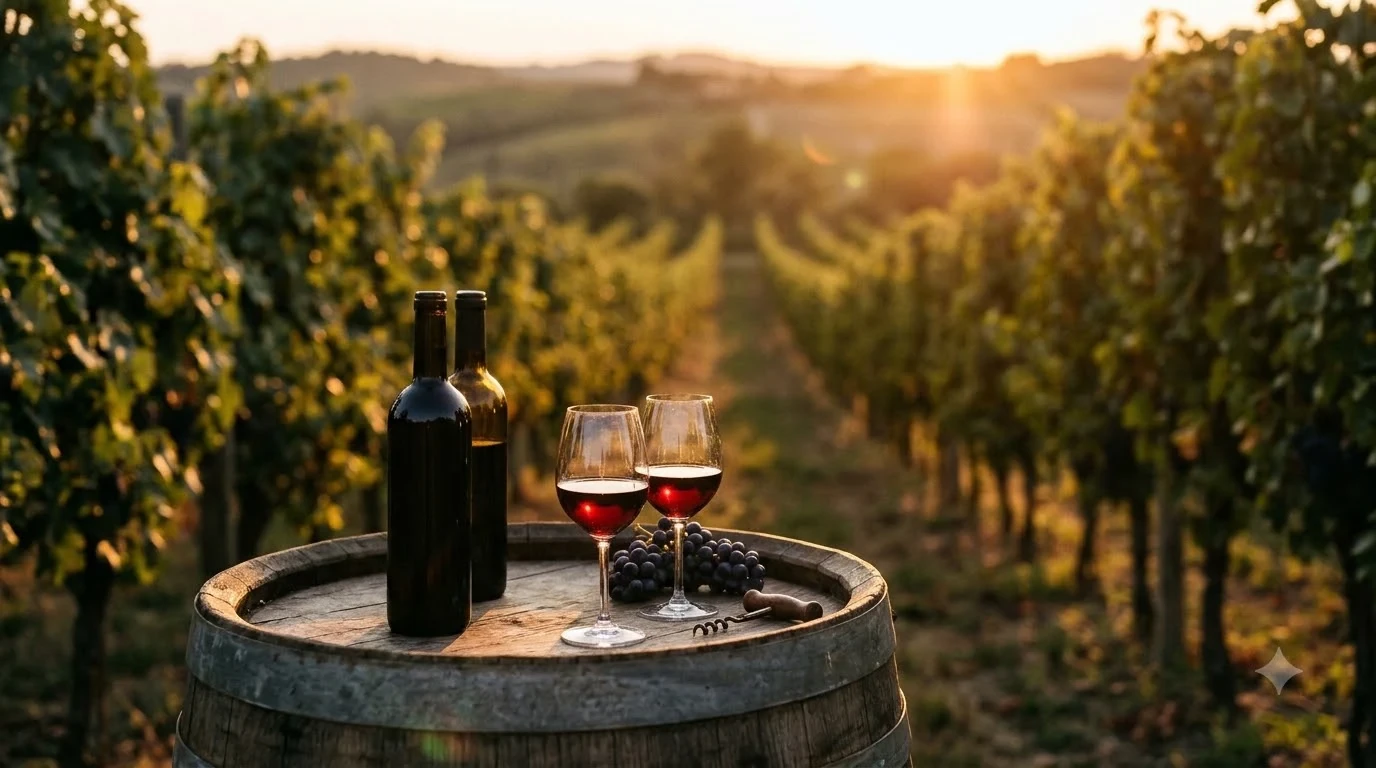
Eden Valley vineyards in South Australia are best known for high-elevation Riesling and elegant, ripe-fruited Shiraz. Set in the hills east of the Barossa Valley, the region has a cooler growing season, varied slopes and a long history of grape growing. Those conditions create meaningful differences between vineyard sites, so the regional name is a starting point rather than a guarantee that every bottle will taste alike.
For wine drinkers, Eden Valley offers a useful contrast to the warmer Barossa Valley floor: fresh, citrus-driven whites sit alongside reds with dark fruit, savory detail and structure. Understanding the landscape, key grapes and historic vineyard names makes it easier to choose a bottle, plan a visit or recognize what makes the region distinctive.
Where Eden Valley Sits Within South Australia
Eden Valley is a distinct wine region in South Australia’s Barossa Zone, immediately east of the Barossa Valley and northeast of Adelaide. Its position in the southern Mount Lofty Ranges, rather than on the lower valley floor, explains much of its reputation for aromatic whites and balanced reds.
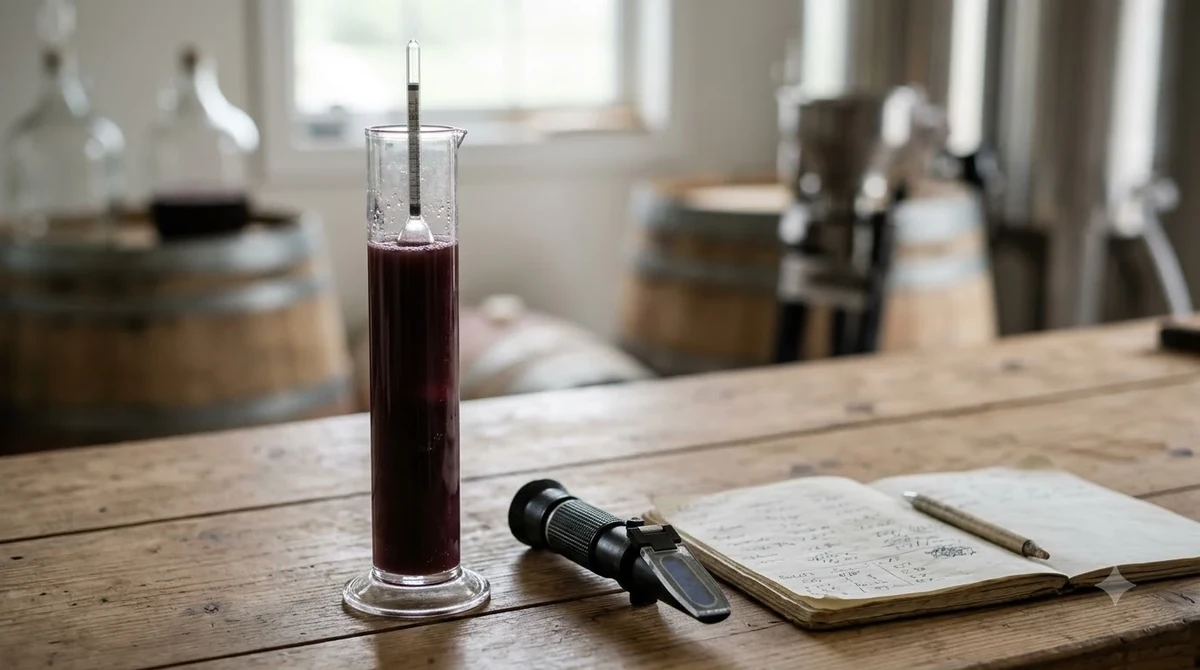
The region is roughly an hour’s drive from Adelaide, according to South Australia’s official travel site. Vineyards occupy pockets of rolling hills and exposed ridgelines rather than a single flat plain, with settlements, farming properties and old red gums between them. Different elevations and slopes create differences in temperature, wind exposure and water availability.
Wine Australia identifies the Eden Valley Geographical Indication as covering 591 square kilometers and containing 2,169 hectares of vineyards. The GI sits within the broader Barossa Zone, but Eden Valley and Barossa Valley are separate regional identities. That distinction matters on a label. Eden Valley names the geographic source of the wine; it does not, by itself, promise a particular grape, sweetness level, oak treatment or quality tier. A bottle may be Riesling, Shiraz, Chardonnay or Cabernet Sauvignon, among other varieties, so the variety and producer remain important clues.
For a closer look at the region’s formal boundaries and signature varieties, see this Eden Valley wine region overview. It is also worth keeping the larger South Australian context in view: Eden Valley shares a zone with the Barossa Valley, yet its higher terrain and cooler late-season conditions give it a different profile. Wine Australia’s Eden Valley regional profile outlines the area, major grapes and site variation in more detail.
How Elevation and Climate Shape the Vineyards
Elevation, slope and aspect are the main reasons Eden Valley wines can vary from one site to another. The region spans approximately 219 to 632 meters above sea level, and its growing-season temperatures are generally lower than those of the neighboring Barossa Valley.
Wine Australia reports 229 millimeters of growing-season rainfall for the region. Rainfall is not evenly distributed through the year, and vineyards must cope with dry growing conditions as well as differences in soil water-holding capacity. The region’s common soils range from loamy sand to clay loams, with ironstone gravel, quartz gravel and rock fragments in many profiles. Some exposed slopes have weaker sandy soils over weathered mica-schist, which hold less water. These details influence vine vigor and the way growers manage a site, but they do not translate into one simple flavor in every finished wine.
The regional contrast can be seen in the location of named vineyards. Wine Australia places Pewsey Vale, Heggies and High Eden at around 500 meters in the southern part of Eden Valley, while Henschke vineyards near Keyneton sit around 380 to 400 meters. The higher southern sites are significantly cooler. A difference of roughly 100 meters can affect the timing of ripening, and exposure to sun and wind also changes how quickly fruit develops. This explains why a broad regional description can only take a drinker so far: site, vintage and winemaking all add another layer.
| Regional measure or site | Reported figure | Why it matters |
|---|---|---|
| Geographical Indication area | 591 km² | Defines the broad regional footprint |
| Total vineyard area | 2,169 hectares | Shows the scale of planted vineyards |
| Elevation range | 219–632 meters | Creates distinct site climates |
| Growing-season rainfall | 229 mm | Highlights the relatively dry growing season |
| Southern vineyards such as Pewsey Vale and Heggies | About 500 meters | Cooler conditions than many northern sites |
| Henschke vineyards around Keyneton | About 380–400 meters | A lower, comparatively warmer position |
Riesling, Shiraz and the Other Important Grapes
Riesling and Shiraz are Eden Valley’s signature varieties, with Chardonnay and Cabernet Sauvignon also established in the region. The white wines often emphasize freshness and aromatic detail, while the reds combine ripe fruit with structure rather than relying only on weight.
Riesling: lime, citrus and bottle development
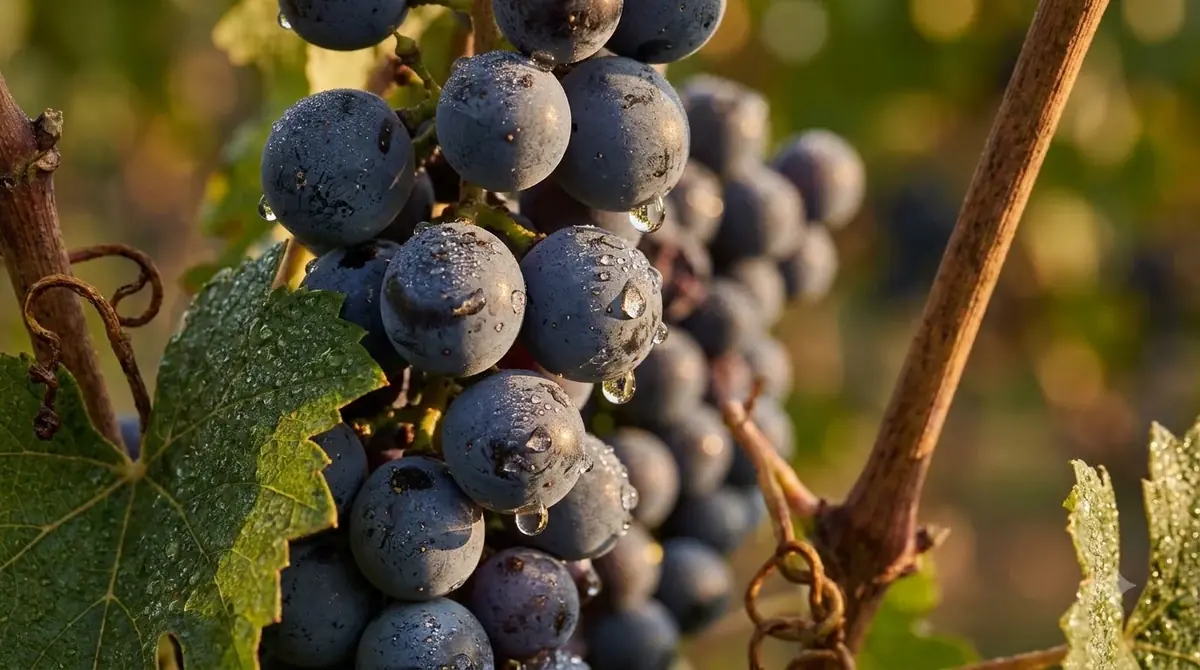
Riesling is the region’s leading white grape. Young Eden Valley examples commonly show lime juice, citrus zest, floral notes and firm, refreshing acidity. Their focus makes them useful at the table as well as as an aperitif. Dry versions are familiar, but the regional name alone does not determine sweetness; the producer’s description is the better guide.
Age can add another dimension. Wine Australia describes mature Eden Valley Riesling as developing marmalade and toasty nuances, with strong examples taking ten years or more to peak. That is a potential, not a fixed timetable: vintage conditions, acidity, closure and storage all matter. Young wines show fresher citrus; carefully stored older bottles may be more layered.
Shiraz: dark fruit with a supple frame
Shiraz is the leading red variety. Eden Valley Shiraz often shows plum and blackberry, with possible liquorice or forest-floor notes. Wine Australia describes ripe, integrated tannins and a smooth, balanced texture. The style can be medium- to full-bodied, but it is not simply a cooler copy of Barossa Valley Shiraz; its fruit and structure can feel more lifted and aromatic.
Regional tendencies are not rules: site, vine age, harvest decisions, fermentation and maturation all affect the result. Some bottles are approachable young; top examples may reward cellaring. Compare an Eden Valley Shiraz with a Barossa Valley bottling to notice differences in climate and site expression.
Chardonnay and Cabernet Sauvignon
Chardonnay is an important white option. Wine Australia traces the first commercial South Australian Chardonnay plantings to Mountadam in 1973 and describes Eden Valley examples with melon, fig and cashew character. Producer choices can bring fresh orchard fruit or a richer style, with lees contact or oak adding weight and texture.
Cabernet Sauvignon also shows site variation: around the Eden Valley village it can show ripe cassis, while higher, cooler vineyards may give dark-berry and green-leaf notes. Semillon, Pinot Gris, Sauvignon Blanc, Merlot and alternative varieties broaden the choice, but Riesling and Shiraz remain the clearest starting points.
Historic Vineyards and Producers to Know
Eden Valley’s wine history reaches back to the nineteenth century, and some of its best-known vineyard names are tied to families who have worked the district for generations. Historic plantings are part of the region’s identity, but the wines also show how growers continue to adapt vineyard management to individual sites.
Henschke’s account of the area records Joseph Gilbert establishing the Pewsey Vale vineyard in 1847. Henschke’s Eden Valley history also traces the property near Flaxmans Valley through nineteenth-century landholders before Cyril Henschke purchased the property in 1966. He planted predominantly Riesling and Shiraz at a time when Riesling was scarce. The oldest vines on that Henschke vineyard were planted in 1968, and later plantings added Cabernet Sauvignon and other varieties.
Henschke’s Eden Valley vineyard is a useful example of how a producer handles a particular site. The winery describes vines that are effectively dry-grown, with soil moisture monitored and drip irrigation used in drier years. It reports sandy loam over gravel and bedrock, patches of clay, and management practices that include organic and biodynamic methods. The property’s wines include Julius Riesling, Louis Semillon, The Wheelwright Shiraz and Cyril Henschke Cabernet Sauvignon. These are producer-specific details, not a template for every vineyard in the GI.
Other recognizable names include Pewsey Vale, Heggies and High Eden, which occupy cooler southern positions, while Henschke’s vineyards around Keyneton illustrate a somewhat lower site. Mountadam is important to the story of regional Chardonnay. These names are useful signposts when comparing labels, but they should not distract from the wider principle: the vineyard’s elevation, aspect, soil and farming choices all contribute to the character of the fruit. Henschke’s Eden Valley vineyard notes provide a specific example of site history, planting and viticulture.
How to Taste, Serve and Pair Eden Valley Wines
The easiest way to appreciate Eden Valley is to taste its main varieties side by side and pay attention to acidity, fruit and texture. Riesling usually brings the brightest acidity, while Shiraz offers more tannin and body; Chardonnay and Cabernet Sauvignon sit in their own stylistic range according to producer and site.
Serve a youthful Riesling as a light white at 45–50°F to preserve its refreshing feel and citrus aromas. Chardonnay with more body can be served closer to 50–55°F. For full-bodied Shiraz, aim for 60–65°F; serving it too warm can make alcohol more prominent. A 5-ounce pour is a practical tasting size, and a 750-milliliter bottle provides about five glasses.
Riesling’s acidity makes it a versatile match for seafood, shellfish, pork, salty snacks and dishes with a citrus or herb element. It works especially well when the food has enough acidity to meet the wine’s freshness. For a spicy dish, choose a lower-alcohol, slightly off-dry Riesling rather than a high-alcohol red: alcohol and tannin can make chili heat feel stronger. With sweet food, match the wine’s sweetness to the dessert or choose a wine that is sweeter than the dish.
Shiraz pairs naturally with grilled lamb, beef, mushrooms, roasted eggplant and dishes with browned or smoky flavors. Its tannin is easier to handle alongside protein, salt and fat, which soften the sensation of astringency. Cabernet Sauvignon also works with richer red-meat dishes, while Chardonnay can complement roast chicken, creamy sauces and grilled vegetables. Avoid pairing a tannic red with oily fish, where the combination can create an unpleasant metallic impression. For a broader foundation in pairing by acidity, tannin and sweetness, explore our Wine Regions learning section.
Tip: Taste an Eden Valley Riesling and Shiraz from the same producer or vintage, and serve each at its proper temperature. The contrast between Riesling’s high acidity and Shiraz’s ripe tannins makes the region’s range easier to understand than a single bottle alone.
Choosing Bottles and Planning a Regional Visit
A good first purchase is a dry Eden Valley Riesling or a classic regional Shiraz, with the producer and vineyard name as useful secondary clues. After those two benchmarks, explore Chardonnay and Cabernet Sauvignon to see how the area’s higher and lower sites shape different grapes.
When reading a label, separate three pieces of information: the region, the grape variety and the producer. “Eden Valley” identifies geographic origin, while “Riesling” or “Shiraz” identifies the grape. A vineyard name may narrow the source further, but it does not guarantee a particular sweetness, oak influence or aging window. A wine described as single-vineyard can offer a more focused expression of a site, yet the producer’s choices still matter. Compare wines from different vintages when possible; a cooler or warmer season may change ripeness and balance without changing the regional name.
For visitors, the region is close enough to the Barossa Valley for a combined trip, but its roads lead into hill country rather than one compact row of cellar doors. South Australia’s visitor information highlights Fernfield, Brockenchack, Flaxman and Henschke. Check opening arrangements before setting out, and allow time to appreciate the views, red gums and changing elevation between stops.
Travelers who enjoy comparing wine landscapes may also find it useful to read about Dry Creek Valley vineyards or Verde Valley vineyards. Those regions offer a different American context for thinking about how climate, elevation and local geography shape vineyard character. The comparison is not about finding an exact stylistic match; it is a way to notice how a place’s conditions influence the varieties growers choose and the wines producers make.
Frequently Asked Questions
Questions about the label, vineyard details and place names help clarify what the regional name means. These answers add useful details about official boundaries and one producer’s vineyard records.
Is Eden Valley an official wine appellation?
Yes. Eden Valley is a registered Australian Geographical Indication, and Wine Australia says the written boundary description is the legal definition when it differs from the map. This makes it a formally defined geographic name rather than simply an informal marketing description.
What is the difference between Eden Valley and High Eden?
High Eden is an officially registered subregion located within Eden Valley, not a separate region. Wine Australia entered the protected name in its register on August 28, 2001, and defines it as part of the Eden Valley region within the Barossa Zone.
How are vines planted at Henschke’s Eden Valley vineyard?
Henschke reports spacing of 3.4 meters between rows and 2 meters between vines at its Eden Valley property. The producer also uses several trellis formats, including single-wire, Vertical Shoot Positioned and Scott Henry systems, depending on the block and variety.
How much wine does the Henschke Eden Valley vineyard produce per hectare?
Henschke reports an average yield of 5 tonnes per hectare for that property. This is a vineyard-specific figure, not a regional average or a fixed yield for all Eden Valley growers.
Which traditional owners are acknowledged in the region?
Henschke identifies the Eden Valley region with Peramangk and Ngadjuri Country and acknowledges the Peramangk and Ngadjuri peoples as Traditional Owners. The cultural history of the area is distinct from its later European vineyard history and remains an important part of understanding the place.
Eden Valley rewards attention to vineyard names and site conditions as much as grape variety. Start with Riesling and Shiraz, then compare producers and elevations to find the styles that suit your table and cellar. Its combination of long-established vineyards and cooler high-country sites makes it one of South Australia’s most distinctive wine regions.
More in Wine Regions
 Willcox Wine Trail: Discover Arizona’s High-Elevation Wine CountryUpdated Nov 20, 2026
 Yakima Valley Wine Region: Find the Best Styles to TryUpdated Nov 20, 2026
 Vosne Romanee Wine Tasting: Identify Aromas and Choose Better PairingsUpdated Nov 20, 2026
 Yakima Valley Wine Festival: Find the Best Seasonal Wine EventsUpdated Nov 20, 2026
 Wales Vineyards: Discover Cool-Climate Wines and Where to VisitUpdated Nov 20, 2026
 Yountville Wine Festival: Discover Napa Wines and Local FoodUpdated Nov 20, 2026