

We may earn a commission when you buy through links on this page, at no extra cost to you. Learn more.
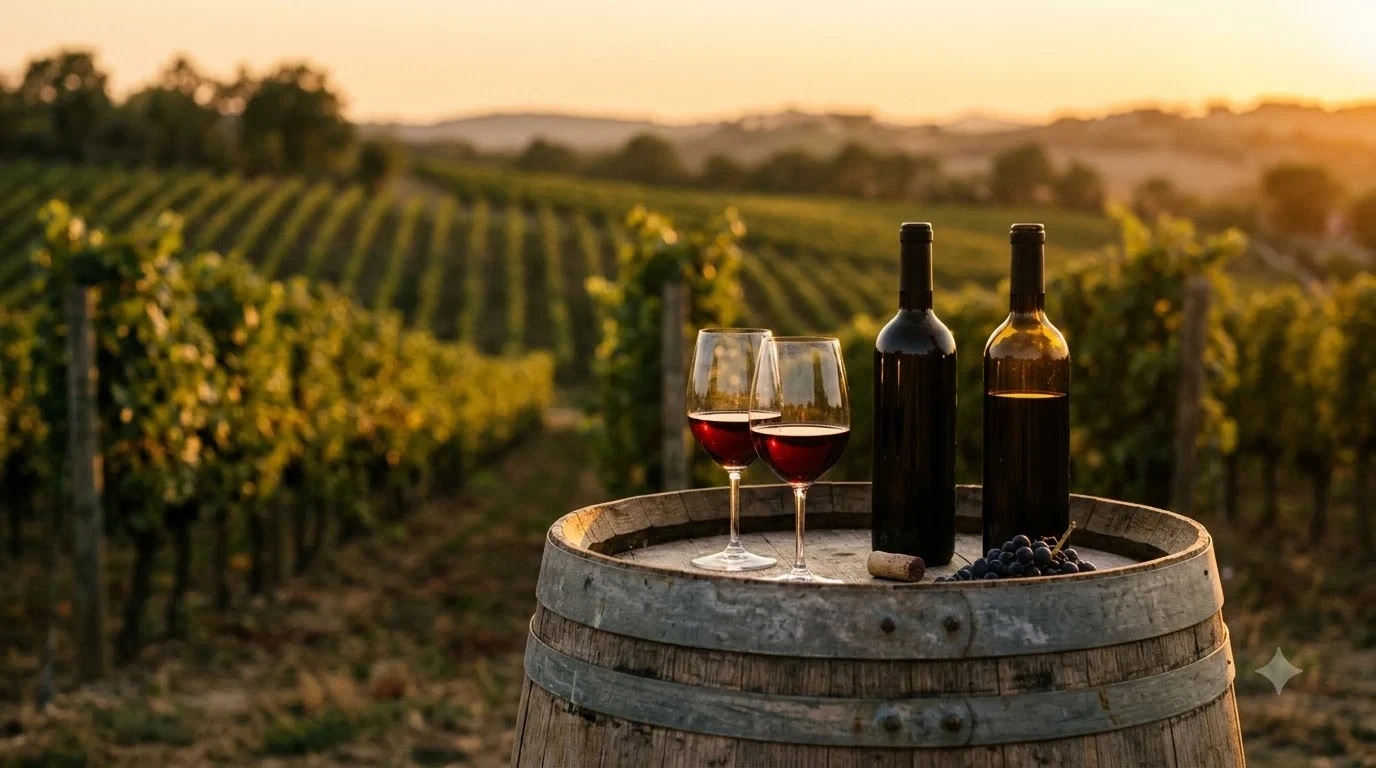
Dry Creek Valley vineyards are the source of Sonoma County wines shaped by old-vine Zinfandel, varied hillside and benchland soils, and a climate that pairs warm afternoons with cool nights. The valley is also known for Sauvignon Blanc, Cabernet Sauvignon, Petite Sirah, and Mediterranean varieties. Understanding where a vineyard sits—on the valley floor, an eastern bench, or a western slope—helps explain why bottles from the same appellation can taste quite different.
Dry Creek Valley is a compact winegrowing district northwest of Healdsburg, California, with a long farming history and a strong network of family-run growers. Its best-known red is Zinfandel, but the landscape supports far more than one grape. This guide explains how the vineyards fit together, what to look for in the wines, and how to plan a visit that goes beyond a quick tasting-room stop.
Where Dry Creek Valley Vineyards Fit in Sonoma County
Dry Creek Valley is a small, enclosed American Viticultural Area in northern Sonoma County, measuring about 16 miles long and two miles wide. More than 150 growers and over 70 wineries work within this narrow landscape, where vineyard blocks can differ sharply in slope, elevation, soil, and exposure.
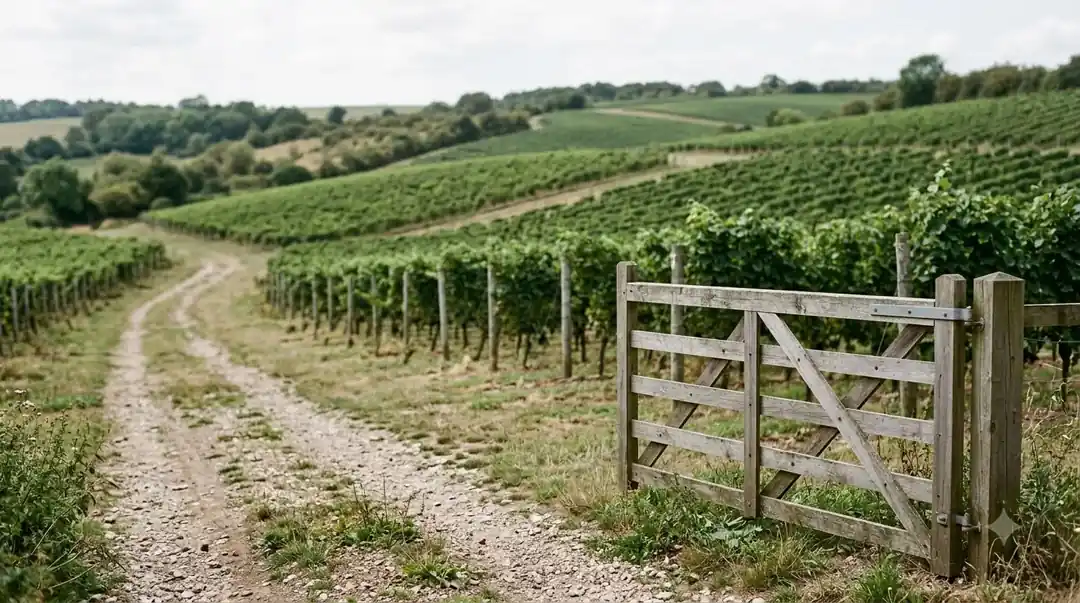
The appellation runs between the Lake Sonoma area in the north and the meeting of Dry Creek and the Russian River in the south. The Winegrowers of Dry Creek Valley regional profile provides an official overview of its geography and growing conditions. Healdsburg lies near its southern end, while Geyserville is a useful reference point farther north.
Winegrowers of Dry Creek Valley describes the district as a 16-by-2-mile valley with many soil types, elevations, and exposures to sun, wind, and water. The Sonoma County Vintners appellation profile gives a separate vineyard-area figure of 8,055 acres and lists 63 wineries, while the regional association describes nearly 9,000 acres and more than 70 wineries. Those totals are not identical, so treat them as organization-specific snapshots rather than as measurements that can be combined.
| Regional measure | Reported figure | Source context |
|---|---|---|
| Valley dimensions | 16 miles by 2 miles | Winegrowers of Dry Creek Valley |
| Vineyard acreage | Nearly 9,000 acres | Regional association estimate |
| Vineyard acreage | 8,055 acres | Sonoma County Vintners profile |
| Wineries | More than 70 / 63 | Different organization counts |
The valley received federal American Viticultural Area recognition in 1983. Its boundaries identify a defined growing region, not a promise that every vineyard produces the same style.
Soils, Slopes, and the Valley’s Daily Climate
Dry Creek Valley’s character begins with a contrast between deep, well-drained valley-floor soils and rockier benchland or hillside ground. Warm days support ripening, while nighttime cooling helps preserve freshness, giving vineyard managers several ways to balance fruit concentration with acidity.
The valley floor includes gravelly and sandy loams formed from alluvial deposits carried into the valley over a long period. These deeper soils can hold useful moisture and provide a generous rooting zone. The surrounding benches and hills more often feature gravelly clay loam, sometimes reddish and iron-rich, with abundant stones and quick drainage. These differences affect vine vigor and water availability, which in turn influence berry size, crop levels, and the timing of ripening. A vine in a deep, fertile floor parcel may grow a fuller canopy and produce a different crop from one planted on a rocky slope. On a well-drained hillside, restricted water availability late in the growing season can moderate growth and contribute to smaller, more concentrated berries.
The regional winegrowers describe July through September afternoons that often reach the mid-80s Fahrenheit, with cool coastal air and fog moving in at night. Decanter’s reporting on local growers notes summer nighttime temperatures around 12 degrees Celsius, or about 54 degrees Fahrenheit. The daily temperature swing helps explain how Zinfandel can ripen fully while retaining useful natural acidity. Decanter also points out that the northern stretches can be warmer than the southern end near Healdsburg. A vineyard’s elevation and side of the valley add another layer: higher, marine-influenced sites can yield more red-fruited, spicy Zinfandel, while warmer floor sites are more likely to show darker, jammy fruit.
Zinfandel and the Old-Vine Vineyard Landscape
Zinfandel is the signature grape of Dry Creek Valley, and old, head-trained vines are among the appellation’s most recognizable sights. The variety thrives in warm sites but can ripen unevenly, so vineyard selection, picking decisions, and sorting at harvest have a strong influence on the finished wine.
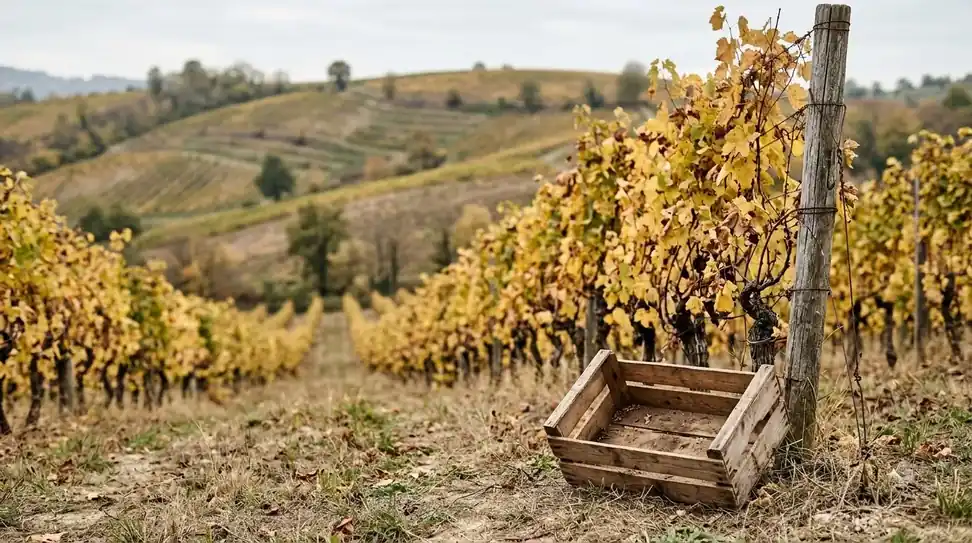
Some surviving plantings are more than a century old. Many are bush-trained rather than arranged on modern trellises, with thick trunks and arms that spread low over the ground. Their age alone does not determine quality: older vines may produce small crops or require careful work, but they preserve genetic material and farming patterns from earlier generations. Traditional field blends are another part of the story. Decanter reports that some older mixed plantings contain roughly 70 to 90 percent Zinfandel, with the balance made up of grapes such as Carignan, Petite Sirah, Alicante Bouschet, and even Palomino. In a field blend, several varieties grow together and may be harvested in one pass. Petite Sirah can add color, tannin, and structure; Carignan can contribute acidity. Modern single-variety bottlings are common too, so the phrase “old-vine Zinfandel” does not automatically mean field blend.
Vineyard position can shape the style in the glass. Decanter’s interviews with producers describe eastern benchland sites as relatively consistent and western slopes as rocky and iron-rich, although growers disagree about which side performs best in especially hot years. Cooler, higher blocks often lean toward red berry fruit and spice; warmer floor sites can show blackberry, plum, and jammy character. Ripe Zinfandel can range from fresh and medium-bodied to dense and powerful. Decanter documents examples around 14 percent alcohol as well as bottlings at 15.5 percent and above, reflecting the grape’s tendency to accumulate sugar as it ripens. Producers who pick earlier or sort aggressively can retain brightness, while others favor a richer, more concentrated expression. For a more detailed account of the growers and styles behind the grape, read Decanter’s report on Dry Creek Zinfandel. When comparing bottles, look for the producer’s name, vineyard designation, alcohol level, and notes about field-blend composition.
Sauvignon Blanc and the Valley’s Other Grapes
Sauvignon Blanc is the valley’s leading white grape and an important counterpoint to its red-wine reputation. Cabernet Sauvignon, Petite Sirah, Bordeaux varieties, and several Mediterranean grapes add further range, so a visit focused only on Zinfandel misses much of the vineyard picture.
Dry Creek Vineyard founder David Stare planted Sauvignon Blanc in the valley in 1972, despite advice that other varieties would be safer choices. The producer’s history identifies its DCV3 vineyard as the pioneering planting and says Sauvignon Blanc is now the most widely planted white variety in Dry Creek Valley. The style often emphasizes citrus, green herbs, and lively acidity, although ripeness and winemaking can bring riper peach or tropical notes. The producer’s vineyard portfolio illustrates how specific blocks are matched to different grapes: one Dry Creek Valley benchland property includes Sauvignon Blanc and Zinfandel in Manzanita gravelly loam, while a valley-floor parcel planted in 2011–2012 includes Sauvignon Blanc, Sauvignon Musqué, and Sauvignon Gris in sandy Yolo gravelly loam. A separate estate block planted in 2009–2010 includes Cabernet Franc and Malbec alongside Sauvignon Blanc. These examples show that a named property can contain multiple blocks, soils, planting dates, and varieties.
Cabernet Sauvignon and other Bordeaux grapes benefit from the valley’s warm growing season, with hillside drainage and long sun exposure contributing to concentration. Petite Sirah is used both as a standalone wine and as a blending partner. Grenache, Syrah, Carignan, Barbera, Sangiovese, and other grapes reflect the range of traditions represented among local growers. Wine Enthusiast’s Dry Creek Valley review archive includes examples of Carignan, Grenache, Barbera, and numerous Zinfandels, providing a snapshot of the appellation’s variety. At a first tasting, compare Sauvignon Blanc with Zinfandel to experience the valley’s brighter, cooler side and its warmer red-wine style. A Cabernet Sauvignon or Petite Sirah flight adds a comparison of body, tannin, and fruit profile.
Vineyard History, Family Growers, and Sustainable Farming
Dry Creek Valley’s modern vineyards grew from a long agricultural history that predates the current tasting-room scene. Family ownership, the revival of old Zinfandel blocks, and vineyard stewardship are central to the region’s identity.
Regional histories trace early grape growing to the decades after the 1849 Gold Rush. By the late 1880s, the valley had nine wineries and 883 vineyard acres, most of them planted to Zinfandel. Prohibition devastated the wine business: after repeal in 1933, only two wineries remained, Frei Brothers and J. Pedroncelli. Prunes and pears became important crops while winegrowing waited for a later revival. The California wine renaissance of the 1970s brought new investment and renewed attention to the valley’s vineyards. Dry Creek Vineyard was founded in 1972 and became the first new winery built in the appellation after Prohibition, according to its own history. The estate says David Stare helped initiate the region’s AVA application and was the first to label a wine with the Dry Creek Valley appellation. In 1983, federal recognition gave growers a formal regional identity that could appear on wine labels.
Multigenerational farms remain part of the landscape, alongside newer growers and winery projects. A regional organization reports more than 150 winegrowers, and its directory lists a wide spread of grape varieties. Sustainable farming can include soil-building, erosion control, water management, habitat protection, and careful canopy work. Dry Creek Vineyard says its 185 acres of estate vineyards are certified sustainable and describes natural soil replenishment and multiple pruning passes through the growing season. These are producer-specific claims, not proof that every vineyard follows identical standards; ask each winery which program applies to its property.
Planning a Vineyard Visit and Tasting Route
The most useful way to explore Dry Creek Valley is to plan around geography and wine styles, not to race through as many tasting rooms as possible. Two or three winery stops in a day leave room to compare sites, ask about vineyard sources, and take in the rural landscape.
Start with a map of the valley and decide whether you want to focus on Zinfandel, Sauvignon Blanc, or a mix of varieties. A Zinfandel-focused visit could include one producer known for old-vine or field-blend bottlings and another with a range of single-vineyard wines. Add a winery that pours Sauvignon Blanc, Cabernet Sauvignon, or Rhône varieties for a broader view. Use the Dry Creek Valley wine region overview to understand the appellation’s boundaries and signature grapes before choosing stops. Check tasting-room hours and reservation requirements directly with each winery before setting out. Some properties offer seated flights, vineyard walks, or food pairings. Confirm whether a visit includes a vineyard walk; the tasting room may not sit beside the vineyard that supplied the wine.
Tip: Ask the winery to identify one vineyard block, its soil type, and the harvest date for a wine in your flight. Those details make site comparisons more useful than tasting notes alone.
At each stop, ask which vineyard or block supplied the fruit, what soil and exposure define that parcel, and how the producer chose the harvest date. For Zinfandel, ask whether the wine is a field blend or a single-variety bottling and whether the vines are head-trained. For Sauvignon Blanc, ask about clone selection, harvest timing, and whether the wine was fermented or aged in stainless steel, oak, or a combination. Keep a small tasting record with the producer, wine name, vineyard designation, grape, alcohol level, and one or two sensory impressions. The Dry Creek Valley wine tasting guide can help organize a day around tasting formats and winery visits.
Food and pacing matter. Zinfandel’s ripe fruit and noticeable tannin work well with grilled beef, sausages, smoked mushrooms, and tomato-based dishes; Petite Sirah often suits richer, slow-cooked foods. Sauvignon Blanc is a natural partner for goat cheese, shellfish, salads, and herb-driven dishes. Drink water between flights, share pours when appropriate, and leave enough time between stops for a relaxed drive. Seasonal events can make a visit more social, but they also change how busy the valley feels. The Dry Creek Valley wine festival is a useful starting point for checking the region’s event calendar and planning around special tastings. For a wider California itinerary, the Wine Regions resource can help compare Dry Creek Valley with nearby Sonoma appellations.
Frequently Asked Questions
These answers address common questions about Zinfandel, Primitivo, vineyard designations, and sustainable farming in Sonoma County.
Is Dry Creek Valley the same place as Russian River Valley?
No. They are separate American Viticultural Areas in Sonoma County, with different boundaries and growing conditions. Dry Creek Valley is associated especially with Zinfandel and Sauvignon Blanc, while Russian River Valley is widely associated with Pinot Noir and Chardonnay.
Is Zinfandel related to Primitivo?
Yes. Zinfandel and Primitivo are names for the same grape variety, although the wines can taste different because climate, vineyard site, harvest choices, and winemaking differ. In Dry Creek Valley, some vineyard records and grower listings use both names.
What does a vineyard designation tell me?
A vineyard designation identifies a more specific fruit source than the broad Dry Creek Valley appellation name. It can help you compare wines from a particular property or block across producers and vintages, but it does not by itself tell you whether the wine is more powerful, elegant, or age-worthy.
Can the same vineyard taste different from one vintage to another?
Yes. Heat spikes, uneven flowering, rainfall, and the date of harvest can alter ripening even when the fruit comes from the same rows. Decanter documented a Dry Creek harvest period when a heat spike exposed Zinfandel grapes to temperatures up to 45 degrees Celsius, a condition that can cause berries to shrivel or raisin.
Does sustainable certification mean a vineyard is organic?
Not necessarily. Sustainability programs can address environmental, social, and economic practices, while organic certification follows a separate set of rules for farming inputs and handling. A winery can describe its program or certification so visitors know exactly which standard applies to a given property.
Dry Creek Valley rewards attention to the vineyard rather than assumptions based on the grape name alone. Compare a Zinfandel from an old mixed planting with one from a cooler benchland, then taste the region’s Sauvignon Blanc to see another side of the appellation. A few well-chosen stops can make the valley’s soils, families, and wine styles much easier to understand.
More in Wine Regions
 Willcox Wine Trail: Discover Arizona’s High-Elevation Wine CountryUpdated Nov 20, 2026
 Yakima Valley Wine Region: Find the Best Styles to TryUpdated Nov 20, 2026
 Vosne Romanee Wine Tasting: Identify Aromas and Choose Better PairingsUpdated Nov 20, 2026
 Yakima Valley Wine Festival: Find the Best Seasonal Wine EventsUpdated Nov 20, 2026
 Wales Vineyards: Discover Cool-Climate Wines and Where to VisitUpdated Nov 20, 2026
 Yountville Wine Festival: Discover Napa Wines and Local FoodUpdated Nov 20, 2026