

We may earn a commission when you buy through links on this page, at no extra cost to you. Learn more.
Organic dry red wine is a dry red made from certified organic grapes and produced under applicable organic winemaking rules. In the United States, the phrase can describe more than one production category, so the exact label matters. Start by checking the organic certification, then choose a grape variety and region that match the body, acidity, and tannin you enjoy.
Organic certification describes how the grapes and wine are produced; dry describes the finished wine’s sweetness. Those are separate decisions, which means a bottle can be organic and dry without being a natural wine, a light-bodied red, or a low-alcohol wine. This guide explains the label language, the main red-grape styles, and how to buy and serve a bottle with confidence.
What Organic Certification Means for Red Wine
In the United States, certified organic wine follows rules for both vineyard farming and cellar production, while wine made with organic grapes follows a different set of allowances. The USDA organic seal is therefore a useful clue, but the wording on the label is just as important.
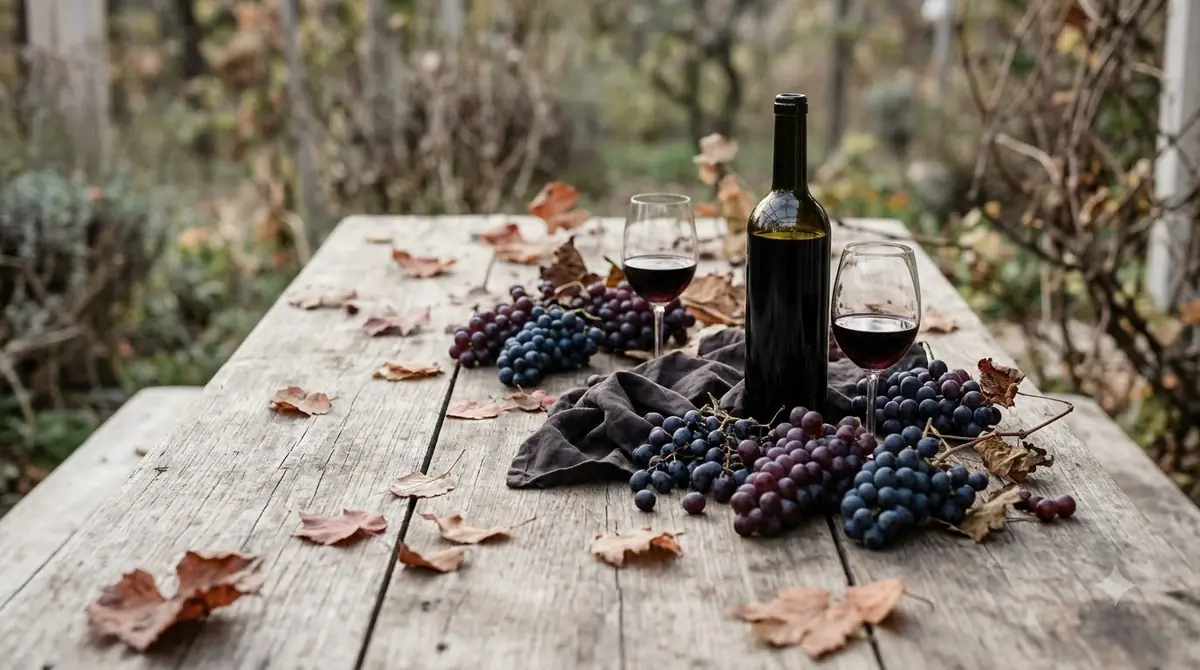
Organic grape growing prohibits most synthetic fertilizers, herbicides, and pesticides that conventional vineyards may use. Certified growers must work within the National Organic Program, which encourages practices that protect soil and natural resources; cover crops, compost, and habitat for beneficial insects are examples of approaches that can support vineyard health. Organic does not mean that a vineyard receives no treatments at all. Organic farming can allow approved substances, and growers still need to manage mildew, insects, weeds, and weather pressure. The goal is compliance with a defined production standard, not an untouched vineyard.
For wine labeled simply “organic” in the U.S., the rules extend beyond the grapes. The winemaking ingredients and processing aids must meet organic requirements, and producers cannot add sulfites. Naturally occurring sulfites may still be present. The USDA organic seal is permitted for qualifying organic wine, although its use is optional. On the information panel, look for the required certification statement naming the certifying body; a logo alone is not the same as the full certification statement.
Wine labeled “made with organic grapes” is different. The grapes must be certified organic, but the winery has more flexibility with certain cellar inputs, including the use of sulfur dioxide as a sulfiting agent, up to 100 parts per million. That wine cannot display the USDA organic seal. The distinction is useful rather than a simple quality ranking: a producer may choose this category to retain a winemaking option while sourcing certified organic fruit. The USDA explains the two wine label categories in its organic labeling requirements.
How to Tell Whether a Red Wine Is Dry
Dryness refers to the amount of residual sugar left after fermentation, not to how ripe, dark, or powerful a red wine tastes. Most classic table reds are fermented dry, but ripe fruit aromas and soft textures can make a dry wine seem sweeter than its sugar level suggests.
Yeast converts grape sugar into alcohol and carbon dioxide during fermentation. When fermentation consumes nearly all fermentable sugar, the result is a dry wine; if fermentation stops early or the starting juice contains more sugar than yeast can convert, sweetness remains. Residual sugar is measured in grams per liter (g/L). Decanter explains that the European Union’s still-wine category “dry” generally reaches 4 g/L, with an acidity allowance that can permit a higher figure in some circumstances. There is no single U.S. legal sweetness definition that works as a universal shortcut across all red-wine labels.
For a practical comparison, less than 4 g/L is a very dry benchmark, while a wine at 4–9 g/L may still taste dry depending on acidity. These are tasting guides, not universal legal cutoffs. A wine with lively acidity can taste fresher and less sweet than a wine with the same residual sugar but softer acidity; alcohol, oak, ripe fruit flavors, and serving temperature also influence perceived sweetness. A ripe California Zinfandel can smell like blackberry jam and taste full-bodied while remaining dry, just as a young Malbec may suggest plum and blueberry without tasting sugary. Dryness is separate from organic, biodynamic, natural, vegan, and sustainable claims.
Red Grapes That Make Distinct Dry Styles
Grape variety is the quickest way to predict body, tannin, acidity, and food compatibility. Organic certification does not dictate a grape or flavor profile, so choose the variety first and use the certification to narrow the production method.
Cabernet Sauvignon usually delivers firm tannin, with blackcurrant, dark cherry, cedar, and sometimes herbal notes. It suits drinkers who like structure and works with grilled beef, lamb, and rich dishes whose protein and fat soften tannin. Merlot is generally softer, with medium tannin and plum or cherry flavors; it is an approachable choice for roast chicken, meatloaf, mushrooms, or tomato pasta. Pinot Noir typically has low-to-medium tannin and high acidity, with red cherry, raspberry, cranberry, and earthy notes. It is useful with roast poultry, salmon, mushrooms, and dishes that would overwhelm a heavily tannic red.
Syrah tends toward medium-plus to high tannin, with dark fruit, pepper, and savory flavors. It can stand up to grilled sausages, barbecued meats, and slow-cooked beef. Malbec often offers dark plum, blackberry, and a plush texture; an Argentine example from Mendoza often gives a fuller, dark-fruited profile. The dry Malbec guide can help distinguish that style from a sweet impression of ripe fruit. Grenache (Garnacha) often brings red berry fruit and moderate tannin, particularly in blends from Spain’s Aragón or France’s southern Rhône. Blends matter, too: Bordeaux-style wines may combine Cabernet Sauvignon, Merlot, and Cabernet Franc, while Rhône-inspired blends often use Syrah, Grenache, and Mourvèdre. Climate, harvest decisions, extraction, and aging can shift all of these broad tendencies.
Vineyard Conditions and Regional Style
Organic certification describes farming practices, not a particular taste, and region still matters. Climate, elevation, soil drainage, sunlight, and harvest timing shape the ripeness and acidity that define a red more directly than the word “organic” does.
Cooler growing areas tend to preserve acidity and produce reds with fresher fruit, lighter body, and less overtly ripe flavors. Pinot Noir from Burgundy or Oregon’s Willamette Valley can show red cherry, cranberry, and earthy notes, while Cabernet Sauvignon from a cooler site may emphasize cassis, herbs, and firmer structure. Warmer areas such as Mendoza in Argentina or parts of California can produce riper fruit, fuller body, and higher alcohol, particularly in Malbec, Syrah, and Cabernet Sauvignon.
Organic growers face different pressures in different climates. Humid conditions can increase mildew pressure, while dry regions may have fewer fungal problems but still need to manage water, heat, and soil health. Organic certification does not mean a vineyard receives no treatments: permitted substances and application conditions depend on the standard. “Organic Cabernet Sauvignon” therefore tells you about the grape and production claim, but a named place such as Bordeaux, Washington State, Chile’s Colchagua Valley, or South Australia gives more context about likely ripeness and style.
How to Read Labels and Choose a Bottle
A good buying decision starts with three pieces of information: the certified organic claim, the grape or blend, and the region. The front label attracts attention, but the back label and producer’s technical description often tell you more about what is in the bottle.
A USDA seal is strong evidence that the wine qualifies for the U.S. “organic” category; its use is optional, so the certifier statement is important too. “Made with organic grapes” means the fruit is certified organic but the wine follows different production allowances. A general “sustainable” logo may refer to a broader environmental or social program and should not be treated as equivalent to organic certification. Wine Enthusiast’s overview of organic and biodynamic wine explains why these terms overlap without meaning the same thing.
| U.S. wine label wording | Grape and cellar requirements | Added sulfites | USDA seal |
|---|---|---|---|
| Organic | Certified organic grapes; cellar ingredients and processing aids must meet organic rules | Not allowed | Allowed |
| Made with organic grapes | 100% certified organic grapes; more flexibility for certain cellar inputs | Sulfur dioxide may be used, up to 100 ppm | Not allowed |
The table summarizes U.S. wine categories, not every country’s organic program. Imported wine must meet the U.S. requirements for the label used in the American market, so a foreign certification logo alone is not enough. Check for the certifier statement and the applicable U.S. category, particularly if sulfite use matters to your buying decision.
Then choose the style. Pinot Noir or lighter Grenache may suit salmon or roast chicken; Cabernet Sauvignon or Syrah is a better fit for steak; Merlot or Malbec can bridge pizza, burgers, and roasted mushrooms. Alcohol percentage offers another clue: a higher number often accompanies ripe, full-bodied fruit, though it is not a guarantee. For a lighter companion or a second bottle for the table, compare the organic dry white wine guide; the Wine Buying Guides section can help with labels and styles beyond organic claims. Do not confuse organic with natural: “natural wine” has no single U.S. legal definition comparable to USDA organic certification, and biodynamic certification, commonly associated with Demeter, is a separate framework with additional farming principles.
Tip: For the clearest organic claim in the United States, look for the USDA organic seal or the full certification statement on the back label. Then read the grape, region, and alcohol percentage to judge the likely style; organic status alone cannot tell you whether a red will be light, bold, or fruit-forward.
Food Pairings for Dry Organic Red Wine
Pair dry red wine by balancing acidity, tannin, body, and the weight of the dish. Organic certification does not change the basic pairing rules: high-tannin Cabernet needs a different partner than high-acid Pinot Noir, and a sweet sauce can make a dry red seem lean or bitter.
For Cabernet Sauvignon, choose protein- and fat-rich foods such as grilled ribeye, lamb chops, short ribs, or mature hard cheese. Salt and fat soften tannin, while the wine’s structure matches the richness of the food. Syrah also works with grilled meats, sausages, and smoky lentils. Avoid pairing a highly tannic red with delicate white fish; oily fish can clash with tannic reds, while a lighter Pinot Noir is usually more flexible with salmon.
Merlot and Malbec are useful with burgers, roasted mushrooms, meatloaf, tomato-based pasta, and hard cheeses. With tomato sauce, remember that acidic food needs a wine with equal or higher acidity, or the wine can taste flat. Grenache and lighter reds suit roast chicken, grilled vegetables, herb-seasoned pork, and charcuterie. A dry Cava can refresh the palate between salty tapas, fried foods, or rich appetizers.
Sweetness and heat deserve attention. A dish with honey glaze, fruit chutney, or sweet barbecue sauce can make a dry wine taste sour or harsh; the general rule is that the wine should be at least as sweet as the food. Chili heat is amplified by alcohol and tannin, so avoid a powerful, high-alcohol Cabernet with very spicy food. A lower-tannin red with moderate alcohol is usually a safer match.
Serving Temperature, Decanting, and Storage
Serving temperature changes how a dry red feels: too warm can exaggerate alcohol, while too cold can mute aroma and make tannin seem harder. Match the temperature to the wine’s body, then give the bottle air only when its structure calls for it.
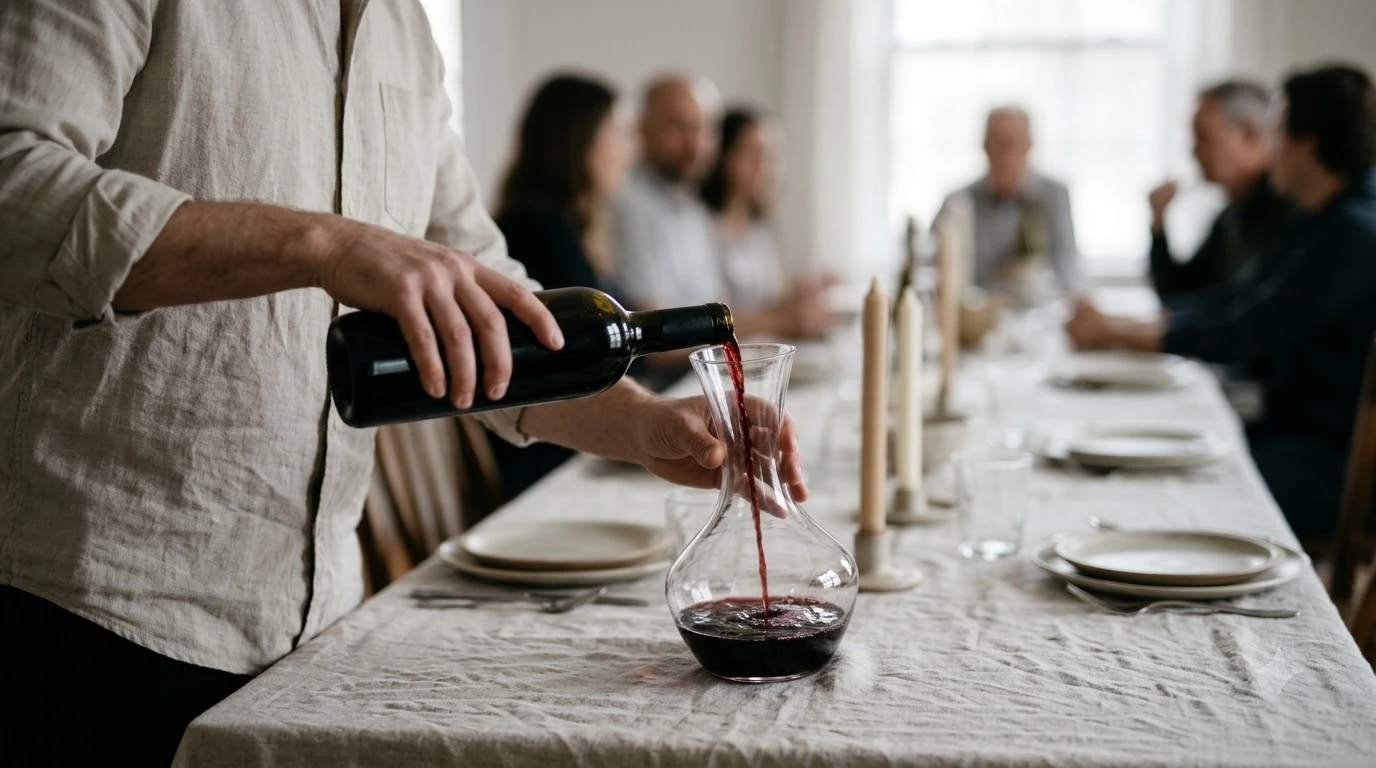
Serve lighter-bodied reds, including many Pinot Noirs and some Grenache wines, around 55–60°F. Full-bodied reds such as Cabernet Sauvignon, Syrah, and many Malbecs are generally more expressive around 60–65°F. Those ranges are cooler than a warm room in many homes, so a brief chill can help. Young, full-bodied reds can benefit from 30–60 minutes in a decanter, especially when firm tannin and concentrated fruit make the wine seem closed. Lighter Pinot Noir and older reds may need little or no decanting.
Store unopened bottles away from sunlight, vibration, and temperature swings. A steady environment near 55°F is a useful target for longer storage, and cork-finished bottles are commonly stored on their sides. For an opened still red, replace the closure and refrigerate it; many wines remain enjoyable for about 3–5 days, though delicate bottles may fade sooner. Bring the remaining wine toward serving temperature before pouring again. Organic certification does not automatically mean a wine must be consumed on the day it is opened or that it has a longer cellar life.
Frequently Asked Questions
These answers clarify label details that often come up after shoppers have narrowed a red by grape and region. They distinguish legal certification from informal marketing language.
Can certified organic red wine contain naturally occurring sulfites?
Yes. Sulfites can form naturally during fermentation even when the winemaker adds none. The U.S. “organic” wine category prohibits added sulfites, not every trace of sulfites generated during fermentation.
Can an imported bottle use the USDA organic seal?
It can qualify under an organic equivalence arrangement if it meets the applicable USDA production and labeling requirements for the U.S. market. A foreign certification logo by itself does not establish eligibility, especially if the wine contains added sulfites.
Does biodynamic certification automatically mean a wine is USDA organic?
No. Biodynamic standards, including Demeter certification, are distinct from the USDA National Organic Program. A winery still needs the relevant USDA certification to use the U.S. organic wine claim and seal.
Is organic red wine always vegan?
No. Organic certification does not by itself rule out animal-derived fining agents such as egg white, casein, or gelatin. A vegan claim or clear statement from the producer is a separate check.
Can a dry organic red wine have a high alcohol percentage?
Yes. Dryness is about residual sugar, while alcohol reflects how much grape sugar fermented into alcohol. A ripe Zinfandel or warm-climate Syrah can be both dry and high in alcohol, so read alcohol and sweetness as separate features.
The easiest way to buy confidently is to separate the questions: verify the organic claim, decide how dry and structured you want the red to be, and match the grape to your meal. With those details in view, organic certification becomes a practical part of the choice rather than a guess about flavor.
More in Wine Buying Guides
 Riesling Gift: Choose a Bottle They’ll LoveUpdated Nov 21, 2026
 Sweet Red Wine Gift: Choose a Bottle They’ll LoveUpdated Nov 21, 2026
 Malbec Gift: How to Choose a Memorable Bottle for Any OccasionUpdated Nov 21, 2026
 Sherry Gift Ideas That Match Every Wine LoverUpdated Nov 21, 2026
 Moscato Gift: How to Choose a Sweet Wine They’ll LoveUpdated Nov 21, 2026
 Merlot Gift: How to Choose a Bottle They’ll AppreciateUpdated Nov 21, 2026