

We may earn a commission when you buy through links on this page, at no extra cost to you. Learn more.
Organic dry white wine is a crisp, low-residual-sugar white made from organically certified grapes under U.S. labeling rules. The key is to separate the farming claim from the sweetness claim: organic describes how the grapes and wine are produced, while dry describes the finished wine’s sugar level. In the United States, “organic” and “made with organic grapes” are also distinct label categories, especially because of sulfite rules.
A bottle can be citrusy, mineral, or softly textured without tasting sweet. Start with a verifiable certification claim, then choose a grape and region that suit your taste.
What Organic Means on a U.S. Wine Label
Organic certification is a production standard, not a flavor description. For U.S. shoppers, the important distinction is whether the finished wine is labeled “organic” or “made with organic grapes,” because the two categories follow different rules for winemaking ingredients and added sulfites.
Under the USDA National Organic Program, the general “organic” category for food products requires at least 95% certified organic content. Wine has additional requirements: USDA guidance says that wine sold as organic must use only certified organic grapes and may not have added sulfites. Organic ingredients used in the wine, including yeast, also have to meet the applicable organic requirements. Small amounts of sulfites can occur naturally during fermentation; “no added sulfites” does not mean a wine is guaranteed to contain absolutely none.
“Made with organic grapes” is a separate claim. The grapes must still be certified organic, but the producer may add sulfur dioxide, up to 100 parts per million in finished grape wine under the USDA wine-labeling rules. The USDA organic seal is not permitted on this category. In either category, a label must identify the certifying body, so look for a named certification organization in the information panel rather than relying only on vineyard language or a leaf illustration.
The USDA’s organic wine labeling guidance helps clarify imported bottles: a wine certified under another country’s system may need different wording for the U.S. market if it contains added sulfites. These are wine-specific rules, not a measure of how “natural” a wine tastes. Certification gives you a verifiable production claim; it does not tell you whether the wine will be lean, rich, tart, or fruity.
| Label category | Grape requirement | Added sulfur dioxide | USDA organic seal |
|---|---|---|---|
| Organic wine | 100% certified organic grapes | Not allowed | Optional, if eligible |
| Wine made with organic grapes | 100% certified organic grapes | Allowed up to 100 ppm | Not allowed |
What Dry Means in the Glass
Dry white wine has little residual sugar left after fermentation, but dry does not mean flavorless, austere, or automatically high in acidity. A wine can smell of ripe pear, peach, melon, or citrus and still finish dry if the palate contains little sugar.
Acidity is one reason sweetness can be difficult to judge from a quick sip. A high-acid wine can taste brisk and refreshing even if a little residual sugar remains to balance the sharpness. Riesling is a useful example: it is made in dry, off-dry, and sweet styles, so the grape name alone does not tell you the finished sweetness. Look for a producer’s word such as “dry,” a sweetness scale, or a technical sheet that lists residual sugar in grams per liter.
Fruitiness and sweetness are different sensations. Sauvignon Blanc may smell of grapefruit, passion fruit, or freshly cut herbs while remaining dry. Chardonnay can suggest baked apple or ripe lemon without being sweet, and a mineral-tasting Albariño may seem less overtly fruity even though it is also dry. Combine the producer’s sweetness description with grape, region, and alcohol level rather than treating fruit aromas as proof of sugar.
Grapes and Regions to Start With
The grape variety gives you a useful first prediction of texture and acidity, while the region and winemaking choices refine that impression. For a fresh, citrus-led bottle, start with Albariño, Sauvignon Blanc, Verdejo, or Vermentino; for more texture, explore Chenin Blanc or Chardonnay.
Albariño from Spain’s Rías Baixas region is often a strong choice for seafood because its lively acidity and citrus, green-apple, and stone-fruit notes can refresh the palate. Vermentino from coastal Italy or California commonly leans toward lemon, herbs, and a slightly savory finish. Verdejo from Spain’s Rueda region can combine citrus with fennel-like or herbal notes. These are starting points, not guarantees: ripeness, fermentation, and aging also shape the wine.
Sauvignon Blanc is a good pick for a sharper, more aromatic profile. The grape commonly shows high acidity, with flavors that can range from lime, grapefruit, and green herbs in cooler climates to riper tropical fruit in warmer areas. Loire Valley examples such as Sancerre and Pouilly-Fumé are often more restrained and mineral in feel, while Marlborough in New Zealand is known for a particularly expressive citrus and herb style. Choose a certified bottling within the style you prefer; no region is inherently more organic than another.
Chenin Blanc and Chardonnay offer more options for a rounder palate. Decanter describes Loire Valley Chenin Blanc through floral aromas, quince and apple flavors, and brisk acidity; in South Africa, cool-fermented examples can show pear-drop fruit, while fuller dry bottlings may move toward peach. Chardonnay varies widely: unoaked versions from cooler places such as Chablis or the Sonoma Coast can be citrusy and mineral, while barrel fermentation or oak aging can add body and notes of spice, toast, or vanilla. Pinot Grigio and Grüner Veltliner are also worth considering for a lighter, crisp style.
Tip: Pick the flavor profile first, then confirm the certification. For citrus and herbs, try Sauvignon Blanc or Vermentino; for salty seafood, start with Albariño; for a little more weight, look for Chenin Blanc or Chardonnay.
How to Choose a Bottle With Confidence
A practical buying decision has three steps: verify the organic claim, identify the sweetness and body you want, and then use the producer and origin to narrow the choice. This approach is more reliable than choosing by a green-colored label, a “clean” slogan, or a broad natural-wine description.
First, read the exact wording on the front and back labels. A USDA organic seal or a named certifier can support an organic-wine claim; “made with organic grapes” is meaningful too, but it is not the same category and cannot use the USDA seal. If the bottle is imported, remember that the U.S. label may differ from the wording used in its country of origin. For shoppers comparing several options, our Wine Buying Guides can help put grape, region, and label details in context.
Second, decide how the wine should feel. A lean, crisp white usually works well as an aperitif or with seafood; a fuller white can better match roast poultry, mushrooms, or dishes with cream. If you prefer a low-oak profile, search for “unoaked,” “stainless steel,” or “concrete” in the producer’s description. If you enjoy a creamy texture, look for barrel-fermented or lees-aged Chardonnay or Chenin Blanc. These cellar terms describe texture and style, not organic status.
Third, check for useful technical details. A producer may publish residual sugar, acidity, alcohol by volume, and the fermentation vessel. Those numbers are not mandatory on every bottle, but they make it easier to compare dry wines made from different grapes. Alcohol affects the impression of weight and warmth; a lower-alcohol white often feels lighter, while a riper, higher-alcohol wine may taste broader even when fully dry. Also, do not assume “organic,” “biodynamic,” and “natural” mean the same thing: biodynamic farming builds on organic methods, while natural wine usually refers to low-intervention cellar choices. Wine Enthusiast’s comparison of organic, biodynamic, and natural wine explains the distinctions. The same label-reading approach applies to an organic dry red wine, too.
Food Pairings for Crisp and Textured Whites
Match the wine’s acidity and body to the dish, and pay attention to sweetness and heat. High-acid whites are natural partners for bright, citrusy food, while fuller whites are often more comfortable with richer sauces and roasted flavors.
Albariño, Vermentino, and Sauvignon Blanc pair well with oysters, grilled shrimp, ceviche, white fish, and salads dressed with lemon. Acidic food needs a wine with equal or higher acidity; otherwise, the wine can seem flat beside a tart vinaigrette or a squeeze of lime. For dishes with herbs, Sauvignon Blanc’s grassy and citrus notes can echo parsley, cilantro, basil, or green onion. A crisp Verdejo also works with fried seafood because its acidity helps refresh the palate between bites.
Chenin Blanc and Chardonnay give you more flexibility with richer dishes. Try a dry Chenin Blanc with roast chicken, pork tenderloin, or vegetables with browned edges. A lightly oaked Chardonnay can stand up to roast turkey, creamy pasta, or salmon with a butter sauce, while an unoaked Chablis-style Chardonnay is more suited to simply prepared fish and shellfish. For a cheese board, match a tangy goat cheese with Sauvignon Blanc or a firm, nutty cheese with a fuller Chenin Blanc.
Keep sweetness in balance: a wine should be at least as sweet as the dessert, or the wine may taste sour and thin beside it. A dry white is better alongside savory appetizers or mild cheeses than with a very sweet cake. Chili heat changes the equation because alcohol and tannin can amplify the burn; choose a lower-alcohol white with refreshing acidity for spicy dishes. For grilled beef or lamb, consider a structured red such as dry Malbec instead. One wine need not serve every course: pour Albariño with shellfish, then Chardonnay with roast chicken or mushrooms. A dry Cava offers another sparkling option for the start of the meal.
Serving and Storing Organic White Wine
Temperature changes how acidity, aroma, and body come across. Serve lighter dry whites cool but not icy, and give fuller whites a little more warmth so their aromas and texture are not muted.
As a practical guide, serve light whites such as Pinot Grigio, Albariño, and crisp Sauvignon Blanc at 45–50°F. Fuller whites such as barrel-aged Chardonnay or a weightier Chenin Blanc are better around 50–55°F. Sweet whites are usually served colder, around 43–50°F, while sparkling wines are commonly served at 40–50°F. If a bottle is too cold, let it sit in the glass for a few minutes; if it warms too much, return it to the refrigerator briefly.
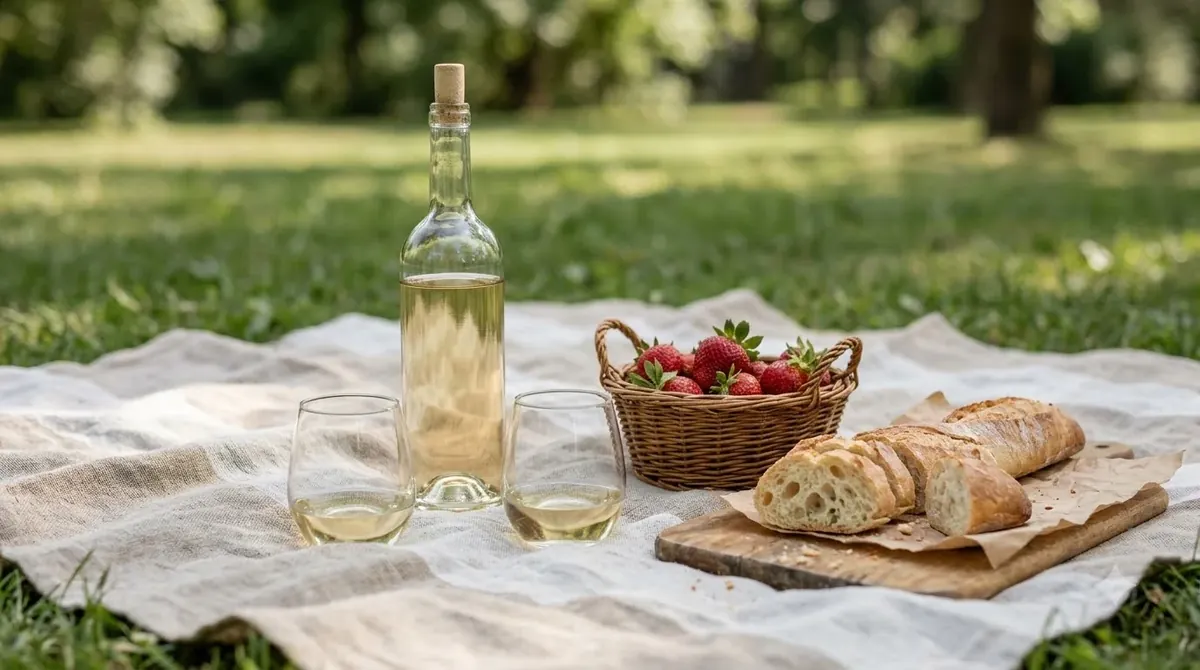
Use a standard 5-ounce pour. A 750-milliliter bottle yields about five glasses at that serving size, which helps with planning for dinner. A white wine glass with a bowl that narrows slightly toward the rim is useful because it gathers aromas without requiring a large pour. Special glassware is optional, but leave room to swirl and smell the wine.
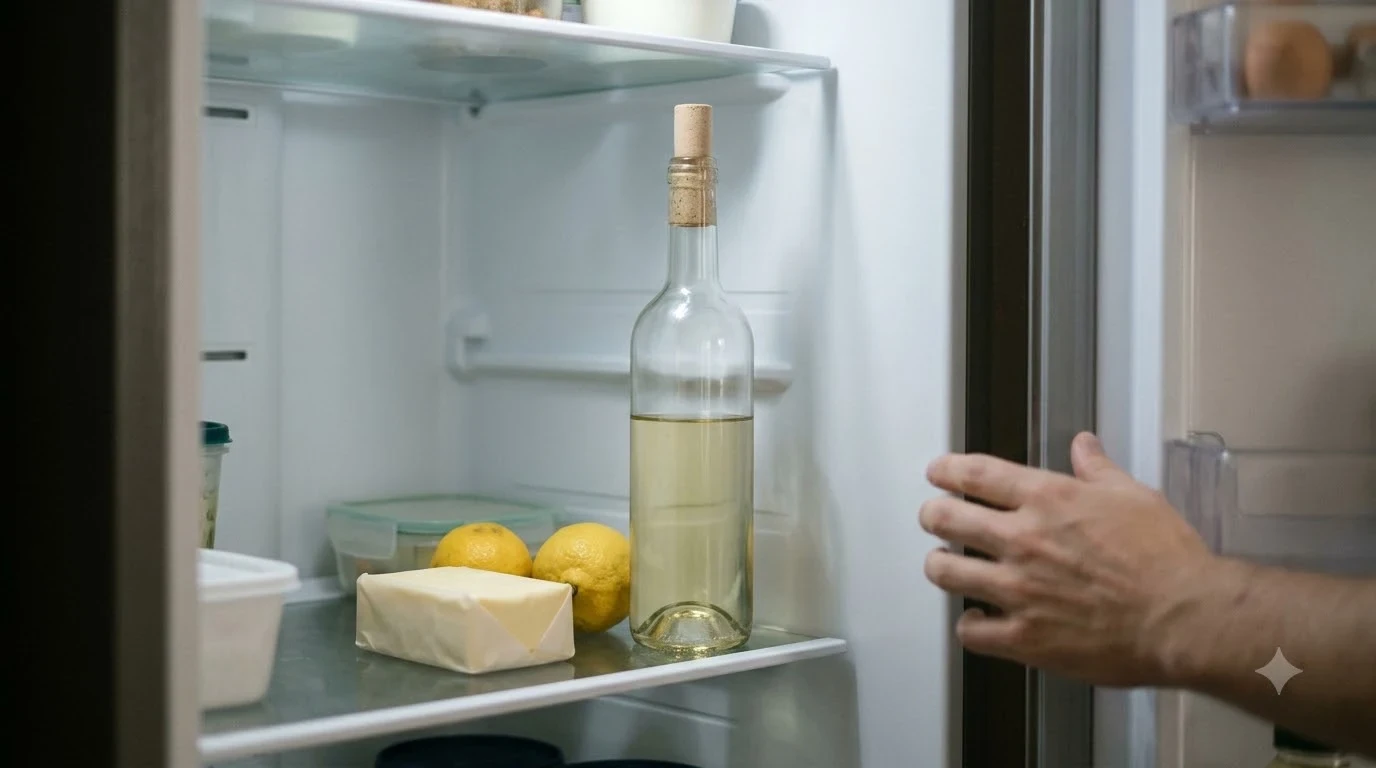
After opening, re-cork the bottle and refrigerate it. Most still wines keep reasonably well for about 3–5 days when stored cold, although freshness fades at different rates depending on the wine and closure. Use a sound stopper and keep the bottle upright once opened. For unopened bottles intended for longer storage, keep them in a cool, dark place near 55°F, away from sunlight, temperature swings, and vibration; bottles with cork closures are generally stored on their sides.
Frequently Asked Questions
Organic certification applies to sparkling wine as well as still wine, while sparkling sweetness has its own vocabulary. Brut Nature, Extra Brut, and Brut generally indicate drier styles than Extra Dry or Demi-Sec.
Does organic certification mean a white wine is vegan?
No. Organic certification does not by itself establish that a wine is free of animal-derived fining agents. Some winemakers use egg white, casein, or fish-derived isinglass during clarification, so look for a separate vegan certification or ask the producer about its fining process.
Does organic mean the vineyard uses no pest-control products at all?
No. Organic standards restrict which substances and methods are permitted; they do not mean a grower never treats vines. Certified growers may use substances allowed under the organic program and must keep the required records for inspection.
Is natural wine the same as organic wine?
No. “Natural wine” is commonly used for low-intervention cellar practices, such as spontaneous fermentation with native yeasts and limited additions, rather than as a single U.S. government certification category. A natural wine can be made from certified organic grapes, but the terms describe different parts of production.
Does an organic dry white have to be made with wild yeast?
No. Organic certification does not require spontaneous fermentation. A producer can use selected yeast that meets the applicable organic rules, so a wine may be certified organic and still have a controlled, predictable fermentation.
Can an organic dry white wine also be sparkling?
Yes. Organic describes production standards, not whether the wine is still or sparkling. For a drier sparkling style, look for Brut Nature, Extra Brut, or Brut; those terms indicate a drier end of the sparkling-wine sweetness scale than Extra Dry or Demi-Sec.
The best bottle is one whose certification you can verify and whose style fits the meal or occasion. Start with a grape you already enjoy, use the label to confirm the organic category, and let acidity, body, and sweetness guide the final choice.
More in Wine Buying Guides
 Cheap Red Blend: How to Find a Flavorful Bottle for LessUpdated Nov 20, 2026
 Pinot Grigio Gift: How to Choose a Bottle They’ll EnjoyUpdated Nov 20, 2026
 Best White Wine at Total Wine for Every MealUpdated Nov 20, 2026
 Wine Fridge Replacement Shelves: Find the Right FitUpdated Nov 20, 2026
 Best Sparkling Wine Under 20: Find Bubbles Worth BuyingUpdated Nov 20, 2026
 Best Wine For Birthday Celebrations With Perfect Party PairingsUpdated Nov 20, 2026