

We may earn a commission when you buy through links on this page, at no extra cost to you. Learn more.
Marques de Riscal white wine is best known for its fresh, aromatic Verdejo and other white wines from Spain’s D.O. Rueda, rather than a Rioja white. The producer’s range includes straightforward Verdejo, Sauvignon Blanc, a fine-lees version, and more structured Verdejo wines with oak influence. Knowing the grape and the bottling name makes it easier to choose a style for seafood, poultry, or a richer meal.
Marqués de Riscal is closely associated with Rioja, so the region printed on its white-wine labels can come as a surprise. Its white-wine story is closely tied to Rueda, a denomination in Castilla y León where Verdejo has a long local history and where the producer began making whites in the 1970s. The differences between its bottles come down to grape variety, vineyard selection, lees contact, and oak.
What the Marqués de Riscal White Wine Name Covers
Marqués de Riscal’s recognizable white-wine lineup is centered on D.O. Rueda, not on the producer’s Rioja category. Its current portfolio lists five Rueda whites, from the accessible Verdejo and Sauvignon Blanc to lees-aged and oak-aged Verdejo bottlings.
The five Rueda wines listed by the producer are Marqués de Riscal Verdejo, Marqués de Riscal Verdejo Sobre Lías Finas, Marqués de Riscal Sauvignon Blanc, Finca Montico Gran Vino de Rueda, and Marqués de Riscal Limousin Gran Vino de Rueda. The names indicate meaningful differences. Verdejo identifies the local grape, Sauvignon Blanc signals a French-origin variety grown in Spain, Sobre Lías Finas points to time on fine lees, and Limousin signals a more oak-influenced style.
There is also a related white bottling in the broader portfolio: Barón de Chirel Verdejo Viñas Centenarias, which the producer groups under V.T. Castilla y León rather than D.O. Rueda. The Rioja category on the producer’s wine list is presented separately from these white selections. That distinction matters because a winery’s best-known home region does not automatically tell you where every wine in its portfolio is made. Readers comparing producers with multiple regional identities may also find it useful to look at baron philippe de rothschild wine, another name associated with wines from more than one place.
Rueda’s Landscape and the Character of Verdejo
Rueda lies in Castilla y León and includes vineyards across Valladolid, Segovia, and Ávila; its signature grape, Verdejo, has been grown in the area for more than ten centuries. Gravelly soils, local altitude, and noticeable differences between daytime and nighttime temperatures help explain the grape’s combination of herbal aroma and refreshing acidity.
The Rueda regulatory council describes Verdejo as the denomination’s indigenous variety and notes its ability to adapt to the area’s gravelly soils and temperature contrasts. In the glass, the grape is commonly associated with fresh herbs, citrus, orchard fruit, and a lightly bitter or savory edge. Marqués de Riscal’s own description of its standard Verdejo emphasizes fennel, white flowers, aniseed, and fresh grass, followed by a lively palate. For a regional overview, the D.O. Rueda’s Verdejo profile explains why the grape is so closely identified with the area.
These traits are not simply a flavor recipe imposed by the winery. The combination of altitude, gravelly ground, and strong day-to-night temperature changes helps preserve freshness while allowing grapes to develop aromatic character. Vineyard choices and harvest timing then influence the final expression. A Verdejo intended for a crisp, youthful style will not necessarily be handled like fruit selected for an oak-aged Gran Vino de Rueda.
Five White-Wine Styles and How They Differ
The easiest way to choose among Marqués de Riscal whites is to start with the degree of texture and oak you want. The standard Verdejo and Sauvignon Blanc emphasize aromatic freshness, while Sobre Lías Finas adds a rounder feel and the Gran Vino bottlings show more selection and structure.
The table summarizes the principal distinctions described by the producer. Temperature conversions are approximate: 8°C to 10°C is about 46°F to 50°F, while 9°C to 12°C is about 48°F to 54°F.
| Wine | Grape or method | Style cue | Producer’s serving range |
|---|---|---|---|
| Marqués de Riscal Verdejo | Verdejo | Fennel, aniseed, white flowers, fresh grass | 8°C–10°C (46°F–50°F) |
| Verdejo Sobre Lías Finas | Verdejo; fine-lees aging | Fresh herbs and flowers with a creamier texture | 8°C–10°C (46°F–50°F) |
| Marqués de Riscal Sauvignon Blanc | Sauvignon Blanc; organic | A more overtly aromatic alternative to Verdejo | 8°C–10°C (46°F–50°F) |
| Finca Montico Gran Vino de Rueda | 100% Verdejo; organic | More body and varietal complexity | 8°C–10°C (46°F–50°F) |
| Limousin Gran Vino de Rueda | Verdejo; French-oak aging | More developed texture and oak influence | 9°C–12°C (48°F–54°F) |
For a first bottle, standard Verdejo is the clearest introduction to the house’s Rueda identity. It gives the variety’s herbal and floral character without making the choice hinge on an elaborate cellar method. Sauvignon Blanc is the alternative for someone who already enjoys that grape’s aromatic profile, while Sobre Lías Finas is a useful step toward a more textured white. Finca Montico and Limousin are better choices when the meal or occasion calls for more concentration.
Independent tasting notes can offer another point of comparison, though every vintage has its own character. Wine Enthusiast’s review of the 2023 Marqués de Riscal Verdejo described pear, guava, jasmine, pineapple, white peach, and lemongrass, and recorded 13.1% alcohol for that vintage. Its 2023 Verdejo review is a useful example of how the fresh, fruit-led profile can appear in a particular bottling, rather than a guarantee that every vintage will taste identical.
Lees, Oak, and Vineyard Choices Shape Texture
Production choices explain why two wines made from the same grape can feel quite different. Marqués de Riscal harvests selected Verdejo vineyards at night for its Sobre Lías Finas, while Limousin comes from old bush vines on high gravel terraces and is aged in French oak.
Lees are the spent yeast cells and other fine particles that remain after fermentation. In the Sobre Lías Finas process, the producer first racks the wine to remove heavier lees, then keeps it in contact with the finer material. According to the winery, this contact helps stabilize aroma and color and builds a creamier mouthfeel without removing the wine’s fresh acidity. That is why the wine can feel broader than a simple young Verdejo while retaining the grape’s herbal lift.
Limousin takes a different route. The winery selects fruit from old bush-trained Verdejo vines growing in gravel soils on the district’s higher terraces. It says the bunches are picked by hand one by one and moved in crates to reduce oxidation before the wine is aged in French-oak casks and barrels. The oak treatment, vineyard selection, and slightly warmer serving recommendation distinguish it from the bright, everyday Verdejo style.
Finca Montico is another expression of Verdejo, made from 100% of the variety and included in the producer’s organic wine collection beginning with the 2018 vintage. The winery describes it as a wine with body and finesse that can be enjoyed fairly young, although keeping a bottle for a few years may add complexity. These choices show why the grape name alone does not tell the whole story: vineyard age, training method, selection, lees, and oak all affect the finished wine.
Food Pairings for Verdejo and Sauvignon Blanc
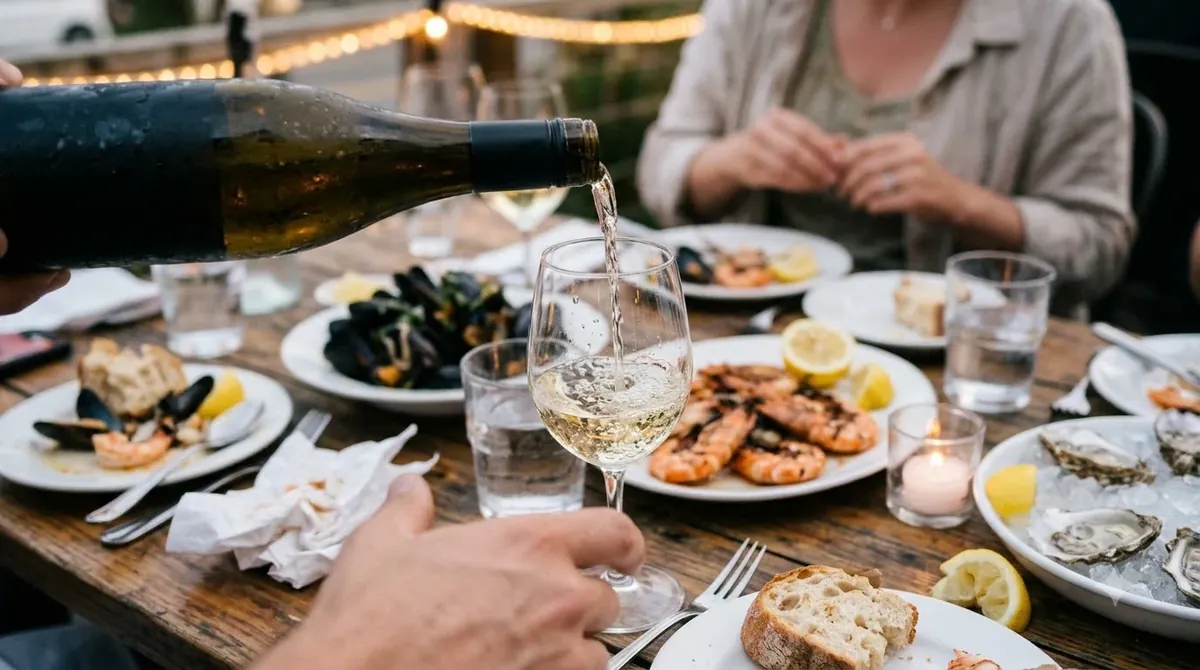
The bright acidity and herbal character of Rueda whites make them natural partners for seafood, simply prepared fish, chicken, and dishes with fresh herbs. Marqués de Riscal specifically recommends fish, shellfish, ham pasta, chicken, and cold cuts for its Verdejo and Sobre Lías Finas wines.
For a classic pairing, serve standard Verdejo with grilled white fish, shrimp, mussels, or a plate of shellfish. Its citrus-like freshness can balance a squeeze of lemon, while fennel and fresh-herb notes can echo a green garnish. It also works with roast chicken, chicken salad, or pasta with ham and peas. With salty cured ham, the wine’s acidity provides contrast rather than making the dish taste heavier.
Sauvignon Blanc is a good fit for seafood, lighter pasta dishes, and an aperitif spread, which matches the producer’s own suggestions. Finca Montico can stand up to a little more weight, including chicken, ham, pasta, or white meat. Limousin is the more suitable choice for fish served with a buttery or gently spiced sauce, char-grilled vegetables, roast lamb, or pulses, all foods that can meet its fuller texture. For a wider look at Spanish bottlings beyond white Rueda, compare the style with Torres Sangre de Toro wine; it is a useful contrast when considering how grape variety and color affect a pairing.
Keep the basic pairing rules in mind. The wine should be at least as sweet as a dessert or sweet sauce, so a dry Verdejo is not the best match for a very sweet glaze or dessert. Acidic food needs a wine with equal or higher acidity; otherwise, the food can make the wine taste flat. Oily fish is generally more comfortable with a fresh white than with a tannic red, and chile heat can seem stronger alongside wines high in alcohol or tannin. Salt and fat can soften tannin in red wines, but that is less central to these fresh white styles.
Serving, Storing, and Opening a Bottle
Serve Marqués de Riscal’s standard Verdejo, Sobre Lías Finas, and Sauvignon Blanc at the producer’s recommended 8°C to 10°C, or roughly 46°F to 50°F. Limousin is listed at 9°C to 12°C, a slightly warmer range that gives its oak-influenced texture more room to show.
Very cold wine can mute aroma, while warm white wine can seem broad and less refreshing. A practical approach is to chill the bottle in the refrigerator and pour a small taste; allow it to warm slightly in the glass if the aromas seem restrained. A light white is often most expressive around 45°F to 50°F, while a fuller white may show better closer to 50°F to 55°F. The producer’s stated range is a reliable starting point for each named bottling.
Use a standard white-wine glass with enough room to swirl gently and smell the wine. A 750 ml bottle yields about five standard 5 oz pours, which makes it easy to plan for a meal without overfilling glasses. For an unopened bottle, store it away from sunlight and temperature swings, ideally on its side in a cool space near 55°F if it has a cork closure. Once opened, reseal it and keep it in the refrigerator; most still wines keep their best character for about three to five days.
Tip: For a seafood dinner, chill Verdejo to about 48°F, pour a 5 oz serving, and let the wine warm naturally in the glass. That gives you a clear read on its herbal and citrus-like aromas without serving it so cold that the flavor disappears.
There is usually no need to decant a young, fresh Verdejo or Sauvignon Blanc. Pouring it into a glass and giving it a few minutes is enough to release its aromas. A more structured bottle such as Limousin can benefit from some time in the glass, but it does not need the long decanting often used for young, full-bodied red wines. If the bottle is being served over several hours, keep it cool between pours rather than leaving it on a warm table. For anyone learning the names of producers and their ranges, the site’s broader wine brands overview can help put Marqués de Riscal in context: its whites show how a winery identified with one region can build a distinct identity elsewhere through different grapes and winemaking choices.
Frequently Asked Questions
Rueda’s white-wine rules cover more than one grape and more than one vineyard system. Two useful technical details are its maximum yield of 8,000 kg per hectare for bush-trained Verdejo and the common 3 × 3 meter spacing used for bush-trained vines.
Can Rueda white wine include grapes other than Verdejo?
Yes. The D.O. Rueda council lists white varieties that include Viura, Sauvignon Blanc, Chardonnay, Viognier, and Palomino Fino as well as Verdejo. That broader list helps explain why a Rueda label does not always mean a single-variety Verdejo.
Does Rueda require only one vineyard-training system?
No. The council describes both bush-trained vines, known as en vaso, and trellised vines. Its listed common planting layouts are 3 × 3 meters for bush-trained vineyards and 3 × 1.5 meters for trellised vineyards.
Is most white-grape harvesting in Rueda done by hand?
No. The Rueda council says almost 95% of its white grapes are harvested mechanically. Mechanical harvesting commonly takes place at night, when cooler conditions help limit oxidation and keep the harvested fruit cool.
How many servings are in a standard bottle?
A standard 750 ml bottle provides about five 5 oz glasses. That is a useful planning measure for a dinner with several courses, although actual pours vary with glass size and serving preference.
Does an organic Marqués de Riscal white wine contain no sulfites?
No. The producer identifies wines such as its Sauvignon Blanc and Finca Montico as organic while also marking them as containing sulfites. Organic production should not be confused with a sulfite-free claim.
Marqués de Riscal white wine is best understood through its Rueda bottlings: start with Verdejo for a crisp, herbal introduction, choose Sobre Lías Finas for extra texture, and look to Limousin for a more developed oak-influenced style. Match the bottle to the food, serve it cool rather than icy, and the differences between the wines become much easier to appreciate.
More in Wine Brands
 Underwood Wine Price: Compare Bottles, Cans, and Pack SizesUpdated Nov 21, 2026
 Zenato Wine Price: Compare Styles and Choose the Right BottleUpdated Nov 21, 2026
 Zuccardi Wine Price: Compare Bottles and Find the Right RangeUpdated Nov 21, 2026
 Yellow Tail Moscato Review: Taste, Sweetness and Serving TipsUpdated Nov 21, 2026
 Wolf Blass Yellow Label Review: Choose Your Best StyleUpdated Nov 21, 2026
 Wolffer Estate Rose Review: Choose the Right Bottle for Your TableUpdated Nov 21, 2026