

We may earn a commission when you buy through links on this page, at no extra cost to you. Learn more.
Rueda wine comes from the Rueda DO in Castile and León, Spain, and is best known for dry white wines built on the Verdejo grape. The region sits about 170 km northwest of Madrid, in the province of Valladolid, and produces white, rosé, and red wines. For most American shoppers, a Rueda white is a fresh, herbal, and food-friendly alternative to Sauvignon Blanc.
This guide explains what Rueda wine tastes like, how the appellation is organized, which grapes go into the bottle, and how to serve and pair it. It is written for buyers who see the name on a shelf and want to know what to expect before they open it.
Where Rueda is and how the appellation works
Rueda is a Denominación de Origen Protegida, or DO, a Spanish protected designation of origin for wine. Its namesake town sits in Valladolid province, roughly 170 km northwest of Madrid, in the Castile and León region of north-central Spain. The appellation covers 72 municipalities: 53 in Valladolid province, 17 in northern Segovia, and 2 in northern Ávila.
According to the Wikipedia entry on Rueda DO, the appellation gained official DO status in 1980, although the idea of a DO for the area was first raised in 1935. The region reports about 16,165 hectares of planted vineyards and 68 wineries. In the 2016/2017 data cited on the same entry, production reached 678,889 hectolitres.
Verdejo: the grape at the center of Rueda wine
Rueda is known mainly for white wine based on Verdejo. The Wine Folly grape guide says Verdejo grows almost exclusively in the Rueda region of Spain, and it describes the grape as herbaceous, a point worth remembering because it is often confused with Portugal’s Verdelho.
In the glass, Verdejo typically shows lime, honeydew, grapefruit pith, fennel, and white peach. Wine Folly describes it as dry, light-bodied, tannin-free, and medium-high in acidity, with an alcohol range of 11.5 to 13.5 percent ABV. That acidity is the reason the wine feels so fresh with food.
Verdejo is also commonly blended with Sauvignon Blanc or Macabeo. Many Rueda bottles are blends rather than pure Verdejo, so the label is the best guide to what is inside.
The Rueda categories and what the labels mean
Rueda wines are organized into three main categories. The standard Rueda category requires at least 50 percent of its principal varieties to be Verdejo and Sauvignon Blanc. Other authorized whites include Viura and Palomino Fino, and Viognier and Chardonnay were approved later. Authorized reds include Tempranillo, Cabernet Sauvignon, Merlot, Syrah, and Garnacha.
The second category is Vino de Pueblo, which indicates a wine made from grapes grown in a single village or town. The top tier is Gran Vino de Rueda, the most prestigious level, made from vines older than 30 years with low yields. For a bottle that aims at more depth, look for that wording on the label.
Wine production in the area is documented from the 11th century. Over the centuries, the region had to recover from setbacks. Phylloxera destroyed more than two-thirds of the vines between 1890 and 1922, and the local Verdejo nearly disappeared before the winegrower Ángel Rodríguez Vidal helped restore it. A major investment by Marqués de Riscal in 1972 began a second era of quality production. The Wikipedia history section is flagged on the page as needing more citations, so those dates are best treated as a general timeline.
How Rueda wine tastes and what to expect
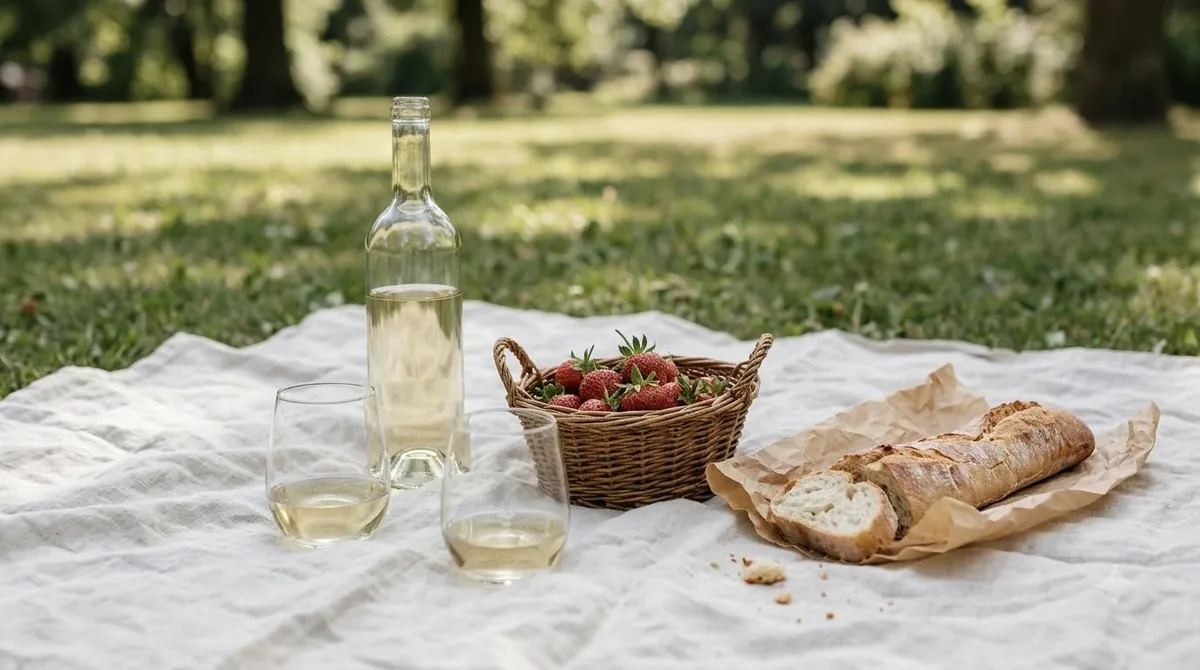
Based on the Verdejo profile described above, a Rueda white is dry and light-bodied with a clean finish. Its lime and grapefruit notes sit alongside a herbal fennel edge, and its medium-high acidity keeps the wine feeling lively rather than heavy.
Because the wine is tannin-free, it does not dry the mouth the way a red does. The fruit and acidity carry the glass, so the wine suits meals where you want something crisp and uncomplicated.
Light body and high acidity make these whites a natural fit for seafood and citrus-heavy dishes. The acidity clears the palate between bites, which is why a Rueda often works with salty or fried food.
How to serve and pair Rueda wine
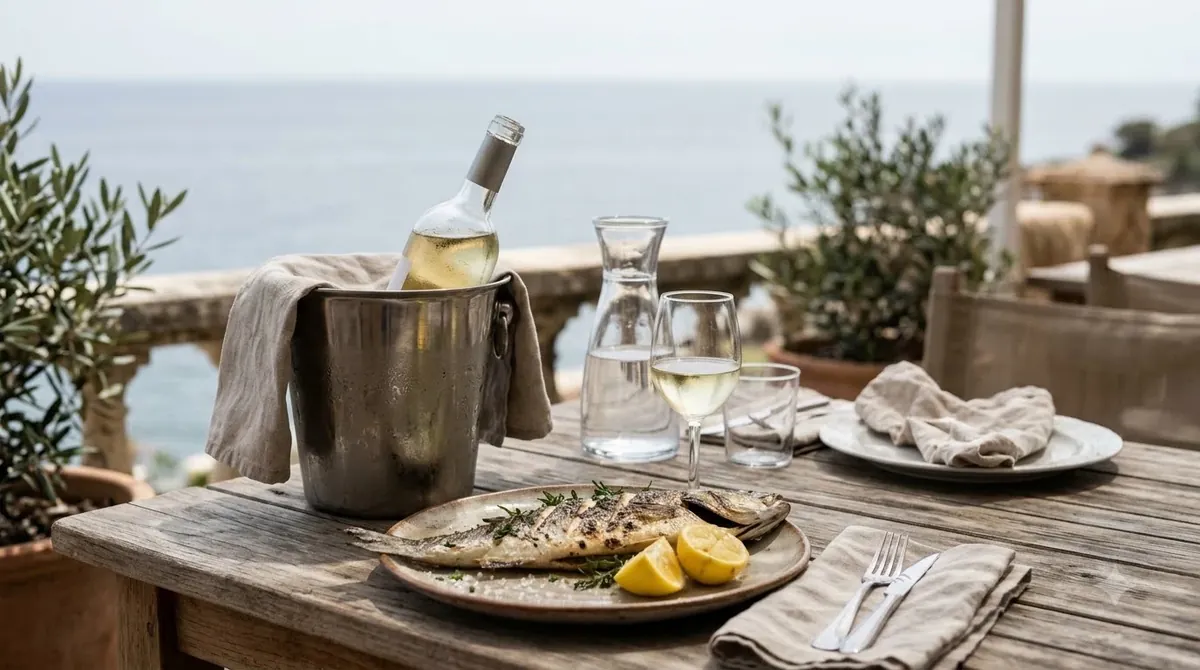
Serve Rueda whites chilled, not ice cold. Wine Folly suggests a temperature of 38 to 45°F, or 3 to 7°C, in a white wine glass, and says decanting is not needed. Cellaring is generally a short-term choice for these wines, with the same guide suggesting 3 to 5 years for Verdejo.
| Dish | Why it works |
|---|---|
| Fish tacos | The acidity matches lime and crisp fish. |
| Lime chicken | Citrus and herb notes follow the dish’s brightness. |
| Carnitas | The wine’s freshness cuts through rich, fatty pork. |
| Seitan steaks | A lighter option for plant-based meals with bold seasoning. |
| Goat cheese or fresh salads | Herbal and citrus notes complement tangy dairy and greens. |
Wine Folly calls Verdejo a great food wine because its higher acidity and subtle bitterness act as a palate cleanser. That makes it a practical choice for a table with several small plates.
Tip: Check the label for the Rueda category and the grape blend. A Verdejo-led bottle and a Sauvignon Blanc-heavy blend can taste quite different, even from the same region.
How to choose a Rueda wine on the shelf
Start with the grape. If the label names Verdejo, expect the herbal and citrus profile described above. If it lists a Sauvignon Blanc-led blend, expect a more pronounced green and grapefruit character. Neither style is better in general, but the choice changes the match with food.
Next, look at the category. A bottle labeled Rueda is a solid everyday choice. A Vino de Pueblo bottle points to a single village or town, which can tell you more about where the grapes were grown. A Gran Vino de Rueda is the top tier and is made from older vines, so it is a better pick when you want a more serious glass.
Finally, match the bottle to the meal. For a casual dinner of tacos, grilled fish, or a fresh salad, a standard Verdejo blend is a practical choice. For a special dinner, a higher category may be worth the search. Many shops keep Rueda whites together with other Spanish wines, so a short look along the shelf often turns up two or three options to compare.
Storage matters too. Keep the bottle cool and out of direct light, and drink it within a few years of release. Freshness is a large part of what makes these whites appealing, so an older bottle may taste flatter than a younger one.
Frequently Asked Questions
Is Rueda wine the same as Sauvignon Blanc?
No. Rueda is an appellation, not a grape. Many Rueda whites are Verdejo, and the standard category allows Sauvignon Blanc as one of its principal varieties. Some Rueda wines are blends, so the label tells you the grape mix.
Is Rueda wine always dry?
The Verdejo styles described by Wine Folly are dry and light-bodied, which is how most Rueda whites are known. Check the label or producer information if you want a specific sweetness level, since the appellation covers several styles.
What is the difference between Rueda and Vino de Pueblo?
Vino de Pueblo indicates that the grapes come from a single village or town within the appellation. The Rueda category covers the broader region, and Gran Vino de Rueda is the top tier, made from older vines with low yields.
How long can I keep a Rueda white?
Most everyday Rueda whites are meant to be drunk young and fresh. Wine Folly suggests cellaring Verdejo for 3 to 5 years, which is a useful guide, though the producer’s own recommendation on the label is the safest reference.
Rueda wine is a good place to start if you want a dry white with bright acidity and a herbal edge. To explore other white styles, begin with Wine by Type, or compare a light, aromatic option with black muscat wine and bobal wine to see how far Spanish and aromatic varieties can differ.
More in Wine Types & Grapes
 Zinfandel Sugar Content: Dry Red vs. White Zinfandel GramsUpdated Nov 21, 2026
 Best Zinfandel Substitute Options for Sipping and CookingUpdated Nov 21, 2026
 Zweigelt Food Pairing: Best Dishes, Cheeses, and Serving TipsUpdated Nov 21, 2026
 Zinfandel Tannins Explained: How Structure Shapes Every BottleUpdated Nov 21, 2026
 Zinfandel Sweetness Level: Dry Red vs. Sweet White Zin ExplainedUpdated Nov 21, 2026
 Xinomavro Food Pairing: Best Dishes, Styles, and Serving TipsUpdated Nov 21, 2026