


We may earn a commission when you buy through links on this page, at no extra cost to you. Learn more.
what wine goes with chicken curry? An off-dry Riesling is the most reliable all-around choice, especially when the sauce is aromatic or moderately spicy. Its bright acidity refreshes the palate, while a little residual sugar can soften chili heat. Gewürztraminer, Chenin Blanc, dry rosé, and sparkling wine are strong alternatives, depending on the sauce, richness, and spice level.
Chicken curry can mean a coconut-rich Thai curry, a creamy Indian korma, tomato-based tikka masala, or a sharper, chile-heavy preparation. Because those dishes do not taste alike, the best bottle is the one that responds to the sauce and the amount of heat rather than simply matching the chicken. Use the guide below to choose a style with enough freshness, fruit, and aromatic character to sit comfortably beside the spices.
Start With the Curry Sauce, Not Just the Chicken
The sauce is the best first clue: coconut milk and cream call for freshness and enough body, tomato and tamarind need lively acidity, and a chile-forward sauce benefits from low alcohol and modest sweetness. The chicken itself is usually less important than the combination of sauce, seasoning, and heat.
Indian-style curry often layers cumin, coriander, turmeric, ginger, garlic, cardamom, cinnamon, and chile. Those spices can be fragrant without being especially hot, so do not assume every golden or red curry needs a sweet wine. A mild korma built around yogurt, cream, or ground nuts has a different balance from a fiery vindaloo with vinegar and fresh chile. A tomato-heavy tikka masala also brings more acidity and savory sweetness than a coconut-based Thai green curry.
That is why sauce-first pairing works across chicken recipes. A rich sauce can make a lean white seem thin, while tomato can make a low-acid, buttery wine feel heavy. Ginger, lemongrass, lime leaf, cilantro, and Thai basil also shift the aromatic profile, favoring wines with citrus, stone-fruit, floral, or herbal notes over heavy oak and vanilla.
Cream and coconut coat the mouth, so acidity is useful. Tomato and tamarind add tang, so the wine should have equal or greater acidity. A chile-heavy sauce makes alcohol and tannin seem more forceful; between two bottles, choose the fresher wine with the gentler finish.
Best Overall Wines for Chicken Curry
Off-dry Riesling is the most dependable starting point because it combines high acidity, ripe fruit, and a small amount of sweetness. Gewürztraminer is a more aromatic option, while Chenin Blanc and dry rosé work well when you want freshness without much sweetness.
Riesling ranges from bone-dry to sweet, so look for a just-off-dry style for medium heat rather than assuming every bottle has sweetness. A German Kabinett is a useful starting point; halbtrocken or feinherb commonly signals off-dry, while trocken means dry. Citrus, peach, and bright acidity keep the wine lively beside ginger, cumin, and cream. Gewürztraminer offers a more perfumed alternative, with lychee, rose, and spice that echo cardamom and coriander in korma or coconut curry. Choose a dry or gently off-dry example for mild dishes and avoid high alcohol with very hot curry.
Chenin Blanc suits tomato-based sauces because its fresh acidity can meet their tang, while a slightly rounded style can sit comfortably beside coconut milk. Dry rosé brings red-berry fruit and a crisp finish to chicken tikka, tomato-cream sauces, and milder herb-forward curries. Sparkling wine refreshes the palate between rich bites or fried appetizers. Prosecco, made from Glera and typically around 11–12% ABV, is a light, fruit-forward option; choose a dry style when the curry itself has noticeable sweetness.
| Wine style | Best curry match | What to look for | Serving temperature |
|---|---|---|---|
| Off-dry Riesling | Medium-heat tomato, cream, or coconut curry | Peach, citrus, fresh acidity, modest sweetness | 45–50°F |
| Gewürztraminer | Fragrant korma or coconut curry | Lychee, rose, ginger-like spice; moderate alcohol | 45–50°F |
| Chenin Blanc | Tomato-based or herb-forward curry | Apple, quince, lively acidity; dry or lightly off-dry | 45–50°F |
| Dry rosé | Chicken tikka or mild tomato-cream curry | Bright berry fruit, crisp finish, little tannin | 45–50°F |
| Prosecco | Mild, creamy curry or fried starters | Dry, fresh, lightly sparkling; about 11–12% ABV | 40–50°F |
| Light Pinot Noir | Mild curry with little chile heat | Fresh red fruit, high acidity, soft tannin | 55–60°F |
Use the table as a starting point, not a fixed rule: a very hot curry needs a gentler wine than a mild curry, even if both use coconut milk. Tomato with lime or tamarind calls for freshness rather than a soft, heavy finish. For broader basics, see this Wine Pairing guide. Wine Enthusiast’s Indian-food pairing advice also emphasizes sauce, spice, and texture when choosing a bottle.
Match the Wine to Chili Heat and Alcohol
As the chili level rises, favor high acidity, modest alcohol, low tannin, and, when useful, a little residual sugar. For a mild curry, a dry white can be refreshing; for a hot curry, a gently off-dry white is usually more forgiving.
Alcohol can intensify chile burn, so a high-alcohol wine may make vindaloo or hot Thai red curry feel hotter. Avoid heavyweight reds and high-proof, heavily oaked whites. Riesling, Grüner Veltliner, and Chenin Blanc offer freshness; around 10–12% ABV can be a useful target for a spicy meal, not a strict rule.
Sweetness is helpful but does not have to dominate. A small amount of residual sugar can soften the impression of chili, while acidity keeps the pairing from tasting syrupy. The wine should still taste balanced on its own. If the curry is only gently spiced, a dry Riesling or crisp rosé may be more satisfying than a sweeter bottle. If the sauce has a clear chile burn, move toward a softer, off-dry style.
Tannin is another variable. Cabernet Sauvignon has high tannin, and a structured Syrah can also feel drying beside hot spices, tomato, or sweet onion. Reserve those reds for milder roasted or grilled dishes, and use white or rosé when the sauce is hot. Lime or yogurt at the table can change the sauce’s balance, so judge the finished dish rather than the recipe title. Decanter’s curry pairing breakdown explains how acidity, sugar, alcohol, and tannin interact with spice.
Tip: Taste a spoonful of the finished curry before opening the wine. If the heat lingers after the bite, choose a lower-alcohol, gently off-dry white; if the sauce is mild and creamy, a dry aromatic white or crisp rosé can be enough.
Choose by Curry Style and Sauce Texture
For creamy Indian curries, start with off-dry Riesling or Gewürztraminer; for tomato-rich tikka masala, try Chenin Blanc or dry rosé; and for coconut-based Thai curry, choose an aromatic white with freshness. These distinctions help narrow the field without pretending every recipe called curry tastes the same.
Butter chicken and chicken tikka masala are often rich, tomato-based, and gently spiced rather than fiercely hot. An off-dry Riesling balances the creaminess, while Gewürztraminer adds a floral, spicy echo. A crisp dry rosé can be especially appealing if the tomato note is prominent and the sauce is not too sweet. For a dish-specific comparison, see our guide to what wine goes with butter chicken; the same broad choices apply, but the recipe’s sweetness and heat should decide the final bottle.
Korma is usually creamy and aromatic, with cardamom, cinnamon, and coriander. Gewürztraminer matches the perfume, while Riesling gives more acidity and a lighter finish. Use a slightly fuller white for a nut- or cream-thickened sauce, but prioritize freshness and restrain sweetness if yogurt makes the korma tangy. Thai green curry combines coconut milk, green chile, lemongrass, lime leaf, and Thai basil; Gewürztraminer echoes the aromatics, while off-dry Riesling contrasts with chile. Mild yellow curry can suit dry Chenin Blanc or crisp Pinot Gris, but a hot red curry calls for lower alcohol and a touch of sweetness.
Caribbean chicken curry may include allspice, thyme, ginger, Scotch bonnet, and a sweeter base. Choose Chenin Blanc or dry rosé for moderate heat, then switch to off-dry Riesling for a hot Scotch bonnet finish. If the meal is smoky or grilled rather than saucy, our guide to what wine goes with BBQ chicken covers that charred profile.
When Red Wine Can Work With Chicken Curry
Red wine is possible with chicken curry, but it is a narrower choice than white or rosé. Pick a mild curry, low chile heat, and a red with soft tannins, fresh acidity, and moderate alcohol.

Pinot Noir is a useful red for mild curry because its tannin is low to medium and its acidity is bright. Serve it around 55–60°F so the fruit stays fresh, and choose a lighter-bodied bottle rather than a highly extracted, oak-driven example. It can work with gentle tomato-based curry but is less reliable with vindaloo or intense chile paste.
Merlot can suit chicken tikka masala when the sauce is mild and the chicken has smoky, tandoor-style char. Its softer, medium tannin is less likely to dominate the dish than Cabernet Sauvignon. Gamay, including Cru Beaujolais, is another option because it is fruity and generally light in tannin. Slight chilling can help these reds feel more refreshing with food, but do not serve them refrigerator-cold.
For richer, smoky preparations, a lighter Syrah or Cabernet Franc may appeal to drinkers who prefer savory reds. Keep the structure modest and the alcohol in check; a full-bodied Syrah with firm tannin is a poor match for a chile-heavy sauce. The same caution applies to Cabernet Sauvignon, which has high tannin and can amplify bitterness. If the curry is hot enough to make the mouth tingle, return to a white or rosé rather than forcing a red pairing.
Think of red wine as the optional path, not the default. A lightly spiced curry with roasted chicken, browned onions, or a smoky finish gives a soft red more to work with. A creamy sauce with lots of chile gives it less room. If the recipe includes a side of grilled vegetables or charred flatbread, those smoky flavors may make a soft red more comfortable, while the sauce itself still favors a refreshing white.
Serve the Wine Well and Build a Balanced Meal
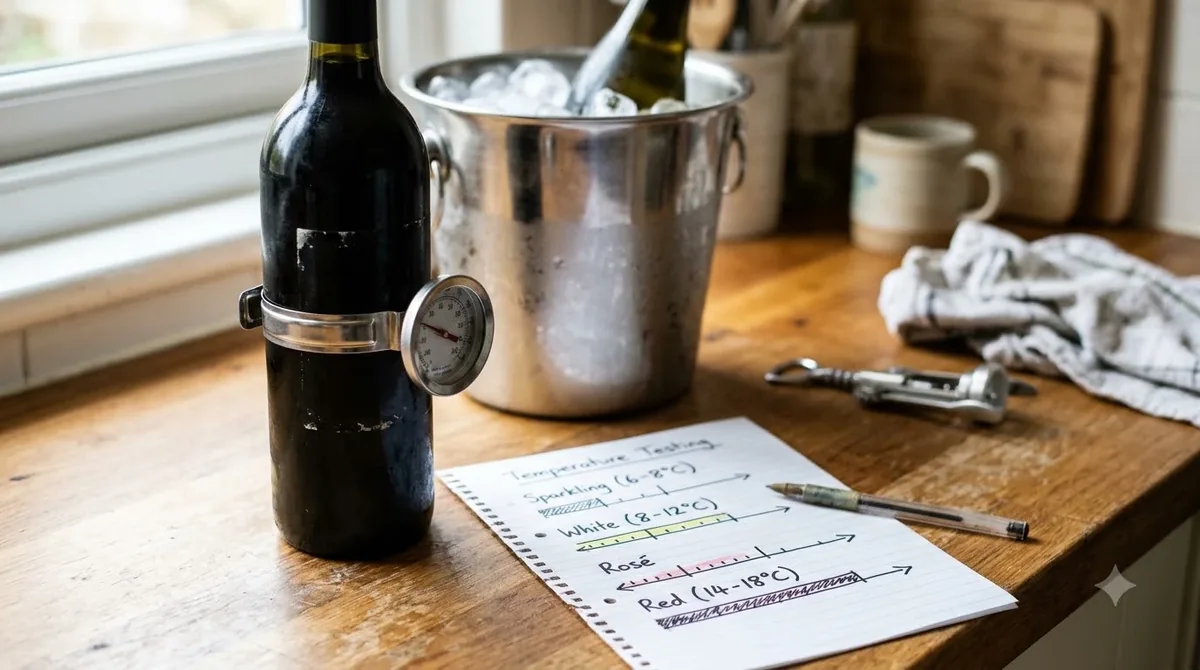
Temperature can make a good pairing feel either refreshing or heavy: chill aromatic whites and rosé, serve sparkling wine colder, and keep light reds cooler than room temperature. Small practical choices—glass size, pour size, and the order of service—also help the wine stay in balance with the meal.
Serve sparkling wine at 40–50°F, light whites and rosé at 45–50°F, and full-bodied whites at 50–55°F. Light reds such as Pinot Noir are best around 55–60°F rather than warm, while fuller reds are more comfortable at 60–65°F. These ranges are starting points; a wine can warm slightly in the glass, especially during a long meal. A white that is too cold can seem muted, while a warm white can make alcohol stand out beside chili.
Pour about 5 ounces per glass; a 750 ml bottle provides roughly five glasses. Open sparkling wine is best within 1–3 days in the refrigerator, while most opened still wines keep for about 3–5 days when recorked and chilled. Bring a very cold white out briefly before serving, and return the bottle to the refrigerator between pours.
Think about the entire plate. Basmati rice, naan, cucumber raita, chutney, and lime wedges change how the wine tastes: yogurt and rice soften chile, lime and tamarind raise acidity, and sweet chutney can make a very dry wine seem sharper. A mild chicken soup or lighter side may call for a different bottle; compare that gentler profile in our guide to what wine goes with chicken noodle soup. For several curries at one meal, choose a flexible, lower-alcohol white such as off-dry Riesling or crisp Chenin Blanc. Add a second bottle only when the dishes differ sharply, such as dry rosé for grilled tikka alongside gently sweet Riesling for a hotter curry.
Frequently Asked Questions
These quick answers cover Riesling sweetness, Pinot Blanc, Sauvignon Blanc, Pinot Gris, and sparkling wine with chicken curry.
Is Riesling always sweet?
No. Riesling is made in styles ranging from bone-dry to very sweet, and it is also used for sparkling wine. The grape originated in Germany’s Rhine region and is now widely grown in places such as Alsace, Austria, Washington State, and New York’s Finger Lakes.
Can Pinot Blanc work with chicken curry?
Yes, especially with mild, creamy korma or coconut-based curry. Alsace Pinot Blanc is typically dry and fresh, making it a gentler, less perfumed alternative to Gewürztraminer; it can also accompany tandoori chicken with naan and salads.
Can Sauvignon Blanc pair with chicken curry?
Yes, especially with a herb-forward curry that includes cilantro, lime, or green vegetables and only modest chile heat. Sauvignon Blanc is naturally high in acidity, but its sharper citrus and herbal character can be less harmonious with a very creamy, strongly spiced sauce than Riesling or Gewürztraminer.
Is Pinot Gris a good choice for chicken curry?
It can be, especially in an aromatic Alsace style with a little extra weight and spice. Decanter identifies Alsace Pinot Gris as a match for chicken and prawn curries and notes that it can suit a table where several different dishes are served together.
Can sparkling wine pair with a spicy curry?
Yes, particularly a lower-alcohol sparkling wine with fresh fruit and a dry or gently off-dry finish. Prosecco is generally made using the tank method for its second fermentation, while Champagne and Cava use bottle fermentation, which gives them a different texture and flavor profile.
For most chicken curry dinners, start with an off-dry Riesling and adjust from there: choose Gewürztraminer for fragrant coconut or cream sauces, Chenin Blanc or rosé for tomato-based versions, and a soft red only when the heat is mild. Match the bottle to the finished sauce, keep alcohol and tannin modest as the chili rises, and serve the wine cool enough to stay refreshing.
More in Food & Wine Pairing
 Risotto With White Wine Recipe: Make a Creamy Dinner at HomeUpdated Nov 20, 2026
 Wassail With Wine Recipe for a Festive Spiced Holiday DrinkUpdated Nov 20, 2026
 Spritz Veneziano Recipe: Make a Classic Venetian Aperitivo at HomeUpdated Nov 20, 2026
 Summer Wine Punch Recipe for Easy Homemade EntertainingUpdated Nov 20, 2026
 Bishop Recipe: How to Make a Bright, Citrus-Forward Red Wine CocktailUpdated Nov 20, 2026
 Wine Cupcakes Recipe: Bake Rich Chocolate Cupcakes at HomeUpdated Nov 20, 2026