

We may earn a commission when you buy through links on this page, at no extra cost to you. Learn more.
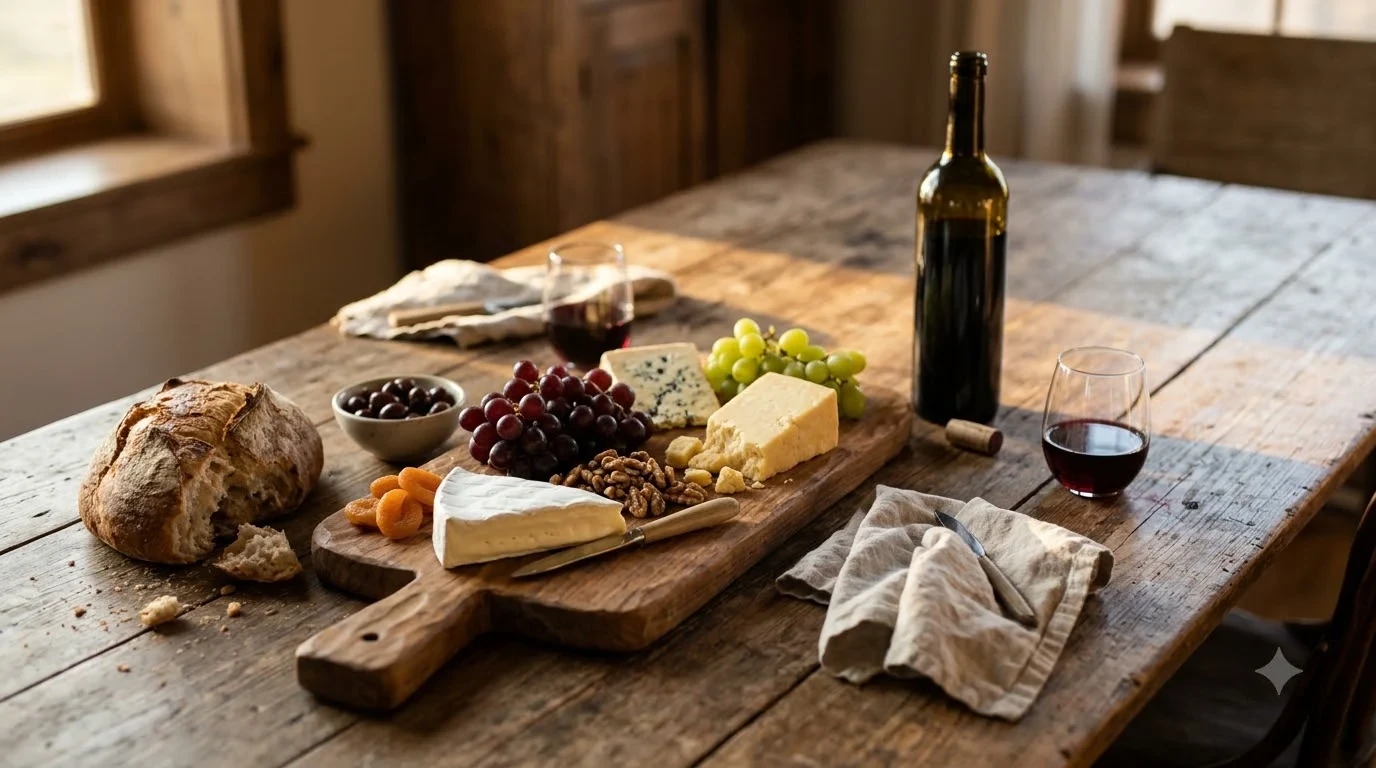
The best answer to what wine goes with charcuterie board is a dry sparkling wine, especially Champagne, Cava, or another crisp Brut. Its acidity and bubbles refresh the palate between salty, fatty bites, while its relatively low tannin makes it flexible with several meats and cheeses. Dry rosé is the best still-wine alternative, and a chilled Gamay or Pinot Noir is a sound choice when red wine is preferred. For a board built around one standout ingredient, match the bottle to that ingredient rather than expecting one wine to flatter every item equally.
A charcuterie board is a collection of contrasts: salty prosciutto, peppery salami, creamy pâté, tangy cheese, briny olives, sharp mustard, sweet fruit, and crisp crackers can all share one platter. The goal is not to find a wine that tastes identical to every ingredient. It is to choose enough acidity, fruit, and freshness to keep the full spread enjoyable, then make small adjustments for unusually spicy meats, very rich pâté, or assertive cheese.
The Best One-Bottle Choice for a Mixed Board
For a board with several cured meats, two or three cheeses, and a mix of salty and sweet accompaniments, start with a dry sparkling wine. A Brut Champagne, Cava, or Crémant has the acidity to refresh the mouth after fatty salami or Brie, while its bubbles give the wine lift without bringing the firm tannins found in many powerful reds.
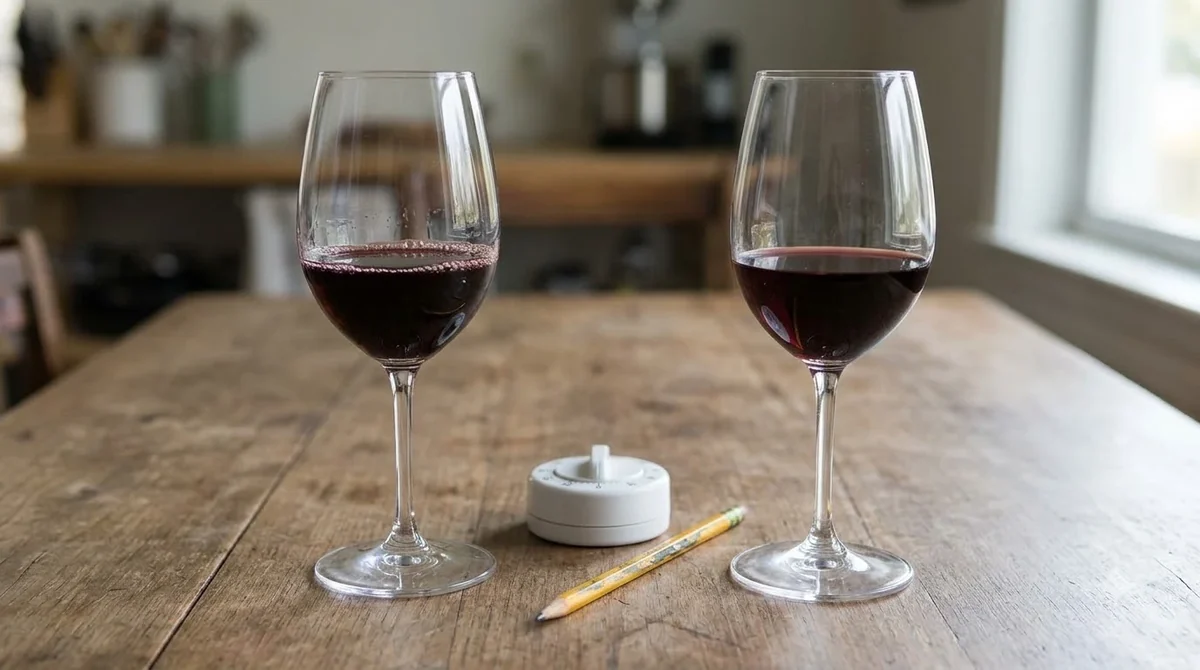
Brut is the most practical starting point: it tastes dry but retains enough fruit for a range of ingredients. Champagne and Cava undergo a second fermentation in the bottle; Prosecco is made from Glera, usually by the tank method, and typically has 11–12% alcohol by volume. Bottle-fermented wines often show finer bubbles and lees-derived notes, while Prosecco is usually fruit-forward. All can work on a board when the style is dry.
Dry rosé is the easiest still-wine substitute. Its red-fruit character suits salami and ham, while freshness and modest tannin keep it from dominating cheese or pickles. Provence-style rosé and dry versions made from Grenache or Pinot Noir are useful choices. Look for enough acidity to stand up to cornichons and mustard.
For a red-wine-first gathering, choose Beaujolais Gamay or fruit-forward Pinot Noir. Both are lower in tannin than Cabernet Sauvignon and many young Syrah wines, with berry flavors that complement cured pork without overwhelming mild cheeses. Frappato, Zweigelt, and Cabernet Franc are other options when they have fresh acidity and restrained tannin. A guide to wine pairings for a mixed charcuterie board also places sparkling wine and dry rosé among the most flexible choices.
Why Acidity, Salt, Fat, and Tannin Matter
The central pairing challenge is the board’s combination of salt, fat, and acid. High-acid wine refreshes the palate after rich meat and cheese, while salt and fat can soften the grip of tannin; the most versatile bottle balances freshness with enough body to avoid tasting thin beside savory food.

Acidity is the most useful quality to look for first. Cured meat brings salt, while pâté, rillettes, and creamy cheese add fat. A lively Sauvignon Blanc, Riesling, Albariño, or Brut sparkling wine refreshes the palate. When pickles, mustard, or vinegar-heavy vegetables are prominent, choose a wine with equal or higher acidity so it does not seem dull after a bite.
Tannin matters more than the simple rule that red wine belongs with meat. Cabernet Sauvignon is high in tannin, Syrah is medium-plus to high, Merlot is medium and softer, and Pinot Noir is generally low to medium. Salt and fat soften tannin, allowing supple reds to work with rich food. Still, a firm, heavily oaked red can overpower delicate prosciutto, while chili heat is amplified by alcohol and tannin. A mixed board is usually easier with bubbles, dry rosé, or a light red than with a powerful Cabernet.
Sweetness matters when the board includes honey, preserves, dried fruit, or chutney. A dry wine can taste sour beside a sweet condiment, so pair the sweetest bites with a wine at least as sweet as the food. Off-dry Riesling can suit lightly sweet fruit and rich pâté; use a dessert wine for very sweet jam or honey. The site’s Wine Pairing primer explains how acidity, sweetness, body, and tannin interact with food.
Pairing Wine With Specific Cured Meats
The meat that takes up the most space on the board should guide the wine choice. Prosciutto, salami, spicy chorizo, and pâté have different levels of salt, fat, spice, and texture, so each rewards a slightly different bottle.
Prosciutto and dry-cured ham
Choose Brut sparkling wine, dry rosé, or crisp Albariño. Bright fruit and acidity suit the pork’s delicate sweetness and savory salt. Prosciutto di Parma and Prosciutto di San Daniele are Italian examples; jamón serrano and jamón ibérico are Spanish counterparts. A light Pinot Noir also works when the board includes earthy cheese or mushrooms.
Salami, soppressata, and finocchiona
Pour Gamay, Pinot Noir, Barbera, or dry Lambrusco. Juicy fruit and acidity balance the seasoning and fat; fennel gives finocchiona an aromatic edge, while soppressata may bring red-pepper warmth. With spicy salami, favor moderate alcohol and limited tannin over a powerful Syrah or Cabernet.
Chorizo and spicy sausage
Use fruit-forward dry rosé, lower-alcohol off-dry Riesling, or a supple red with moderate tannin. Smoked paprika and chili make alcohol feel hotter, while firm tannin adds dryness. Separate hot slices from mild salami so guests can move between them without carrying the heat into every bite.
Pâté, terrines, and rillettes
Choose sparkling wine, Sauvignon Blanc, Chenin Blanc, or off-dry Riesling. These rich, soft preparations benefit from acidity. Off-dry Riesling suits pâté with fruit chutney; Brut sparkling wine is more flexible when sharp pickles and salty sausage share the board.
Mortadella, coppa, and bresaola
Mortadella’s soft texture suits Brut or dry rosé; marbled coppa can handle Pinot Noir or Gamay. Lean bresaola works with fresh Pinot Noir or a medium-bodied red with restrained tannin. For smoked beef served alongside the board, see the guide to what wine goes with beef brisket.
Choose Wine for Cheese, Fruit, Pickles, and Spreads
Cheese can change the best wine choice as much as the meat does. Creamy Brie, tangy goat cheese, salty aged Cheddar, and pungent blue cheese each place a different demand on the glass, so consider the strongest cheese rather than treating all cheese as one flavor.
Creamy and fresh cheeses
Brie and Camembert: Try Brut sparkling wine, lively Chardonnay, Chenin Blanc, or fruit-forward Pinot Noir. Freshness balances the creamy texture, while bubbles add lift; an unoaked or lightly oaked Chardonnay gives a cleaner contrast than a heavily oaked style. Goat cheese and other tangy fresh cheeses: Sauvignon Blanc is a classic match because both have pronounced acidity. Albariño, dry Riesling, and Brut are alternatives. With especially tart chèvre or feta, choose a wine with equal or higher acidity; a soft, low-acid red may taste flat.
Aged and blue cheeses
Aged Cheddar, Manchego, Gruyère, and Parmesan: Try Barbera, Sangiovese, Pinot Noir, Cava, or a structured white. As hard cheese ages, it becomes saltier and more concentrated; its nutty flavors can match the fruit of a medium-bodied red. Blue cheese: A sweet wine may be better than the bottle served with the rest of the board. Salty, pungent Roquefort, Stilton, or Gorgonzola can pair with Sauternes, Ruby Port, or sweet Riesling. Keep the blue separate and offer a small pour; the wine should be at least as sweet as any jam or honey served with it. See the guide to what wine goes with blue cheese for more detail.
Accompaniments change the balance, too. Cornichons, pickled onions, and mustard favor lively whites or bubbles; olives and salted nuts suit crisp whites and dry sparkling wine. Grapes, figs, apricots, and preserves add sweetness, so keep them modest or offer an off-dry option. Plain crackers and baguette provide neutral bites between stronger flavors.
Build a Board Around the Bottle
A board becomes easier to pair when it has a deliberate structure instead of a random collection of rich ingredients. Start with a wine style, choose a few meats and cheeses that suit it, then use fruit, pickles, nuts, and bread to add contrast without introducing too many competing flavors.
For a sparkling-wine board, include prosciutto, mild salami, Brie, aged Gouda, a little pâté, cornichons, olives, almonds, grapes, and baguette. Salt, fat, creaminess, and fruit give Brut plenty to work with. Add only one spicy meat, and keep mild ingredients in the mix.
For a red-wine board, choose Gamay or Pinot Noir with finocchiona, coppa, mild soppressata, aged Manchego, and mushrooms or walnuts. Keep sharp pickles and very spicy sausage apart from the red; a lightly chilled red is refreshing with a cold platter, but delicate Pinot Noir is not ideal for a board dominated by smoke, chili, and blue cheese. For a white-wine board, build around Sauvignon Blanc, Albariño, or Riesling with prosciutto, pâté, chèvre, mozzarella, mild salami, and crisp vegetables. Sauvignon Blanc suits goat cheese and pickles, while Riesling has more flexibility with spice or sweetness.
Portion and variety matter as much as wine. Wine Enthusiast suggests three to five charcuterie items, spanning fatty, spicy, and spreadable textures and at least two animal sources. A slice of firm salami beside a scoop of pâté creates more contrast than several meats with the same texture; see the Wine Enthusiast charcuterie planning guide for more board-building ideas.
Tip: Choose one centerpiece meat and one centerpiece cheese, then make the remaining ingredients support them. A board with prosciutto, Brie, and Brut sparkling wine is easier to balance than a platter that combines hot chorizo, smoked sausage, blue cheese, sweet jam, and sharp pickles in equal amounts.
Serving Temperatures, Portions, and Open-Bottle Timing
Serve wine cool enough to preserve freshness, but not so cold that its aromas disappear. An icy sparkling wine may seem muted, while a warm red can make alcohol stand out beside salty food.
Use the ranges below as practical starting points. They are not rigid rules, but they help each style show its best balance beside a board with cold meats and cheeses. Chill sparkling wine to 40–50°F, light whites and rosé to 45–50°F, and fuller whites to 50–55°F. Light reds are best around 55–60°F, while full-bodied reds generally show better at 60–65°F. Sweet whites can be served colder, around 43–50°F.
| Wine style | Serving temperature | Good board match |
|---|---|---|
| Brut sparkling wine | 40–50°F | Mixed meats, Brie, olives, pâté |
| Light white or dry rosé | 45–50°F | Prosciutto, chèvre, pickles |
| Fuller white | 50–55°F | Rich pâté, Brie, mild sausage |
| Light red | 55–60°F | Salami, coppa, Manchego |
| Full red | 60–65°F | Bold hard cheese and hearty meats |
| Sweet white | 43–50°F | Blue cheese, fruit preserves |
A standard pour is 5 ounces, and a 750-milliliter bottle holds about five such glasses. If you offer both Brut and a sweet wine for blue cheese, the second bottle can be an optional small pour rather than the main pour. Keep water on the table alongside spicy sausage and salty accompaniments.
Set cheese out before serving; about 30 minutes at room temperature is a useful guideline. Arrange slices loosely and put mustard, jam, olives, and pickles in small bowls so moisture does not spread across crackers. Refrigerate perishable leftovers after the gathering. Recork and refrigerate opened wine: sparkling wine generally keeps for 1–3 days with a sparkling stopper, still wines for 3–5 days, fortified wines for several weeks, and bag-in-box wine for 4–6 weeks. These are broad quality windows; air exposure and storage conditions affect freshness.
Frequently Asked Questions
Does charcuterie have to be made from pork?
No. Charcuterie can include poultry, duck, game, beef, and other meats as well as pork. Examples include duck rillettes, chicken liver mousse, rabbit pâté, and bresaola made from beef.
What is bresaola?
Bresaola is an air-dried beef specialty associated with Lombardy in northern Italy. It is typically made from a lean cut such as the beef round, so its texture and flavor are quite different from fatty pork salami or coppa.
What is the difference between charcuterie and salumi?
Salumi is an Italian term for preserved meat products, including both sausages and whole cured cuts such as prosciutto. Charcuterie is a broader French category that also includes preparations such as pâtés, terrines, and rillettes, not only sliced cured meats.
Should I remove the casing from every salami?
No. Some casings are edible, while tough casing, twine, and cloth should be removed before slicing and serving. When preparing a board, separate slices slightly so guests can pick them up without pulling apart a stack.
What is finocchiona?
Finocchiona is an Italian salami seasoned with fennel seeds. Wine Enthusiast’s charcuterie guide traces the style to the Renaissance, making it a long-established example of fennel-flavored salumi.
For most mixed charcuterie boards, open a dry sparkling wine first; choose dry rosé when you prefer a still wine, or chilled Gamay and Pinot Noir when the table wants red. Then adjust for the strongest ingredient, especially blue cheese, sweet preserves, or hot sausage, rather than forcing one bottle to suit every bite. A balanced board and a fresh, high-acid wine will make the pairing feel considered without making it complicated.
More in Food & Wine Pairing
 Risotto With White Wine Recipe: Make a Creamy Dinner at HomeUpdated Nov 20, 2026
 Wassail With Wine Recipe for a Festive Spiced Holiday DrinkUpdated Nov 20, 2026
 Spritz Veneziano Recipe: Make a Classic Venetian Aperitivo at HomeUpdated Nov 20, 2026
 Summer Wine Punch Recipe for Easy Homemade EntertainingUpdated Nov 20, 2026
 Bishop Recipe: How to Make a Bright, Citrus-Forward Red Wine CocktailUpdated Nov 20, 2026
 Wine Cupcakes Recipe: Bake Rich Chocolate Cupcakes at HomeUpdated Nov 20, 2026