

We may earn a commission when you buy through links on this page, at no extra cost to you. Learn more.
If you are wondering what to do if cork breaks, the short answer is to stay calm, retry the corkscrew with gentle pressure, and strain out any pieces before you pour. If the broken cork is still in the neck, pull it straight up slowly with the same tool rather than forcing it. If pieces have dropped into the wine, pour through a cloth, cheesecloth, or coffee filter into a decanter. The fix usually takes just a few minutes, and a crumbled cork does not automatically mean the wine is spoiled.
Few things derail a dinner faster than a cork that snaps halfway out of the bottle or crumbles into debris floating in your wine. Even experienced sommeliers run into it, especially with older bottles whose corks have dried out over the years. The good news is that the problem is almost always fixable, and the methods professionals use are simple enough for a home kitchen. This guide walks through each situation in the order you are likely to face it, from a cork still stuck in the neck to a stubborn piece that refuses to leave the bottle, and it explains how to tell whether the wine itself is still in good shape.
Stay Calm and Check What Happened
Before reaching for a tool, take a moment to see how much cork remains and where the pieces ended up. That quick look tells you which fix is worth trying and keeps you from making the damage worse.
Alexandre Freguin, a former UK Best Sommelier, starts with a reminder that many people forget in the moment: do not stress. Panic leads to rushed, heavy-handed motions, and a tense grip is exactly what splits an already weakened cork. Slow, deliberate movement gives you the best chance of pulling out a piece in one clean motion, and it keeps loose debris from being pushed deeper into the wine.
Next, figure out where the cork ended up. If a broken half still sits in the neck, you have the most options, because a corkscrew can often grab it again. If the pieces dropped into the bottle, the job becomes a filtering task rather than an extraction one. Either way, the wine is rarely the first thing to worry about, and most of the time it is in better shape than the cork suggests.
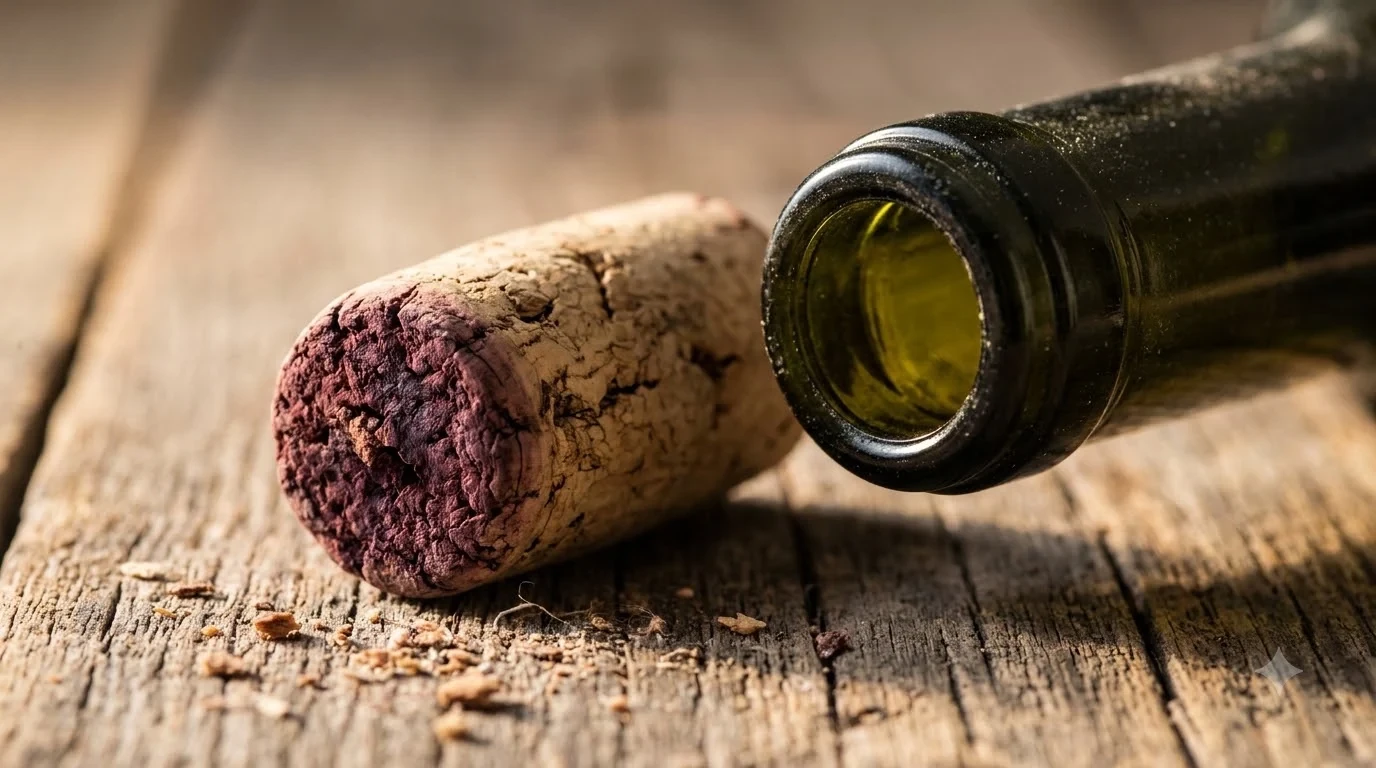
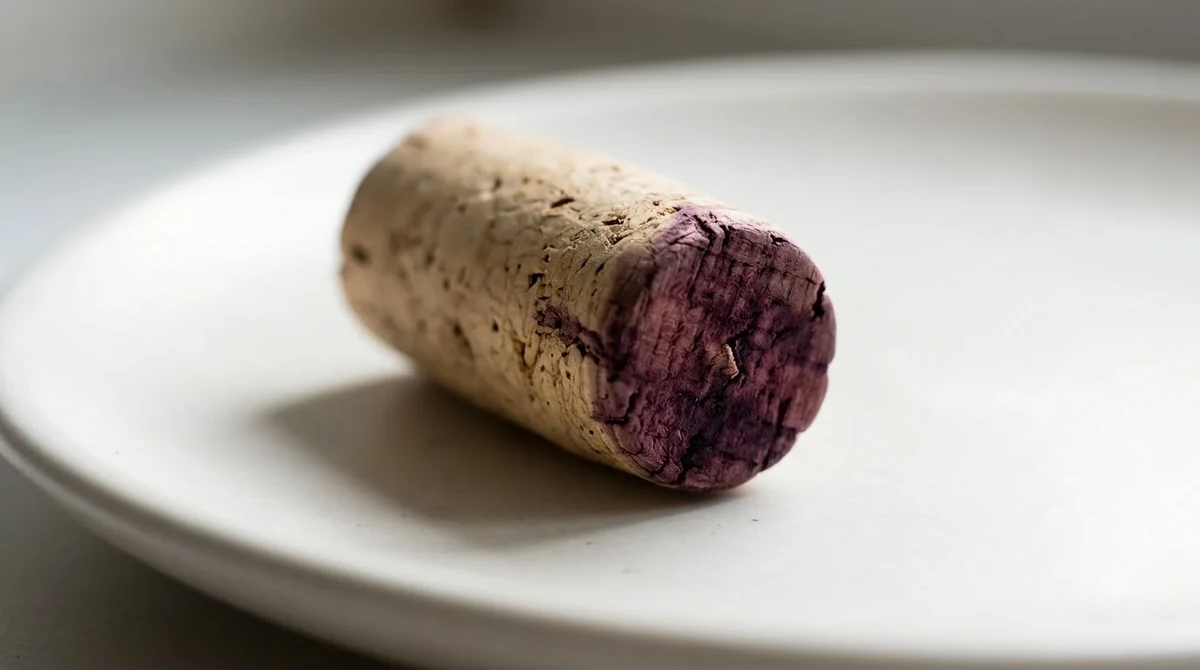
The condition of the cork is also worth noting. According to Decanter’s advice on crumbling corks, a cork that falls apart does not necessarily mean the wine is faulty, although it can point to poor storage. A cork kept in contact with the wine stays moist and flexible, while a bottle stored upright for a long time in dry conditions can dry out, turn brittle, and lose its grip. Clement Robert MS, director of wine and spirits at Liquid Icons, has observed that some of the best bottles he has tasted came with the worst corks, so a rough cork alone is not a verdict on what is inside.
Try the Corkscrew Again With Gentle Pressure
When a cork snaps and the top half stays in the neck, a second careful pass with the same corkscrew often finishes the job. Light pressure and a straight pull matter more than strength.
Sipha Lam, owner of Wilder Wines in Burlington, Vermont, recommends piercing the broken cork again with a traditional twist or waiter’s corkscrew, using much lighter pressure than you did the first time. Enter through the center of the remaining cork, twist with care, and then lift slowly and straight up. Pulling at an angle is one of the most common reasons a cork splits again, so keep the pull vertical until the piece is fully out of the neck.
If you own a waiter’s corkscrew with two hinged ledges, use the second one. VinePair explains that you rest the first ledge on the lip of the bottle and pull until the cork is about halfway out, then move the second ledge onto the lip and pull again. The same writer notes that the remainder of a broken cork can often be removed the same way you would open an intact bottle. If you get a turn or two into what is left, you can lever it out and wipe the neck clean. If you are still getting comfortable with the process, our guide on how to open a wine bottle with a broken cork walks through the same tools in more detail.
Tip: Keep a spare wine key in the kitchen drawer, since the worm wears out over time. A bent worm pulls the cork to one side and is one of the most common reasons corks split in half.
Retrieve Floating Pieces With a Cork Retriever
If the cork slides into the bottle as one intact chunk, a cork retriever is the cleanest way to bring it back out. It takes patience, but it keeps the broken pieces out of the wine.
A cork retriever looks like the claw games found at an arcade. The method is to insert the long prongs into the bottle, wait for the cork to float into the center of them, and then pull the tool out slowly while holding the prongs squeezed together with your other hand. The cork may not come out on the first attempt, so expect a few tries and keep the movements gentle so the piece does not fall apart in the neck.
The tool is inexpensive. VinePair points to a Wine Enthusiast model as a good, low-cost option, which makes it a sensible purchase for anyone who opens bottles regularly. Lam also recommends a cork retriever when a cork drops into the bottle, and suggests decanting as the fallback if you do not have one. A retriever works best on a single chunk. Crumbled cork, which breaks into small fragments, is hard to grab with prongs, so for that situation you will move to filtering.
Filter Cork Pieces Out Through Cloth or Filter
When cork crumbles into fragments, straining is the most dependable fix. A thin cloth, cheesecloth, or coffee filter over a funnel or decanter catches most of the pieces.

Freguin finds that a very thin cloth works especially well. He covers a funnel with it and pours the wine into another container, such as a decanter, slowly enough that the pieces settle on the cloth rather than sliding through with the liquid. For a delicate old bottle, he suggests a more careful approach: pour only until the fragments have landed on the cloth, then pour the remaining wine back into the original bottle and filter the rest. For especially fragile wines, filtering directly into the glass is worth considering, because each extra exposure to air speeds up oxidation and drains the more volatile aromas.
America’s Test Kitchen takes a simpler route. Place a cheesecloth or coffee filter over the mouth of a decanter, pour slowly until the bottle is empty, and the filter catches the cork along with any pieces that escaped. The method works just as well for a few stray fragments as for a bottle full of them, so it is a good default when you are not sure how bad the break is.
VinePair makes a similar suggestion with a sieve or cheesecloth set over a decanter. The writer’s point is practical: the wine will taste the same as before, but since the bottle is already open, you should finish it the same day. For the full argument behind these tips, the VinePair guide on stopping broken corks is worth a read.
Push a Stubborn Piece In and Pour Carefully
Sometimes the broken cork will not budge, and the practical answer is to push it into the bottle and pour around it. The result is less elegant, but the wine still reaches the glass.
When half of the cork blocks the neck, you cannot filter the wine yet, because nothing can pass through the opening. Decanter’s guidance gives you two options at that point: keep working the corkscrew by inserting it carefully and pulling in one controlled motion rather than twisting, or accept that the cork is not coming out and push it down into the bottle. One careful attempt is worth making. After that, the wine is better served by moving on.
Once the cork is down, hold the handle of a teaspoon against it while you pour. Decanter’s advice is to keep the cork pressed down during the pour, because a loose cork can cause the wine to spurt out of the neck. Pour slowly, keep the spoon in place until the bottle is empty, and expect the cork to stay in the bottle for the rest of the evening. It is not the most elegant solution, but it gets the wine into the glasses, which is the point.
Is the Wine Still Good After a Broken Cork?
In most cases, yes. A broken cork does not make the wine corked, and the main concern is how much air the wine has been exposed to.
Many people worry that bits of cork touching the wine have ruined it. Robert explains that this is one of the most common misconceptions. “Corked” describes a wine tainted by a chemical compound called TCA, and that compound is not a product of the cork itself. It can occur in any cork, old or new, dry or moist. If TCA was not present in the wine to begin with, the bits of cork that break off will not add it. The crumbled pieces are a filtering problem, not a sign of taint.
A crumbled cork can still signal a real issue, though. Decanter notes that when a cork falls apart, the wine may have had long, unwanted contact with oxygen, which is not ideal for quality. That is why it is worth tasting carefully before you pour for guests. A quick sniff and a small sip will tell you whether the wine smells and tastes like itself. If it smells flat, sour, or noticeably oxidized, set it aside rather than serving it.
Once the wine is open, the clock starts. The table below shows typical refrigerator life for the styles you are most likely to rescue after a cork mishap. These are general ranges rather than guarantees, and a bottle that smells off should go no matter what the calendar says.
| Wine style | Typical fridge life once opened | Decant before serving? |
|---|---|---|
| Sparkling (Champagne, Prosecco, Cava) | 1-3 days | No |
| Still white or rosé | 3-5 days | No |
| Light red | 3-5 days | No |
| Young full red | 3-5 days | 30-60 minutes |
If the bottle was sparkling, the guide on how to tell if champagne is bad covers the signs to look for. Bubbles fade once the seal is broken, and sparkling wine tends to lose its appeal faster than a still wine does.
Prevent the Next Cork Break
Most broken corks come down to three things: a worn tool, a crooked pull, or an old, dried-out cork. Fixing those habits cuts down on mishaps considerably.
Start with the tool. VinePair advises replacing a worn wine key, because a bent worm pulls the cork to one side and splits it. Before you pull, screw the worm in until the entire spiral is buried in the cork. If the last rung still shows, give it an extra turn. Some corks from Barolo and Barbaresco are longer than standard, so the key may not reach the full length on the first pass. VinePair suggests one more turn for that last bit of leverage rather than brute force, which can rip the cork in two.
For older bottles, Decanter recommends a two-prong opener, also called a butler’s thief. Its prongs slide down the side of the cork between the cork and the neck, and their inward pressure keeps a crumbling cork together while you lift. Decanter is also clear that no method is foolproof, and that even experienced sommeliers break corks, especially on bottles whose corks have dried out. A two-prong opener is the right choice for older or fragile bottles, not a guarantee against every break.
Storage plays a role too. Decanter explains that bottles stored on their side keep the cork in contact with the wine and in a humid space, so it stays hydrated and flexible. Upright storage in dry air for a long time does the opposite. For a home cellar or wine fridge, aim for a cool, stable spot near 55 F with bottles lying flat. For the wider basics of opening and serving, the Opening & Serving section gathers the essentials in one place. If you end up with a jar of corks after all these repairs, you can reuse them in a craft project such as a bulletin board, as explained in our guide to how to make a cork board from wine corks.
Frequently Asked Questions
These are the questions readers ask most often after a cork mishap, with details that go beyond the steps above.
How many glasses do I get from a bottle after filtering?
A standard 750 ml bottle holds about five pours of 5 ounces each, so plan on roughly five glasses from a full bottle. Some wine clings to the cloth or filter, so the total may be slightly less. If the bottle was partly poured before the cork broke, count the remaining volume before deciding how many people it will serve.
Do young full reds need decanting after a cork mishap?
Young full-bodied reds often benefit from 30 to 60 minutes of decanting before serving, which softens their tannins and opens up the aromas. Cabernet Sauvignon is the classic high-tannin grape that rewards that time. For an older, delicate bottle, keep decanting short and serve it soon after filtering.
What temperature should I serve the wine at after rescuing it?
Light reds are best around 55 to 60 F, while full reds sit comfortably at 60 to 65 F. Sweet whites are best served cooler, around 43 to 50 F. Chilling a wine too far can mute its aromas, so a short time in the fridge before pouring is usually enough.
Which red grape has the most tannin?
Cabernet Sauvignon is one of the highest-tannin reds, while Merlot is softer and easier to drink on its own. Pinot Noir sits at the low-to-medium end with high acidity. Syrah falls between medium-plus and high in tannin, so knowing this helps you match a rescued red to a meal.
Can I reattach the two halves of a broken cork for display?
Yes, if you have both halves. Insert a halved toothpick into one piece and seat it into the other, and the two will hold together well enough to show alongside the bottle. This is mainly for presentation, since the cork is still a broken piece and will need to come out to open the wine.
A broken cork is one of the most common frustrations in the wine world, and it rarely has to end the evening. With a gentle retry, a retriever, or a simple strainer, you can usually have a clean glass in minutes. Keep a spare wine key handy, and the next bottle is far more likely to open without drama.
More in Wine Basics
 Which Rose Is Best for Your Taste, Budget, and Food PairingsUpdated Nov 21, 2026
 Is Cheap Wine Bad? How to Find Bottles Worth DrinkingUpdated Nov 21, 2026
 What To Write On A Wine Gift Tag: Thoughtful Messages For Every OccasionUpdated Nov 21, 2026
 Which Wine Is Best For Weight Loss? Compare Lower-Calorie ChoicesUpdated Nov 21, 2026
 What Is The Best Wine For Mimosas? Choose Bubbly That Balances Orange JuiceUpdated Nov 20, 2026
 Which Prosecco Is Best for Your Taste and OccasionUpdated Nov 20, 2026