

We may earn a commission when you buy through links on this page, at no extra cost to you. Learn more.
The waring wine chiller PC100 is best understood as a single-bottle serving-temperature holder, not a fast way to take warm wine down to cellar temperature. Its 33 preset wine settings, digital display, and automatic temperature maintenance make it convenient once a bottle is already close to its target. The trade-offs are slow cooling, mixed reports about temperature accuracy and fan noise, and limited new-stock availability.
The Waring Pro PC100 gives a bottle its own powered reservoir, with settings for red wine, white wine, and champagne. That concept is appealing for a dinner table where one bottle needs to stay near serving temperature, but buyer reports suggest the time required to cool a warm bottle can be much longer than a host expects. The verdict depends on whether temperature maintenance matters more than speed, and whether a used unit can be inspected before purchase.
Specs and Key Features
The PC100 combines a one-bottle tabletop format with a thermoelectric cooling system and a 33-setting wine library. Its strongest design feature is the simple control sequence: choose a wine category, select a variety, and let the unit work toward the displayed target.
The Waring PC100 instruction book identifies the main parts as an aluminum reservoir, removable filter, insulation sleeve, power adapter, and a front control panel with power, up, down, and SELECT buttons. The screen is backlit, and the display shows the current temperature beside the selected temperature. The built-in wine library covers red, white, and champagne choices, while the operating instructions say the machine can cool or warm the bottle to its selected setting. This is more specific than a basic insulated sleeve, but it does not make the PC100 a multi-bottle wine refrigerator.
| Specification | Waring Pro PC100 | Practical meaning |
|---|---|---|
| Intended capacity | 1 bottle | Designed for one bottle at a time |
| Preset wine library | 33 settings | Selections cover red, white, and champagne wines |
| Maximum bottle diameter | 3.5 inches | Check wide-bodied bottles before buying |
| Cooling system | Thermoelectric Peltier module | Electronic cooling rather than an ice-and-water bath |
| Rated power | 90 watts | Requires the supplied power adapter and an outlet |
| Controls | Backlit LCD, power, up/down, SELECT | Choose a category and a wine preset |
The 3.5-inch bottle limit is one of the most useful numbers to check before looking for a PC100. A standard Bordeaux-style bottle is generally a safer fit than a very broad bottle, but bottle shoulders, foil, and neck shape can still affect how comfortably it sits in the reservoir. The insulation sleeve wraps around the neck; it is not a universal bottle-size adapter. Also note that the advertised one-bottle capacity is a serving accessory format, not storage for a collection.
According to Best Buy’s product specification, the PC100 draws 90 watts and uses a Peltier module with CPU control. The manufacturer instruction book describes an aluminum reservoir and a filter that should be cleaned regularly. Neither specification promises instant chilling. For more context on how it differs from other powered wine accessories, compare the general approach with an electric wine chiller; a temperature-holding station and a rapid-cooling device solve related but different problems.
What Owners Like
Owners who like the PC100 tend to value its ability to hold a bottle near a selected serving temperature after the initial cooling period. The preset library also takes some guesswork out of choosing a target, particularly for people who serve both reds and whites in the same evening.
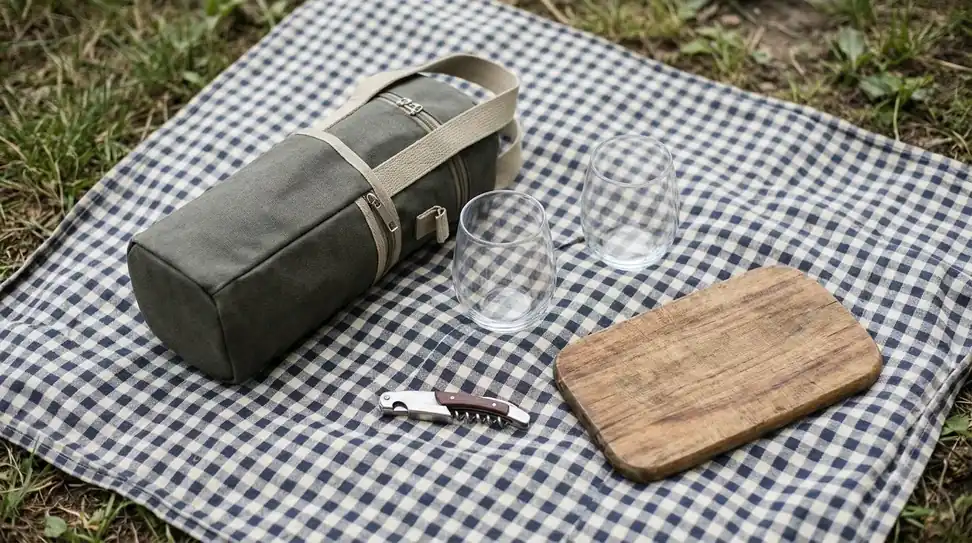
WineCoolerReviews’ PC100 review reports that some satisfied owners use the device more for maintaining temperature than for rapidly chilling wine. Some pre-chill white wine in a refrigerator and then use the Waring to keep it near the chosen setting. That pattern makes practical sense: light whites and rosé are commonly served around 45 to 50 degrees Fahrenheit, while many light reds are better closer to 55 to 60 degrees. A machine that maintains rather than quickly removes heat can still have a role when the bottle begins near its target.
The PC100 can also suit a table where a bottle is opened gradually. The instruction book says the unit stops and beeps when the preset temperature is reached, then resumes cooling or warming when the wine moves away from the target. That automatic cycling is the feature owners are often describing when they say the unit keeps wine at a consistent serving point. Rather than repeatedly topping up an ice bucket or moving a bottle between the table and refrigerator, the host can leave one bottle in the reservoir.
Some eBay buyers also praise the straightforward variety selection and report that the unit maintains its setting once it gets there. One owner said they liked the temperature assignment for commonly served wine styles; another described the unit as working well for red wine. These are useful reports, but they are individual experiences rather than a guarantee that every used PC100 will cool at the same rate. Condition matters, especially for a product that may have spent years in storage.
Common Complaints
The recurring complaint is speed: the PC100 can take too long to chill a bottle that starts warm. Owner accounts also raise questions about noise and whether the temperature shown by the machine always matches the wine inside the bottle. Reports on fan noise differ, with some owners calling it loud or distracting and another describing it as quiet.
WineCoolerReviews includes an owner account in which the manual’s estimated 53-minute cooling time to 48 degrees reportedly took more than 2 hours in practice. The same review summarizes complaints about white, rosé, and sparkling wine not reaching the desired serving temperature. A separate owner account on eBay describes the unit taking about twice as long as expected. These examples are not controlled performance tests, but they point to a consistent buying risk: do not assume a warm bottle will be ready in time for guests arriving shortly.
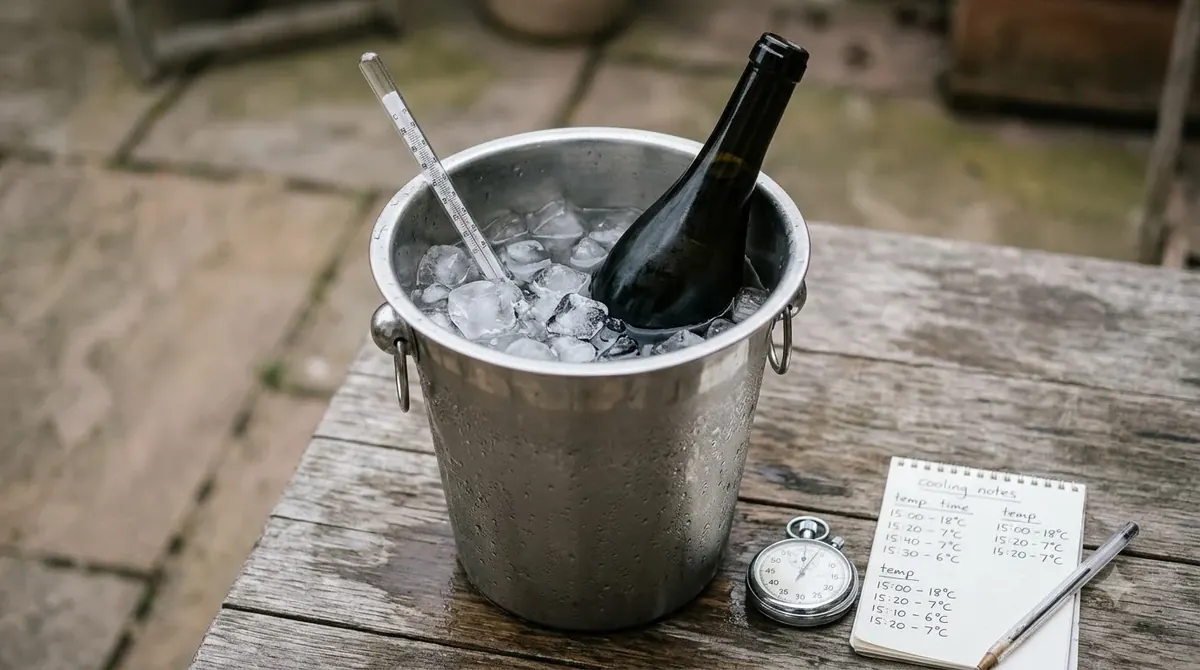
The reason is partly the design. The bottle sits in an aluminum reservoir, with an insulation sleeve around its neck; the appliance does not circulate the wine inside the bottle. The cooling surface can therefore change temperature before the liquid throughout the bottle reaches the same point. WineCoolerReviews relays owner comments that the bottle base felt cooler than the upper part and that the poured wine did not always match the temperature shown by the unit. A separate bottle thermometer is a sensible way to verify the liquid temperature rather than treating the screen as a laboratory reading.
There is also an availability issue. Best Buy’s PC100 listing says it is no longer available in new condition, so buyers should approach a used or refurbished listing as an older appliance rather than assume easy replacement or current retail support. Before paying, ask for a photo of the adapter, sleeve, reservoir, filter, and powered-on display; a missing accessory, cracked reservoir, damaged cable, or clogged filter can reduce the value of a secondhand unit.
Tip: Treat the PC100 as a temperature-maintenance tool. Put a white wine in the refrigerator ahead of time, then use the Waring to hold it near its serving target; verify the liquid with a separate thermometer before serving.
Who Should Buy and Who Should Skip
The PC100 makes the most sense for a buyer who serves one bottle at a time, has counter space near an outlet, and cares more about holding a chosen temperature than about fast chilling. It is a poor fit for last-minute cooling, quiet-table settings, or anyone who needs to keep several bottles ready at once.
Consider it if you regularly pour a single bottle over a long dinner and dislike watching an ice bucket dilute labels or clutter the table. The automatic cycling feature can keep the bottle in the same place while guests return for another glass. This is especially convenient when a red wine is already close to its target: for example, a bottle of Pinot Noir stored around 55 degrees may need less adjustment than a bottle of room-temperature Chardonnay that needs a much larger drop.
Skip the PC100 if your main goal is to cool a warm bottle quickly. A refrigerator, freezer with careful timing, or ice bath is a better preparation method when a white wine needs to be brought down several degrees before dinner. A dedicated instant wine chiller may be a more relevant category to investigate when speed is the priority, although the exact performance depends on the particular device. The Waring is not a magic shortcut around advance chilling.
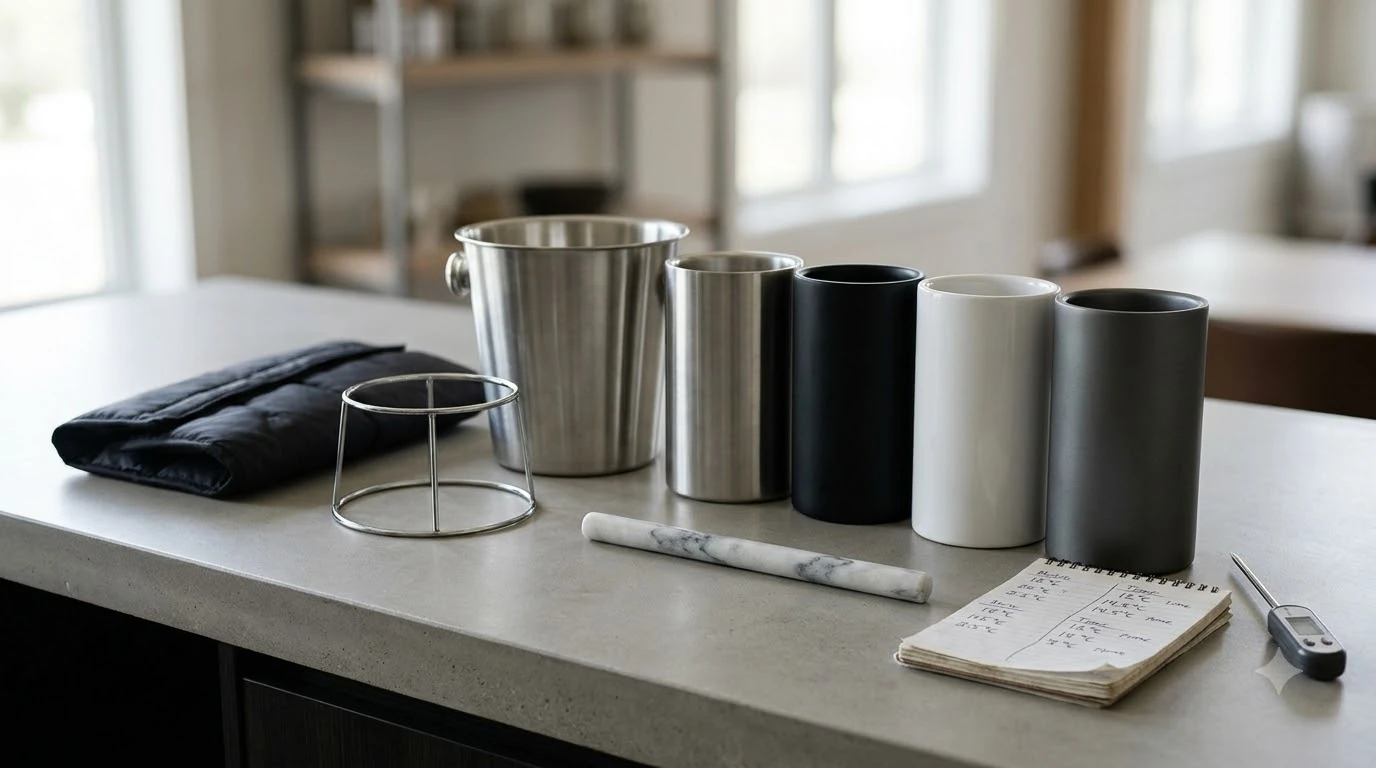
It is also a weak choice for anyone who wants to manage multiple bottles or preserve a cellar. One bottle at a time is the point of the design, and the 3.5-inch maximum diameter rules out some unusually wide bottles. If you want passive table presentation rather than powered temperature control, a marble wine chiller offers a simpler alternative for holding a pre-chilled bottle cool for a period, but it does not select or maintain a digital target.
How It Compares to Alternatives
The PC100 occupies a specific middle ground: it offers powered temperature control and a library of wine presets, but it does not excel at rapid cooling. A passive chiller or a rapid-cooling device may be a better match depending on whether the priority is appearance, speed, or holding temperature.
WineCoolerReviews explicitly compares the PC100 with the Cooper Cooler, describing the Waring as slower to cool or warm but as an option that lets the owner keep the wine label visible. The same review quotes an owner who recommended the Cooper Cooler for people who want quick cooling. That is enough to identify the difference in intended use, but not enough to claim a precise speed advantage or a particular temperature result for every bottle. The useful takeaway is simple: the Waring is a countertop temperature station, while a rapid chiller is meant to shorten the wait before pouring.
A passive marble sleeve is different again. It has no digital control, preset library, or powered cooling cycle, so it is best paired with wine that has already been chilled. The comparison is similar to choosing between a carafe and an appliance: the passive option is simple and quiet, while the PC100 adds temperature selection and automatic cycling at the cost of power, space, fan noise, and more parts that can fail. The correct option depends on what happens before the bottle reaches the table.
For more options across the category, browse the site’s Accessory Brands coverage and compare bottle diameter, capacity, power, and temperature control. Best Buy no longer lists the PC100 as available new, so a current accessory with a clear return policy may suit buyers who expect straightforward support. A product label such as “wine chiller” does not tell you whether the unit is designed to store, hold, or rapidly cool a bottle; those are three distinct jobs, and the Waring PC100 is most compelling at the holding end of that spectrum.
Frequently Asked Questions
These practical details matter when evaluating a used PC100 or setting it up for the first time. They cover display configuration, maintenance, placement, repair limits, and the company identified in the instruction book.
Can the Waring PC100 display Celsius instead of Fahrenheit?
Yes. With the unit off, press the power and SELECT buttons together for about one second, then use the up or down button to choose Fahrenheit or Celsius. Press SELECT to save the choice; the unit shuts off automatically.
How should the PC100 filter be cleaned?
Turn the unit off and unplug the power adapter before removing the filter. The instruction book says to brush debris away with a soft brush, then replace and tighten the filter. This is separate from wiping the outer housing with a damp cloth.
Where should the Waring PC100 be placed during operation?
Keep it away from direct sunlight and heat sources such as radiators, heaters, and stoves. The manual also warns not to block its air opening or place it on soft surfaces such as a bed or couch, where the opening could be obstructed.
Can owners open the PC100 housing to repair the electronics?
No. The instruction book says there are no user-serviceable parts inside and warns users not to remove the cover or back. It advises against disassembling or attempting to repair the unit because an incorrect repair can create an electric-shock or injury risk.
Which company is identified in the PC100 instruction book?
The manual identifies Waring Products as a division of Conair Corporation and lists a business address in East Windsor, New Jersey. That information can help confirm that a loose manual or replacement accessory belongs to the same product family.
The Waring PC100 is a specialized accessory with a useful idea and clear limits: it can hold one bottle near a selected serving temperature, but it is not the right tool for fast chilling or multi-bottle storage. Buy it only when the unit is complete, tested, and priced with its older status in mind; for most hosts, pre-chilling first is the key to getting the best use from it.
More in Wine Accessories
 Vinglace Wine Tumbler Review: A Glass-Lined Choice for Better SippingUpdated Nov 20, 2026
 ZWILLING Electric Wine Opener Review: Features and DrawbacksUpdated Nov 20, 2026
 Vinturi Electric Wine Opener Review for Easy UncorkingUpdated Nov 20, 2026
 Vinabon Wine Aerator Review for Easier, Cleaner Wine ServingUpdated Nov 20, 2026
 Vacu Vin Electric Wine Opener Review: Easy Cork Removal for Home Wine LoversUpdated Nov 20, 2026
 Rabbit Wine Accessories for Easier Home Wine ServiceUpdated Nov 20, 2026