

We may earn a commission when you buy through links on this page, at no extra cost to you. Learn more.
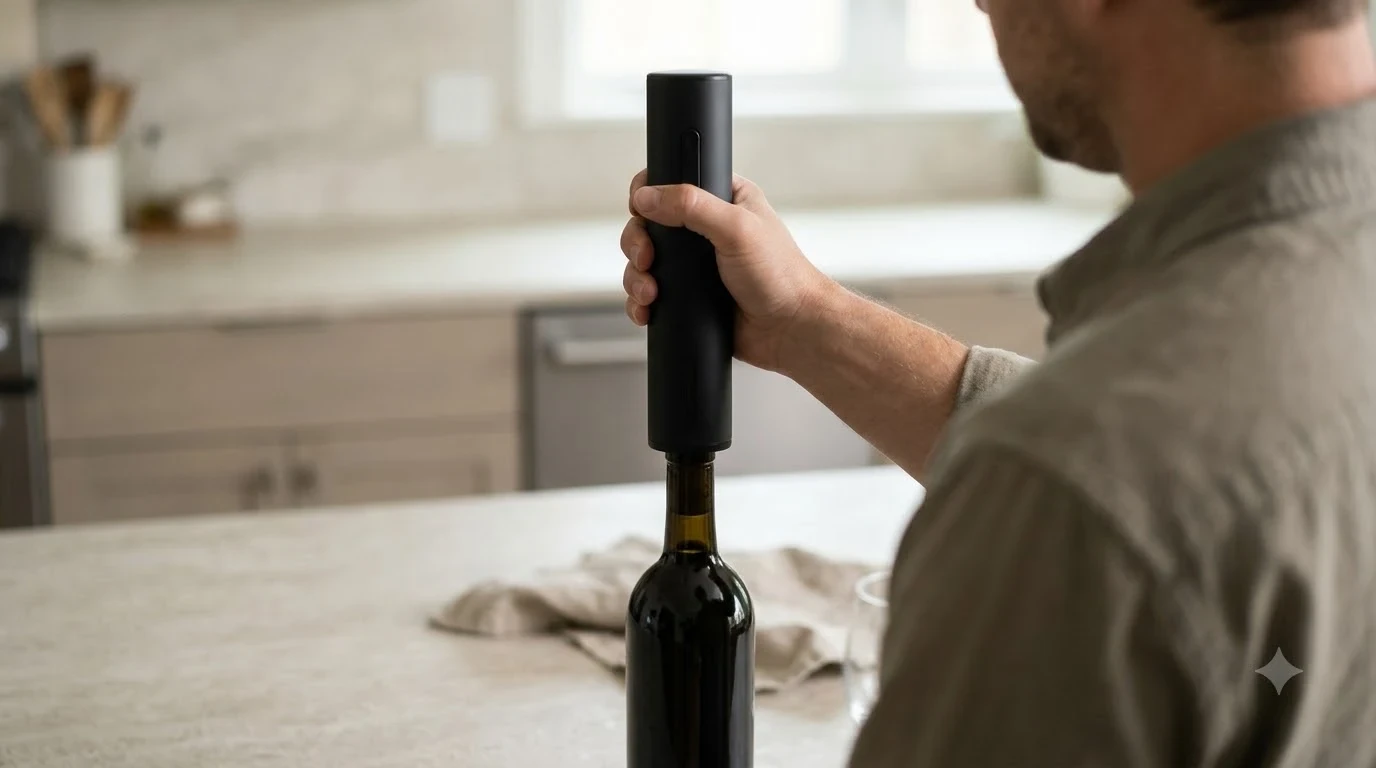
The zwilling electric wine opener is a rechargeable, cordless corkscrew designed to remove natural and synthetic wine corks with the press of a button. The ENFINIGY model combines automatic extraction, a magnetic stainless steel foil cutter, and USB-C charging in a compact design. Its convenient operation and approximately 1.5-hour charging time are appealing, but customer feedback raises legitimate questions about inconsistent cork removal and what happens when a cork gets stuck.
The ZWILLING ENFINIGY electric wine opener is aimed at households that regularly open cork-sealed wine bottles and would rather avoid the twisting and pulling involved with a manual corkscrew. Its appearance is restrained, its controls are straightforward, and the rechargeable battery eliminates the need to keep disposable batteries on hand. However, an electric opener needs to do more than look attractive on a kitchen counter. Reliability, charging convenience, compatibility, and recovery from a failed extraction all matter. This review examines the published specifications, operating instructions, and available owner feedback to help determine whether this ZWILLING accessory deserves a place in a home wine setup.
Specs and Key Features
The ZWILLING ENFINIGY combines a rechargeable motorized corkscrew with a detachable magnetic foil cutter. Its most useful features are the cordless design, stainless steel opening components, and automatic cork extraction and release.
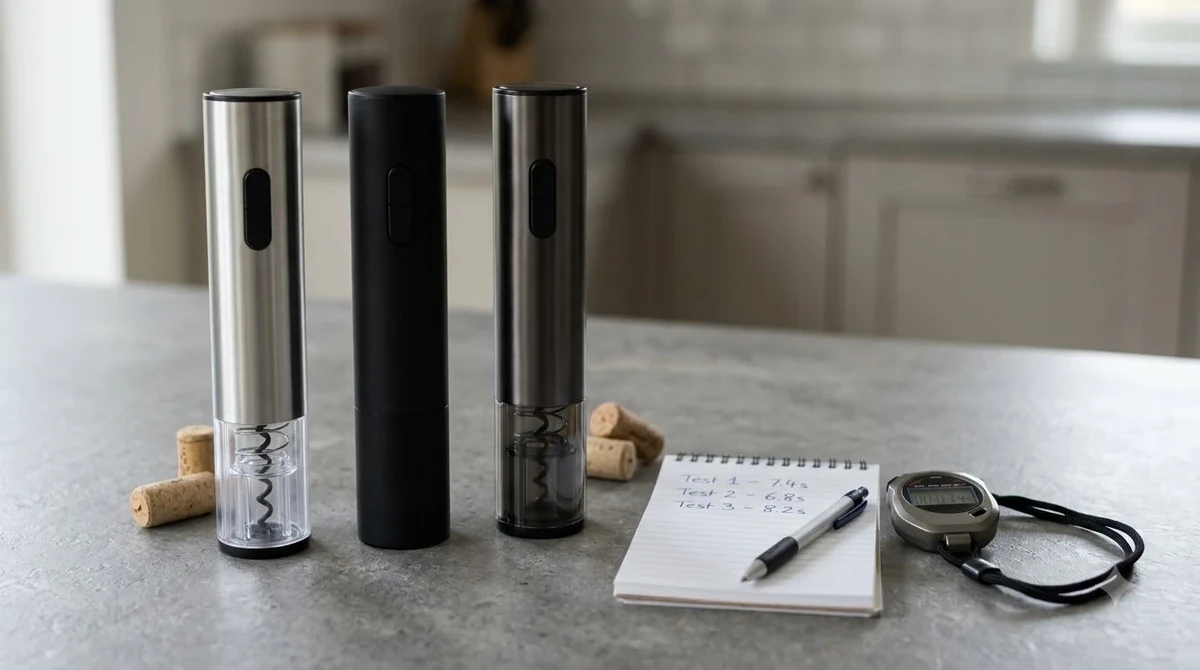
The product is listed by retailers as model 1028019. The manufacturer’s operating manual identifies the corresponding ENFINIGY electric wine opener as model 53114-0 and provides the technical specifications for its battery, dimensions, charging connection, and operation. Retailer descriptions add information about the exterior finish, included foil cutter, and traditional bottle compatibility. The official ZWILLING ENFINIGY operating manual is particularly useful for understanding its charging requirements and recovery instructions.
| Specification | Published details |
|---|---|
| Product | ZWILLING ENFINIGY electric wine opener |
| Retailer model number | 1028019 |
| Manufacturer manual model | 53114-0 |
| Battery | 7.4 V lithium-ion, 260 mAh |
| Charging connection | USB Type-C |
| Charging cable length | 0.5 m |
| Full charging time | Approximately 1.5 hours |
| Dimensions | 49 x 49 x 217 mm |
| Weight | 326 g |
| Housing materials | Tritan, ABS, and SAN plastic |
| Opening components | Stainless steel corkscrew and foil cutter |
| Foil cutter | Magnetic attachment at the base |
| Finish | Matte black |
| Cork compatibility | Natural and synthetic corks |
| Operation | Automatic extraction and cork release |
The technical measurements deserve attention because they help establish how the opener fits into an ordinary kitchen. At approximately 8.54 inches tall and 1.93 inches wide, its cylindrical shape occupies relatively little counter space. The manufacturer lists a weight of 326 grams, or approximately 0.72 pounds, making it manageable to hold vertically over a bottle. Nordstrom independently lists dimensions of 3.43 x 3.43 x 9.37 inches, reflecting its external product measurements.
The rechargeable battery is another important part of the specification. A 260 mAh lithium-ion battery is permanently installed, and the supplied charging cable connects through USB-C. The manual specifies a 5-volt, 1,000 mA power supply, but does not list a charging adapter among the supplied components. That distinction matters if a household expects a complete wall-charger package rather than simply a cable.
The magnetic foil cutter is a particularly practical inclusion. Instead of searching through a drawer for a separate cutting tool before opening a bottle, users can keep the cutter attached to the base of the opener. The corkscrew and cutter are stainless steel, while the exterior uses the plastics identified in the manufacturer’s technical documentation. Retailer descriptions also identify the product as BPA-free.
There is an important distinction between published specifications and real-world performance. Battery capacity, cable length, and physical dimensions are measurable characteristics. Cork removal reliability, however, depends on the condition of the cork, correct positioning, and the condition of the mechanism. A useful review needs to consider both categories rather than treating an attractive specification list as proof of dependable operation.
What Owners Like
Positive owner feedback centers on convenience, compact storage, and the freedom to operate without a permanently connected power cable. For people who open wine frequently or find manual corkscrews uncomfortable, these practical advantages can make an electric opener appealing.
One recurring advantage in the available customer comments is the rechargeable cordless format. A Nordstrom reviewer specifically appreciated being able to charge the opener, disconnect it, and store it instead of leaving it connected to an outlet. This arrangement is useful for kitchens with limited counter space, particularly when small appliances are normally stored in cabinets between uses.
The automatic operation is another frequently appreciated feature. Traditional corkscrews require a combination of downward pressure, rotation, and upward pulling. The ENFINIGY reduces these physical actions to positioning the opener and pressing its operating button. This can make bottle opening more comfortable for someone who struggles with twisting motions or has difficulty gripping a conventional corkscrew.
A reviewer on Nordstrom specifically mentioned that the opener was useful for someone with arthritis or mobility limitations. That comment describes one customer’s experience rather than establishing a medical benefit or guaranteeing that every user will find the mechanism suitable. Nevertheless, reducing the need for manual twisting is a meaningful design advantage.
Storage also receives favorable comments. The product is a narrow upright appliance rather than a large countertop wine station. Its foil cutter attaches magnetically to the base, reducing the chance of misplacing a small accessory. This is a useful detail for anyone who keeps wine accessories together in a kitchen drawer, bar cabinet, or serving area.
Some owners also appreciate the motor’s relatively quiet operation. One Nordstrom reviewer described the extraction as quiet and consistent when the mechanism worked correctly. Lower operating noise can be welcome when opening a bottle during dinner or when guests are gathered around a table. It is not a substitute for dependable cork extraction, but it contributes to the overall experience.
The convenience of one-button operation
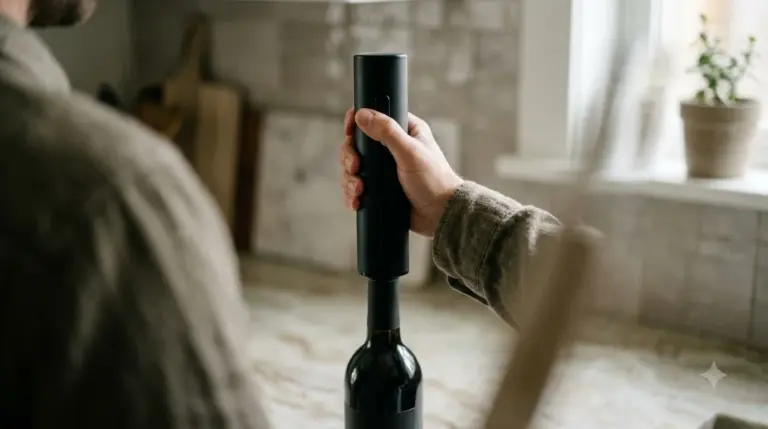
The manufacturer’s operating instructions describe a straightforward opening cycle. The user positions the opener vertically on the bottle, applies light pressure, secures the bottle, and briefly presses the operating button. The internal corkscrew enters the cork, extracts it, and subsequently rotates out of the cork automatically.
That sequence is easier to understand than the multi-stage operation of some traditional wine tools. There is no separate lever to raise, no handle to turn repeatedly, and no need to pull a cork upward by hand. The automatic sequence also helps make bottle opening more consistent in terms of the movements required from the user.
The two-second secondary button function adds another practical feature. According to the manual, holding the operating button for two seconds activates the separate cork-release function. This allows the user to release an extracted cork without relying exclusively on the normal automatic cycle.
For households that frequently entertain, the combination of automatic extraction and integrated foil cutting can simplify preparation. Opening several bottles for a dinner party still requires attention to bottle positioning and cork condition, but the user does not have to repeat the physical twisting action associated with a manual opener.
Overall, the positive feedback supports a clear conclusion: the ENFINIGY has an appealing operating concept. Its strongest advantages are ease of use, cordless storage, integrated accessories, and relatively simple controls. These are meaningful benefits, provided the extraction mechanism performs consistently.
Common Complaints
The biggest concern with the ZWILLING electric wine opener is inconsistent cork extraction. Some customer reviews describe cork breakage, incomplete removal, and difficulty recovering when a cork becomes stuck inside the mechanism.
These concerns are more significant than minor complaints about appearance or charging convenience because removing the cork is the opener’s primary purpose. A motorized corkscrew should reduce the effort involved in opening wine without introducing uncertainty about whether the cork will emerge intact.
Several Nordstrom reviews illustrate the mixed experiences. One customer reported that the opener worked well when functioning correctly, with quiet operation and even cork pulls, but raised concerns about the difficulty of resolving a stuck cork. Another described repeated problems with broken corks and incomplete extraction. A separate verified-purchase review was unfavorable about the product’s basic opening performance.
Independent evaluation adds useful context. Food & Wine’s electric wine opener evaluation describes the ENFINIGY as compact, quiet, and attractive, but also reports that a cork became stuck in its chamber during testing. The publication also identified difficulty using the foil cutter, which required substantial force and multiple passes in its evaluation.
These individual accounts should not be treated as proof that every unit is defective. Customer reviews and limited product evaluations do not establish an overall failure rate. However, similar complaints concerning the same central mechanism are useful signals for prospective buyers, especially when they involve incomplete extraction.
Problems with broken or stuck corks
A cork can become difficult to remove for several reasons. Older natural corks may be dry, brittle, or weakened by prolonged storage. Synthetic corks can also behave differently from natural corks because their materials and surface characteristics vary. If an opener is not positioned correctly, the corkscrew may enter at an angle and pull unevenly.
These factors affect manual and electric corkscrews alike. Nevertheless, an electric mechanism can be frustrating when it continues operating without producing a clean extraction. With a conventional waiter-style corkscrew, a user can adjust the angle, change the pulling position, or stop applying force immediately. A motorized device offers fewer opportunities for direct intervention.
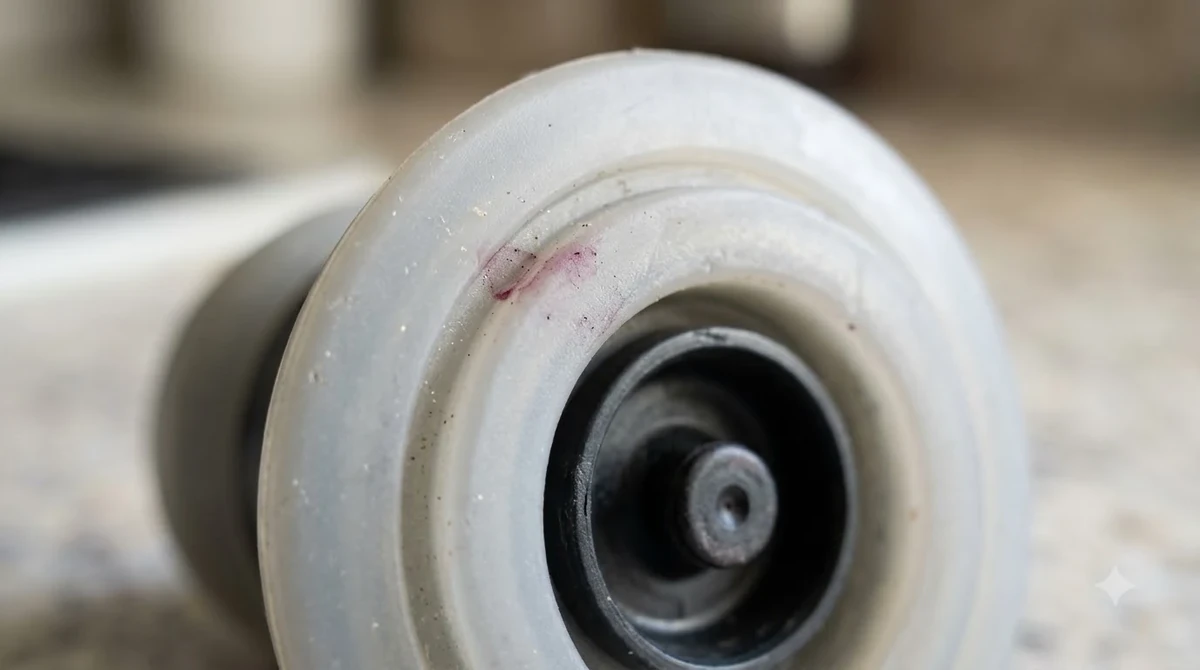
The ENFINIGY manual does provide a recovery procedure for a stuck cork. It instructs users to connect the charging cable and hold the operating button for two seconds. This is an important detail that prospective owners should understand before their first use. The product does have a documented recovery step, although the presence of that procedure does not guarantee that every jam can be resolved.
Charging and battery limitations
The rechargeable design removes the need for disposable batteries, but it also introduces a charging requirement. An opener that is stored for a long period without being charged may not be ready when a bottle needs to be opened. The approximately 1.5-hour recharge period is reasonable for a small appliance, but it still requires planning.
The manufacturer’s manual also states that the battery is permanently installed and cannot be replaced by the user. This is an important long-term ownership consideration. If battery capacity declines substantially after extended use, the owner cannot simply open the casing and install a replacement battery.
The supplied cable is 0.5 meters long. That is relatively short for some countertop arrangements, so the charging location may need to be close to an appropriate power supply. It is also important to distinguish between the included charging cable and a compatible wall adapter. The manual specifies the required electrical input but does not list a wall adapter as an included component.
Another limitation is that the opener is intended for indoor household use rather than unrestricted outdoor operation. The manufacturer specifically warns against moisture exposure and immersion in liquids. It should therefore be treated like an electronic kitchen appliance, not a waterproof bar tool.
There is also a service consideration. The manufacturer states that the appliance contains no parts intended for user repair. Owners should not attempt to dismantle the housing or modify the battery compartment when a mechanism fails. The published instructions direct users to manufacturer customer service for problems that cannot be resolved through the documented operating procedures.
Tip: If the cork does not emerge correctly, avoid repeatedly forcing the mechanism or pulling aggressively on the opener. Follow the manufacturer’s two-second recovery procedure with the charging cable connected. If the problem remains, stop using the appliance and contact ZWILLING support rather than dismantling the housing.
Who Should Buy and Who Should Skip
The ZWILLING ENFINIGY makes the most sense for someone who values cordless convenience, one-button operation, and a coordinated appearance among kitchen accessories. It is less compelling for buyers whose main priority is mechanical simplicity, long-term repairability, or dependable manual control over every cork extraction.
For a household that opens wine several times a week, an electric opener can remove a repetitive task from dinner preparation. The automatic operating sequence requires little physical effort, and the attached foil cutter keeps two commonly used tools together. Its compact dimensions also make it suitable for kitchens where a large wine accessory collection is impractical.
People who have difficulty twisting a manual corkscrew may find the electric format especially appealing. Instead of rotating a handle, the user steadies the opener and bottle while the motor performs the extraction. This is a genuine difference in operation, although the user must still be able to hold the device securely and position it vertically.
It can also be an attractive gift for someone who enjoys wine and appreciates coordinated kitchen accessories. The matte black appearance, rechargeable construction, and integrated cutter create a more finished presentation than many basic battery-operated openers. The decision should still account for the mixed feedback concerning cork extraction.
Buy it if convenience is your main priority
Consider this ZWILLING model if you prefer a rechargeable appliance to a manual corkscrew and want to avoid repeatedly twisting a handle. Its USB-C charging connection is familiar to many households, and the 1.5-hour recharge time provides a reasonably short charging cycle.
It is also worth considering if your kitchen already uses coordinated black appliances and bar accessories. The opener’s relatively narrow form, magnetic foil cutter, and cordless operation make it easy to store with other wine tools. The design is particularly appropriate for someone who wants a simple opening accessory rather than a large electric wine station.
People who usually open standard natural or synthetic cork-sealed bottles are within the manufacturer’s stated intended use. The device is designed specifically for those two cork categories, so it covers the ordinary needs of many domestic wine drinkers.
Skip it if repairability and manual control matter most
A manual corkscrew may be a better choice for someone who wants a device with no rechargeable battery or electronic components. A traditional waiter-style opener is inexpensive to maintain, compact, and capable of being operated with a high degree of direct feedback. It also allows the user to stop and adjust the extraction if a cork starts to move unevenly.
Buyers who frequently open fragile older corks should think carefully before choosing an electric mechanism. A deteriorating cork may crumble regardless of the opener, but an experienced user with a manual tool can often adjust the angle and extraction technique as the cork begins to move. A motorized opener does not offer the same degree of tactile control.
It is also not the ideal choice for anyone who expects a user-replaceable battery. The permanent battery installation means that the owner must accept a more limited repair path than with a simple mechanical tool. Someone who prioritizes long-term serviceability may prefer a conventional corkscrew instead.
Finally, buyers who are particularly concerned about the reported extraction problems should compare alternatives before committing. The available customer feedback is mixed enough that an automatic operating cycle should not be mistaken for guaranteed success with every bottle.
How It Compares to Alternatives
The most relevant comparison is between the ZWILLING ENFINIGY and traditional manual corkscrews, rather than assuming every electric opener offers identical features. The ENFINIGY emphasizes cordless convenience and automatic extraction, while a manual wine key prioritizes direct mechanical control and simplicity.
Traditional waiter-style corkscrews and sommelier tools provide useful alternatives for someone who prefers a different opening method. A manual corkscrew does not depend on a charging cable or battery, and it gives the user more direct control over the cork during extraction.
| Comparison | ZWILLING ENFINIGY | Manual waiter corkscrew |
|---|---|---|
| Power | Rechargeable battery | Manual operation |
| Opening action | One-button automatic extraction | Hand-operated rotation and leverage |
| Charging | USB-C, approximately 1.5 hours | Not required |
| Foil cutting | Included magnetic cutter | Depends on the individual tool |
| Physical effort | Minimal twisting | Requires manual movement |
| Control during extraction | Motorized sequence | Direct user control |
| Battery replacement | Not user-replaceable | Not applicable |
| Storage | Upright electronic accessory | Compact handheld tool |
| Maintenance | Care of housing, cutter, and charging system | Basic mechanical care |
| Best suited to | Convenience-focused households | Buyers who prefer simplicity |
Against a traditional waiter-style corkscrew
A waiter-style corkscrew is a particularly sensible alternative because it offers a familiar opening method without the need for electricity. The handle turns the spiral into the cork, while the hinged lever provides mechanical assistance when lifting it from the bottle. It also fits easily into a drawer or serving kit.
The ENFINIGY is more convenient for users who want to avoid repeated wrist movements. However, its rechargeable battery and motor introduce additional components that can malfunction or require attention. A manual tool has fewer operating requirements and does not need to be charged before a dinner party.
Neither format is automatically superior for every type of cork. A manual opener offers more direct control, while an electric device reduces the amount of physical work. The right choice depends on whether convenience or mechanical simplicity is more important.
Against other electric wine openers
A basic electric wine opener may use disposable batteries or a charging base, depending on its design. The ZWILLING model’s USB-C connection and magnetic foil cutter are attractive features for someone who prefers an integrated rechargeable accessory.
However, buyers should compare more than the exterior appearance. Battery replacement, the availability of a recovery procedure, cable requirements, and customer feedback about extraction are all useful points of comparison. A less elaborate electric opener may be a better fit if its mechanism is easier to access or its battery system is more convenient to maintain.
For a broader look at accessories, the Accessory Brands section provides another starting point for comparing wine-related equipment. Buyers interested in keeping wine at the right serving temperature should also distinguish between opening equipment and cooling equipment. An electric wine chiller serves a different purpose: it manages bottle temperature rather than extracting the cork.
The same distinction applies when researching the best electric wine chiller. Cooling appliances and electric corkscrews may appear together in a home bar setup, but they solve separate problems. A good chiller does not replace a reliable opener, and an electric opener does not maintain the temperature of an open or unopened bottle.
For buyers who want a backup opening tool in a compact package, a wine bottle opener keychain is another category worth understanding. It is not a direct replacement for the ENFINIGY’s motorized operation, but a small manual accessory can be useful when an electronic device is uncharged or unavailable.
The central comparison is straightforward. The ENFINIGY is a convenience-focused product with a more sophisticated mechanism than a basic manual wine key. Its appeal depends on whether the automatic extraction experience is worth accepting the battery and mechanism-related limitations.
Frequently Asked Questions
Does the ZWILLING ENFINIGY opener work with older wine bottles?
The opener is designed for natural and synthetic corks, but the manufacturer’s instructions do not promise successful extraction from every aged or deteriorating cork. Older corks can become brittle and may crumble during removal. For valuable older bottles, a two-pronged Ah-So opener may be a more appropriate tool because it works around the cork rather than driving a spiral through its center.
Can the ZWILLING electric opener be taken on an airplane?
The opener contains a permanently installed lithium-ion battery, so airline battery rules may affect how it can be transported. Lithium-battery restrictions can differ between carry-on and checked baggage, as well as between airlines and jurisdictions. Travelers should consult their airline’s current battery policy before packing the appliance.
Does the ZWILLING opener remove screw caps from wine bottles?
No. The device is intended to extract natural and synthetic corks, not unscrew metal closures. A screw-cap bottle should be opened by turning its cap manually. Applying the electric corkscrew to a screw-cap closure is outside the manufacturer’s stated purpose.
Can the foil cutter be used independently of the electric opener?
The foil cutter is a separate removable accessory attached magnetically to the base of the opener. Its independent physical design allows it to be removed for the foil-cutting step before the opener is positioned over the bottle. It should be handled carefully because it contains a cutting edge.
Does the ZWILLING ENFINIGY opener have a replaceable battery?
No. The manufacturer’s operating manual describes the lithium-ion battery as permanently installed and not user-replaceable. The appliance should not be opened to access the battery. If battery or electrical problems develop, the appropriate route is to contact ZWILLING customer service for guidance.
The ZWILLING ENFINIGY electric wine opener has a convenient cordless design, an integrated magnetic foil cutter, and straightforward automatic operation. Its compact construction and rechargeable USB-C battery make it an attractive option for households that value convenience, but the mixed owner feedback and independent evaluation findings about broken and stuck corks deserve serious consideration. Buyers who prioritize easy operation may appreciate its design, while those who want maximum control and long-term mechanical simplicity may be better served by a traditional manual corkscrew.
More in Wine Accessories
 Vinglace Wine Tumbler Review: A Glass-Lined Choice for Better SippingUpdated Nov 20, 2026
 Vinturi Electric Wine Opener Review for Easy UncorkingUpdated Nov 20, 2026
 Vinabon Wine Aerator Review for Easier, Cleaner Wine ServingUpdated Nov 20, 2026
 Vacu Vin Electric Wine Opener Review: Easy Cork Removal for Home Wine LoversUpdated Nov 20, 2026
 Rabbit Wine Accessories for Easier Home Wine ServiceUpdated Nov 20, 2026
 Vinabon Wine Opener Review: Fast Cork Removal With Less EffortUpdated Nov 20, 2026