

We may earn a commission when you buy through links on this page, at no extra cost to you. Learn more.
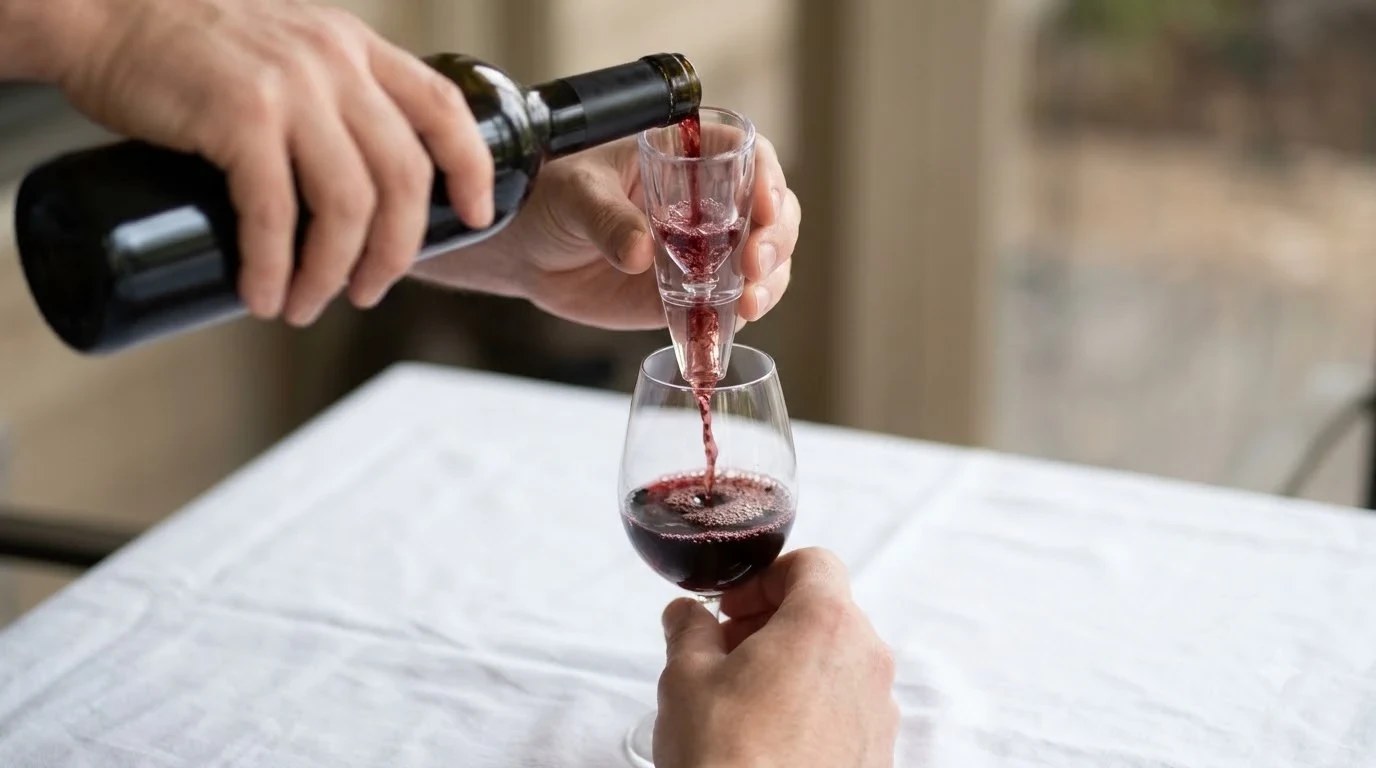
The vinabon wine aerator is a compact bottle-top aerator and pourer designed to introduce air into wine as it flows into your glass, making it a convenient choice for everyday serving. Its main features include a Bernoulli Effect aeration system, an acrylic body, an ergonomic pouring spout, and an anti-drip rubber stopper. It is particularly appealing to wine drinkers who want a simple alternative to pouring wine into a separate decanter, although it should not be mistaken for a replacement for traditional sediment removal or extended aeration.
A wine aerator can make serving a young red wine more convenient, especially when there is little time to let a bottle breathe before dinner. VINABON takes a straightforward approach with a device that attaches directly to the bottle rather than requiring a separate vessel, electrical connection, or complicated preparation. Its appeal rests on combining two everyday tasks: aerating wine and directing the pour. Understanding what this arrangement can accomplish, where its limitations begin, and how it compares with a decanter makes it easier to decide whether it belongs in your wine accessory collection.
Specs and Key Features of the VINABON Wine Aerator
The VINABON aerator is designed around convenience rather than elaborate wine presentation. Its bottle-top configuration combines an air-introducing mechanism with a pouring spout, while the rubber stopper helps secure the attachment during serving.
The manufacturer’s product description identifies acrylic construction, an ergonomic pouring design, and Bernoulli Effect technology as the main elements. These features make the device relatively straightforward in concept: attach it to a wine bottle, tilt the bottle, and allow the wine to pass through the aerating spout before reaching the glass. Buyers can review the official VINABON aerator product description for the manufacturer’s own explanation of its construction and intended operation.
| Specification | VINABON Wine Aerator |
|---|---|
| Product category | Bottle-top wine aerator and pourer |
| Aeration mechanism | Bernoulli Effect, according to the manufacturer |
| Main body material | FDA-approved plastic acrylic materials, according to VINABON |
| Bottle attachment | Rubber stopper |
| Pouring design | Ergonomic spout intended for slower pouring |
| Drip-control feature | Anti-drip rubber stopper |
| Wine compatibility | Red and white wines, according to the manufacturer |
| Money-back guarantee | 30 days, according to the official product page |
| Electrical requirements | No electrical operation described |
| Published dimensions and weight | Not specified on the official product page |
The Bernoulli Effect and wine aeration
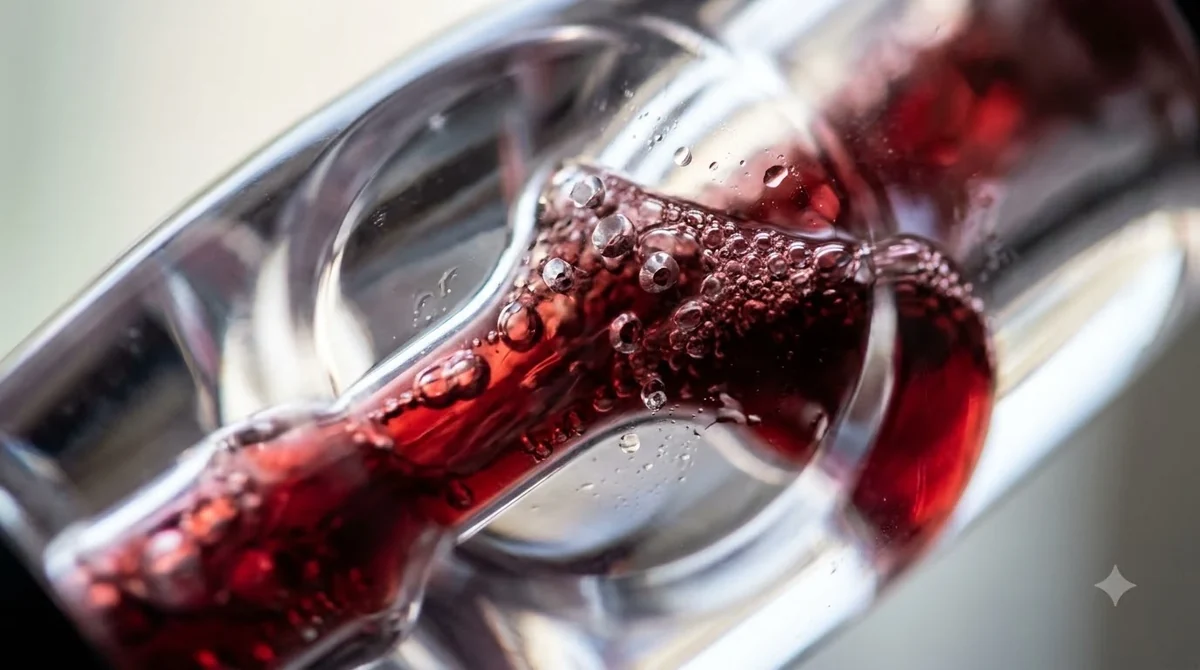
The Bernoulli Effect is the physical principle VINABON identifies as the basis for its aeration system. In practical terms, the product is designed to draw air into the wine stream as liquid moves through the spout. This creates additional contact between wine and air during the pour instead of requiring the wine to sit in a decanter for an extended period.
The manufacturer describes the process as introducing small bubbles into the wine. This is the intended mechanism, not independent proof that every wine will taste dramatically different after passing through the device. Aeration results depend on the wine itself, its age, structure, temperature, and the amount of air exposure it receives.
Construction and pouring design
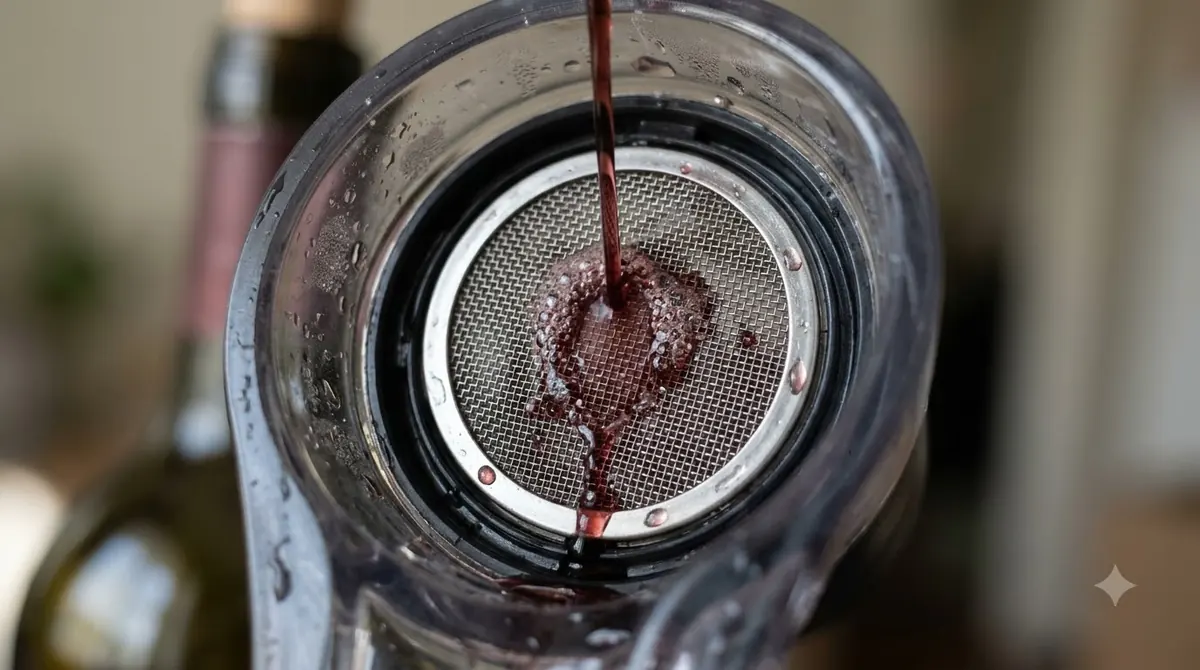
The acrylic body gives the product a lightweight, transparent appearance. Unlike a large glass decanter, a bottle-top attachment takes up relatively little storage space and can remain near the other wine-serving accessories. Its ergonomic spout is designed to make the pouring movement more controlled, while the rubber stopper helps keep the aerator in place.
One important specification gap is that the official product page does not provide a detailed dimensional drawing, a complete weight measurement, or a full compatibility chart. Buyers who regularly open bottles with unusual neck shapes should therefore avoid assuming that every bottle will produce an equally secure fit.
The manufacturer also advertises a 30-day money-back guarantee. This is a specific return-related promise on the product page, rather than a substitute for checking the terms of any separate warranty or retailer purchase policy.
What Owners and Product Feedback Suggest
Available product feedback points toward ease of use and convenient pouring as the VINABON aerator’s strongest practical attractions. The product is intended for people who prefer a simple bottle attachment over a larger countertop accessory, although review summaries should be interpreted as reported customer sentiment rather than controlled performance testing.
BestViewsReviews identifies ergonomic handling, the anti-drip rubber stopper, and the combination aerator-pourer format as positive features. Its evaluation categories also include ease of use, giftability, material quality, size, and overall satisfaction. These categories are useful because they reflect the everyday considerations involved in choosing a wine accessory rather than focusing exclusively on claims about flavor improvement.
Convenience is the main advantage
A bottle-top aerator removes several steps from the usual decanting routine. There is no need to locate a separate vessel, transfer the wine, wait for a specific interval, and then pour from the decanter. For someone opening a bottle of Cabernet Sauvignon on a weeknight, that simplicity can be more important than having a large serving vessel on the table.
The combined pouring and aeration arrangement is also useful for smaller gatherings. A host can attach the device and serve guests directly from the bottle, keeping the dining area relatively uncluttered. This approach works particularly well when the objective is to make ordinary wine service easier rather than create a formal tasting presentation.
Cleaner serving is another attraction
Wine drips can leave marks on tablecloths, countertops, and serving trays. VINABON’s rubber stopper and pouring-spout arrangement is intended to reduce this problem by creating a more controlled attachment and flow. A properly seated aerator can be useful when pouring several glasses in succession.
However, anti-drip construction should not be interpreted as a guarantee that spills are impossible. Pouring angle, bottle fill level, the condition of the rubber stopper, and how securely the device fits can all affect the result. Tilting the bottle slowly is a sensible approach, particularly when serving guests or using delicate glassware.
How much flavor improvement should buyers expect?
The most important distinction is between making a wine more accessible through aeration and changing the underlying quality of the wine. Oxygen exposure can help some aromatic compounds become more noticeable, while certain young reds can seem less closed after receiving air. A bottle-top aerator may help achieve some of that effect during serving.
It cannot turn an unbalanced wine into a well-made one, correct excessive acidity, or replace the structural qualities provided by good grapes and winemaking. Buyers should approach claims of dramatic flavor improvement cautiously. The more realistic expectation is convenient, immediate air exposure, with the size of the sensory difference varying from bottle to bottle.
Common Complaints and Limitations
The VINABON aerator has a convenient design, but it is not a universal wine-serving solution. The main considerations are bottle compatibility, cleaning, the limits of rapid aeration, and the lack of detailed technical specifications on the manufacturer’s product page.
BestViewsReviews identifies a possible missing accompanying e-book as one drawback. This is a packaging or accessory concern rather than a limitation of the aeration mechanism itself, but it is still relevant for anyone purchasing the product partly because of its additional educational material.
Bottle fit deserves attention
A bottle-top aerator depends on a secure connection between its stopper and the bottle neck. Although VINABON describes the product as fitting wine bottles, the official product page does not provide a detailed list of supported neck dimensions. Bottles with unusual openings, damaged rims, or irregular shapes may not provide the same fit as conventional wine bottles.
A loose connection can create an inconvenient pour or cause wine to escape around the attachment. Conversely, forcing an unsuitable stopper into a bottle can make removal difficult. Check the attachment gently before serving and avoid applying excessive pressure.
Cleaning is part of regular ownership
Wine residue can remain inside narrow pouring channels after use. If it dries, it may leave deposits that affect the next pour or become difficult to remove. A small aerator therefore needs attention even though it is simpler to use than a full-sized decanter.
The official product page does not provide a detailed cleaning procedure or explicitly establish dishwasher compatibility. It is sensible to rinse the attachment promptly after serving and use a gentle cleaning approach appropriate for acrylic and rubber components. Avoid assuming that high dishwasher temperatures or aggressive cleaning products are suitable.
Rapid aeration is not the same as extended decanting
One of the most important limitations concerns expectations. A pour-through aerator introduces air during the relatively short time wine travels from the bottle into the glass. A traditional decanter gives wine a larger exposed surface and allows it to remain in contact with air for a longer period.
For a young, structured Cabernet Sauvignon, these approaches may both be useful, but they do not provide identical exposure. Wine.com recommends approximately 30 to 60 minutes of decanting for young, tannic Cabernet Sauvignon, Petite Sirah, and Nebbiolo. Its guide to when wine benefits from decanting also explains the difference between aeration and sediment separation. A quick pour through an aerator is more convenient, but it should not be assumed to deliver the same result.
Another limitation is sediment. The VINABON product description does not identify a dedicated sediment-filtering system. Older red wines with visible deposits are therefore better handled with careful traditional decanting rather than relying on this attachment to separate solids from liquid.
Who Should Buy the VINABON Wine Aerator and Who Should Skip It
The VINABON aerator makes the most sense for casual wine drinkers who value quick serving, uncomplicated operation, and a compact accessory. It is less appropriate for collectors who regularly open mature bottles or people who want a dedicated aeration vessel for formal wine service.
Its intended convenience is especially relevant for everyday red wine drinkers. A young Merlot, Cabernet Sauvignon, or Syrah can benefit from exposure to air, although the amount of improvement will vary with the bottle. The attachment also offers a practical way to aerate selected white wines without transferring them into another container.
Good reasons to consider buying it
- You regularly serve wine by the glass. The bottle-top format makes it possible to aerate wine during ordinary pouring without setting up a separate decanter.
- You prefer compact accessories. A small attachment is easier to store than a large glass vessel, particularly in a kitchen with limited cabinet space.
- You frequently open young red wines. Cabernet Sauvignon and Syrah are examples of structured reds that may benefit from additional air exposure.
- You want a combined aerator and pourer. The product is designed to perform both functions instead of requiring two separate accessories.
- You host informal dinners. Direct bottle serving can keep the table relatively simple while making wine service more convenient.
Reasons to choose something else
- You frequently serve aged wines with sediment. A traditional decanter provides better control over separating wine from deposits.
- You want extended aeration. A wide-base decanter provides more opportunity for wine to remain exposed to air before serving.
- You need documented bottle compatibility. Buyers who use unusual bottle formats may prefer a product with published neck-size specifications.
- You require detailed maintenance instructions. The absence of a comprehensive cleaning guide and published dishwasher information may be inconvenient.
- You expect a major improvement in every wine. Aeration is not equally beneficial for every grape variety, bottle age, or winemaking style.
Match the accessory to the wine
Wine style matters as much as the accessory. Young Cabernet Sauvignon has high tannin, and Syrah can have medium-plus to high tannin, so additional air may help their aromas become more expressive. Merlot generally has softer, medium tannins, making it a reasonable candidate for a brief aeration experiment as well.
More delicate wines require a different approach. Older Pinot Noir, aged Rioja, and mature Chianti Classico can lose aromatic freshness if exposed to too much air. Wine.com recommends handling these wines gently and serving them soon after careful decanting. A quick pour-through attachment may be more convenient, but it is still important to taste the wine and assess its condition before deciding how much aeration it needs.
Tip: Pour a small sample before aerating the entire bottle. If a young red smells closed or tastes especially firm, try the VINABON aerator and compare the next glass. If an older wine already has delicate, expressive aromas, avoid giving it unnecessary air exposure.
How the VINABON Aerator Compares to Traditional Alternatives
The VINABON aerator occupies a specific position in the wine-accessory category: it prioritizes portability and direct bottle service. Traditional decanters, aerating pourers, and simple wine glasses each offer different levels of air exposure, convenience, and control.
Choosing between these options depends on how frequently you open wine, whether sediment is present, and how much time you have before serving. There is no single accessory that works equally well for every bottle.
VINABON versus a traditional decanter
A decanter is the stronger choice when wine needs extended exposure to air or when sediment must be separated from the liquid. Its larger vessel creates a broad surface area, allowing the wine to interact with oxygen over time. A wide-base design is particularly useful for this purpose.
The VINABON aerator has the advantage of speed. It attaches to the bottle and introduces air during pouring, so there is no separate vessel to prepare or clean. For a casual dinner involving a young red wine, this convenience may be sufficient. For an older Bordeaux or vintage Port with deposits, however, careful decanting is the more appropriate technique.
Anyone comparing these formats can also consider a decanter with aerator, which combines a serving vessel with an aeration-focused design. That format is particularly useful for hosts who want the visual presentation of a decanter alongside a more deliberate serving process.
VINABON versus a handheld aerator
A handheld aerator is typically used between the bottle and the glass or over a glass, depending on its design. It can be useful for people who want to control the aeration process separately from the bottle attachment. Some handheld models also include a stand or a removable chamber.
The VINABON design keeps the aerating component attached to the bottle during pouring. This makes the serving routine simpler, but it also means the user has less flexibility in positioning the aerator independently. Someone who prefers to pour individual samples through a separate device may find a handheld design more practical.
VINABON versus simply letting wine breathe
Not every wine requires an accessory. Pouring wine into a glass already exposes it to air, and swirling increases contact between the wine and the glass’s interior. For many everyday bottles, this may be enough to reveal additional aromas as the wine sits for a few minutes.
Wine.com explains that merely removing the cork and leaving wine in the bottle does relatively little because only a small amount of wine contacts the air. Pouring and swirling are more useful ways to increase exposure. A bottle-top aerator offers another convenient method, but it is not essential equipment for enjoying a good bottle.
For households that regularly entertain, a dedicated serving area can also make it easier to keep accessories organized. A bar cart provides space for glassware, corkscrews, stoppers, and aerators without taking up valuable kitchen counter space. The VINABON attachment is small enough to fit naturally into this type of setup.
Which alternative makes the most sense?
Choose a traditional decanter if you frequently serve older reds or wines that need more time to open. Choose a handheld aerator if you want a separate device for individual pours. Choose the VINABON if quick bottle-top operation is your priority. And if you mostly drink straightforward everyday wines, start with a glass and a few minutes of breathing time before buying additional equipment.
Wine accessories should solve an actual serving problem rather than create another unnecessary step. The best arrangement is the one that suits the bottles you regularly enjoy and the amount of time you want to spend preparing them.
Frequently Asked Questions
Does the VINABON aerator remove sulfites from wine?
No. Aeration should not be treated as a sulfite-removal process. Sulfites are compounds used in winemaking and may occur naturally or be added during production, and a bottle-top aerator is not a certified sulfite-removal device. Its primary purpose is to introduce air during pouring.
Can the VINABON aerator be used with sparkling wine?
The manufacturer describes the product for red and white wines but does not establish sparkling-wine compatibility. Introducing additional air into Champagne, Cava, or Prosecco can encourage carbon dioxide to escape and reduce the bubbles that make these wines distinctive. A conventional sparkling-wine stopper is a more suitable accessory for preserving an opened bottle.
Does an aerator change the alcohol content of wine?
No meaningful reduction in alcohol content should be expected from ordinary use of a bottle-top aerator. The device is designed to expose wine to air during pouring, not to perform controlled alcohol removal. Its intended purpose is to influence the wine’s presentation and aromatic expression.
Can the VINABON aerator help with wine that has cork pieces in it?
The official product description does not establish that the VINABON attachment includes a dedicated cork-particle filter. If a cork breaks during opening, use a suitable fine wine strainer or filtering funnel rather than assuming the aerator will catch every fragment. This is especially relevant when serving wine directly to guests.
Does the VINABON aerator preserve wine after the bottle is opened?
No. An aerator is not a preservation system or a vacuum stopper. Once serving is finished, remove the attachment, clean it, and reseal the bottle with an appropriate wine stopper. Refrigerating opened still wine can generally help maintain its quality for approximately three to five days, depending on the wine and storage conditions.
Is the VINABON aerator suitable as a wine gift?
It can be a practical gift for someone who regularly opens wine bottles and enjoys useful serving accessories. It is particularly appropriate alongside a corkscrew, wine glasses, or a bottle of wine. For a recipient who already owns several aerators, a different accessory may provide more value.
The VINABON wine aerator is best understood as a convenient bottle-top serving accessory rather than a complete replacement for a traditional decanter. Its acrylic construction, Bernoulli Effect mechanism, ergonomic spout, and rubber stopper make it appealing to casual wine drinkers who prioritize simple operation and cleaner pouring. If your main needs are quick aeration and everyday convenience, it is a reasonable option to consider; if you regularly serve mature wines or need sediment separation, a traditional decanter remains the more suitable choice.
More in Wine Accessories
 Vinglace Wine Tumbler Review: A Glass-Lined Choice for Better SippingUpdated Nov 20, 2026
 ZWILLING Electric Wine Opener Review: Features and DrawbacksUpdated Nov 20, 2026
 Vinturi Electric Wine Opener Review for Easy UncorkingUpdated Nov 20, 2026
 Vacu Vin Electric Wine Opener Review: Easy Cork Removal for Home Wine LoversUpdated Nov 20, 2026
 Rabbit Wine Accessories for Easier Home Wine ServiceUpdated Nov 20, 2026
 Vinabon Wine Opener Review: Fast Cork Removal With Less EffortUpdated Nov 20, 2026