

We may earn a commission when you buy through links on this page, at no extra cost to you. Learn more.
A sweet cava is Spanish traditional-method sparkling wine with noticeable residual sugar, usually labeled Semi Seco or Dulce. Semi Seco contains 32 to 50 grams of sugar per liter, while Dulce contains more than 50 grams per liter. Both styles retain Cava’s lively bubbles and natural acidity, so sweetness does not have to mean a heavy or flat-tasting wine. For most buyers looking for a clearly sweet bottle, Semi Seco is the best place to start.
Sweet Cava can work as an aperitif, a partner for salty tapas, or the sparkling finish to a dessert course. The key is understanding the Spanish sweetness terms, separating sugar level from bottle aging, and choosing a style that suits the food and the occasion.
What Sweet Cava Means on the Label
Sweetness in Cava is a regulated category, not just a tasting note printed by a winery. The clearest starting points are Semi Seco, which is medium-sweet, and Dulce, the sweetest official category; Seco sits between Extra Seco and Semi Seco for drinkers who want only a moderate impression of sweetness.
The D.O. Cava classification measures residual sugar in grams per liter. This matters because words such as “dry” and “extra dry” can be counterintuitive on sparkling-wine labels: Extra Seco is sweeter than Brut, and Seco is sweeter than Extra Seco. A bottle labeled Semi Seco is the more dependable choice when you want sweetness you can recognize without tasting the wine first.
| Label term | Residual sugar | What to expect |
|---|---|---|
| Brut Nature | 0–3 g/L; no added sugar | Very dry, crisp |
| Extra Brut | 0–6 g/L | Dry, with little sweetness |
| Brut | Up to 12 g/L | Dry, rounded impression |
| Extra Seco | 12–17 g/L | Gently off-dry |
| Seco | 17–32 g/L | Noticeably softer and sweeter |
| Semi Seco | 32–50 g/L | Clearly sweet, balanced by acidity |
| Dulce | More than 50 g/L | The sweetest Cava style |
These figures describe the wine’s sugar concentration, not the amount of sugar in an entire bottle. A 750-milliliter bottle with 40 grams per liter of residual sugar contains about 30 grams of residual sugar across the bottle. That calculation helps put the label into perspective: the same bottle poured into five standard 5-ounce glasses delivers roughly one-fifth of that bottle total per glass.
For a practical buying decision, choose Semi Seco for fruit tart, flan, blue cheese, or a sweet-and-savory snack board. Choose Dulce when you want a dessert wine in its own right, especially beside fruit-forward pastries or a simple plate of ripe fruit. When the label says only “Cava,” the wine may be dry; the sweetness term is the detail to look for.
How Dosage Creates the Sweetness
Cava gets its sweetness primarily from dosage, a small addition made after the second fermentation and disgorgement. The producer adjusts this final addition to set the wine’s residual-sugar category, while the wine’s acidity and bubbles help keep the finished style lively.
Cava is made by the traditional method: the base wine undergoes a second fermentation inside the bottle that will eventually be sold. Yeast consumes the sugar added for that fermentation and creates carbon dioxide, which remains trapped in the sealed bottle. After the wine has aged on its lees, the producer removes the sediment during disgorgement and tops up the bottle with expedition liqueur, also called dosage. This final liquid is generally a blend of wine and sugar, and its composition varies by producer.
The difference between the two additions is important. Sugar used for the second fermentation is fuel for the yeast; it is not intended to make the finished wine sweet. Dosage is the finishing adjustment that determines whether the Cava is Brut Nature, Brut, Semi Seco, or Dulce. This is why two Cavas made from similar grapes can taste very different in sweetness even when their production methods are alike.
Acidity is the counterweight. A sweet Cava with fresh acidity can taste bright, citrusy, and balanced rather than syrupy, while a sweeter wine with less freshness may feel broader and richer. Wine Enthusiast notes that the better sweet Cavas balance sugar with natural acidity, and its discussion of sweeter bottlings points buyers toward Extra Seco, Seco, Semi Seco, and Dulce rather than assuming every Cava is dry. For a closer explanation of how the finishing addition changes the glass, read the D.O. Cava account of traditional-method Cava production and dosage.
Grapes, Regions, and the Traditional Method
Sweetness does not change what makes Cava Spanish sparkling wine: its protected origin and traditional-method production. The classic white blend commonly draws on Macabeo, Xarel-lo, and Parellada, while the Cava designation covers production areas beyond the best-known vineyards of Penedès in Catalonia.
Each grape contributes a different part of the blend. Macabeo, also called Viura or Macabeu, is relatively neutral and can add body and texture. Xarel-lo is associated with herbal aromas, acidity, and earthy character; Parellada brings fruit notes such as green apple and citrus. Producers may vary the proportions or use other authorized grapes, so a bottle’s exact aroma profile is not determined by sweetness alone.
The traditional method gives Cava a texture that a simple carbonated wine does not share. After the second fermentation, the wine rests in the bottle with dead yeast cells called lees. The minimum aging period for Cava de Guarda is nine months. The lees contribute aromatic complexity and a creamier feel; longer aging can bring more developed notes of pastry, toast, dried fruit, and nuts. Those savory details can make a sweet Cava feel more layered than a simple sugary sparkling drink.
Most Cava is associated with Catalonia, especially the Penedès area, but the designation also includes other Spanish production zones. The four broad geographical units are Comtats de Barcelona, Valle del Ebro, Viñedos de Almendralejo, and Requena. A bottle’s place of origin, grape blend, and aging time can all shape its character, so two Semi Seco Cavas need not taste identical. For an independent overview of the grapes and regional background, Decanter’s Cava guide discusses the main varieties and the growing use of Malvasia in sweeter styles.
How to Choose a Bottle for Your Taste
Start with sweetness, then consider aging and the kind of flavors you enjoy. Semi Seco is usually the most versatile first purchase for someone seeking a sweet sparkling wine, while Dulce is better for a deliberately rich finish; the aging category tells you something different from the sugar term.
Cava’s aging categories are based on time in bottle, not sweetness. Cava de Guarda must age for at least nine months; Reserva requires at least 18 months; Gran Reserva requires at least 30 months; and Cava de Paraje Calificado requires at least 36 months. Longer time on the lees can add pastry, toasted bread, and nutty notes, but it does not automatically make the wine sweeter. Read the two label clues separately: one describes the aging tier, and the other describes residual sugar.
There is one useful limitation for shoppers: the D.O. Cava rules reserve Gran Reserva and Cava de Paraje for dry Brut types, specifically Brut Nature, Extra Brut, and Brut. For sweet styles, the most relevant categories are Cava de Guarda and Reserva. That is not a quality warning; it simply means a buyer looking for both pronounced sweetness and the longest aging tier will not find those two aims together under the Cava classification.
Think about the flavor profile you want as well. A younger Semi Seco may emphasize apple, pear, citrus, or peach, with more direct fruit and energetic bubbles. A Reserva Semi Seco may add a pastry or baked-fruit dimension from longer lees contact. Dulce is the choice for a more overtly sweet profile, but its sweetness should still sit alongside the wine’s acidity. For readers comparing sweet sparkling bottles with a crisp alternative, a bottle of dry Cava provides a useful contrast and makes it easier to identify the level of sweetness you actually prefer. Sweet Cava is not as common in U.S. retail stores as Brut, so a focused search is often more productive than browsing every sparkling-wine shelf. Look for the words Semi Seco or Dulce in the front or back label description, and ask a wine shop to confirm the category when the label is unclear. A review that describes the wine as “off-dry” may refer to Extra Seco or Seco rather than the clearly sweet Semi Seco style. For more advice on choosing a bottle by label, occasion, and taste, browse our Wine Buying Guides.
Food Pairings for Sweet Cava
Pair sweet Cava with food that can meet its sweetness, or with salty and rich dishes that benefit from a touch of sugar and lively bubbles. The two most reliable directions are fruit-based desserts for Semi Seco or Dulce, and savory foods such as firm cheeses, salted nuts, or richer seafood for a sweet-and-salty contrast.
For dessert, match the wine’s sweetness to the dish rather than choosing a wine that is less sweet. Semi Seco is a natural partner for flan, crème brûlée, peach cobbler, apple tart, poached pears, and fruit pastries. Dulce can stand beside sweeter desserts or be poured on its own after a meal. Chocolate can be harder to match because dark chocolate’s bitterness and intensity may make a medium-sweet Cava seem less sweet by comparison; a fruit-led dessert is often the easier choice. For acidic foods such as a sharp vinaigrette or a squeeze of lemon over seafood, select a Cava with enough freshness to meet the dish’s acidity. A delicate, sweet wine can seem flat beside a very tart sauce. Also avoid pairing a sweet bottle with a dessert that is much sweeter than the wine; the wine may taste thin and sour next to the dish.
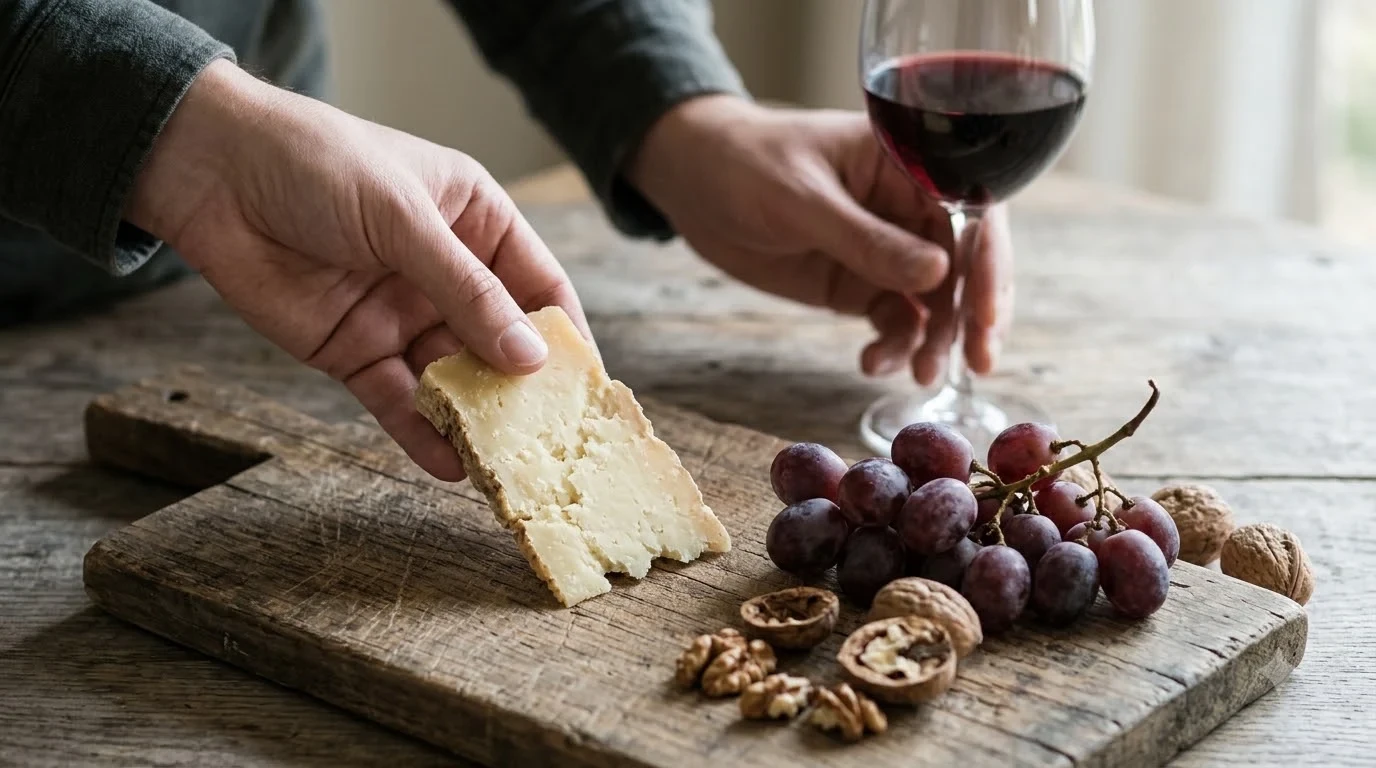
Salty food is another strong pairing. Try Semi Seco with Manchego, aged sheep’s-milk cheese, blue cheese, Marcona almonds, salted potato chips, jamón, or savory pastries. The salt makes the wine’s sweetness feel more balanced, while carbonation refreshes the palate after richer bites. Wine Enthusiast specifically highlights firm cheeses, salty snacks, richer seafood, and grilled meats as options for sweeter Cava, and a tasting note for a Semi Seco bottling points to flan, crème brûlée, and strong blue cheese as fitting matches. For a main course, consider grilled chicken with citrus glaze, pork with apple, shrimp in a lightly spicy sauce, or barbecue with a restrained sweet glaze. Cava’s acidity can refresh food with some richness, and the sugar can soften a salty or gently smoky edge. Be careful with very hot chili dishes: alcohol and tannin can make chili heat feel more intense, and a high-alcohol wine is not the best way to cool a fiery dish. Choose mild spice and let the sweet-acid balance do the work. For another still-wine comparison, sweet Chenin Blanc can show how a dessert wine’s acidity and sweetness work together at the table.
Serving Temperature, Glassware, and Storage
Serve sweet Cava well chilled, generally between 40 and 50 degrees Fahrenheit. This temperature range keeps the bubbles refreshing and the sweetness in check without making the wine so cold that its fruit and pastry aromas disappear.
Chill the bottle in the refrigerator before serving and pour into a tulip-shaped sparkling-wine glass when possible. The D.O. Cava recommends tulip glasses for aromatic expression; a flute emphasizes freshness and acidity, while a wide bowl loses carbonation more quickly. A standard 750-milliliter bottle gives about five 5-ounce pours, a practical amount for a small dessert course or a toast with several guests.
Tip: Chill Semi Seco or Dulce to about 43–48 degrees Fahrenheit, then pour a small first glass. If the wine seems too quiet, let it warm slightly in the glass rather than serving the whole bottle warmer from the start.
Open sparkling wine loses its bubbles faster than still wine. Reseal the bottle with a proper sparkling-wine stopper, keep it in the refrigerator, and aim to finish it within one to three days for the best texture. The wine may remain drinkable after that window, but its mousse and fresh aromas will fade. If you are serving several courses, open the bottle close to the time you plan to pour it rather than leaving it uncorked on the table. For unopened bottles, store Cava in a cool, dark place away from vibration and large temperature swings. A steady cellar-like temperature near 55 degrees Fahrenheit is a useful target, and bottles with natural corks are generally stored on their sides. Avoid a sunny kitchen counter or a warm cupboard above the oven. Sweetness is set during production; poor storage will not improve the balance and can shorten the wine’s freshness.
Frequently Asked Questions
These quick answers cover a few details that are useful when comparing bottles, especially if the shelf has both white and rosé Cava or an unfamiliar designation.
Can sweet Cava be rosé?
Yes. Cava can be white or rosé, and the official production specification requires rosé base wine to use at least 25 percent red grape varieties. Garnacha and Monastrell are among the red grapes used for Spanish sparkling rosé.
Which grape is associated with sweeter Cava?
Malvasia, known locally as Subirat Parent, is increasingly used in sweet and semi-sweet Cava. It is an additional grape to look for in the broader range of Cava styles, rather than a replacement for the familiar Macabeo, Xarel-lo, and Parellada blend.
How much alcohol does Cava contain?
The Cava product specification sets the finished wine’s alcohol range at 10.8 to 12.8 percent alcohol by volume. A sweet label therefore describes residual sugar, not a low-alcohol or alcohol-free drink.
How fizzy should a bottle of Cava be?
For standard full-size bottles, the Cava specification sets minimum excess pressure at 3.5 bars measured at 20 degrees Celsius. That pressure creates a lively sparkling wine rather than a lightly fizzy frizzante style.
What extra care goes into Cava de Paraje Calificado?
Its grapes must be harvested by hand and delivered whole to the winery. Those production requirements accompany the category’s minimum 36-month aging period and distinguish it from more broadly blended Cava.
For most shoppers, a Semi Seco bottle is the most flexible introduction to sweet Cava, while Dulce is the better fit for a sweeter dessert finish. Focus on the sweetness term first, then choose the food, glass, and serving temperature that let the wine’s acidity and bubbles stay in balance.
More in Wine Buying Guides
 Riesling Gift: Choose a Bottle They’ll LoveUpdated Nov 21, 2026
 Sweet Red Wine Gift: Choose a Bottle They’ll LoveUpdated Nov 21, 2026
 Malbec Gift: How to Choose a Memorable Bottle for Any OccasionUpdated Nov 21, 2026
 Sherry Gift Ideas That Match Every Wine LoverUpdated Nov 21, 2026
 Moscato Gift: How to Choose a Sweet Wine They’ll LoveUpdated Nov 21, 2026
 Merlot Gift: How to Choose a Bottle They’ll AppreciateUpdated Nov 21, 2026