

We may earn a commission when you buy through links on this page, at no extra cost to you. Learn more.
The swan creek wine trail is a North Carolina wine-country route connecting tasting rooms in Hamptonville and Jonesville, within the Swan Creek AVA of the Yadkin Valley. Its appeal is a close-knit mix of family-run vineyards, estate wines, scenic foothill views, and tasting rooms with distinct personalities. Plan around a few stops rather than racing through every address, and use the AVA as your guide to the broader group of nearby producers.
North Carolina’s Swan Creek area is a useful destination for travelers who want a relaxed tasting day with short drives between wineries. This guide explains the landscape, the principal trail stops, how to shape a sensible itinerary, and what to look for in the glass before you set out.
Where the Swan Creek Wine Trail Sits in North Carolina
The trail is part of the Yadkin Valley wine region in the foothills west of Winston-Salem. Its core tasting-room cluster stretches across Hamptonville and Jonesville, with other Swan Creek AVA wineries around Ronda; the result is a compact regional outing rather than a single street or a fenced attraction.
Hamptonville is a practical base for a first visit because several of the trail’s listed stops are close together. NC Wine’s trail directory identifies Dobbins Creek Vineyards, Laurel Gray Vineyards, Shadow Springs Vineyard, and Windsor Run Cellars in Hamptonville, while Chateau Jourdain sits in nearby Jonesville. Addresses matter here: the region’s wineries occupy rural roads, not a walkable downtown strip, so plan each leg by car and leave time for winding two-lane roads.
The Town of Yadkinville describes the Swan Creek route as a day-trip option and notes that purple and green grape-cluster signs mark the trail. That municipal page also refers to a six-winery itinerary, while NC Wine’s current trail directory displays five named stops. Because published route lists can differ, use a current directory and each winery’s own visitor information before finalizing the day. The wider area also has trails with a different focus, including the Traverse City wine trail, which makes a useful comparison for travelers planning a separate wine-country trip.
How the Swan Creek AVA Shapes the Wines
Swan Creek is an American Viticultural Area, or AVA, within the larger Yadkin Valley AVA. Wine Enthusiast’s Swan Creek AVA profile describes it as a partial sub-appellation: about 60 percent lies inside the Yadkin Valley AVA and the remaining 40 percent extends south of it.
The Brushy Mountains help define the landscape and geology. Wine Enthusiast describes the region’s soils as clay, mica, and schist, with mineral-rich, schist-like material linked to the weathering of the mountains; NC Wine likewise points to mineral-rich soils that can retain nutrients and water. Those descriptions explain why Swan Creek should be understood as a place with its own growing conditions, not just a label for any winery in the wider Yadkin Valley.
The same Wine Enthusiast profile places the AVA at roughly 1,000 to 2,000 feet in elevation and describes a climate that is slightly cooler and less rainy than nearby areas. Those conditions can support a range of grapes, but they do not dictate a single house style. Producers choose different varieties and winemaking approaches, so a tasting lineup may move from aromatic whites to structured reds, sweeter bottlings, or fortified wines.
Wine Enthusiast names Chambourcin, Petit Verdot, Riesling, Traminette, Petit Manseng, and Vermentino among the region’s important grapes. The list itself is a useful reminder that the area is not defined by one internationally famous variety. For a broader primer on how climate, soil, elevation, and boundaries shape regional labels, see our overview of Wine Regions.
Wineries to Put on Your Swan Creek Route
Five wineries appear on NC Wine’s dedicated trail directory, and they make a sensible starting list for a first visit. Nearby AVA producers add more possibilities, but the best plan is to choose a compact group based on the styles and experiences you want; the NC Wine trail directory is the best place to confirm the core route.
Jonesville and the first Hamptonville stops
Chateau Jourdain / The Vineyard Cottage is at 2406 Swan Creek Road in Jonesville. NC Wine describes it as a boutique vineyard and winery in the heart of the AVA, making it a natural choice for visitors who want to include the Jonesville side of the region. Dobbins Creek Vineyards, at 4430 Vineyard View Lane in Hamptonville, is a woman-owned and operated vineyard known for red wines. A regional tourism feature also highlights its dry Riesling and sweet Hemric Mountain Red, a useful comparison of two different expressions from one producer.
Two more Hamptonville tasting rooms
Laurel Gray Vineyards sits at 5726 West Old U.S. Highway 421. NC Wine says Ben and Kim Myers established the winery in 2000 and that its estate French wines are sold at the tasting room. Shadow Springs Vineyard, at 5543 Crater Road, offers crisp whites, fuller-bodied reds, and sweeter pours, according to a regional visitor feature. The same account notes a covered patio overlooking nearly 11 acres of vines, so the setting is part of the appeal.
Windsor Run and other AVA producers
Windsor Run Cellars is at 6531 Windsor Road in Hamptonville. NC Wine lists estate reds and whites alongside meads and fortified wines, and notes that the property also has a distillery with tours and tastings; a regional visitor guide places it less than a mile from Shadow Springs. Beyond the five core stops, Midnight Magdalena Vineyards in Jonesville emphasizes dry wines, Dynamis Estate Wines is a high-elevation estate on a 1,500-acre private property focused on Bordeaux varieties, and Piccione Vineyards in Ronda features Sangiovese, Montepulciano, and Vermentino. For a fuller directory, compare Swan Creek vineyards before deciding which cluster best fits your day.
How to Plan a One-Day Visit and Manage the Driving
A successful day in Swan Creek usually means two or three tasting rooms, a meal or picnic break, and enough time to enjoy the countryside between stops. The Hamptonville cluster is the easiest place to build a compact route, while Jonesville and Ronda make sense as extensions for visitors with more time.
For a simple first outing, start with a late-morning tasting at one Hamptonville winery, pause for lunch, then visit a second nearby producer in the afternoon. Shadow Springs and Windsor Run are particularly easy to pair because a local tourism guide places them less than a mile apart. Dobbins Creek is about 10 minutes north of Windsor Run according to the same guide, so it can be added as a third stop if opening hours and tasting pace allow.
Winston-Salem makes a practical base: the regional tourism office places Hamptonville about 30 minutes west of the city. Allow extra time on rural access roads, and avoid scheduling tastings so tightly that one late start affects the afternoon.
| Planning detail | Published figure | How to use it |
|---|---|---|
| Hamptonville to Winston-Salem | About 30 minutes | Useful as a broad day-trip estimate, not a door-to-door guarantee. |
| Shadow Springs to Windsor Run | Less than 1 mile | Pair the nearby tasting rooms on the same side of Hamptonville. |
| Windsor Run to Dobbins Creek | About 10 minutes north | Consider it as a third stop if the day’s hours allow. |
| Swan Creek AVA elevation | 1,000–2,000 feet | Provides context for the region’s foothill growing conditions. |
Before leaving, check the day’s hours, tasting format, food policy, and reservation requirements directly with each winery. Small operations may have limited schedules or special-event closures. If you want a longer visit, consider adding an AVA winery outside the five-stop trail directory rather than squeezing six or seven tastings into one afternoon.
Tip: Choose a designated driver before the first tasting, or arrange a local tour or transportation service. The wineries are spread along rural roads, and a planned ride lets everyone enjoy the visit without having to manage the drive afterward.
What to Taste, Serve, and Pair in Swan Creek
Use the region’s grape range as a tasting checklist, not a promise that every winery pours every variety. Ask what is grown on the property, which wines are estate bottlings, and how the producer handles acidity, oak, sweetness, and tannin.
For whites, compare Riesling, Traminette, Petit Manseng, and Vermentino when they are available. Riesling and Sauvignon Blanc are typically high in acidity, while Chardonnay is generally medium in acidity; that distinction helps at the table. Higher-acid wines are especially useful with acidic foods such as tomato-based dishes or vinaigrette, because the wine needs enough freshness to keep pace with the food. Vermentino can be a good conversation starter for visitors who want to explore a variety beyond the familiar Chardonnay and Sauvignon Blanc choices.
For reds, ask whether the winery is pouring Bordeaux varieties such as Cabernet Sauvignon, Merlot, or Petit Verdot, or regional selections such as Chambourcin. Cabernet Sauvignon is typically high in tannin, Merlot tends to be softer with medium tannin, and Pinot Noir usually has low-to-medium tannin with high acidity. Salt and fat soften tannin, so a firmer red often works more comfortably with a grilled burger, aged cheese, or rich meat dish than with a lean, delicate entrée. Oily fish is generally a poor match for tannic reds.
Sweet and fortified wines deserve their own comparison. Windsor Run lists meads and fortified wines, while Chateau Jourdain’s NC Wine profile includes dessert or port-style wine among the styles available. Pair a sweet wine with a dessert at least as sweet as the wine; otherwise the food can make the wine seem thin or tart. For a cheese course, try a small pour alongside a salty or rich cheese and compare how the texture shifts the finish.
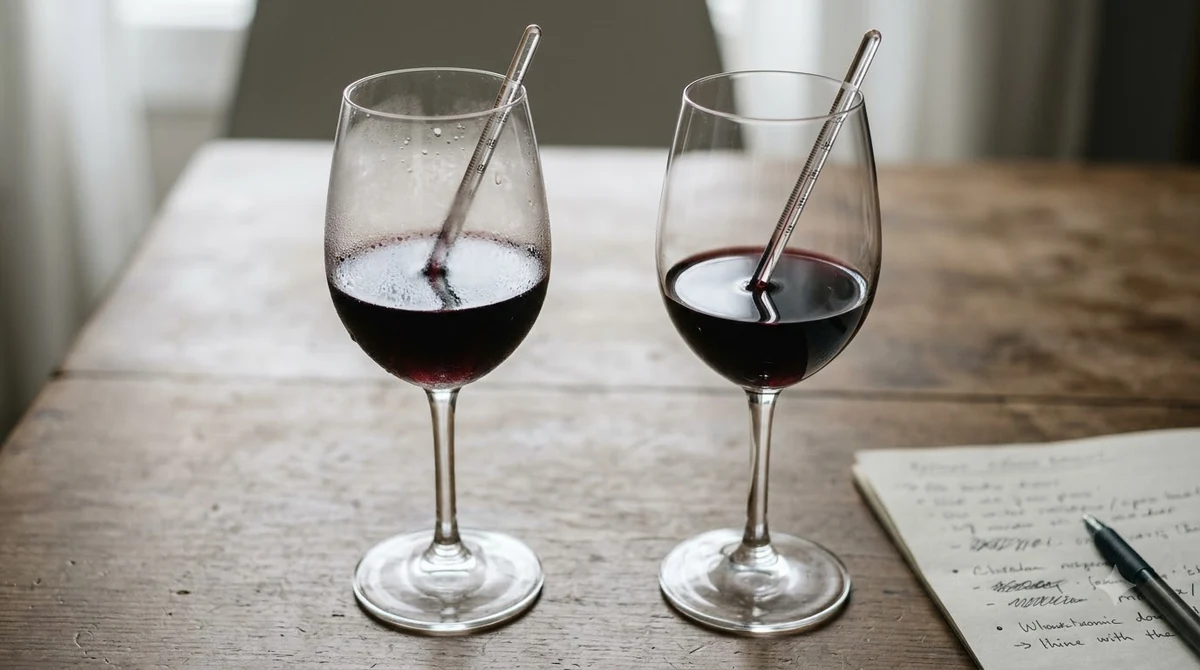
Temperature also changes the experience. Serve light whites and rosé around 45–50°F, fuller-bodied whites around 50–55°F, and light reds around 55–60°F; fuller reds are generally best around 60–65°F. These are useful starting points for a bottle opened at home after the trip, especially if it has warmed in a car or sat in a sunny tasting room. Bring home bottles in a cool, stable place rather than leaving them in a hot vehicle.
For your tasting notes, record the grape, sweetness level, acidity, tannin, and one food pairing that worked. A quick note such as “dry Riesling, high acidity, good with goat cheese” is more useful later than simply writing down a winery name. You can use the same framework to compare Swan Creek wine with bottles from other North Carolina AVAs.
Practical Details for a Relaxed Wine-Country Day
Good timing and basic preparation matter more in a rural wine region than an urban tasting district. Confirm opening times, reserve where requested, and make sure the addresses in your route match the tasting room rather than an office or vineyard entrance.
Wear comfortable shoes for vineyard walks and bring a light layer for patio visits. A small notebook or phone note helps you remember the producer, grape, vintage, and style you liked; ask before taking photos inside a tasting room.
Ask about food before you arrive. Some wineries welcome picnics or offer a patio setting, while others focus on wine service and do not operate as restaurants. A planned lunch stop prevents the day from becoming a series of tastings without a proper break. If a winery has a special event, live music, or a private function, its regular visitor routine may change, so verify details close to your visit.
Keep your purchase plan sensible, too. A standard 750-milliliter bottle holds about five 5-ounce glasses, which is helpful when deciding how many bottles to bring home for a dinner or small gathering. Store wine on its side in a cool place near 55°F when the closure calls for it, and refrigerate opened still wine; it generally keeps for about three to five days. These simple steps help protect what you enjoyed at the tasting room.
Swan Creek offers a rural, small-producer experience and fits naturally into a larger Yadkin Valley visit. Ronda, Elkin, Dobson, and other towns have their own tasting rooms and outdoor attractions, so leave room for a favorite stop to run long rather than treating the route like a checklist.
Frequently Asked Questions
These answers cover five core stops on the current NC Wine trail directory and the seven AVAs in North Carolina, including visitor policies and nearby producers.
Can visitors stay overnight at a Swan Creek winery?
Yes. NC Wine lists overnight accommodation at The Cottage associated with Chateau Jourdain in Jonesville. The listing directs guests to contact the property for information and booking, so arrange lodging separately from a standard tasting reservation.
Do all Swan Creek AVA wineries appear on the trail directory?
No. The AVA directory includes producers beyond the five stops on NC Wine’s dedicated trail page, including Castello Barone, Eden Oaks Vineyard, and Raffaldini. Check the producer’s current visitor page before adding an AVA winery to your route.
What are Chateau Jourdain’s usual tasting hours?
NC Wine lists Friday through Sunday, 11:00 a.m. to 5:00 p.m., and says reservations are required. Confirm the schedule directly before traveling, since special events or seasonal changes can affect a visit.
Are pets allowed at any vineyards in the area?
NC Wine’s profile for Midnight Magdalena Vineyards says pets are welcome outside and that the property is picnic-friendly. That policy belongs to the named winery, so contact other tasting rooms directly rather than assuming the same rule applies throughout the AVA.
How many American Viticultural Areas does North Carolina have?
NC Wine’s AVA overview lists seven in the state. Swan Creek is one of them, alongside regions such as Yadkin Valley, Haw River, and the Appalachian High Country.
The Swan Creek area rewards visitors who choose a few wineries and give each tasting room time to show its own character. Start with the Hamptonville cluster, add Jonesville or Ronda if the schedule allows, and confirm the day’s details before setting out. That approach leaves room to enjoy both the wines and the Blue Ridge foothill scenery.
More in Wine Regions
 Willcox Wine Trail: Discover Arizona’s High-Elevation Wine CountryUpdated Nov 20, 2026
 Yakima Valley Wine Region: Find the Best Styles to TryUpdated Nov 20, 2026
 Vosne Romanee Wine Tasting: Identify Aromas and Choose Better PairingsUpdated Nov 20, 2026
 Yakima Valley Wine Festival: Find the Best Seasonal Wine EventsUpdated Nov 20, 2026
 Wales Vineyards: Discover Cool-Climate Wines and Where to VisitUpdated Nov 20, 2026
 Yountville Wine Festival: Discover Napa Wines and Local FoodUpdated Nov 20, 2026