

We may earn a commission when you buy through links on this page, at no extra cost to you. Learn more.
Sonoita wine country is Arizona’s high-elevation wine region centered on Sonoita and Elgin, where visitors can taste distinctive wines among open grasslands and mountain views. Most vineyards sit between 4,500 and 5,500 feet, and the Sonoita American Viticultural Area was established in 1984. Syrah, Malvasia, Roussanne, and Viognier are important local grapes, alongside familiar varieties and more unusual plantings. A successful visit pairs a short winery shortlist with time for the rural scenery and changing weather.
Southern Arizona’s wine country looks unlike the state’s familiar desert postcards: broad grassy valleys, oak-dotted hills, and distant mountain ridges frame small vineyards and tasting rooms. Sonoita and nearby Elgin make a practical day trip from Tucson, but the rural distances reward a slower pace. A little knowledge of the AVA, its climate, and its wineries helps visitors choose tastings and bottles with confidence.
Sonoita, Elgin, and the 1984 AVA
The Sonoita AVA is a federally recognized grape-growing area in southeastern Arizona, centered on Sonoita and Elgin. It covers about 319 square miles across parts of Cochise, Pima, and Santa Cruz counties, between the Santa Rita, Huachuca, and Whetstone mountain ranges.
The University of Arizona Cooperative Extension dates the AVA’s establishment to October 1984, making it Arizona’s first federally designated wine-grape region. The boundary defines origin, not a single flavor profile: elevation, slope, soil, grape variety, and cellar choices vary by property.
University of Arizona data describe about 126 square miles, or 39 percent of the AVA, as privately owned; federal and state entities manage the remainder. Ranchland, grassland, roads, washes, and public land share the boundary, so winery visits involve short drives between separate properties rather than a walkable row of tasting rooms. For a broader explanation of American appellations and how they differ, see our Wine Regions overview.
| Regional measure | Reported figure | Why it matters |
|---|---|---|
| Total AVA area | About 319 square miles | A broad appellation with distinct vineyard sites |
| Typical elevation band | 4,500–5,500 feet | High elevation brings cooler nights |
| Growing-season temperature | 66–70°F across much of the AVA | A measure of seasonal heat for ripening |
| Privately owned land | About 126 square miles, or 39% | Much of the AVA is managed public land |
| Central Winkler Index | 1,944–2,222 | Shows accumulated growing-season heat |
The University of Arizona Cooperative Extension provides these figures. The Winkler Index measures accumulated heat from April through October; it is a viticultural comparison, not a prediction of flavor. Treat the figures as regional context because elevation and slope vary from site to site.
High-Desert Grasslands, Cool Nights, and Monsoon Weather
Elevation shapes Sonoita’s growing season: much of the AVA lies between 4,500 and 5,500 feet, where strong sunshine meets cooler nights and summer storms. The combination helps explain why the area can ripen Mediterranean grapes while retaining freshness.
Wine Enthusiast’s regional profile describes more than 280 days of annual sunshine and day-to-night temperature shifts of around 40 degrees. Those swings influence vine growth and harvest decisions. Warm days help fruit ripen, while cooler nights can slow the loss of acidity and preserve aromatic detail. Actual results vary by vineyard, crop load, and weather in a particular season.
Rainfall is concentrated in the summer monsoon period. The Arizona Wine Growers Association puts average annual rainfall in the Sonoita/Elgin area at about 15 to 20 inches, with much of it arriving during monsoon season. Heavy rain or hail at a sensitive stage can increase disease pressure and bunch-rot risk, so growers consider moisture patterns as carefully as summer heat when choosing grape varieties and vineyard practices.
Wind and late spring frost add challenges. Wine Enthusiast reports yields of roughly 1.5 to 2 tons per acre, reflecting demanding conditions rather than a target for every vineyard. Soils include sandy loam, limestone, and caliche, with mixes varying by site. Some producers describe dusty or mineral impressions, but soil names alone do not determine flavor; farming, grape variety, fermentation, and aging matter too. Pack for changing conditions: bring a light layer, sun protection, and shoes suited to gravel paths, and allow extra driving time during storms.
Syrah, Malvasia, Roussanne, and the Grape Mix
Sonoita’s plantings combine well-known international grapes with varieties that are less common on many American wine lists. Syrah, Malvasia, Roussanne, and Viognier are among the most planted grapes listed by Wine Enthusiast, while individual growers experiment with a much wider range.
Syrah is a useful starting point because it is a leading regional planting and can show both ripe fruit and savory character. Depending on the producer, the glass may suggest dark berries, pepper, herbs, earth, or oak. Do not expect every bottle to taste like a warm-climate Australian Shiraz or a Northern Rhône Syrah: altitude, harvest timing, extraction, and barrel use create a local identity. When possible, compare two Syrahs from different producers or vineyard blocks.
Malvasia, Roussanne, and Viognier reveal different white-wine styles. Malvasia can be floral and citrus-led; Roussanne often has more body and may show herbal, stone-fruit, or honeyed notes; Viognier is usually aromatic, with peach, apricot, and flower scents. These are tendencies, not guarantees: producers may use stainless steel, oak, or blending to shape texture and balance.
The range includes Petit Verdot, Vermentino, Montepulciano, and Petit Manseng, according to Wine Enthusiast. Petit Verdot can add color and structure to blends; Vermentino often suits a bright white; Montepulciano can yield a savory red; and Petit Manseng can retain acidity as it ripens. Sonoita Vineyards, for example, lists Sangiovese, Pinot Noir, Petit Sirah, Sauvignon Blanc, Syrah, Merlot, Cabernet Sauvignon, Mission, Malbec, and Chardonnay, and names Colombard as its bestseller. That is one producer’s portfolio, not a complete inventory of the AVA; compare several wineries to see how sites and cellar choices shape the range.
Wineries and Tasting Rooms in Sonoita and Elgin
The Sonoita-Elgin area has a cluster of small wineries and tasting rooms spread along rural roads. Visit Arizona describes about 20 wineries in the region, from established producers to newer operations with distinct food, architecture, or vineyard settings.
Sonoita Vineyards is a logical stop for visitors interested in the area’s early commercial wine history. The winery says it began in 1974 and opened in 1983; its FAQ describes about 30 acres of vines on its property at roughly 5,000 feet. Its mix includes familiar grapes such as Merlot and Cabernet Sauvignon as well as less common varieties, making it a useful introduction to Arizona-grown wine. The winery also notes that its production room is attached to the tasting room, so visitors may hear or smell activity from the working cellar.
Dos Cabezas WineWorks is another well-known stop in Sonoita. Visit Arizona’s Sonoita-Elgin overview describes its two vineyard sources: Pronghorn Vineyard in Elgin and Cimarron Vineyard near Willcox, and mentions the tasting room’s wood-fired pizza. Ask which wines come from each vineyard to compare how site affects the wine. In Elgin, Callaghan Vineyards is a stop for questions about production, Los Milics has a glass-walled tasting room and small-plate dining, and Rune Wines is associated with wide high-desert views and an off-grid approach.
Arizona Hops and Vines brings a playful approach with wine paired with Hot Cheetos and Fritos. Other names on local winery listings include Flying Leap, Deep Sky, Autumn Sage, Wilhelm Family Vineyards, Twisted Union, and Elgin Winery and Distillery. For a contrast with wine touring in a more humid, eastern setting, our Yadkin Valley wine country article offers a useful comparison. Schedules and business status can change, so verify opening days, group reservations, food service, and indoor or outdoor arrangements directly with each winery before driving out.
Planning a Visit From Tucson to Sonoita
Sonoita and Elgin are less than an hour south of Tucson by road, making the region practical for a day trip or an overnight escape. Wineries are spread around State Routes 82 and 83 and connecting rural roads, so a little route planning makes the day easier.
For a first visit, choose two or three wineries rather than trying to fit every tasting room into one afternoon. Start with the property that matters most, especially if it requires an appointment, then group nearby stops to reduce backtracking.
Build the route around your interests: choose a property with food service for a relaxed lunch, or producers with different grape portfolios for style comparisons. The Sonoita Fairgrounds, near State Routes 82 and 83, host rodeos, horse shows, and horse races, according to Visit Arizona; check the event calendar before going.
Driving after tasting needs a firm arrangement. Choose a designated driver, arrange a chauffeured wine tour, or stay nearby and limit travel after the first tasting. Sonoita Vineyards’ visitor FAQ points guests toward local wine-tour services; do not assume a ride service will be immediately available in this rural area. Summer brings monsoon weather and greener grasslands, while cooler months can offer crisp air and clear views, so check local forecasts and ask about outdoor seating. For another regional wine-travel model, compare our Hill Country vineyards overview. An overnight stay lets you spread tastings across two days; rural lodging is limited, so reserve early around busy weekends and ask your host about transportation.
Serving Sonoita Wines and Pairing Them With Food
Serve each bottle according to its style rather than its Arizona address. A Syrah, an aromatic Viognier, and a crisp Vermentino need different temperatures and food partners, even if the vineyards are close to one another.
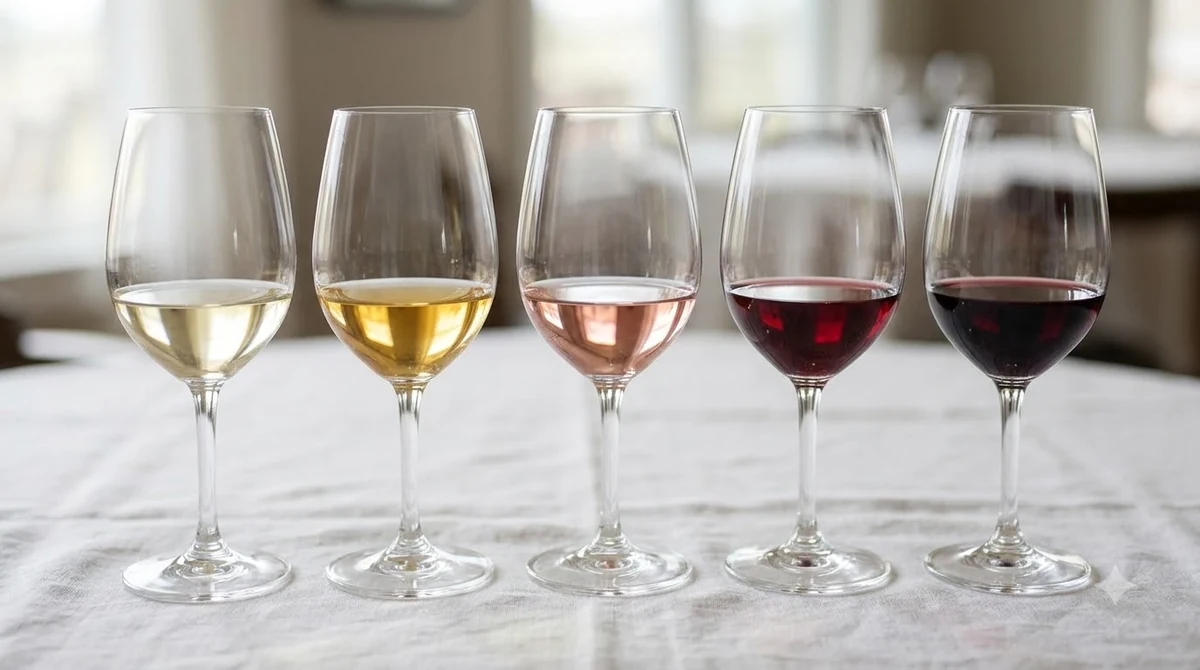
For structured reds such as Syrah or Cabernet Sauvignon, aim for 60–65°F; serving them too warm can make alcohol feel more prominent. Lighter reds such as Pinot Noir are generally better around 55–60°F. Chill light whites to 45–50°F and fuller whites such as an oak-influenced Roussanne or Chardonnay to 50–55°F. Sparkling wine is best at 40–50°F, while sweet whites are suited to 43–50°F.
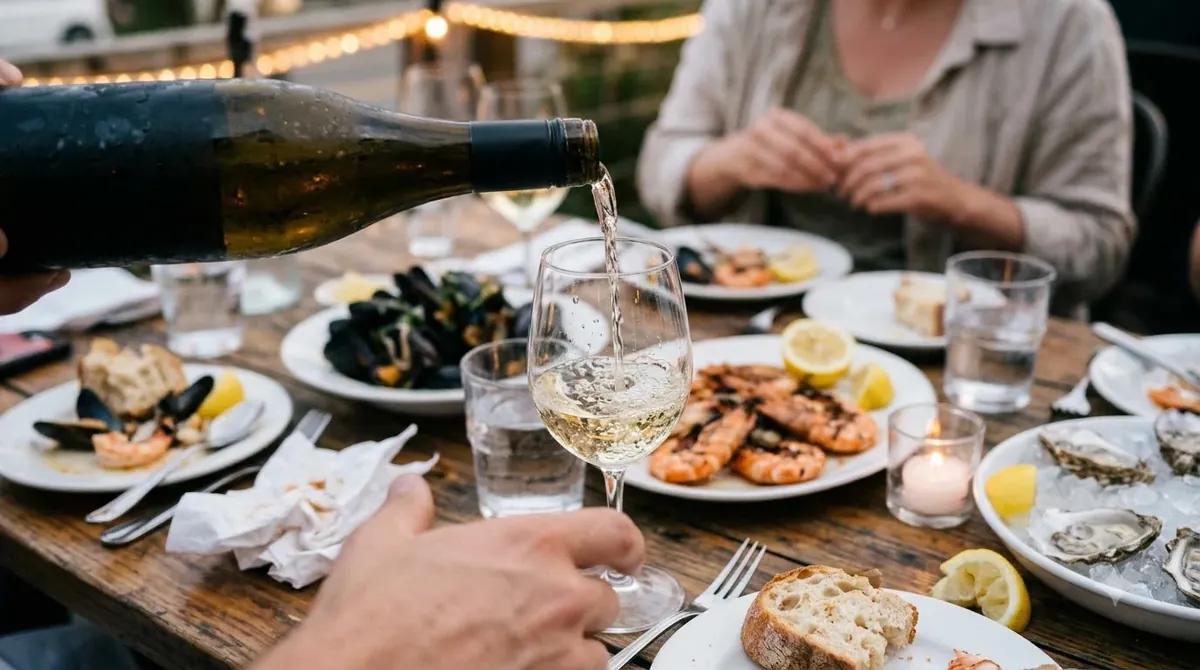
Pairing depends on acidity, tannin, sweetness, alcohol, and texture. A high-acid white such as Sauvignon Blanc can stand up to acidic food, including citrus-dressed salads or tomato-based dishes. Fuller whites can work with roast chicken, grilled vegetables, or creamy textures. Syrah and Cabernet Sauvignon have more tannin and can suit grilled beef, lamb, or richly seasoned mushrooms, while softer Merlot and lower-tannin Pinot Noir are flexible with roast poultry and pork.
Salt and fat soften the perception of tannin, so salty cheeses, charcuterie, or a rich grilled dish can make a firm red feel more approachable. Chili heat is amplified by alcohol and tannin, so spicy food is often easier with a lower-alcohol, fruit-forward wine or a wine with some sweetness. Oily fish can clash with tannic reds; serve salmon or trout with a crisp white or a lighter red instead. For dessert, choose a wine at least as sweet as the food.
Tip: Taste the same wine at two temperatures, particularly a structured red or aromatic white. A few degrees can change how acidity, alcohol, fruit, and oak feel, giving you a practical serving reference for the bottle you take home.
A standard 5-ounce pour gives about five glasses from a 750-milliliter bottle. Store unopened bottles on their sides near 55°F, away from temperature swings. After opening, refrigerate still wines and finish within three to five days; sparkling wines are best within one to three days, while fortified wines can last several weeks. Young, full-bodied reds may benefit from 30 to 60 minutes in a decanter. With an unfamiliar grape, taste before choosing food: note acidity, body, sweetness, and tannin, then choose a dish that complements those traits.
Frequently Asked Questions
These answers cover practical details that can help visitors prepare for tastings. They also distinguish the AVA’s legal rules from facts that apply to one individual winery.
Which counties contain the Sonoita AVA?
The AVA extends into west-central Cochise County, southeastern Pima County, and northeastern Santa Cruz County. Its official boundary follows a federal description based on U.S. Geological Survey topographic maps, rather than the municipal limits of Sonoita or Elgin.
What does the Sonoita AVA name require on a wine label?
Federal appellation rules require at least 85 percent of the grapes in an AVA-labeled wine to come from that AVA. The wine must also be fully finished within the state where the AVA is located, so the designation refers to geographic origin rather than a particular grape blend or flavor profile.
How much wine does Sonoita Vineyards produce?
Sonoita Vineyards reports annual production of about 4,000 to 5,000 cases. That figure applies to this one producer and should not be confused with total production for the Sonoita AVA, where winery size and output differ.
When is Sonoita Vineyards least crowded?
The winery recommends Monday through Thursday on non-holiday weeks for guests who want more one-on-one time with its wine consultants. It identifies Saturday and Sunday afternoons as its busiest period, so a weekday tasting may suit visitors who prefer a quieter conversation.
Can visitors bring a dog to Sonoita Vineyards?
The winery allows animals on its grounds when leashed and supervised, but pets are not permitted inside the tasting room unless they are service animals. Policies can differ at other properties, so ask each winery before bringing a pet on a multi-stop trip.
Sonoita wine country rewards visitors who make room for both the wine and the landscape: high grasslands, mountain views, dramatic weather, and a varied grape mix give the region a clear identity. Choose a few wineries, confirm details before driving, and taste across producers to understand the range within this Arizona AVA.
More in Wine Regions
 Willcox Wine Trail: Discover Arizona’s High-Elevation Wine CountryUpdated Nov 20, 2026
 Yakima Valley Wine Region: Find the Best Styles to TryUpdated Nov 20, 2026
 Vosne Romanee Wine Tasting: Identify Aromas and Choose Better PairingsUpdated Nov 20, 2026
 Yakima Valley Wine Festival: Find the Best Seasonal Wine EventsUpdated Nov 20, 2026
 Wales Vineyards: Discover Cool-Climate Wines and Where to VisitUpdated Nov 20, 2026
 Yountville Wine Festival: Discover Napa Wines and Local FoodUpdated Nov 20, 2026