

We may earn a commission when you buy through links on this page, at no extra cost to you. Learn more.
In North Carolina, yadkin valley wine country is the foothills wine region anchored by the Yadkin Valley AVA, where visitors can explore estate vineyards, European grape varieties, and distinctive regional hybrids. The appellation sits in the western Piedmont near the Blue Ridge Mountains and includes parts of seven northwestern counties. Its wineries range from established vineyard estates to smaller tasting rooms, with red blends, crisp whites, rosé, and off-dry wines all represented. A good visit pairs a little regional geography with a focused tasting plan rather than trying to cover every winery in one day.
North Carolina’s wine identity is broader than its well-known coastal and mountain landscapes might suggest. The Yadkin Valley gives wine drinkers a concentrated way to explore the state’s modern vinifera scene, while also showing how growers use hybrids suited to local conditions. Here is what to know about the appellation, the bottles to seek out, and how to plan a visit that leaves room to enjoy the scenery.
Where the Appellation Sits in North Carolina
The Yadkin Valley AVA occupies the northwestern Piedmont and the foothills leading toward the Blue Ridge Mountains. Its scale is broad, but winery visits are concentrated around communities such as Elkin, Dobson, Ronda, Boonville, Hamptonville, and Jonesville.
The federal appellation was established in 2003, making it North Carolina’s first American Viticultural Area. Wine Enthusiast’s Yadkin Valley profile lists its area at 1,416,600 acres and its elevation range at roughly 800 to 1,600 feet. The AVA includes all of Wilkes, Surry, and Yadkin counties, along with parts of Davie, Davidson, Forsyth, and Stokes counties. That boundary describes a large grape-growing region, not a single valley floor or one compact tourism district, so two tasting rooms carrying the same appellation name can sit in noticeably different settings.
The Yadkin River valley and surrounding foothills help explain the region’s varied vineyard locations. Pilot Mountain, the Brushy Mountains, and the Blue Ridge foothills shape the views and terrain. Elevation, slope, and air movement change conditions from one vineyard to another, encouraging growers to work with several grape varieties.
Swan Creek is an important name to understand on a wine label or itinerary. It is a smaller AVA nested within the Yadkin Valley AVA, established in 2008, and its loamy soils include schist and mica. The two designations are related but not interchangeable: a Swan Creek wine identifies a more specific growing area within the broader Yadkin Valley. When planning visits, use the winery’s address and tasting schedule rather than assuming all producers are clustered in one town.
Climate, Elevation, and Vineyard Conditions
Yadkin Valley’s foothill setting combines sunny growing days, rolling terrain, a relatively long growing season, and soils that vary across the appellation. The result is enough diversity for both classic European grapes and hybrids, although vineyard site and vintage conditions still influence the character of each bottle.
Regional soil descriptions include clay, fine loam, schist, and mica. Soil names alone cannot predict a wine’s flavor, but they help explain why growers monitor drainage, water availability, slope, and vine vigor. A hillside may shed cold air differently from a lower pocket, while slope direction affects sunlight.
Temperature and growing-season length matter because grapes need enough time and warmth to ripen before autumn frost. North Carolina State Extension’s statewide analysis estimates growing seasons of 154 to 239 days among active vineyards, reflecting major differences in elevation and topography. That is a statewide range, not a Yadkin Valley average; the practical point is that the same grape can behave differently on a warmer foothill site than on a cooler slope.
Growers also manage humidity, seasonal rain, disease pressure, and spring frost risk. Extension identifies Pierce’s Disease, spread by insect vectors, as a major threat that can cause vine dieback in the Yadkin Valley foothills. Some hybrid grapes bring traits that help them cope with local conditions; the study finds vinifera and hybrids predominant in Yadkin Valley and Swan Creek, with smaller plantings of muscadines and native American grapes.
Grapes and Wine Styles to Look For
Expect a mix of structured reds, aromatic whites, approachable rosés, and hybrid-based wines rather than one dominant regional style. Cabernet Franc, Cabernet Sauvignon, Merlot, Chardonnay, Viognier, Chambourcin, and Traminette are useful starting points for a first tasting flight.
Among the red vinifera grapes, Cabernet Franc is especially worth comparing across wineries because it can show fresh red-fruit character, herbal notes, and moderate tannin. Cabernet Sauvignon usually brings firmer tannin and darker fruit, while Merlot tends to feel rounder and softer. Syrah and Petit Verdot also appear in regional plantings and blends. If a winery pours several reds side by side, compare their body and tannin rather than assuming that every bottle labeled with the same grape will taste alike.
Whites show another side of the region. Chardonnay can range from crisp and restrained to fuller styles shaped by lees contact or oak. Viognier is often more aromatic, with stone-fruit and floral notes, while Riesling and Sauvignon Blanc can offer brighter acidity. Traminette, a French-American hybrid, is known for a fragrant profile and may be made dry or with some residual sweetness. Chambourcin is a useful red hybrid to try because its color and fruit can work in a single-variety bottling or a blend.
In North Carolina State Extension’s western Piedmont survey, Merlot appeared in 25 vineyard plantings, Chardonnay and Cabernet Sauvignon in 22 each, and Cabernet Franc in 21. These are planting counts, not acres or bottle production, but they show why these classic varieties are useful starting points for a tasting.
| Wine to Try | Typical Character | Serving Temperature |
|---|---|---|
| Riesling | Bright acidity; can be dry or off-dry | 45–50°F |
| Chardonnay | Medium acidity; citrus, orchard fruit, or oak | 50–55°F |
| Viognier | Aromatic white with ripe stone-fruit notes | 50–55°F |
| Cabernet Franc | Red fruit, herbal notes, moderate tannin | 55–60°F |
| Chambourcin | Fruit-forward red hybrid; often approachable young | 55–60°F |
| Cabernet Sauvignon | Fuller red with higher tannin | 60–65°F |
These temperatures are useful starting points, not rigid rules. A very cold white can hide its aromas, while a warm red may seem heavier and more alcoholic than intended. Ask for a cooler or slightly warmer pour when a wine seems muted, and revisit it after a few minutes in the glass. A tasting is more informative when you pay attention to how the wine changes as its temperature settles.
How to Taste the Region’s Wines
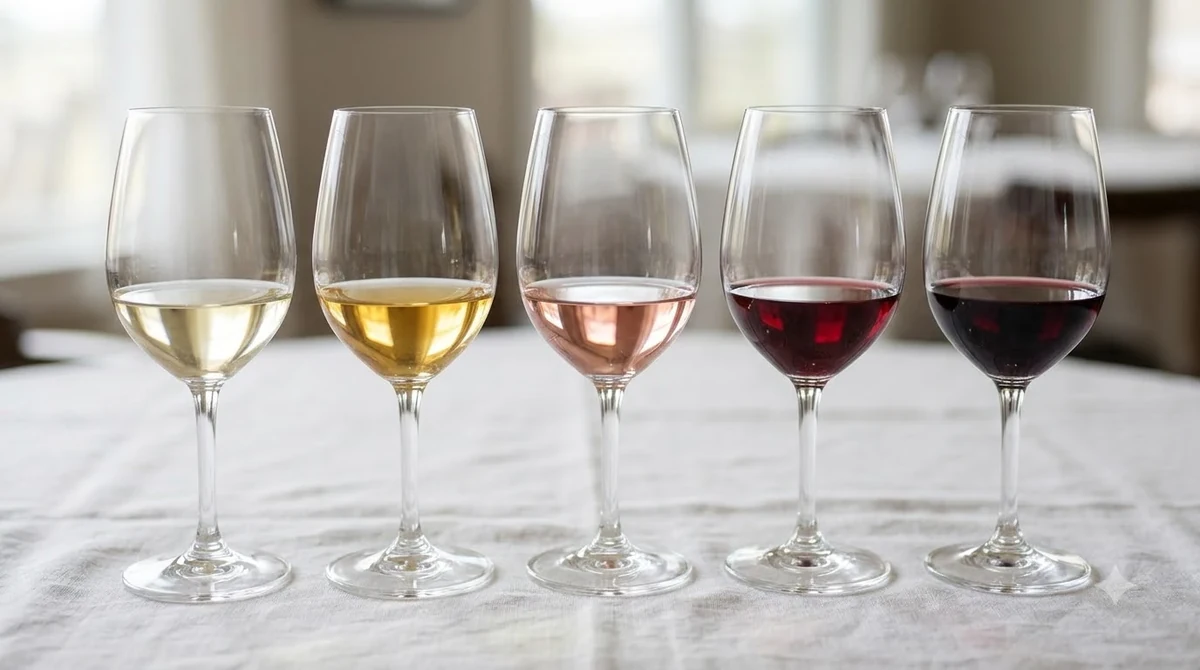
A useful Yadkin Valley tasting compares different grapes and winemaking choices, not just several versions of the same style. Start with a bright white, move to a fuller white or rosé, and finish with lighter and then more structured reds.
For a focused flight, begin with Riesling or Sauvignon Blanc to assess acidity, then taste Chardonnay or Viognier for a fuller texture and more aromatic weight. A dry rosé can bridge the gap between whites and reds. Finish with Cabernet Franc, Merlot, and Cabernet Sauvignon if they are available; the contrast between Cabernet Franc’s herbal edge, Merlot’s softer tannin, and Cabernet Sauvignon’s firmer structure makes the comparison especially helpful.
Ask the person pouring about the grape source, whether the wine is estate-grown, how much oak was used, and whether the wine is fully dry. These questions help distinguish vineyard character from cellar decisions. For a hybrid such as Chambourcin or Traminette, ask what the producer wants the grape to contribute: fruit, color, aromatics, freshness, or a particular balance of sweetness and acidity. A tasting room can be a useful place to learn regional vocabulary without needing to memorize technical terms.
Tip: Taste from lighter to fuller wines, take a sip of water between pours, and write down the grape, sweetness level, and one flavor you noticed. A 5-ounce pour is a standard glass of wine, and a 750-milliliter bottle holds about five such servings; tasting-room pours are often smaller, but ask before ordering a flight.
Food can sharpen the comparison. High-acid whites such as Riesling and Sauvignon Blanc work well with foods that have a bright citrus or vinegar component because the wine’s acidity can keep pace with the dish. Cabernet Sauvignon and Syrah have more tannin, which tends to feel softer beside salt and fat, such as grilled beef or aged cheese. Pinot Noir is not a regional calling card in the same way as Cabernet Franc, but its lower-to-medium tannin and higher acidity make it a useful reference point for lighter reds.
Wineries and Towns to Put on Your Route
Several towns make practical anchors for a tasting itinerary, and the region’s winery mix ranges from larger vineyard estates to smaller producers. Choose a compact cluster of stops instead of trying to cross the entire AVA between appointments.
Dobson is a useful place to start with Shelton Vineyards, which Wine Enthusiast describes as an estate with 87 acres of vinifera vines, a bistro-style restaurant, and hotel accommodations. The profile also highlights a gravity-flow production facility and barrel rooms. That combination makes Shelton a natural option for visitors who want to connect the vineyard landscape with a broader winery experience. Check directly with the property for current tours, food service, and tasting arrangements before building the rest of the day around it.
Near Jonesville, Dynamis Estate Wines offers another kind of estate visit. Wine Enthusiast lists the property at 1,640 feet in elevation and describes guided tours, seasonal locally inspired light bites, and special events. Its listed address is on Highland Road, making it a distinct stop from the Dobson area rather than an automatic walk or quick hop between tasting rooms. The regional directory also identifies JOLO Winery and Vineyards near Pilot Mountain, while Grassy Creek Vineyard and Winery is listed in State Road, close to Elkin.
Elkin and its surrounding countryside are particularly useful for building a day with several nearby wine-related stops, and the broader area includes producers in Ronda, Boonville, State Road, and Hamptonville. For a more structured route, use the Yadkin Valley wine trail as a planning framework, then confirm which tasting rooms are open on your chosen day. A winery directory is a starting point rather than a guarantee that every listed business offers walk-in tastings every day.
Planning a Practical Wine-Country Visit
One well-paced day can introduce the region, while two days give visitors more time to compare subregions and different winery styles. A comfortable plan usually includes two or three scheduled tasting stops, time for lunch, and enough space between visits to enjoy the landscape without rushing.
Before leaving, check each winery’s current hours, reservation rules, tasting format, food availability, and policies for groups. Some properties offer guided tours or special events; others may focus on a tasting-room experience. Do not assume that a winery directory reflects same-day availability. Weekends, holiday periods, and event dates can change how far ahead you need to reserve, and a private event may affect public access.
Plan around actual addresses: Dobson, Elkin, Ronda, Boonville, Hamptonville, and Jonesville are useful anchors, but the AVA is wide and its wineries do not sit on one continuous wine road. Arrange a designated driver or hired transportation where available, carry water, and leave time for a meal rather than treating each tasting as a full glass of wine.
Think about the season as well as the calendar. Vineyard landscapes change through the growing cycle, and harvest activity can make a visit feel different from a quiet winter tasting-room stop. Spring and summer bring active growth and outdoor scenery; fall can bring harvest-related activity, though vineyard work is weather-dependent. Whatever the season, verify whether patios, tours, and food service are operating before you arrive. For a broader sense of how this foothill region compares with other American wine destinations, it can be useful to read about Santa Ynez Valley wine country or other wine regions before deciding what kind of trip you want.
Record the wines you liked, their grapes, and whether they were dry, off-dry, or sweet. Ask about safe bottle transport in hot weather. At home, store bottles away from sunlight and temperature swings; refrigerate opened still wine and aim to finish it within three to five days. A young, full-bodied red may benefit from 30 to 60 minutes in a decanter.
Frequently Asked Questions
How do you pronounce Yadkin Valley?
Wine Enthusiast gives the pronunciation as “YAD-kin VAL-ee.” The first syllable of Yadkin is stressed, and the valley name is generally said as two clear words rather than blended into one.
What does AVA mean on a North Carolina wine label?
AVA stands for American Viticultural Area, a federally recognized grape-growing region with a defined boundary. The designation identifies geographic origin; it does not by itself guarantee a particular grape variety, sweetness level, or quality tier.
Is the Yadkin Valley name connected to the Yadkin River?
The name is associated with the Yadkin people, who lived along the river now known as the Yadkin River. The appellation’s name therefore reflects the region’s human history as well as its river-valley geography.
Can visitors taste wine made from hybrid grapes?
Yes. Chambourcin and Traminette are two examples of French-American hybrids associated with North Carolina winegrowing. Hybrids are produced from crosses involving different grape species and can offer growers traits that differ from those of European vinifera varieties.
Does every Yadkin Valley winery offer tours?
No. Tour formats vary by property, and a tasting-room listing does not necessarily mean that a guided production tour is available. Ask whether a visit includes vineyard access, the winemaking area, or only a seated tasting before you reserve.
Yadkin Valley rewards visitors who approach it as a varied foothill appellation rather than a single-style wine destination. Focus on a few producers, compare the region’s vinifera and hybrid grapes, and leave time to enjoy the towns and vineyard scenery between tastings.
More in Wine Regions
 Willcox Wine Trail: Discover Arizona’s High-Elevation Wine CountryUpdated Nov 20, 2026
 Yakima Valley Wine Region: Find the Best Styles to TryUpdated Nov 20, 2026
 Vosne Romanee Wine Tasting: Identify Aromas and Choose Better PairingsUpdated Nov 20, 2026
 Yakima Valley Wine Festival: Find the Best Seasonal Wine EventsUpdated Nov 20, 2026
 Wales Vineyards: Discover Cool-Climate Wines and Where to VisitUpdated Nov 20, 2026
 Yountville Wine Festival: Discover Napa Wines and Local FoodUpdated Nov 20, 2026