

We may earn a commission when you buy through links on this page, at no extra cost to you. Learn more.
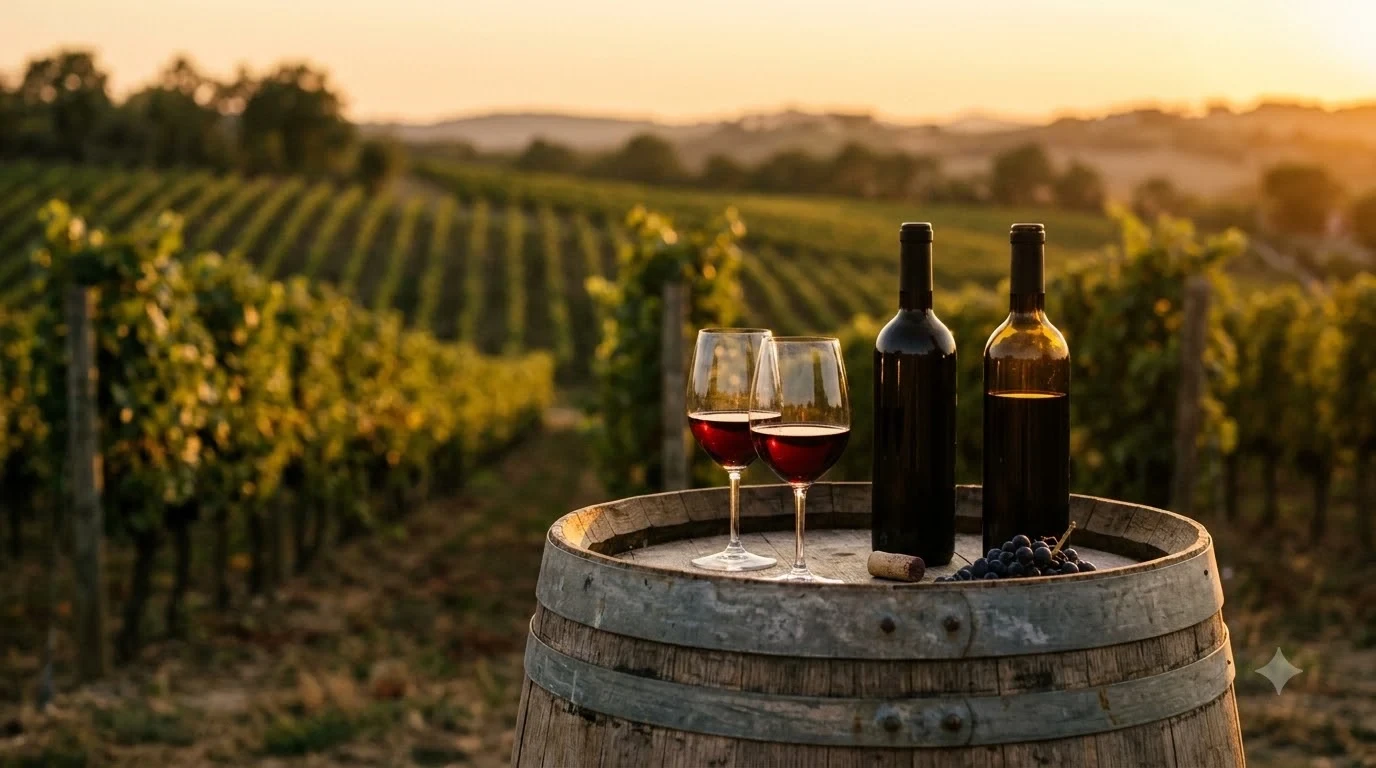
Hill country vineyards are the grape-growing estates and vineyard sites of Texas Hill Country, a large wine region centered on communities around Fredericksburg, west of Austin, and north of San Antonio. The region is known for limestone and granite terrain, a mix of locally grown and regionally sourced grapes, and wines made from varieties such as Tempranillo, Tannat, Aglianico, Viognier, and Albariño. Understanding the difference between the Texas Hill Country AVA and an individual vineyard helps you choose bottles with a clearer sense of origin. It also makes a tasting-room visit more rewarding.
Texas wine country is not one continuous vineyard but a broad patchwork of hills, ranchland, small growing sites, wineries, and tasting rooms. Some producers farm their own grapes, while others work with vineyards elsewhere in Texas. This guide explains where the vines grow, what the region’s labels mean, which grapes to seek out, and how to taste the wines with confidence.
Where Texas Hill Country Vineyards Are Located
The Texas Hill Country AVA stretches across a wide area in central Texas, north of San Antonio and west of Austin. Its visitor-facing wine scene is concentrated around Fredericksburg and a series of smaller communities, but the appellation itself is much larger than any single wine trail.
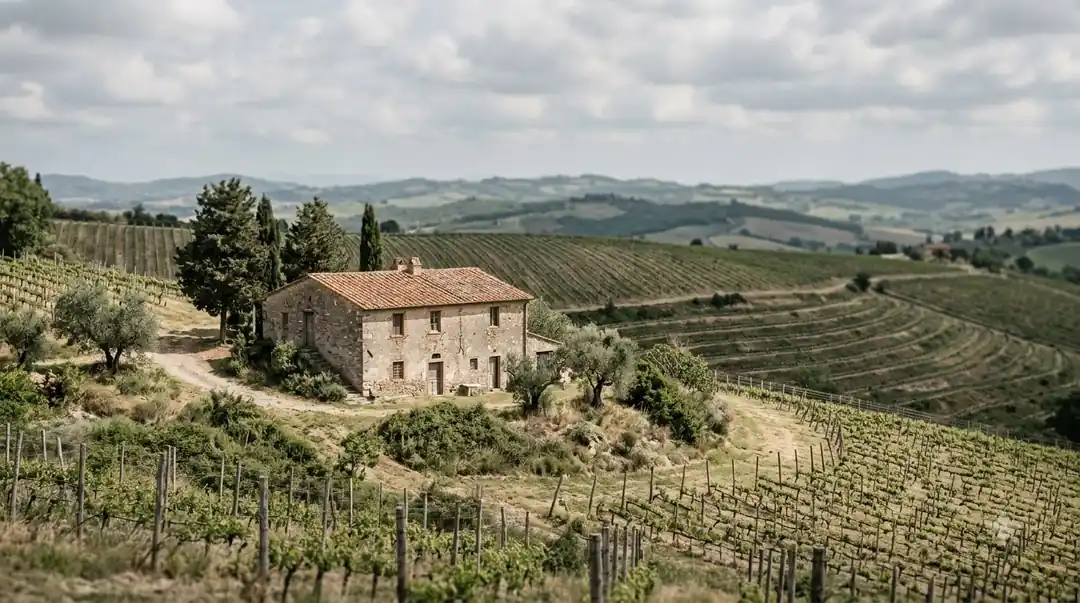
The Texas Hill Country Wineries regional overview describes an AVA of about 9 million acres, with more than 100 wineries and approximately 2,000 acres of vineyards. That distinction matters: the AVA is a geographic boundary, not a claim that every acre within it is planted to wine grapes. Much of the landscape remains ranchland, woodland, farms, towns, and open countryside. The vineyard acreage is a relatively small part of a very large region.
Fredericksburg is the best-known visitor hub, while tasting rooms and vineyards also appear around Driftwood, Dripping Springs, Johnson City, Stonewall, Hye, Spicewood, Burnet, and Marble Falls. The Austin-area side of the region is convenient for shorter outings, while the Fredericksburg corridor offers a denser collection of wine stops and a more extended wine-country day. The regional geography is varied enough that two tasting-room itineraries can feel quite different even when both use the Hill Country name.
It helps to distinguish a vineyard from a winery and a tasting room. A vineyard is where grapes grow; a winery is where grapes are made into wine; and a tasting room is where visitors sample bottles. One business may combine all three, but they do not have to share an address. That is why the words “Hill Country winery” and “Hill Country vineyard” are not always interchangeable.
How the AVA and Smaller Appellations Work
The Texas Hill Country American Viticultural Area is a legally defined growing region, while smaller AVAs identify more specific places within it. The name on a bottle can therefore tell you whether the wine represents the wider Hill Country or a more narrowly defined growing area.
The Texas Wine and Grape Growers Association describes the Texas Hill Country AVA as the third-largest certified viticultural area in the United States, covering well over 9 million acres. Two smaller AVAs sit within its wider boundaries: Bell Mountain and Fredericksburg in the Texas Hill Country. The Fredericksburg AVA covers about 110 square miles. Bell Mountain, designated in 1986, covers about 5 square miles roughly 15 miles north of Fredericksburg.
For a wine to use an AVA name on its label, at least 85 percent of the wine’s volume must come from grapes grown in that AVA. This is a useful origin rule, but it does not mean that every grape in the bottle was grown at the winery printed on the front label. Nor does an AVA designation tell you whether the wine is red, white, sparkling, dry, or sweet. It identifies geographic origin under the labeling rules; the producer, grape variety, vintage, and winemaking choices tell the rest of the story.
When comparing bottles, look for the most specific place name and ask what it represents. “Texas Hill Country” identifies a broad region; “Fredericksburg in the Texas Hill Country” or “Bell Mountain” narrows the geographic claim. If you are learning how appellations work in other countries and states, the wider Wine Regions overview can help put American AVAs in context.
Limestone, Elevation, and Vineyard Growing Conditions
Hill Country vineyards grow in a landscape shaped by limestone, sandy loam, granite, and large exposed rocks. The region’s varied soils and topography mean that site selection, drainage, and vineyard management can matter as much as the broad regional name.
The regional association places the Llano Uplift and Enchanted Rock to the north and west, with the Edwards Plateau farther east and the Balcones Fault helping define the landscape. These are not just scenic labels: the area’s geology creates different soil depths, textures, slopes, and exposures. A vineyard planted on a shallow rocky site will not behave exactly like one on deeper sandy loam, even if both lie within the same AVA.
Compared with the Texas High Plains, which sits about 400 miles farther north, the Hill Country has lower elevation, higher rainfall, and less dramatic day-to-night temperature swings, according to Decanter’s regional comparison. Those differences help explain why the two major Texas growing regions can produce wines with distinct profiles. They also mean that growers in the Hill Country must pay close attention to local conditions rather than assume that a grape successful in another part of Texas will behave identically here.
In a warm growing environment, canopy management can help protect fruit from excessive sun, while careful timing of harvest helps balance ripe fruit with freshness. Drainage is also important where storms deliver substantial rain, particularly on sites with clay-rich or compacted soils. Limestone and rocky ground may be a striking feature of the landscape, but growers still need to match rootstock, variety, row orientation, and vineyard practices to each site. These decisions are practical responses to the land, not marketing language.
These conditions create variation from one vineyard to the next. Grape variety, site, and harvest decisions all shape acidity, body, tannin, and aroma, so it is useful to compare several producers rather than expect every Hill Country bottle to share one signature style.
Grapes and Wine Styles to Look For
Warm-climate varieties from Spain, southern France, and Italy are an important part of the region’s identity. Tempranillo, Tannat, Aglianico, and Syrah are useful red grapes to look for, while Viognier, Roussanne, Vermentino, Albariño, and Picpoul Blanc broaden the white-wine selection.
Tempranillo is a natural starting point for red-wine drinkers because it is an Iberian grape with a long record in warm growing areas. In the Hill Country, it appears as a varietal wine and in blends. Its profile can move from red and dark fruit toward savory herbs, spice, and oak depending on ripeness and cellar choices. It is a flexible partner for grilled meats, smoked brisket, and dishes with herbs or roasted peppers.
Tannat and Aglianico offer a firmer, more structured direction. Tannat is known for pronounced tannin and dark-fruit character, while Aglianico can combine firm tannin with notable acidity. Syrah adds another option for drinkers who enjoy darker fruit and peppery, savory notes. These wines can work especially well with smoky or fatty foods, since salt and fat soften the impression of tannin. For a comparison with another warm-climate South American growing region, see the overview of Uruguay vineyards, where Tannat is also an important grape.
White-wine drinkers should not overlook the region. Viognier can offer fuller texture and floral, stone-fruit character; Roussanne can contribute body and savory complexity; and Albariño and Vermentino are useful choices when you want freshness with food. Picpoul Blanc also appears in Texas Hill Country bottlings. Wine Enthusiast’s regional selection includes examples of Viognier, Picpoul Blanc, Aglianico, Tempranillo, and Tannat, illustrating the range. Blends are worth considering, too: a grower may combine grapes to balance acidity, tannin, color, aroma, and texture. Ask which grape leads the blend and what the other components contribute.
Choosing a Vineyard and Planning a Tasting
A good Hill Country visit starts by deciding whether you want to see vines, learn about production, or sample a range of Texas wines. Some stops offer vineyard walks and estate-focused tastings, while others are primarily tasting rooms with wines made from fruit grown elsewhere in the state.
The visitor area spreads from the Austin outskirts toward Fredericksburg. Driftwood and Dripping Springs are practical for a shorter trip from Austin; farther west, Johnson City, Spicewood, Burnet, Marble Falls, Hye, Stonewall, and Fredericksburg offer more options for a full day or overnight visit. Visit Austin’s guide describes a 32-acre vineyard at Spicewood Vineyards and a 35-acre vineyard at Salt Lick Cellars—examples of individual vineyard properties, not estimates for the entire AVA.
Before choosing a stop, ask whether the tasting includes estate-grown fruit, grapes from other Hill Country growers, or fruit from another Texas region. A winery can be part of the Hill Country visitor scene without growing all its grapes there: Visit Austin notes that Duchman Family Winery pours in Driftwood while using Texas High Plains grapes for wines including Vermentino. Plan two or three appointments rather than trying to fit every stop into one afternoon, and ask whether each visit includes a vineyard walk, production tour, guided flight, or counter tasting. Reservations may be needed for seated flights and tours.
Tip: At each tasting, ask one direct question: “Are these grapes estate-grown, grown elsewhere in the Hill Country AVA, or sourced from another Texas region?” The answer will help you understand the wine’s origin more clearly than the tasting-room address.
It is also useful to compare the same grape from two producers. A side-by-side tasting of Tempranillo or Viognier can show how site, harvest timing, fermentation, and oak choices change the final wine. For a seasonal event built around regional producers, the Hill Country wine festival can offer another way to sample several styles in one setting.
Serving Temperatures and Food Pairings
Hill Country wines are easiest to understand when served at the right temperature and matched to food with a similar level of weight and intensity. Chill fresh whites and rosés, serve fuller whites slightly warmer, and avoid serving structured reds at hot room temperature.
Use the following ranges as a practical starting point. A lighter, high-acid white such as Albariño generally benefits from a cooler pour, while a fuller Viognier or Roussanne can show more texture at a slightly warmer temperature. Reds such as Tempranillo, Tannat, Aglianico, and Syrah usually work best in the full-red range rather than warm enough to accentuate alcohol.
| Wine style | Serving temperature | Food pairing to try |
|---|---|---|
| Albariño or another crisp white | 45–50°F | Grilled Gulf shrimp, oysters, or citrus-dressed fish |
| Viognier or a fuller white blend | 50–55°F | Roast chicken, pork tenderloin, or herb-roasted vegetables |
| Dry rosé | 45–50°F | Smoked turkey, grilled vegetables, or charcuterie |
| Tempranillo or Syrah | 60–65°F | Smoked brisket, grilled sausage, or barbecue ribs |
| Tannat or Aglianico | 60–65°F | Fatty beef, lamb, or slow-cooked short ribs |
For barbecue, consider the sauce as well as the meat. Smoky, fatty brisket can work with Tempranillo or Syrah because fat softens tannin; a sweet sauce calls for a fruit-forward wine that will not seem overly dry beside it. With acidic foods such as tomato salsa or vinegar slaw, choose a wine with equal or higher acidity. Chili heat is amplified by alcohol and tannin, so a crisp white or rosé may be more comfortable beside fiery salsa, while oily fish is usually better with white wine than a tannic red.
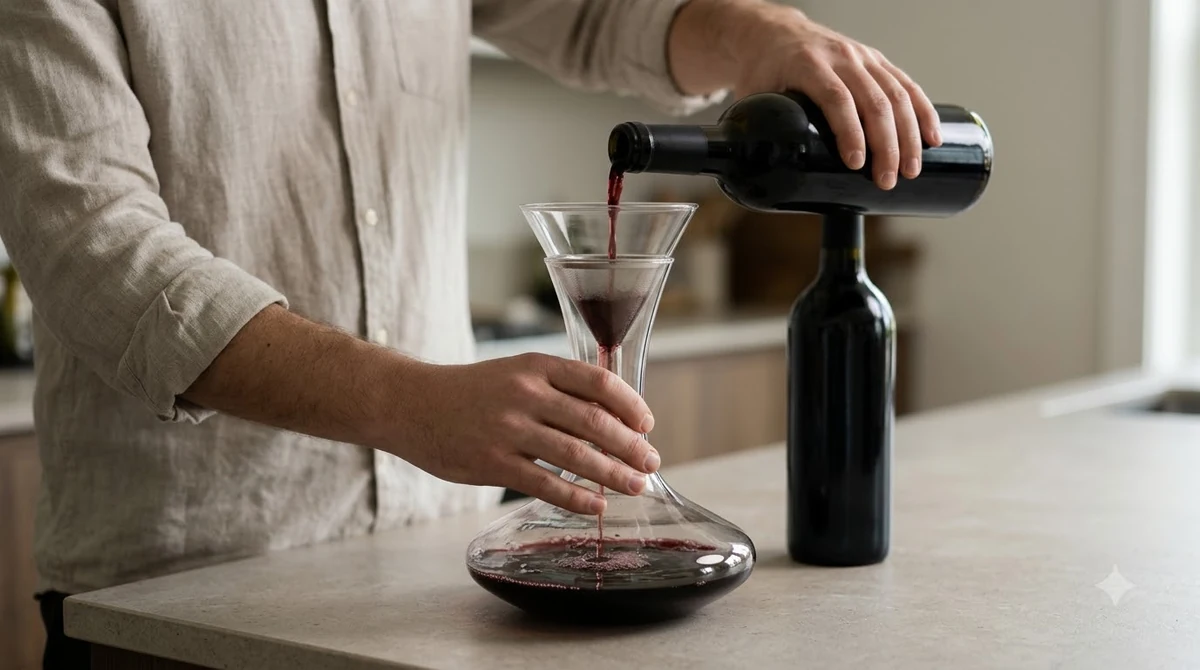
At home, pour about 5 ounces per glass; a 750-milliliter bottle yields roughly five servings. Young, full-bodied reds can benefit from 30 to 60 minutes in a decanter. Store unopened bottles on their sides near 55°F, and refrigerate opened still wine, which is generally best within 3 to 5 days.
Frequently Asked Questions
How many American Viticultural Areas are in Texas?
Texas has eight AVAs in the Texas Wine and Grape Growers Association’s listing. In addition to Texas Hill Country and Texas High Plains, the list includes Texoma, Mesilla Valley, Escondido Valley, Texas Davis Mountains, Bell Mountain, and Fredericksburg in the Texas Hill Country. The last two are geographically within the larger Hill Country AVA.
How far back does Texas winemaking history go?
The Texas Wine and Grape Growers Association traces the state’s first vineyard to Franciscan priests near 1659. European settlers later brought additional vine cuttings as mission communities and settlements expanded. That early history predates the modern commercial wine industry by several centuries.
How many vineyard acres are planted across Texas?
The Texas Wine and Grape Growers Association estimates approximately 4,500 acres of producing vineyard farmland statewide. That figure covers Texas as a whole, not just the Hill Country AVA. It helps put the region’s approximately 2,000 vineyard acres into a broader state context.
How many wineries belong to Texas Hill Country Wineries?
The association says more than 60 wineries are members, within a wider region that has over 100 wineries. Membership is an industry affiliation, not a claim that every member bottles only estate-grown grapes. It is a useful starting point for discovering participating producers.
How widely are Texas wines distributed outside the state?
Decanter reports that approximately 95 percent of Texas wine is sold within Texas. That means visitors are often in a better position to sample a broad local selection at the source than shoppers in distant markets. Bottles from small producers may be especially difficult to find outside the state.
Hill Country vineyards offer more than a scenic backdrop: they reveal how Texas growers are matching grapes to a varied landscape and building a regional identity around them. Start with a clearly sourced bottle of Tempranillo, Viognier, or Tannat, then compare it with another producer to discover how much the vineyard site and winemaking choices can change the glass.
More in Wine Regions
 Willcox Wine Trail: Discover Arizona’s High-Elevation Wine CountryUpdated Nov 20, 2026
 Yakima Valley Wine Region: Find the Best Styles to TryUpdated Nov 20, 2026
 Vosne Romanee Wine Tasting: Identify Aromas and Choose Better PairingsUpdated Nov 20, 2026
 Yakima Valley Wine Festival: Find the Best Seasonal Wine EventsUpdated Nov 20, 2026
 Wales Vineyards: Discover Cool-Climate Wines and Where to VisitUpdated Nov 20, 2026
 Yountville Wine Festival: Discover Napa Wines and Local FoodUpdated Nov 20, 2026