

We may earn a commission when you buy through links on this page, at no extra cost to you. Learn more.
Hill Country wine comes from the Texas Hill Country, a large American Viticultural Area in Central Texas. The AVA covers about 9.6 million acres on the Edwards Plateau, north and west of the Balcones Fault, and was established in 1991. The region grows dozens of grape varieties, with Mediterranean reds such as Tempranillo, Sangiovese and Syrah among the best known, and it has roughly 100 wineries.
This guide covers where the region sits, which grapes grow there, how the wine industry developed, and how to find and enjoy a bottle. If you are new to Texas wine, the sections below will give you a clear starting point.
Where the Texas Hill Country Is
The Texas Hill Country is in Central Texas, an area of rolling limestone hills and river valleys. According to the Wikipedia entry for the Texas Hill Country AVA, its boundary lies north and west of the part of the Balcones Fault that runs west of San Antonio and Austin, and it extends across the Edwards Plateau.
The AVA is very large. Its total area is listed as 9.6 million acres, or about 15,000 square miles, which is far bigger than most wine regions people know by name. Because of that size, wine styles and growing conditions vary from one part of the region to another.
Grape Varieties in Hill Country Wine
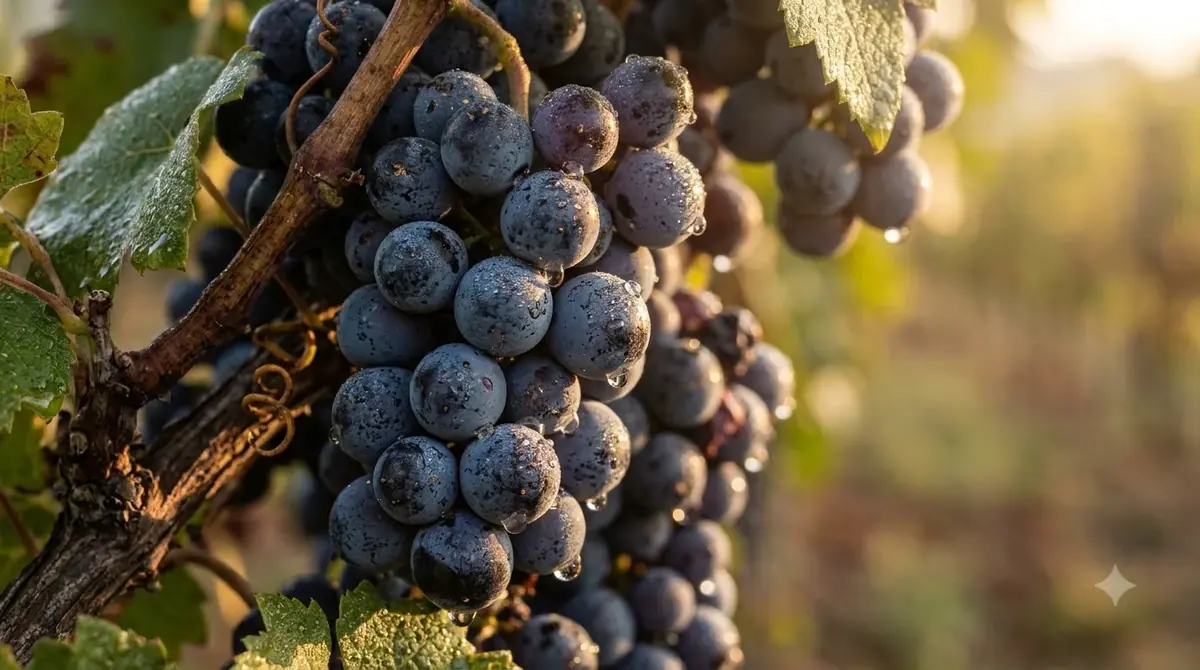
The region grows a wide mix of varieties. The Wikipedia infobox for the AVA lists 37 grape varieties, and the text notes that most of them come from France, Italy or Spain.
Tempranillo, Sangiovese, Syrah, Cabernet Sauvignon and Merlot are among the best-known reds. Tempranillo’s Spanish roots suit the warm, dry climate, while Sangiovese brings the bright acidity associated with Italian wine. Syrah tends to give darker fruit and spice, and Cabernet and Merlot are common in blends.
Blends are another common approach. Winemakers often combine Mediterranean and Bordeaux varieties to balance acidity, tannin and fruit, and the results can be quite different from single-variety bottlings. Reading the back label for the list of grapes is a useful habit in this region.
White wines are also produced, though red varieties get most of the attention. Visitors who want to understand the region’s range often try a few reds and a white side by side.
| Style | Common varieties | What to expect in the glass |
|---|---|---|
| Spanish-style red | Tempranillo | Red fruit, earthy notes and a medium body |
| Italian-style red | Sangiovese | Bright acidity, cherry and herb character |
| Rhone-style red | Syrah | Dark fruit, pepper and spice |
| Bordeaux-style blend | Cabernet Sauvignon, Merlot | Structured tannins and black fruit |
A Short History of the Industry
Winemaking in the area is older than many people expect. Winefolly’s Texas Hill Country history page says Franciscan missionaries planted the first Texas vineyards near El Paso in the 1650s, and that German and Italian settlers brought winemaking to Central Texas in the 1800s, especially in Gillespie County.
Prohibition closed wineries and abandoned vineyards in the 1920s and early 1930s. The page says the modern revival began in the 1970s, when researchers at Texas Tech and Texas A&M saw that local soils and climate resembled those of southern Europe. Llano Estacado Winery opened in 1976, and the Texas Hill Country AVA was recognized in 1991.
The AVA was established on November 29, 1991, which gave the region a formal legal identity and made it easier for producers to describe where their grapes came from. Winefolly notes that the Texas Hill Country Wineries Association, founded in 1999 with eight members, had grown to nearly 70 members. Wikipedia’s summary puts the number of wineries and vineyards in the AVA at approximately 100, and many producers focus on tasting rooms and events, so visiting is a big part of the local experience.
How Climate and Soil Shape the Wine
The Hill Country’s climate is warm and dry for much of the growing season, and the limestone soils drain quickly. Those conditions suit grapes that handle heat and need good drainage. Growers also have to manage disease pressure and water, which is why vineyard practices differ widely between producers.
Heat-tolerant varieties such as Tempranillo, Viognier and Sangiovese have become more popular in the region because they cope well with a hot, dry summer. That practical choice helps explain why the list of grapes in the Hill Country looks so Mediterranean.
Because the AVA is so large, altitude and local soil can change from one site to the next. A winery near the hills may produce a different style from one in a lower valley, even within the same appellation.
How to Serve Hill Country Wine
Serving temperature depends on the style. Reds with firm tannins, such as Cabernet blends, usually show best slightly below room temperature, while lighter reds like many Tempranillo and Sangiovese bottlings are often served a little cooler. Whites should be chilled but not icy, so their aromas can come through.
Decanting a young, tannic red for an hour or so can help it open up. Older bottles need less time. A standard wine glass with a wide bowl works well for almost every style from the region.
Tip: Ask the tasting room staff which varieties they recommend for the season. Many wineries offer small flights that let you compare styles without committing to a full bottle.
Food Pairing Ideas
Food is a big reason the region’s wines feel at home at the table. Many of the dishes people associate with Central Texas, from brisket to sausage and fresh tortillas, have the richness and seasoning that suit both reds and whites from the area.
Hill Country reds pair well with the regional food that people know best. Grilled and smoked meats, sausages and barbecue all have the fat and char that can stand up to firm tannins. Tempranillo and Sangiovese suit tomato-based dishes and roasted vegetables, while Syrah works with spiced or peppery meals.
Lighter whites and rosé styles fit salads, goat cheese and fresh seafood. Matching the wine’s body to the body of the food is usually the simplest rule to follow.
Frequently Asked Questions
Where is the Texas Hill Country?
It is in Central Texas, north and west of the part of the Balcones Fault that runs west of San Antonio and Austin. The region extends across the Edwards Plateau and is a large American Viticultural Area.
What grapes grow in Hill Country wine country?
The region grows many varieties, including Tempranillo, Sangiovese, Syrah, Cabernet Sauvignon and Merlot. Most of the varieties are originally from France, Italy or Spain.
When was the Texas Hill Country AVA established?
The AVA was established on November 29, 1991. It covers about 9.6 million acres, which makes it one of the larger wine regions in the United States by area.
Is Hill Country wine worth trying if I usually drink European wine?
Many people find it interesting because the grapes are familiar but the regional character is distinct. Tempranillo and Sangiovese from Texas can taste different from their European counterparts, so tasting a few bottles side by side is a good way to compare.
When you choose a bottle, look at the producer’s name, the vintage and the list of grapes on the label. A wine that names its variety, such as Tempranillo or Sangiovese, gives you a clearer idea of what to expect than a generic red blend. Bottles from smaller wineries are often a good way to taste the local character, and staff at a tasting room can point you to styles that fit your meal.
Hill Country wine rewards anyone willing to explore beyond familiar labels. For more background, see the Texas Hill Country wine guide, plan a visit with the list of Texas Hill Country wineries, or compare the region with other areas in the wine regions section.
More in Wine Regions
 Willcox Wine Trail: Discover Arizona’s High-Elevation Wine CountryUpdated Nov 20, 2026
 Yakima Valley Wine Region: Find the Best Styles to TryUpdated Nov 20, 2026
 Vosne Romanee Wine Tasting: Identify Aromas and Choose Better PairingsUpdated Nov 20, 2026
 Yakima Valley Wine Festival: Find the Best Seasonal Wine EventsUpdated Nov 20, 2026
 Wales Vineyards: Discover Cool-Climate Wines and Where to VisitUpdated Nov 20, 2026
 Yountville Wine Festival: Discover Napa Wines and Local FoodUpdated Nov 20, 2026