

We may earn a commission when you buy through links on this page, at no extra cost to you. Learn more.
The main difference in sangiovese vs shiraz comes down to bright, mouthwatering acidity versus plush, full-bodied dark fruit. Sangiovese, Italy’s signature red grape, delivers tart red cherry, dried herbs, and crisp acidity that cuts through tomato sauces and rich cheeses. Shiraz, the bold New World expression of Syrah made famous in Australia, brings heavy blackberry, plum, black pepper, and higher alcohol suited to smoky barbecue and grilled meats.
Both grapes produce dry, age-worthy red wines with noticeable tannins, yet they occupy opposite ends of the red wine spectrum on the dinner table. Knowing how their structure, regional styles, and serving needs diverge makes it easy to pick the right bottle for any menu or cellar plan.
Key Structural Differences Between Sangiovese and Shiraz
Sangiovese and Shiraz differ most sharply in acidity, body, and alcohol rather than sweetness, since nearly all standard table versions of both wines ferment completely dry. Sangiovese leans medium-bodied and brisk with sharp natural acidity, while warm-climate Shiraz feels broader, heavier, and noticeably warmer on the finish.
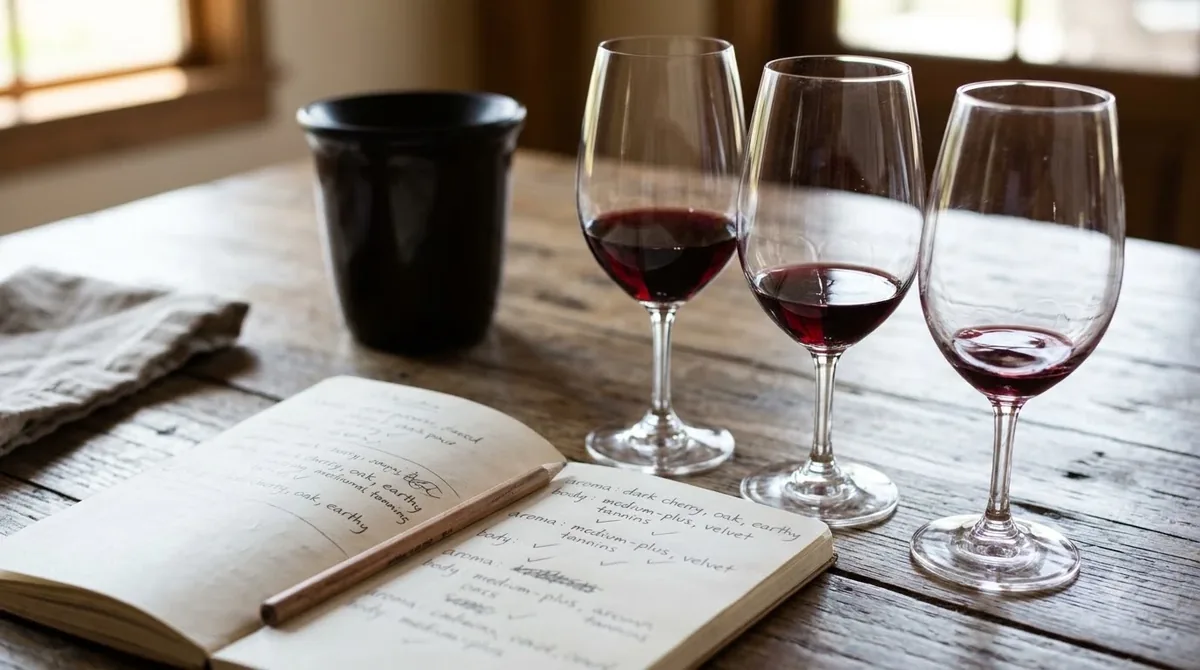
Acidity marks the clearest dividing line between the two varieties. According to tasting profiles from Wine Enthusiast, Sangiovese is prized for naturally high acidity that keeps even deeply structured bottles feeling lively and energetic on the palate. That crisp acid stimulates saliva and balances the grape’s firm, grippy tannins, which typically sit in the medium-plus to high range. In contrast, classic warm-climate Shiraz carries low-medium to medium acidity alongside medium-plus to high tannins, creating a rounder, more velvety weight across the mid-palate.
Alcohol and body also push the two wines in separate directions. Traditional Tuscan Sangiovese generally falls between 12.5% and 14.5% ABV, supporting a medium-plus frame that rarely feels syrupy. Australian Shiraz grown in warm regions like South Australia frequently reaches 14% to 15.5% ABV, producing a full-bodied texture coated in ripe fruit extract and oak spice. Readers comparing other bold reds alongside Shiraz can also explore shiraz vs zinfandel to see how high-alcohol New World styles stack up against each other.
| Attribute | Sangiovese | Shiraz (Warm-Climate Style) |
|---|---|---|
| Primary Homeland | Central Italy (Tuscany, Emilia-Romagna) | Australia (Barossa Valley, McLaren Vale) |
| Sweetness | Dry (low residual sugar) | Dry (low residual sugar) |
| Body | Medium to medium-plus | Full |
| Acidity | High | Low-medium to medium |
| Tannin | Medium-plus to high | Medium-plus to high |
| Typical Alcohol (ABV) | 12.5%–14.5% | 14.0%–15.5% |
| Core Fruit Flavors | Tart red cherry, red plum, strawberry, cranberry | Blackberry, blackcurrant, ripe plum, blueberry |
| Savory & Spice Notes | Tomato leaf, dried oregano, leather, tobacco, flint | Black pepper, dark chocolate, licorice, vanilla, smoke |
| Serving Temperature | 60–65°F | 60–65°F (slightly cooler if high alcohol) |
Color provides one final visual clue before the first sip. Because Sangiovese has relatively thin skins, it pours a translucent ruby or brick-garnet hue even in concentrated reserves. Shiraz grows with thicker, darker skins packed with anthocyanins, yielding an opaque, inky purple-black core that stains the edge of the glass.
Flavor Profiles and Aromatics: Tart Cherry vs. Dark Bramble
Sangiovese smells and tastes savory, herbal, and red-fruited, whereas Shiraz leads with ripe black and blue berries layered over cracked black pepper and sweet oak spice. Even when both grapes age in wooden barrels, their core varietal aromatics stay unmistakably distinct.
Young Sangiovese opens with high-toned aromas of sour cherry, wild strawberry, red currant, and fresh violet petals. Beneath the fruit sits a distinctly savory layer reminiscent of roasted tomato, dried oregano, thyme, and damp earth. As fine Tuscan examples mature for 15 to 25 years, those bright primary notes shift toward dried cherry, cured leather, pipe tobacco, truffle, and flinty mineral tones. Oak aging in traditional cellars typically relies on large, neutral Slavonian or French casks so wood toast does not mask the grape’s delicate herbal perfume.
Shiraz delivers an immediate wave of concentrated dark fruit, led by blackberry jam, blackcurrant, dark plum, and ripe blueberry. Black peppercorn is the grape’s signature spice marker, often joined by star anise, licorice, eucalyptus, and dark cocoa. Many Australian winemakers mature Shiraz in toasted American or French oak barrels, adding rich secondary layers of vanilla bean, baking spice, espresso, and campfire smoke. While Shiraz tastes sweeter on the mid-palate due to plush fruit and glycerol from higher alcohol, the wine itself remains chemically dry.
Tip: If a full-bodied Shiraz feels overly heavy or warm on the palate, place the open bottle in the refrigerator for 15 to 20 minutes before pouring. Dropping the serving temperature toward 60°F tightens the fruit, refreshes the finish, and keeps high alcohol from dominating the aromas.
Grape Origins and Regional Expressions
Sangiovese is native to central Italy and adapts tightly to hillside soils and microclimates, while Shiraz is the New World name for France’s Syrah grape after its 19th-century arrival in Australia. Geography and local winemaking rules shape how each variety expresses itself in the bottle.
Tuscany and Romagna: Sangiovese’s Italian Strongholds
First documented in 1590, Sangiovese takes its name from the Latin sanguis Jovis, meaning “the blood of Jove,” and accounts for Italy’s largest red vineyard footprint. According to VinePair, Sangiovese serves as the sole or majority grape behind Tuscany’s most celebrated red wines, including Chianti, Chianti Classico, Vino Nobile di Montepulciano, and Brunello di Montalcino. Because the vine mutates easily, growers recognize distinct local biotypes such as Prugnolo Gentile in Montepulciano and Sangiovese Grosso in Montalcino.
Appellation rules create clear tiers of richness and aging across central Italy:
- Chianti Classico: Grown between Florence and Siena, this denomination requires at least 80% Sangiovese. Standard Annata bottles age for 12 months before release, Riserva ages for 24 months, and top-tier Gran Selezione requires 30 months.
- Brunello di Montalcino: Located 25 miles south of Siena with vineyard altitudes spanning 320 to 2,165 feet above sea level, Montalcino experiences warmer, drier summers than Chianti. Brunello must use 100% Sangiovese and age at least five years after harvest—including two years in oak—before release, producing firmer tannins and decades-long cellar potential.
- Sangiovese di Romagna: Produced in southeastern Emilia-Romagna, where records of the grape date back to 1671, this style requires at least 85% Sangiovese (95% in its 12 delimited subzones) and generally delivers rounder tannins and slightly softer acidity than Tuscan versions.
Australia’s Warm Valleys vs. Cool-Climate Regions
Shiraz and Syrah are genetically identical, tracing their roots to the northern Rhône Valley of France before British pioneers including John MacArthur and James Busby carried cuttings to Australia in the early 1800s. By the 1830s, settlers planted own-rooted Shiraz vines in South Australia’s Barossa Valley that still produce fruit today as pre-phylloxera Heritage clones. In 1959, Penfolds winemaker Max Schubert bottled Kalimna Bin 28 exclusively from Barossa Valley Shiraz, launching Australia’s modern single-varietal benchmark.
Warm regions such as the Barossa Valley and McLaren Vale produce classic, opulent Australian Shiraz packed with sun-ripened blackberry, chocolate, and velvety tannins. However, higher-altitude and coastal regions—including Eden Valley, Clare Valley, Adelaide Hills, and Victoria’s Yarra Valley—yield a cooler-climate expression. Those cooler sites retain brighter acidity, leaner red-and-black fruit, and white pepper notes that echo northern Rhône Syrah while keeping alcohol closer to 13% or 14% ABV.
Food Pairing: Matching Acidity and Weight to Your Menu
Sangiovese excels alongside acidic, tomato-driven, and herbaceous dishes, while Shiraz shines with charred, smoky, and richly marbled meats. Matching the structural backbone of each wine to the dominant flavor profile of the plate prevents either the food or the wine from tasting harsh.
Blending Partners and Alternative Styles
Both Sangiovese and Shiraz serve as major blending grapes as well as single-varietal icons, giving drinkers distinct hybrid styles to explore. Winemakers in Italy and Australia combine these varieties with complementary grapes to soften tannins, add mid-palate weight, or brighten aromatics.
In Tuscany, Sangiovese traditionally forms the structural core of regional blends. Under Chianti Classico regulations cited by Wine Enthusiast, producers can blend up to 20% of other approved red varieties—such as native Canaiolo and Colorino or international Cabernet Sauvignon and Merlot—into the minimum 80% Sangiovese base. Outside traditional DOCG rules, “Super Tuscan” winemakers frequently pair Sangiovese with Bordeaux grapes aged in French oak barriques, producing wines that bridge Sangiovese’s bright acidity with Cabernet’s darker cassis and plush body.
Australian winemakers deploy Shiraz across an even wider range of blends and formats, as documented in Wine-Searcher’s Australian Shiraz guide:
- Cabernet-Shiraz Blends: Iconic across South Australia, this pairing marries Cabernet Sauvignon’s structured cassis backbone with Shiraz’s generous mid-palate dark plum and spice.
- GSM Blends: Inspired by France’s southern Rhône Valley, Grenache-Shiraz-Mourvèdre blends combine Grenache’s bright raspberry fruit with Shiraz’s peppery depth and Mourvèdre’s earthy grip; readers curious about how those two components differ on their own can review grenache vs shiraz.
- Sparkling Shiraz: Produced in Victoria for over a century using both traditional bottle fermentation and tank methods, this chilled red sparkling wine delivers frothy dark berry fruit, subtle sweetness, and refreshing acidity tailored for holiday roast turkey or glazed ham.
How to Serve, Decant, and Store Both Wines
Sangiovese and Shiraz both perform best when served slightly below room temperature at 60–65°F, though young, structured bottles of each benefit from decanting and proper cellar humidity. Paying attention to glassware, aeration, and storage prevents alcohol burn or tight tannins from muting either grape’s aromas.
Serving temperature makes an immediate difference in the glass. At typical 72°F living room temperatures, a 15% ABV Barossa Shiraz can taste hot and jammy, while a high-acid Chianti Classico can lose its crisp herbal edge. Chilling either bottle to 60–65°F preserves fruit freshness and keeps alcohol balanced. Pour standard 5-ounce servings—roughly five glasses per 750 ml bottle—into large-bowled red wine glasses so oxygen can lift Sangiovese’s violet and sour cherry aromatics or Shiraz’s cracked pepper and blackberry notes.
Decanting time depends heavily on bottle age and tannin density. Young, full-bodied reds such as Brunello di Montalcino, Chianti Classico Riserva, or single-vineyard Australian Shiraz benefit from 30 to 60 minutes in a decanter to soften firm tannins and blow off any reductive cellar aromas. Older bottles aged 15 years or more require gentler handling: stand the bottle upright for several hours so sediment settles, then decant carefully right before serving without prolonged air exposure. Once opened, recork unfinished bottles and refrigerate them; still red wines stay fresh for 3 to 5 days in the fridge before oxidation flattens the fruit. For long-term cellaring, store unopened bottles horizontally on their side near 55°F with 50% to 70% humidity so corks remain moist and sealed.
Choosing Between Sangiovese and Shiraz
Pick Sangiovese when a meal features bright tomato sauces, herbs, or lighter roasted meats and calls for mouthwatering acidity, and choose Shiraz when the table demands plush dark fruit, peppery spice, and full-bodied power. Both varieties reward curiosity across price tiers and regions.
Sangiovese is the stronger match for weeknight pasta, wood-fired pizza, antipasti boards, and drinkers who favor savory, earthy complexity over heavy oak. Entry-level Chianti and Rosso di Montalcino offer vibrant red fruit ready to drink right away, while Chianti Classico Riserva and Brunello di Montalcino provide serious cellar longevity. Shiraz is the better call for backyard barbecue, slow-smoked meats, pepper-crusted steaks, and anyone who enjoys generous, velvety texture with bold dark berry flavor. Those seeking a lighter, silkier alternative to Australian Shiraz can also check pinot noir vs shiraz, or browse more head-to-head grape comparisons in the Wine vs Wine guide.
Frequently Asked Questions
Are Shiraz and Syrah the exact same grape?
Yes, Shiraz and Syrah are genetically identical varieties that originated in France’s northern Rhône Valley. Winemakers in Australia adopted the name Shiraz in the 19th century, and today the label name usually signals style: “Shiraz” typically indicates a riper, fuller-bodied New World wine, while “Syrah” points toward a leaner, more savory, higher-acid expression.
Can Sangiovese and Shiraz be blended together in the same wine?
Yes, though the blend is uncommon outside innovative New World wineries in Australia and California. In Australia’s McLaren Vale and Barossa Valley, several producers co-ferment or blend Sangiovese with Shiraz so that Sangiovese’s bright cherry acidity lifts Shiraz’s rich blackberry weight and softens its broad mid-palate.
Which wine usually has more tannins, Sangiovese or Shiraz?
Both varieties carry medium-plus to high tannins, but their tannins feel different on the palate. Sangiovese’s tannins often feel firmer, drier, and slightly chalky because they are paired with high natural acidity and lower fruit sweetness, whereas warm-climate Shiraz wraps its tannins in plush dark fruit extract and higher glycerol.
Is Sangiovese or Shiraz better for aging in a wine cellar?
Top examples of both grapes age gracefully for 15 to 25 years or longer when stored on their side near 55°F. Benchmark Brunello di Montalcino relies on high acidity and firm tannins to evolve complex truffle, leather, and dried cherry notes, while top Barossa Valley and Hunter Valley Shiraz wines develop savory earth, cedar, and velvety dark fruit over decades.
Which wine has more calories and carbohydrates per glass, Sangiovese or Shiraz?
Because both wines ferment dry with minimal residual sugar, calorie differences come primarily from alcohol content. A 5-ounce pour of warm-climate Shiraz at 15% ABV typically contains slightly more calories than a 5-ounce pour of Tuscan Sangiovese at 13.5% ABV, because alcohol is the primary source of calories in dry wine.
Sangiovese and Shiraz showcase two classic pillars of red winemaking: vibrant, food-friendly Italian acidity on one side and lush, spice-driven Australian richness on the other. Keeping a bottle of each on hand offers a reliable structural match whether dinner leans toward simmering marinara or smoky grilled meats.
More in Wine vs Wine
 Chenin Blanc vs Pinot Gris: Acidity, Body, and Pairing DifferencesUpdated Nov 20, 2026
 Chianti vs Lambrusco: How Tuscany and Emilia-Romagna Reds CompareUpdated Nov 20, 2026
 Chianti vs Primitivo: Key Differences in Taste, Body, and PairingUpdated Nov 20, 2026
 Chianti vs Rioja: Key Differences in Taste, Aging, and PairingUpdated Nov 20, 2026
 Chianti vs Shiraz: How Acidity, Body, and Food Pairings CompareUpdated Nov 20, 2026
 Chianti vs Syrah: Key Differences in Taste, Body, and Food PairingUpdated Nov 20, 2026