

We may earn a commission when you buy through links on this page, at no extra cost to you. Learn more.
The rabbit wine chiller is a useful serving accessory for keeping wine cool at the table while combining an ice-filled stainless steel core, glass carafe, and pouring function. Its main appeal is the ability to chill wine without adding ice directly to the glass, while the pouring design also aerates the wine. However, the 25-ounce capacity, hand-wash requirement, and fragile glass construction make it better suited to careful home entertaining than rugged outdoor use. Buyers should also distinguish the glass chilling carafe from Rabbit’s separate insulated bottle chiller and chilling pourer stick.
Wine temperature can change noticeably during a leisurely dinner, particularly when a chilled Sauvignon Blanc, Chardonnay, or sparkling wine sits on a warm dining table. A dedicated wine chiller helps address that problem without diluting the wine. Rabbit offers several approaches, including a glass chilling carafe, a stainless steel insulated picnic chiller, and an insert-style chilling pourer. This review concentrates on the Rabbit Wine Chilling Carafe, examining its construction, serving experience, practical limitations, and the situations where another cooling accessory makes more sense.
Specs and Key Features
The Rabbit Wine Chilling Carafe combines a borosilicate glass serving vessel with a stainless steel insert that holds ice. Instead of surrounding the bottle with ice, this arrangement places the cooling element inside the carafe, allowing wine to remain in a serving vessel while it is poured through the chilled central component.
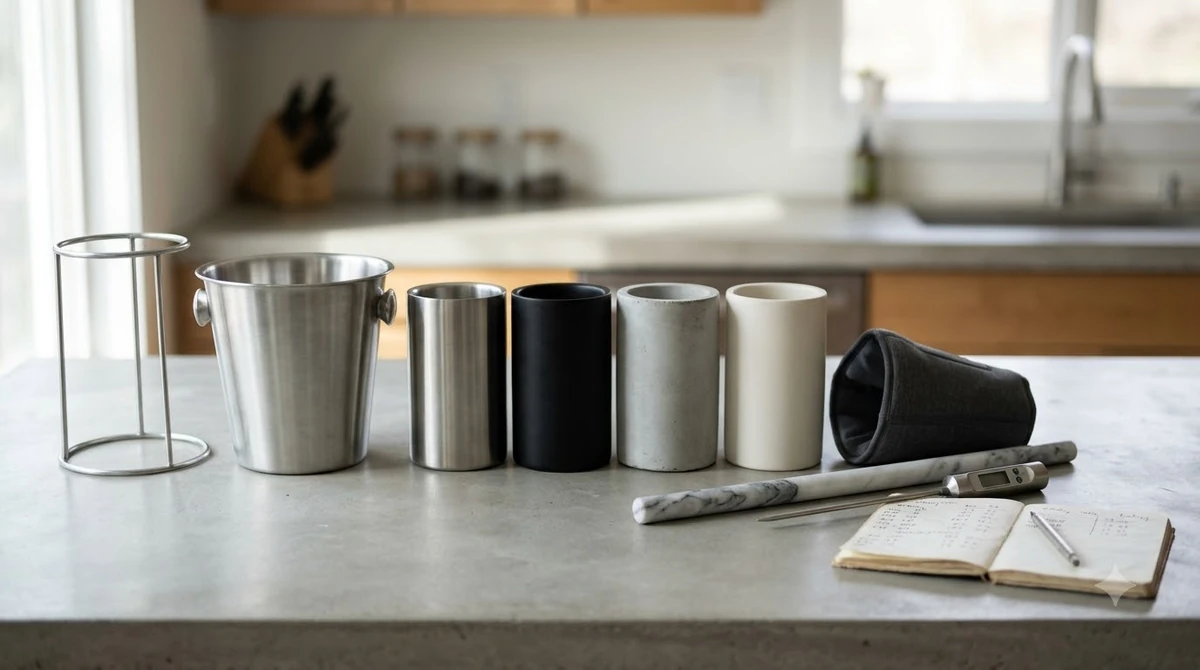
The product is designed for people who want a dedicated presentation piece rather than a conventional ice bucket. Its transparent glass body lets guests see the wine, while the central metal component provides the cooling function. According to the product specifications published by Macy’s, the carafe measures 4.13 inches across in both length and width and stands 11.81 inches tall. That relatively tall, narrow profile gives it a noticeable presence on a dining table without requiring the footprint of a large bucket.
| Specification | Rabbit Wine Chilling Carafe |
|---|---|
| Product type | Wine-chilling serving carafe |
| Capacity | 25 oz. |
| Glass material | Borosilicate glass |
| Chilling component | Stainless steel ice chamber |
| Length | 4.13 inches |
| Width | 4.13 inches |
| Height | 11.81 inches |
| Pouring design | Wine passes through the chilling core |
| Additional feature | Aeration during pouring |
| Fill management | Marked fill line |
| Cleaning | Hand wash |
| Listed warranty | One-year limited warranty |
These specifications come from the Rabbit Wine Chilling Carafe product listing at Macy’s. The capacity deserves particular attention. A standard wine bottle contains 750 ml, or approximately 25.36 fluid ounces, so the listed 25-ounce capacity is fractionally smaller than a full standard bottle. Buyers should not assume that every bottle can be transferred in its entirety without considering the fill line and the space occupied by the chilling insert.
The stainless steel core is the central feature. It is filled with ice before the wine is added, and the insert remains in position while the wine is served. This gives the accessory a different operating principle from a conventional wine bucket, which cools the outside of a bottle, or an insulated sleeve, which slows temperature changes around the bottle.
The pouring arrangement also creates a wine-shower effect. Wine flows through the central cooling area as it is poured, introducing aeration rather than simply moving directly from the original bottle into a glass. This can be particularly appealing when serving young red wines that benefit from some exposure to oxygen. It should not, however, be treated as a replacement for extended decanting when a structured young Cabernet Sauvignon or Syrah needs additional time to open.
The glass body is made from borosilicate glass, a material commonly used in glassware designed to tolerate temperature changes better than ordinary glass. That does not make the carafe unbreakable. Its height and transparent construction still require careful handling, especially when the metal core is being inserted or removed.
For additional context on how this type of serving accessory fits into a home wine setup, the Accessory Brands category provides a useful starting point for comparing different wine tools and serving equipment.
What Owners Like
The strongest appeal of the Rabbit Wine Chilling Carafe is its combination of chilling and serving in one vessel. It reduces the need to keep returning a bottle to the refrigerator during dinner and avoids placing ice directly into wine glasses.
Its design is particularly convenient for occasions when wine stays on the table for an extended period. A bottle of Pinot Grigio or Albariño may begin at the right refrigerator temperature, but the wine gradually warms as guests pour small glasses throughout a meal. The Rabbit carafe offers a practical way to maintain a cooler serving environment without putting the original bottle in an ice bucket.
The earlier Rabbit chilling carafe design received a favorable assessment from WIRED in its review of wine-chilling gadgets. The publication reported that its pre-chilled Pinot Grigio remained at a suitable temperature for approximately 100 minutes during the review. It also found that the carafe could cool wine that had not been refrigerated, although the process took longer. Those observations provide useful historical context, but they should not be interpreted as a guaranteed performance specification for every version of the product.
Another advantage is that the stainless steel insert can be replenished with ice. Unlike a freezer-based cooling accessory that must return to the freezer before being used again, an ice-filled chamber can be reloaded when the first batch melts. This is convenient for a dinner where several glasses are served over an extended period.
The glass design also offers a more refined presentation than a neoprene bottle sleeve or an ordinary plastic cooling accessory. The wine remains visible, making it easy to identify the variety and color. For hosts serving rosé, pale Pinot Grigio, or a richly colored red, that presentation can be part of the appeal.
Convenience Beyond Temperature Control
The carafe’s pouring design is another practical benefit. The central chilling component is intended to aerate wine as it passes through, so users do not need to purchase a separate aerating pourer for this basic serving function. The wide mouth also makes transferring wine and accessing the interior easier than a narrow-necked vessel.
There is an important distinction between aeration and chilling. Aeration introduces oxygen during pouring, while cooling reduces the wine’s temperature. Both functions can be useful, but they address different serving needs. A young Merlot may benefit from some aeration, while a delicate Pinot Noir may need only a modest temperature adjustment and gentle handling.
The Rabbit design also avoids dilution. Ice remains in the stainless steel chamber instead of melting directly into the wine. That is useful for crisp, high-acidity whites such as Sauvignon Blanc and Riesling, where added water can noticeably weaken the wine’s balance.
For people who entertain regularly, the combination of serving presentation and cooling convenience may be more valuable than the performance of a basic bottle sleeve. The main benefit is not simply keeping wine cold; it is being able to serve it from an attractive vessel without constantly managing a separate bucket.
Common Complaints
The Rabbit Wine Chilling Carafe has several practical limitations that deserve attention before purchase. Its glass construction, limited capacity, hand-wash requirement, and dependence on ice mean that it is not the simplest option for every household.
The first concern is capacity. At 25 ounces, the carafe holds slightly less than the approximately 25.36 ounces in a standard 750 ml wine bottle. That difference is small, but the chilling insert also occupies space inside the vessel. The marked fill line exists for a reason: inserting the metal core into an overfilled carafe can cause liquid to overflow. It is better to transfer wine carefully and leave sufficient room than to try to force the entire bottle into the vessel at once.
The second limitation is glass fragility. Borosilicate glass is a sensible material for this application, but the carafe can still crack or break if dropped, knocked against a hard counter, or handled carelessly. This is particularly relevant at outdoor gatherings, where surfaces may be uneven and serving equipment is frequently moved.
Cleaning also takes more effort than maintaining a simple stainless steel bottle sleeve. Macy’s lists the Rabbit carafe as hand-wash only. That means users should not assume the vessel or its chilling components are suitable for routine dishwasher cycles. The removable metal insert and any associated parts should be handled according to their care instructions.
There is also a preparation requirement. The chilling core must be filled with ice before serving. A conventional insulated bottle chiller can be prepared in advance and placed around an already chilled bottle, while the Rabbit carafe requires wine to be transferred from its original bottle into the serving vessel.
Cooling Expectations Need to Be Realistic
The carafe is most useful when wine is already reasonably cool. Ice inside the stainless steel chamber provides a cooling surface, but the time required to bring wine down to serving temperature depends on its starting temperature, the amount of wine, the quantity of ice, and the surrounding room temperature.
Do not assume that every wine poured at room temperature will reach its ideal temperature immediately. A warm Chardonnay, for example, may require more cooling time than a bottle that has already spent several hours in the refrigerator. The same principle applies to a bottle of sparkling wine intended for a particularly cold serving temperature.
For reference, light whites and rosés are generally served around 45 to 50 degrees Fahrenheit, while fuller-bodied whites such as Chardonnay are usually better around 50 to 55 degrees. Sparkling wine is typically served at 40 to 50 degrees. A carafe that maintains an already suitable temperature is doing a different job from a refrigerator that must cool an entire warm bottle.
Buyers should also distinguish the current glass carafe from older Rabbit designs. WIRED’s historical review describes a crystal glass vessel with a removable stainless steel ice chamber and reports approximately 100 minutes of cooling for pre-chilled wine. That result should not be presented as a measured guarantee for the current carafe, whose listed capacity and specifications differ.
Who Should Buy and Who Should Skip
The Rabbit Wine Chilling Carafe makes the most sense for home wine drinkers who value presentation and want a convenient way to keep wine cool while serving. It is less suitable for people who prioritize portability, minimal maintenance, or the ability to cool an entire bottle without transferring its contents.
Good candidates include:
- Home entertainers: Hosts who serve several glasses over dinner can keep a chilled wine available without repeatedly returning the original bottle to the refrigerator.
- White wine drinkers: People who regularly serve Sauvignon Blanc, Riesling, Pinot Grigio, or Albariño may appreciate the ability to maintain cooler serving conditions without diluting the wine.
- Rosé enthusiasts: The transparent carafe offers attractive presentation for pale pink wines, particularly during outdoor-style meals and summer entertaining at home.
- Occasional red wine servers: Drinkers who enjoy aerating younger Merlot or Pinot Noir while pouring may appreciate the additional serving function.
- Gift buyers: The glass-and-metal construction gives the accessory a more distinctive appearance than a basic reusable cooling sleeve.
Buyers who should skip it include:
- People who want to chill wine inside its original bottle: The carafe requires transferring the wine before serving.
- Frequent outdoor hosts: Glass is less practical for beaches, camping, picnics, and crowded patios where equipment may be dropped or knocked over.
- Large groups: A 25-ounce vessel does not provide the same capacity as a full standard bottle, so multiple transfers or refills may be necessary.
- Low-maintenance households: The hand-wash requirement makes the carafe less convenient than some simpler stainless steel alternatives.
- People seeking long-term wine storage: A serving carafe is not a substitute for a wine refrigerator or suitable bottle storage arrangement.
The decision also depends on drinking habits. Someone who opens one bottle of Sauvignon Blanc over a two-hour dinner may find the design useful. Someone who regularly serves several bottles at a barbecue may prefer an insulated bottle chiller that can accommodate a full 750 ml bottle without transferring the wine.
There is no reason to purchase a specialized carafe simply because a wine collection includes expensive bottles. The most useful accessory is the one that solves a recurring serving problem. If wine is usually poured directly from the bottle and finished quickly, a separate chilling vessel may not add much practical value.
How It Compares to Alternatives
Rabbit’s glass carafe is one approach to wine cooling, but the brand also offers other formats, and conventional cooling accessories solve the same problem differently. The most important comparison is whether the wine needs to be chilled during pouring, kept cold inside its bottle, or cooled before serving.
Rabbit Versus an Insulated Stainless Steel Chiller
Rabbit’s separate vacuum-insulated wine chiller, included in the four-piece picnic set listed by Costco, is designed for a different kind of use. It holds a standard 750 ml wine bottle and uses vacuum-insulated stainless steel to keep beverages cold for up to 24 hours according to the retailer’s product description.
The insulated model is a more natural fit for picnics, barbecues, and outdoor gatherings. Wine stays in its original bottle, and the built-in pouring spout is removable for cleaning. The lid also doubles as a cup. Those features make it more practical for travel than a tall glass serving carafe.
The glass Rabbit carafe, by comparison, is better suited to a dining table where guests can see the wine and appreciate the presentation. The two products should not be confused simply because they share the Rabbit name. One is primarily a serving carafe with an ice chamber, while the other is an insulated bottle-style chiller.
Rabbit Versus a Chilling Pourer Stick
Rabbit also sells a Wine Chiller and Pourer Stick, an insert-style accessory that is frozen before being placed inside an opened wine bottle. The manufacturer instructs users to freeze the device for one hour before use. Its design combines chilling, pouring, aeration, and sediment filtering.
This format requires less counter space than a full glass carafe. It can be especially convenient when someone wants to continue pouring from the original bottle instead of transferring wine into another vessel. However, it does not provide the same presentation as the glass carafe.
The pourer stick is also a distinct product with its own operating instructions. Its advertised cooling and vacuum-sealing claims should not automatically be applied to the glass carafe.
Rabbit Versus Other Cooling Accessories
Other wine accessories offer different trade-offs. A marble wine chiller relies on the cooling properties of a pre-chilled solid material and works best as a passive holder for an already chilled bottle. It does not require transferring wine into another vessel.
An electric wine chiller may be a better fit for households that want a dedicated powered cooling appliance rather than an ice-filled serving accessory. These products can be more convenient for repeat use, although their size, power requirements, and cooling capabilities vary by design.
An instant wine chiller is another option for people who prioritize cooling speed and do not necessarily need a dedicated serving carafe. The best choice depends on whether the priority is portability, presentation, minimal preparation, or cooling performance.
The following comparison summarizes the practical differences:
| Accessory | How It Works | Best Use | Main Limitation |
|---|---|---|---|
| Rabbit glass carafe | Ice-filled stainless steel core inside glass vessel | Tabletop serving | Requires wine transfer and hand washing |
| Rabbit insulated chiller | Vacuum-insulated stainless steel bottle holder | Picnics and outdoor events | Requires an already chilled bottle for best results |
| Rabbit chilling pourer | Frozen insert placed inside the wine bottle | Direct bottle pouring | Requires freezer preparation |
| Marble wine chiller | Pre-chilled solid material surrounds bottle | Simple tabletop bottle cooling | Limited active cooling |
| Electric wine chiller | Powered cooling system | Repeated cooling at home | Requires power and additional space |
| Instant wine chiller | Rapid-cooling accessory or system | Quick temperature adjustments | Performance depends on product design |
For a single bottle served at dinner, the Rabbit glass carafe offers an appealing combination of presentation and temperature maintenance. For travel, the insulated stainless steel version is more practical. For minimal preparation and direct bottle service, the chilling pourer stick is the more compact alternative.
Care, Serving and Buying Considerations
Proper preparation makes a meaningful difference to the Rabbit Wine Chilling Carafe’s usefulness. The simplest approach is to chill the wine before transferring it, prepare the ice chamber separately, and avoid filling the glass vessel beyond its marked line.
Start by chilling the wine in its original bottle. Light whites and rosés generally benefit from serving temperatures around 45 to 50 degrees Fahrenheit, while fuller-bodied whites are better around 50 to 55 degrees. Sparkling wines generally work well around 40 to 50 degrees. Starting with wine near its target temperature reduces the amount of cooling required from the carafe.
Next, prepare the stainless steel chamber with ice according to the product’s instructions. Transfer the wine into the glass vessel carefully, leaving sufficient space for the chilling insert. Pay particular attention to the fill line before inserting the metal component. The product design specifically includes this marking to reduce overflow risk.
Once assembled, pour the wine through the chilling core and monitor its temperature during service. If the ice begins to melt and the wine starts warming, replenish the chamber as appropriate. Swirling the wine inside the carafe can also help speed up cooling, according to the product instructions published by Macy’s.
Tip: Chill the original wine bottle first, then use the Rabbit carafe to maintain serving temperature. This is generally more practical than expecting an ice-filled insert to bring an entire warm bottle rapidly down to its ideal temperature.
Cleaning the Glass and Chilling Core
After serving, empty any remaining wine and remove the chilling component carefully. The listed cleaning guidance for the carafe is hand washing, so use gentle cleaning methods rather than placing the glass vessel in the dishwasher. Avoid sudden temperature changes when handling the glass, particularly immediately after it has been exposed to ice-cold water or a warm washing environment.
Pay attention to any areas where wine residue may collect around the insert or stopper. Rinse the components thoroughly and allow them to dry before storing them. Keeping the parts clean is especially important if the accessory is used with several different wine varieties.
What to Check Before Purchasing
First, verify that the product listing refers to the glass Rabbit Wine Chilling Carafe rather than the separate insulated bottle chiller or Wine Chiller and Pourer Stick. The three products have different dimensions, capacities, preparation methods, and uses.
Second, consider the capacity. A 25-ounce carafe is close to the volume of a standard 750 ml bottle, but the marked fill line and internal chilling component mean that transferring the entire bottle may not be practical. Buyers who routinely serve full bottles should pay particular attention to this point.
Third, confirm the cleaning and warranty details associated with the specific product listing. Macy’s lists a one-year limited warranty for its glass carafe. That information is useful when comparing sellers, particularly because glass breakage and damaged deliveries can complicate the ownership experience.
Finally, consider how frequently the accessory will be used. If it will sit in a cabinet for most of the year, a simpler bottle sleeve or an ordinary ice bucket may be more practical. If it will be used regularly for dinners and small gatherings, the carafe’s serving presentation may justify choosing it over a more basic cooling accessory.
Frequently Asked Questions
Can the Rabbit Wine Chilling Carafe be used for beverages other than wine?
The carafe’s glass vessel and stainless steel chilling core can physically accommodate other suitable cold beverages, although the manufacturer’s listed use focuses on wine. Avoid highly carbonated beverages unless the specific product instructions confirm that the assembled design is suitable. Thorough cleaning between different drinks also helps prevent lingering aromas from affecting subsequent servings.
Does the Rabbit Wine Chilling Carafe work with Champagne?
Its cooling function can be useful for sparkling wine, but the 25-ounce listed capacity is not ideal for transferring an entire standard 750 ml Champagne bottle. Sparkling wine also loses carbonation after opening, so minimizing unnecessary transfers and keeping the bottle properly sealed between servings remain important. For Champagne service, a bottle-style insulated chiller may be more convenient.
Can the Rabbit Wine Chilling Carafe be used for red wine?
Yes, the chilling system is not limited to white wine. Light reds such as Pinot Noir can benefit from serving temperatures around 55 to 60 degrees Fahrenheit, while fuller reds such as Cabernet Sauvignon generally work better around 60 to 65 degrees. Avoid making red wine excessively cold simply because the chilling chamber contains ice.
Does the Rabbit carafe replace a traditional wine decanter?
Not completely. Its pouring arrangement introduces aeration, but a traditional decanter offers more room for wine to interact with oxygen over a longer period. A young, structured red may benefit from 30 to 60 minutes of decanting, depending on its style and age. The Rabbit carafe is primarily a serving and cooling accessory.
Is the Rabbit Wine Chilling Carafe suitable for long-term wine storage?
No. It is designed as a temporary serving vessel, not a storage container for unfinished bottles or collectible wine. Wine intended for later consumption should be returned to an appropriate sealed bottle or wine-preservation container and refrigerated when suitable. The carafe’s ice chamber is intended for serving rather than maintaining stable cellar conditions.
The Rabbit Wine Chilling Carafe is a practical choice for wine drinkers who value attractive tabletop presentation, cooling during service, and the convenience of an integrated aerating pour. Its glass construction and relatively small capacity are genuine limitations, particularly for outdoor use or households that want to transfer an entire bottle at once. For home entertaining, however, it offers a distinctive alternative to a conventional wine bucket, while Rabbit’s insulated bottle chiller remains the more sensible option for portability and full-bottle storage during gatherings.
For additional product details, consult the official Rabbit Wine Chiller and Pourer Stick product information, which explains how the brand’s separate bottle-insert cooling accessory works.
The historical WIRED review of wine-chilling accessories also provides useful context on the earlier Rabbit carafe design and its reported cooling performance.
More in Wine Accessories
 Vinglace Wine Tumbler Review: A Glass-Lined Choice for Better SippingUpdated Nov 20, 2026
 ZWILLING Electric Wine Opener Review: Features and DrawbacksUpdated Nov 20, 2026
 Vinturi Electric Wine Opener Review for Easy UncorkingUpdated Nov 20, 2026
 Vinabon Wine Aerator Review for Easier, Cleaner Wine ServingUpdated Nov 20, 2026
 Vacu Vin Electric Wine Opener Review: Easy Cork Removal for Home Wine LoversUpdated Nov 20, 2026
 Rabbit Wine Accessories for Easier Home Wine ServiceUpdated Nov 20, 2026