

We may earn a commission when you buy through links on this page, at no extra cost to you. Learn more.
A reliable pinotage food pairing starts with smoky grilled meat, braised dishes, savory mushrooms, and richly seasoned food that can match the wine’s dark fruit and earthy character. Pinotage ranges from fresh, red-fruited and supple to full-bodied, tannic and marked by oak, coffee, or smoke. Match the weight and texture of the bottle to the dish, and keep very hot chili, sugary sauces, and delicate seafood from overwhelming the wine. South African braai is the classic starting point, but the grape also works at a weeknight table.
Pinotage is South Africa’s signature red grape, created by crossing Pinot Noir with Cinsault, historically known in South Africa as Hermitage. That parentage helps explain its range: a lighter bottle can show cherry and fresh plum, while a more concentrated version may bring blackberry, leather, smoke, dark chocolate, or coffee. The best match is not simply the richest dish in the kitchen. It is the dish whose flavor, fat, seasoning, and cooking method make the wine feel balanced.
How Pinotage Tastes and Why It Matters for Food
Pinotage usually has medium to full body, noticeable tannin, and a flavor profile built around red and black fruit. Its cross of Pinot Noir and Cinsault links it to cherry and berry aromas on one side and a sturdier, savory character on the other, while ripeness and oak treatment can shift the emphasis considerably.
A youthful, fruit-forward style may show strawberry, raspberry, red cherry, plum, or blackberry, sometimes with a banana-like note. It is flexible with roast chicken, pork tenderloin, meat-topped pizza, and grilled vegetables because those dishes do not bury the fruit. Softer tannins also help when the menu includes several smaller plates. Riper or oak-influenced Pinotage has more weight and firmer structure, with possible notes of smoke, tobacco, cedar, mocha, coffee, or dark chocolate. The South African Wine portal describes the grape as dry, full-bodied, and high in tannin, while noting the range of winemaking styles. An assertive bottle needs protein and flavor; a lighter one can pair with simple roasts. Decanter’s overview of Pinotage also describes the rise of more refined, balanced expressions.
Use the wine’s strongest feature as a guide: dark fruit can echo slow-cooked tomato, smoke connects with char, and earthy notes complement mushrooms or lentils. Protein and fat soften tannin, so a firm Pinotage often tastes smoother beside lamb, beef, or aged cheese than it does alone. Add richness rather than sweetness if the wine feels especially dry.
Best Meats for Pinotage: Braai, Beef, Lamb and Pork
Grilled and slow-cooked meats are the most dependable partners for a structured Pinotage. The combination of browned protein, rendered fat, seasoning, and smoke gives the wine enough savory detail to meet its tannin and dark fruit.
Start with South African braai, the country’s open-fire barbecue tradition. Boerewors, lamb chops, beef kebabs, and sticky pork ribs all make sense, especially when the meat has a browned crust and the sauce is savory rather than candy-sweet. Coriander, black pepper, garlic, and paprika in sausage seasoning can bring out Pinotage’s spice and earthy side. For a full-bodied, oak-aged bottle, choose short ribs, beef brisket, or lamb shoulder cooked slowly until tender; their richness helps soften the wine’s firmer structure. For beef, choose grilled ribeye, flank steak, burgers, or meatloaf. Ribeye’s fat and char tame firm tannin, while lean flank steak benefits from olive oil or a mushroom side. Burgers are especially adaptable with aged cheddar, grilled onion, and a moderate amount of barbecue sauce. A lighter Pinotage is better with a cheeseburger than heavily smoked brisket.
Lamb’s savory flavor stands up to dark fruit and oak: try rosemary-garlic chops or roast leg, but keep mint sauce restrained. Pork is a softer match, especially pulled pork, smoked shoulder, or grilled sausage with a juicy Pinotage. Fiona Beckett’s Pinotage pairing suggestions also recommend smoked duck and pulled pork for rustic, Pinot Noir-like expressions.
Tip: When serving a firm, tannic Pinotage, put protein and a little fat on the plate—such as lamb chops, a beef burger, or aged cheddar. Avoid a very lean, dry preparation with almost no sauce, which can make the tannins feel more pronounced.
Venison steak, ostrich, and venison burgers suit structured Pinotage, particularly with roasted mushrooms or black pepper. Keep berry sauce restrained; a sticky, dessert-like glaze can make a dry red seem harder.
Vegetables, Mushrooms and Plant-Forward Plates
Pinotage does not need meat to work well; its savory and smoky notes can be matched with grilled vegetables, roasted mushrooms, lentils, and dishes with browned edges. The key is to build enough texture and umami to support a medium- or full-bodied red.
Portobello mushrooms are a useful centerpiece because their dense texture and earthy flavor give a red wine something substantial to meet. Grill or roast them with olive oil, thyme, garlic, and black pepper, then serve with polenta or white beans. A mushroom risotto also works, particularly with a medium-bodied Pinotage that has freshness and restrained oak. Keep the cheese savory and measured; a mountain of rich cream and cheese can make the pairing feel heavy if the wine is already powerful. Eggplant is another strong option. Charred eggplant, stuffed eggplant with lentils, roasted peppers, and tomato-based vegetable stew can echo the grape’s smoke and dark-fruit character. A little cumin, coriander, smoked paprika, or oregano adds depth without introducing aggressive heat. For a simple supper, roast eggplant wedges and red peppers until their edges caramelize, then serve them with chickpeas, herbs, and a spoonful of yogurt on the side. The yogurt brings coolness to the plate, while the roasted vegetables keep the match savory.
Grilled zucchini, charred corn, black bean burgers, lentil shepherd’s pie, and roasted root vegetables also work. Brown sweet vegetables such as carrots and beets, then balance them with herbs and salt rather than a sugary glaze. The site’s Wine Pairing primer explains how body, acidity, sweetness, and texture shape a match. For a mixed vegetable meal, anchor the pairing with the deepest flavor: grilled mushrooms and eggplant can handle a more structured bottle than steamed greens. Olive oil, toasted nuts, or caramelized onion add useful texture, while heavy lemon juice or vinegar can make a lower-acid red taste flat.
Spices, Sauces and South African-Inspired Dishes
Pinotage can handle aromatic seasoning and moderate heat, especially when the wine has ripe fruit and soft tannins. Coriander, cumin, black pepper, paprika, and gently smoky sauces usually make more harmonious partners than very sharp vinegar or fiery chili.
South African flavors offer an easy route to a satisfying match. Boerewors often includes coriander and other warm spices, which connect naturally with the savory side of Pinotage. Cape Malay cooking may use cinnamon, cardamom, cumin, turmeric, and dried fruit; choose a fruit-forward Pinotage for gently spiced chicken, lamb stew, or a fragrant vegetable curry. Keep the chili level moderate, because alcohol and tannin can amplify the sensation of heat and make a very spicy dish feel harsher. Choose barbecue sauce that is smoky, tangy, and only moderately sweet; a thick molasses or brown-sugar glaze can overwhelm dry red wine. Brush it on near the end of cooking, and balance sweetness with mustard, tomato, or black pepper. A fruitier, softer Pinotage is best with sweeter sauces. A lamb curry, spiced roast leg, or tomato-based beef curry can stand up to Pinotage when the heat is moderate and the sauce has body. Very hot coconut curries are less predictable because alcohol can amplify chili. For those meals, a high-acid white such as Riesling or Albariño may be more refreshing; the site’s albarino food pairing ideas cover bright, citrus-driven dishes.
Tomato-based dishes such as lasagna, sausage stew, or pepperoni-and-mushroom pizza bring out Pinotage’s fruit. If the sauce tastes sharply acidic, soften it with olive oil, roasted vegetables, or cheese, and pair the wine with the main dish rather than a vinegar dressing.
Cheese, Pasta and Easy Weeknight Pairings
For casual meals, Pinotage is flexible with firm cheeses, rich pasta, and dishes with browned or roasted ingredients. A useful rule is to match the wine’s weight: a fresher bottle suits tomato pasta or sausage pizza, while an oak-aged version can take on richer cheese and slow-cooked sauces.
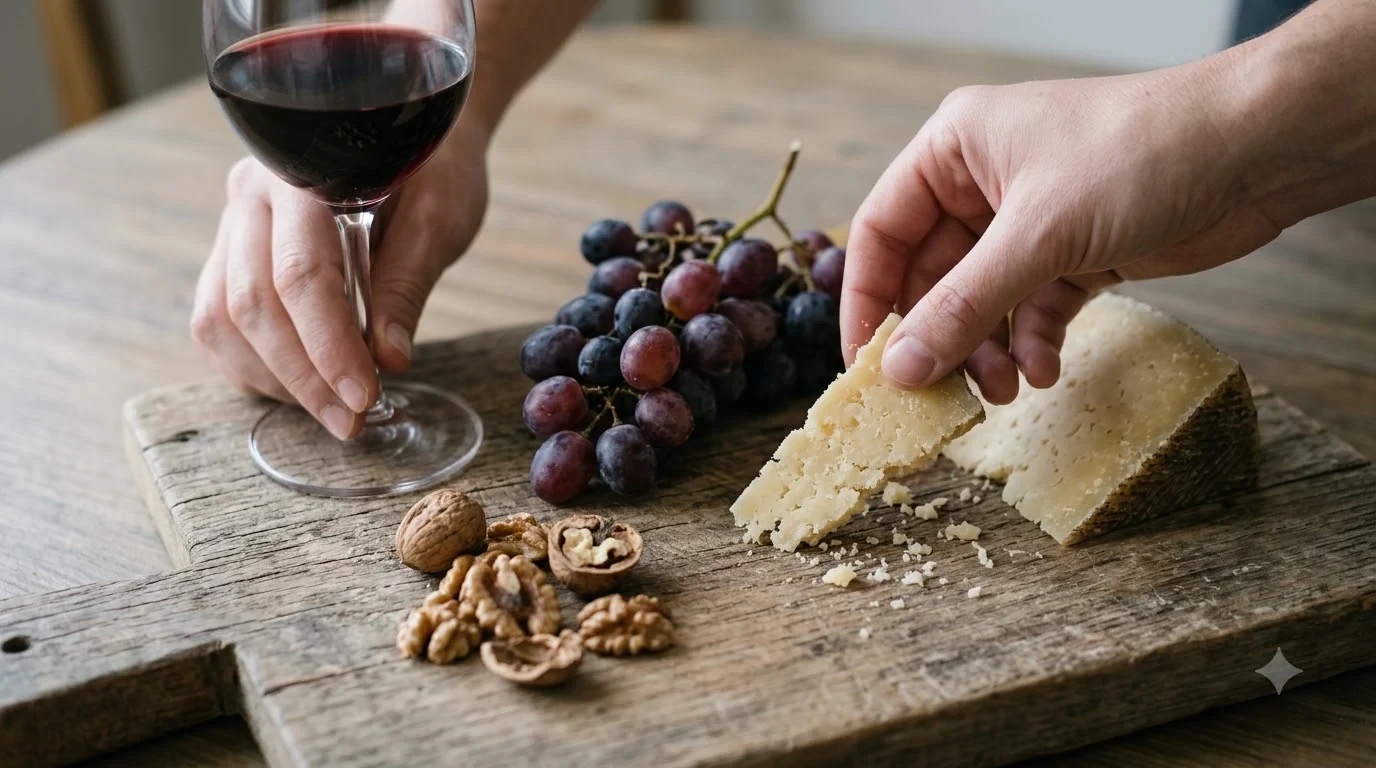
Aged cheddar, mature Gouda, and other firm cow’s-milk cheeses are reliable choices because their protein and fat soften tannin. Try a cheese board with aged cheddar, toasted walnuts, olives, and charcuterie, or melt cheddar over a burger. If the Pinotage has obvious coffee, cocoa, or cedar notes, those flavors can echo the savory depth of aged cheese. Very delicate fresh cheeses are less satisfying with a large, tannic red; they can disappear beside the wine.
For pasta, choose lasagna, beef ragù, sausage rigatoni, baked ziti, or mushroom pappardelle. Their savory sauces and browned cheese provide more balance than pasta dressed only with lemon. Meat-topped pizza with pepperoni, sausage, roasted peppers, or mushrooms is another easy match; use hot chili oil sparingly. Smoked duck breast or duck-and-mushroom pie bridges lighter and richer styles. For a fresh Pinotage, choose roast chicken or grilled sausage; for a powerful bottle, serve beef stew, short-rib pasta, or aged cheese. Very delicate white fish can be overwhelmed, while oily fish such as sardines or mackerel can clash with red-wine tannin. Bitter greens, vinegar-heavy salads, and very sweet sauces also make the pairing harder. For a different red-wine profile, the site’s barbera food pairing discussion compares dishes with Barbera, a red that generally has brighter acidity and less assertive tannin.
Serving Temperature, Portions and Choosing a Style
Serve Pinotage slightly cool rather than warm: about 60–65°F for a full-bodied, structured bottle and 55–60°F for a lighter, fruit-forward version. A short chill helps keep alcohol in balance and makes the fruit and savory notes more distinct.
For a bottle stored at room temperature, refrigerate it for about 20 to 30 minutes, then taste and adjust. Avoid serving a full-bodied Pinotage too warm, since heat makes alcohol more noticeable. A light, unoaked bottle can go toward the cooler end of the range; an oak-aged example benefits from slightly more warmth.
| Pinotage style or serving detail | Useful number | How to use it |
|---|---|---|
| Light, fruit-forward Pinotage | 55–60°F | Serve slightly cool with pork, roast chicken, or grilled vegetables. |
| Full-bodied or oak-aged Pinotage | 60–65°F | Give it a little more warmth for beef, lamb, or aged cheddar. |
| Standard wine pour | 5 oz | A measured pour leaves room to assess aroma and food together. |
| Standard 750 ml bottle | About 5 glasses | Plan roughly one bottle for five standard pours. |
| Young, structured red wine | 30–60 minutes | Decant if the wine is notably firm or closed, then taste as it opens. |
Decanting is optional. A young, concentrated Pinotage with firm tannin may benefit from 30 to 60 minutes of air beside steak or braised short ribs, while a lighter bottle may be ready after a brief chill. Taste before deciding whether it needs more time. On a label or producer description, words such as fresh, juicy, unoaked, or red-fruited suggest a match for chicken, pork, and vegetables. Reserve, barrel-aged, or mocha styles point toward lamb, beef, venison, mushrooms, and mature cheese. For a multi-course meal, serve the Pinotage with the main course. A 5-ounce pour means a 750 ml bottle supplies about five glasses. Recork leftover still wine and refrigerate it; most opened bottles are best within three to five days.
Frequently Asked Questions
These answers cover the 1924 South African grape crossing, the best dishes for braai, and serving choices that can make a Pinotage pairing work.
Is Pinotage the same grape as Pinot Noir?
No. Pinotage is a distinct South African crossing of Pinot Noir and Cinsault, not another name for Pinot Noir. The crossing was made by Professor Abraham Izak Perold in 1924, and the first seeds were planted the following year. The name combines “Pinot” with “Hermitage,” the historical South African name for Cinsault.
Does Pinotage always taste smoky or like coffee?
No. Those aromas are associated with some oak-influenced or specially styled bottlings, not every Pinotage. A fresher wine may emphasize strawberry, sour cherry, plum, or blackberry, and the amount of oak varies by producer and wine. Coffee and mocha notes became especially associated with a style first produced at Diemersfontein in 2001.
Can Pinotage be served with turkey?
Yes, particularly with roast turkey served alongside mushroom gravy, sausage stuffing, roasted squash, or cranberry relish that is not overly sweet. A lighter Pinotage is the safer choice for white meat, while a more structured bottle suits dark meat and savory gravy. Avoid a very sugary glaze, which can make a dry red taste hard.
Is Pinotage suitable for a vegetarian Thanksgiving menu?
It can be, especially with lentil loaf, mushroom Wellington, roasted eggplant, wild mushroom stuffing, or a savory squash dish with herbs and toasted nuts. Build in browned edges and umami rather than relying on sweetness. A medium-bodied Pinotage with moderate oak is usually easier to pair across several vegetable sides than a heavily extracted version.
Which South African regions are known for Pinotage?
Stellenbosch, Swartland, Paarl, and Wellington are among the well-known South African growing areas for the grape. Stellenbosch is closely tied to Pinotage’s origin, while Swartland and Paarl are also important sources. Regional identity is only one clue, so the producer’s style and the wine’s balance still matter most at the table.
For the simplest match, pair a juicy Pinotage with pork or sausage, and save a firmer, oak-aged bottle for grilled beef, lamb, venison, or mushrooms. Keep the wine slightly cool, make the sauce savory rather than sugary, and let the meal’s smoke, seasoning, and texture do the work. With those basics in place, Pinotage can move comfortably from a traditional braai to pasta night or a vegetable-centered dinner.
More in Food & Wine Pairing
 Risotto With White Wine Recipe: Make a Creamy Dinner at HomeUpdated Nov 20, 2026
 Wassail With Wine Recipe for a Festive Spiced Holiday DrinkUpdated Nov 20, 2026
 Spritz Veneziano Recipe: Make a Classic Venetian Aperitivo at HomeUpdated Nov 20, 2026
 Summer Wine Punch Recipe for Easy Homemade EntertainingUpdated Nov 20, 2026
 Bishop Recipe: How to Make a Bright, Citrus-Forward Red Wine CocktailUpdated Nov 20, 2026
 Wine Cupcakes Recipe: Bake Rich Chocolate Cupcakes at HomeUpdated Nov 20, 2026