

We may earn a commission when you buy through links on this page, at no extra cost to you. Learn more.
The oxo wine chiller is a double-wall stainless steel bottle holder designed to keep an already-chilled 750 ml bottle cool while serving, with a soft protective interior and a built-in drip-catching moat. Its compact tabletop design makes it a practical alternative to an ice bucket for dinners and casual entertaining. However, it is a temperature-maintaining accessory rather than a rapid wine cooler, so bottles need to be refrigerated before use.
The OXO Steel Wine Chiller combines a brushed stainless steel exterior with an insulated interior, giving wine drinkers a simple way to present a bottle without constantly returning it to the refrigerator. Its appeal comes from practical details rather than complicated technology: double-wall construction, bottle protection, and a small interior channel for collecting drips. This review examines its specifications, expected performance, limitations, and the situations in which another type of wine chiller may be a better purchase.
Specs and Key Features: A Compact 750 ml Bottle Chiller
The OXO Steel Wine Chiller is designed around a straightforward purpose: holding one standard wine bottle and helping it retain its serving temperature. Its brushed stainless steel construction gives it a restrained appearance, while the insulated interior and protective lining make it more functional than an ordinary decorative bottle holder.
| Specification | OXO Steel Wine Chiller |
|---|---|
| Product type | Insulated tabletop wine chiller |
| Manufacturer | OXO |
| Capacity | One 750 ml wine bottle |
| Exterior material | Stainless steel |
| Exterior finish | Brushed stainless steel |
| Construction | Double-wall insulation |
| Interior | Soft protective lining |
| Drip management | Internal moat |
| Width | 5.25 inches |
| Depth | 5.25 inches |
| Height | 8.375 inches |
| Manufacturer SKU | 3110300 |
| Care information | Wipe clean, according to QVC |
These specifications come from OXO’s official Steel Wine Chiller product listing, with the bottle capacity and dimensions also confirmed by QVC’s product description. The measurements are particularly useful when deciding where to place the accessory. At 8.375 inches tall and 5.25 inches wide, it is a relatively compact tabletop item that does not require the space occupied by a traditional ice bucket.
The double-wall design is the central functional feature. It creates an insulating barrier between the bottle and the surrounding room temperature, helping slow the warming process after wine comes out of the refrigerator. This matters particularly for white wine, rosé, and sparkling wine, which are generally served cooler than most red wines.
The soft interior provides another practical benefit. A stainless steel container with an exposed hard interior could allow a glass bottle to knock against the sides during placement. OXO’s protective lining is intended to cushion the bottle instead. The internal moat adds a separate convenience feature by collecting small drips that might otherwise run onto the table.
One specification deserves careful interpretation: the 750 ml capacity describes the intended bottle size, not universal compatibility with every bottle shape. A standard Bordeaux-style bottle is a more straightforward fit than a particularly broad Champagne bottle or an unusually shaped wine bottle. The published dimensions describe the exterior, not the usable interior diameter.
OXO also provides a Better Guarantee information link on its product page. That is useful for shoppers seeking support, although the product listing does not provide a specific standalone warranty duration for this accessory.
What Owners Like: Simple Insulation and Tabletop Convenience
The strongest reasons to consider the OXO chiller are its uncomplicated operation, protective interior, and tidy presentation. Its double-wall construction, one-bottle capacity, and drip-catching moat address common annoyances associated with serving chilled wine at the table.
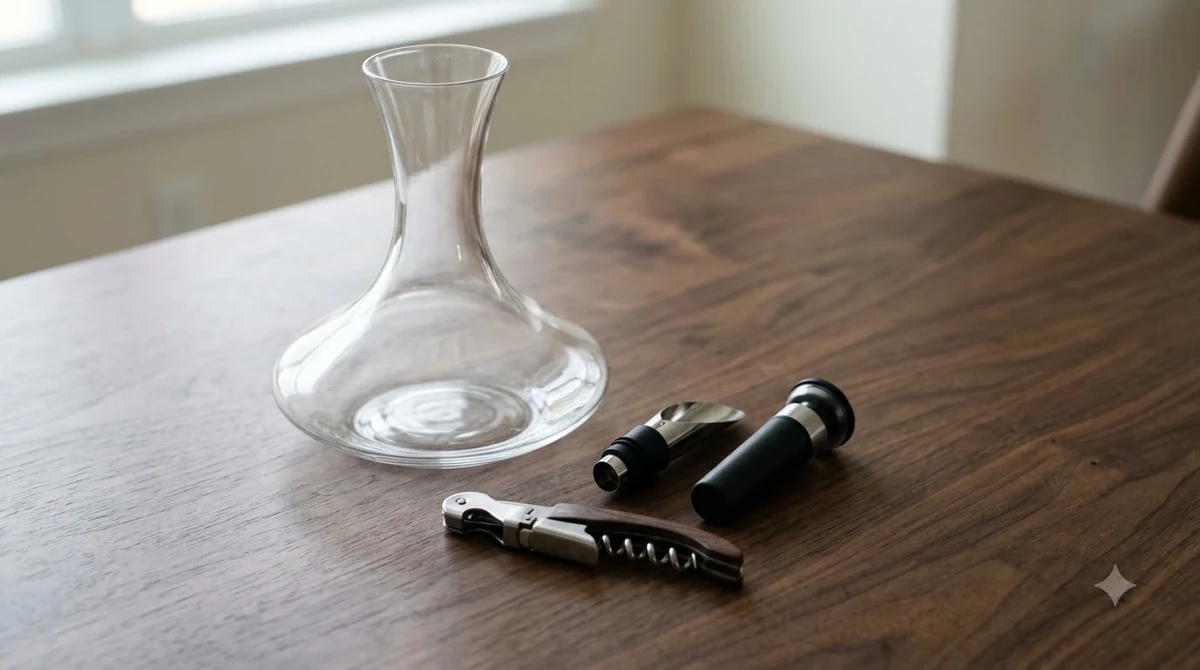
It reduces the need for an ice bucket. An ice bucket requires ice, water, and enough space to accommodate a bottle. It also creates meltwater as the evening progresses. The OXO design avoids those requirements because it relies on insulation rather than a bath of ice. A bottle can move directly from the refrigerator into the holder, making it particularly convenient for an ordinary dinner or a small gathering.
The stainless steel finish suits different table settings. Brushed metal is a relatively neutral design choice. It can sit alongside glassware, stainless steel flatware, ceramic serving dishes, and wooden dining furniture without introducing a particularly strong color or decorative pattern. That makes the chiller suitable for both everyday dining and more formal occasions.
The interior is designed with the bottle in mind. The soft protective lining is a meaningful distinction from a basic metal bucket. It helps cushion the bottle during placement and reduces direct contact with the hard exterior structure. The internal moat also gives condensation and minor drips a designated collection area.
It occupies a manageable amount of table space. Its 5.25-inch width and depth create a relatively compact footprint. This can be useful when serving several dishes at once or arranging a small dining table where an oversized ice bucket would compete with plates and serving bowls.
It requires little preparation. Unlike a freezer-based cooling sleeve, the OXO design does not depend on frozen gel packs. There is no electrical connection, temperature setting, or complicated assembly involved. The important preparation happens before serving: the wine needs to reach its preferred temperature in the refrigerator.
The Los Angeles Times also examined the OXO Steel Wine Sleeve and described its ability to maintain an already-chilled bottle’s temperature for roughly one or two hours. That assessment helps establish the product’s practical role: maintaining a suitable serving condition rather than performing a rapid temperature reduction.
Another advantage is that the design avoids continuous contact with melting ice. Labels can become wet in traditional ice buckets, particularly during extended dinners. A dry insulated holder offers a tidier presentation for bottles whose labels are important to the occasion, such as a special Burgundy, California Chardonnay, or Champagne.
However, these advantages should be understood as design benefits rather than proof that every owner has experienced identical results. Room temperature, starting wine temperature, bottle shape, and how frequently the bottle is removed all influence real-world performance.
Common Complaints: Limited Cooling Power and Bottle Compatibility
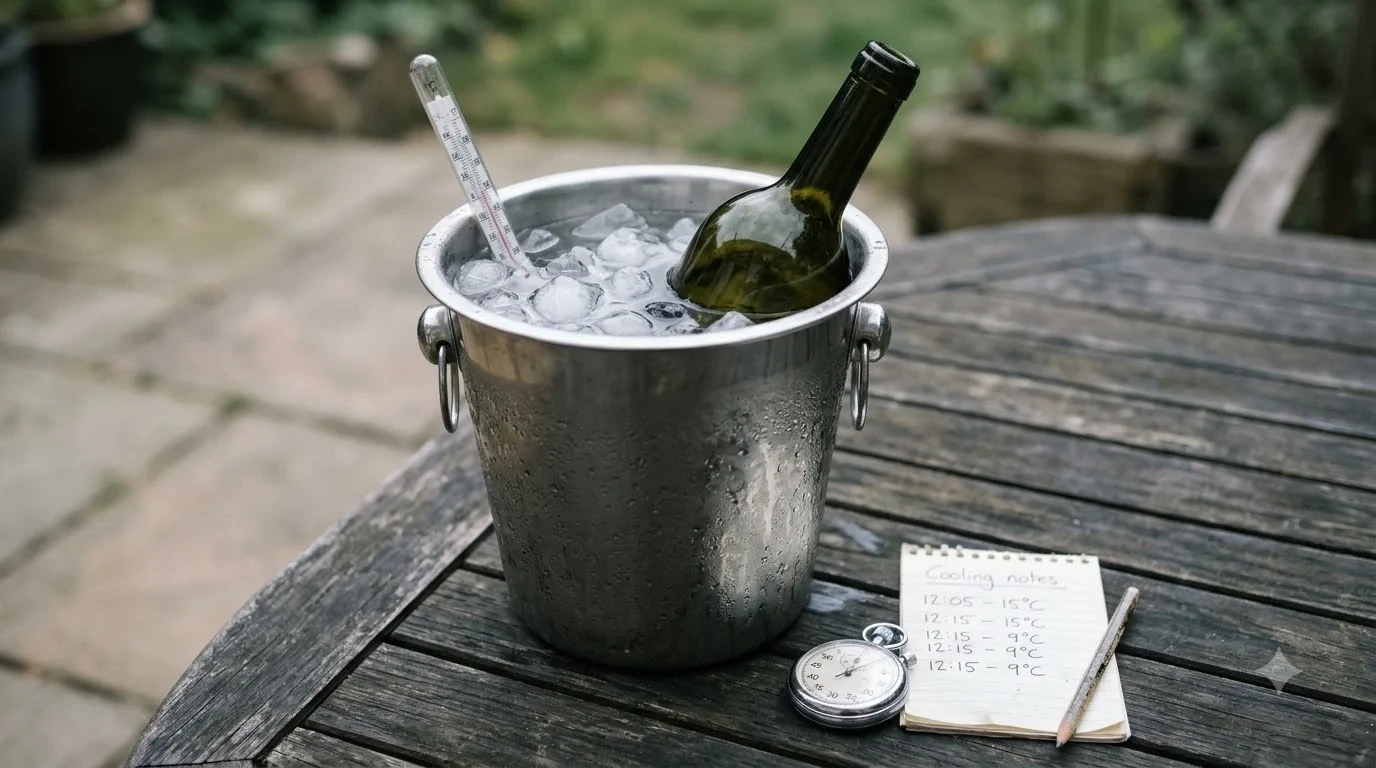
The main limitation of the OXO wine chiller is that insulation does not generate cold. It slows temperature changes, but it cannot replace a refrigerator, an ice bath, or an active cooling system when a bottle starts out warm.
It is not a rapid-chilling device. Someone who purchases this accessory expecting to take a room-temperature Sauvignon Blanc and make it refrigerator-cold in a few minutes may be disappointed. The manufacturer describes insulated construction but does not publish a specific rapid-chilling time. Its intended use is holding an already-chilled bottle during service.
Cooling performance depends on preparation. Consider a bottle of Pinot Grigio that has spent several hours in the refrigerator. Moving it into an insulated holder helps slow warming as guests pour their glasses. By contrast, placing a warm bottle into the same holder does not provide the active cooling needed to reach a suitable serving temperature quickly.
One-bottle capacity limits versatility. The OXO is designed for one 750 ml bottle. That works well for a quiet dinner, but it is less convenient for an event serving Champagne, white wine, and rosé simultaneously. Users must either rotate bottles or provide separate cooling arrangements.
Wide bottle shapes may present a fit problem. Not every 750 ml bottle has identical proportions. Champagne and some sparkling wine bottles can have wider bodies than conventional still-wine bottles. Since OXO does not publish an interior diameter, shoppers should avoid assuming that every bottle carrying a 750 ml label will fit comfortably.
It does not offer adjustable temperature control. An electric wine cooler can be configured to maintain a particular temperature, while this accessory simply provides passive insulation. There is no thermostat, digital display, compressor, or refrigeration cycle. That is not necessarily a defect, but it does make the product unsuitable for people seeking a temperature-controlled storage solution.
The exact cooling duration is not guaranteed. The Los Angeles Times described approximately one or two hours of temperature maintenance. That is a useful indication, but it should not be treated as a guaranteed performance specification under every condition. A bottle taken from a refrigerator at 42°F and placed in a warm room will behave differently from one taken from a refrigerator at 50°F and served in a cooler dining area.
Availability may require additional checking. QVC’s listing identifies its OXO Steel Wine Chiller as sold out. The official OXO product page provides the product specifications, but shoppers should confirm current stock through the manufacturer or an authorized retailer rather than assume that every listing is available for purchase.
Finally, the product is not especially versatile outside its intended job. It holds a bottle upright and helps maintain its temperature. It does not aerate wine, preserve an opened bottle, cool individual glasses, or provide long-term storage. Those functions require different accessories.
Tip: Refrigerate the bottle before placing it in the OXO chiller. For sparkling wine, aim for approximately 40–50°F; for light whites and rosé, aim for 45–50°F. The insulated holder is intended to help maintain that starting temperature, not create it.
Who Should Buy It and Who Should Skip It
The OXO Steel Wine Chiller makes the most sense for people who regularly serve one refrigerated bottle at a time. Its insulated design is particularly useful for dinners where guests pour wine gradually rather than finishing a bottle immediately after opening.
Consider it if you regularly serve chilled white wine. Sauvignon Blanc, Pinot Grigio, Albariño, and dry Riesling generally benefit from cooler serving temperatures. A bottle that starts properly chilled can remain in the insulated holder while dinner progresses. The same principle applies to rosé and many sparkling wines.
Consider it if you want a simple alternative to an ice bucket. The OXO holder is useful for someone who dislikes managing ice, draining meltwater, and wiping down a wet bottle. Its brushed stainless steel appearance also makes it suitable for a dining table where a traditional plastic or metal ice bucket might look out of place.
Consider it for small gatherings. A household that usually opens one bottle with dinner is more likely to appreciate the capacity than someone hosting a large reception. The compact footprint also makes it practical for apartment dining tables, kitchen islands, and smaller serving areas.
Skip it if you need to chill wine quickly. Someone who frequently forgets to refrigerate bottles will benefit more from a rapid-cooling method. An ice-water bath, for example, provides active cooling that a double-wall holder cannot reproduce.
Skip it if you regularly serve several bottles together. A single-bottle holder does not solve the needs of a large dinner party. A larger ice bucket or several coordinated cooling vessels may be more practical when serving multiple bottles of Chardonnay, sparkling wine, and red wine.
Skip it if you need wine storage. The OXO product is a serving accessory, not a wine refrigerator. Collectors who want to hold bottles for months or years need a more appropriate storage environment with stable temperature conditions. A dedicated wine refrigerator is designed for that different purpose.
Skip it if your bottles have unusual dimensions. A household that regularly buys large-format bottles, broad Champagne bottles, or unusually shaped wines should prioritize a product with a clearly stated interior diameter. The OXO listing does not provide enough interior measurements to guarantee universal bottle compatibility.
For shoppers browsing beyond this particular product, the Accessory Brands section is a useful starting point for comparing wine-serving equipment. The important distinction is whether the purchase is intended to keep an already-cold bottle comfortable at the table or actively lower its temperature.
How It Compares to Alternative Wine Chillers
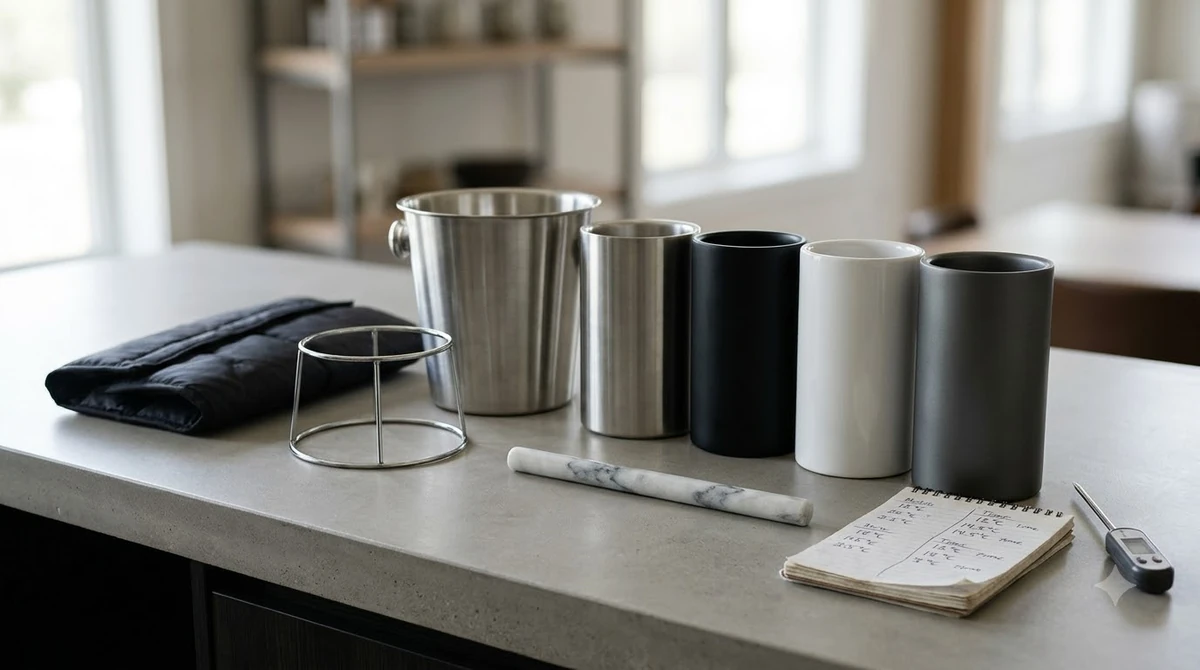
The OXO Steel Wine Chiller occupies the passive-insulation category. It is different from marble holders, frozen sleeves, and electric wine coolers, each of which addresses a different serving or storage requirement.
OXO versus a marble wine chiller: Both options can provide an attractive tabletop presentation without requiring an ice bucket. However, marble relies on the thermal mass of a pre-chilled stone, while OXO uses insulated double-wall stainless steel. Marble can be particularly attractive as a decorative serving accessory, but it is generally heavier and needs advance cooling if its thermal mass is to provide a useful benefit.
A marble wine chiller may suit someone who prioritizes natural materials and a decorative centerpiece. OXO is the more practical direction for someone who prefers a brushed-metal appearance and a soft protective interior. Neither should be mistaken for a replacement for refrigerator chilling.
OXO versus an electric wine chiller: This comparison involves a much larger difference in functionality. An electric wine cooler uses powered refrigeration to control temperature, whereas OXO simply slows the warming of a bottle that has already been chilled.
A dedicated electric wine chiller is a better choice for people who want temperature management, repeated use with different bottles, or a more permanent wine-serving station. The OXO accessory is more appropriate for portable tabletop use and occasional entertaining. It does not require electricity, installation, or a permanent location.
OXO versus an instant wine chiller: Rapid-chilling products are designed to address a different problem. Depending on their design, they use frozen cooling elements or other direct cooling methods to reduce a bottle’s temperature. That makes them more useful when wine has not been refrigerated in advance.
An instant wine chiller is worth investigating for last-minute entertaining. The OXO holder, by comparison, is better suited to keeping an already-cold bottle ready for serving throughout a meal.
The following comparison summarizes the functional differences without assuming that every product in each category has identical performance.
| Chiller Type | How It Works | Best Use | Main Limitation |
|---|---|---|---|
| OXO insulated steel | Double-wall insulation | Maintaining a chilled bottle at the table | Does not actively cool |
| Marble chiller | Thermal mass of chilled stone | Decorative tabletop serving | Requires pre-chilling |
| Electric wine cooler | Powered refrigeration | Temperature-controlled storage or serving | Needs electricity and space |
| Instant wine chiller | Rapid-cooling mechanism | Last-minute temperature reduction | Depends on the particular cooling system |
| Traditional ice bucket | Ice and water | Active cooling and bottle presentation | Requires ice and produces meltwater |
For most households, the decision comes down to timing. If the bottle is already cold, the OXO design provides a convenient serving holder. If the bottle is warm, a more active cooling method is the logical choice. If wine needs to remain at a controlled temperature for an extended period, an electric wine refrigerator is a different and more appropriate category.
How to Get Better Results From the OXO Wine Chiller
Good preparation makes a noticeable difference with passive wine insulation. The bottle should reach its intended serving temperature before entering the holder, and the chiller should be used as a serving accessory rather than as a substitute for proper refrigeration.
Start by choosing the correct serving temperature. Different wine styles benefit from different temperatures. Sparkling wines generally work well around 40–50°F, while light whites and rosé are commonly served around 45–50°F. Fuller-bodied white wines, including richer Chardonnay styles, are generally served around 50–55°F.
Red wines also benefit from thoughtful temperature management. Light-bodied Pinot Noir is generally better around 55–60°F, while fuller-bodied Cabernet Sauvignon and Syrah are commonly served around 60–65°F. Many modern indoor environments are warmer than these preferred serving temperatures, so slightly chilling a red wine before service can be helpful.
Refrigerate the bottle before dinner. Allow enough time for the wine to reach its intended temperature. Do not expect the insulated walls to compensate for a warm bottle. The more appropriate the starting temperature, the more useful the holder becomes during service.
Check bottle proportions before committing to a particular wine. Standard 750 ml bottles are the intended format, but some producers use broader bottle shapes. This is especially relevant for Champagne and other traditional-method sparkling wines. Because OXO does not specify the interior diameter, unusually wide bottles should not be assumed to fit.
Place the holder on a stable surface. A level dining table, kitchen island, or serving counter is a sensible location. Avoid positioning it where guests may repeatedly bump it while reaching for food or glassware.
Return unfinished wine to the refrigerator. The chiller is designed to maintain serving temperature during a meal, not to provide overnight refrigeration. If the bottle still contains wine after dinner, reseal it appropriately and refrigerate it. Most opened still wines generally retain their best quality for approximately three to five days when refrigerated, although the exact period depends on the wine and storage conditions.
Clean the holder after use. Wipe away moisture, drips, and any residue from the exterior and interior. QVC specifies wiping the product clean, while OXO’s product description emphasizes the soft interior and drip-catching moat. Avoid assuming that the entire accessory is dishwasher-safe because the manufacturer does not provide that instruction on the product listing.
These habits make the accessory more useful and help keep the serving area tidy. They also prevent a common misunderstanding about passive chillers: insulation preserves an existing temperature difference but does not continuously create cold.
Frequently Asked Questions
Does the OXO Wine Chiller fit a 1.5 liter Magnum bottle?
The published capacity is one 750 ml bottle, so a 1.5 liter Magnum should not be assumed to fit. Magnum bottles are also typically wider and taller than standard bottles. A dedicated large-format cooler with published interior measurements is a safer option.
Can the OXO Wine Chiller be used for sparkling cider?
Yes, it can serve as an insulated holder for a suitably sized chilled sparkling cider bottle. The important consideration is physical bottle compatibility rather than the beverage itself. Wider sparkling beverage bottles may require a larger holder.
Does stainless steel affect the taste of wine?
The OXO chiller is an exterior serving accessory, not a wine fermentation or storage vessel. The wine remains inside its original glass bottle, so it does not have direct contact with the stainless steel construction. Its purpose is insulation and bottle presentation.
Can the OXO chiller hold a bottle of sparkling water?
A suitably sized sparkling water bottle may fit, although the manufacturer specifically describes the capacity in terms of a 750 ml wine bottle. Tall, unusually narrow, or oversized water bottles may not sit as intended. Keeping the bottle sealed also helps prevent carbonation loss during serving.
Is the OXO Steel Wine Chiller suitable as a gift?
It can make a practical gift for someone who regularly entertains or enjoys serving chilled wine. Its neutral stainless steel finish works with many table settings, and the one-bottle capacity keeps the accessory relatively compact. Before purchasing it as a gift, confirm that the model is currently available.
The OXO Steel Wine Chiller is a sensible serving accessory for wine drinkers who want to keep one properly chilled bottle cool during dinner without dealing with an ice bucket. Its double-wall stainless steel construction, soft interior, and drip-catching moat are useful practical features, although it cannot rapidly chill warm wine or accommodate every bottle shape. If its passive cooling approach matches your entertaining habits, it is a straightforward design to consider; otherwise, a marble, instant, or electric alternative may better suit your needs.
More in Wine Accessories
 Vinglace Wine Tumbler Review: A Glass-Lined Choice for Better SippingUpdated Nov 20, 2026
 ZWILLING Electric Wine Opener Review: Features and DrawbacksUpdated Nov 20, 2026
 Vinturi Electric Wine Opener Review for Easy UncorkingUpdated Nov 20, 2026
 Vinabon Wine Aerator Review for Easier, Cleaner Wine ServingUpdated Nov 20, 2026
 Vacu Vin Electric Wine Opener Review: Easy Cork Removal for Home Wine LoversUpdated Nov 20, 2026
 Rabbit Wine Accessories for Easier Home Wine ServiceUpdated Nov 20, 2026