

We may earn a commission when you buy through links on this page, at no extra cost to you. Learn more.
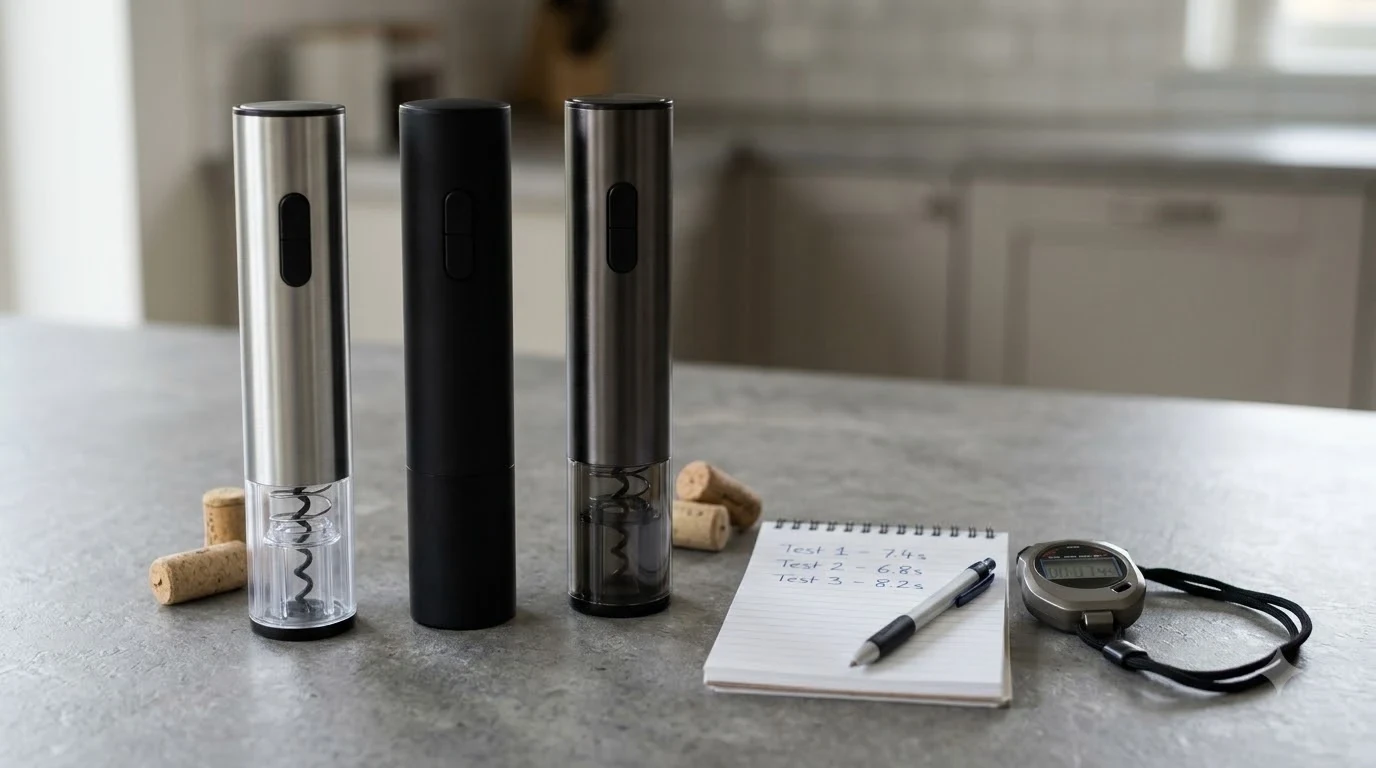
The Oster electric wine opener is a convenient cordless corkscrew for everyday wine drinkers who want push-button cork removal, a soft-grip handle and an included foil cutter. Its straightforward operation and recharging base make opening bottles easier than using a traditional manual corkscrew. However, recurring customer complaints about battery deterioration, charging problems and stuck corks make long-term reliability an important consideration before buying.
The Oster Silver Electric Wine Opener is designed to simplify one of the most routine parts of serving wine. Instead of twisting a lever or pulling against a stubborn cork, you position the electric opener over the bottle and use its switch to extract the cork. The package includes a foil cutter, while the charging base keeps the appliance ready for another occasion. This review examines its specifications, operating experience reported by owners, common problems, and the situations in which another type of wine opener might be a better choice.
Specs and Key Features
The Oster Silver Electric Wine Opener combines cordless operation, rechargeable power and a simple two-direction switch in a countertop appliance. Its main selling points are convenience and the manufacturer’s stated capacity of up to 30 bottles per full charge.
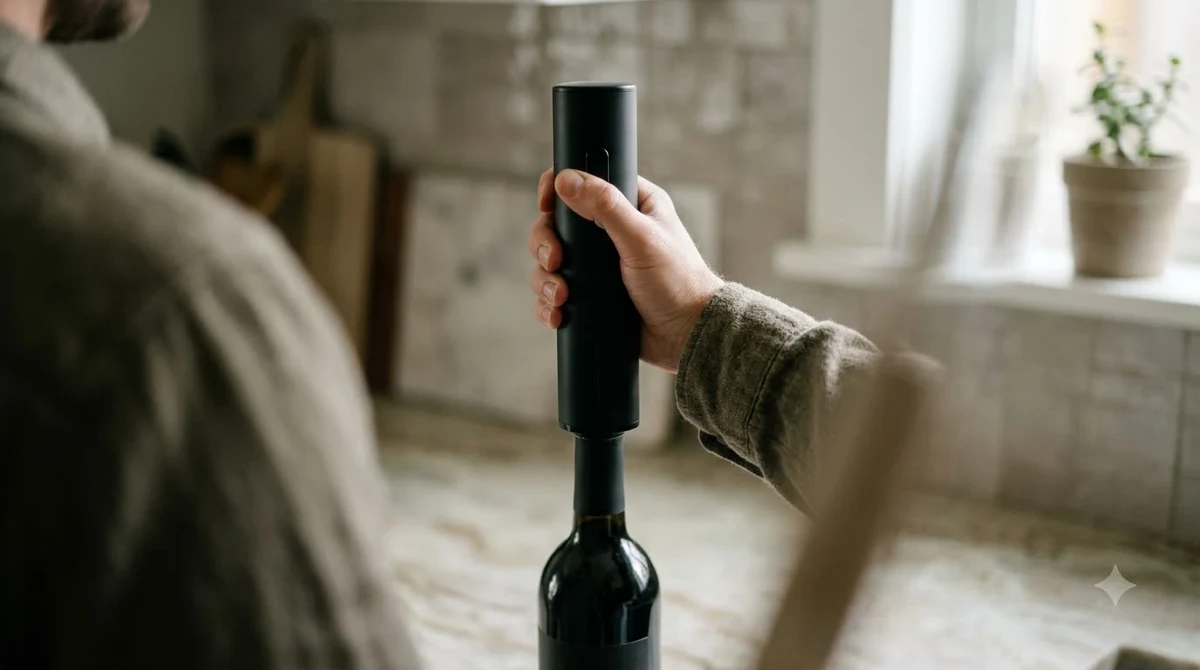
The silver model carries the manufacturer designation FPSTBW8207-S-AMZ. Its package includes the electric opener and a foil cutter, with a separate recharging base supplied for keeping the appliance powered. The soft-grip handle provides a more secure hold when positioning the mechanism over a bottle. Unlike a manual corkscrew, the Oster does the turning and extraction work using its internal motor.
Here are the specifications published by Oster for the silver model. These figures refer specifically to FPSTBW8207-S-AMZ rather than every Oster electric opener sold under similar product names.
| Specification | Oster Silver Electric Wine Opener |
|---|---|
| Model | FPSTBW8207-S-AMZ |
| Operation | Cordless electric |
| Power | 14.4 watts |
| Electrical rating | 110-120 volts |
| Advertised capacity | Up to 30 bottles per charge |
| Charging time | Approximately 6-8 hours |
| Dimensions | 5.51 x 14.96 x 5.32 inches |
| Weight | 2.1 pounds |
| Included accessories | Foil cutter and recharging base |
| Warranty | 1-year limited warranty |
The advertised 30-bottle capacity is useful when evaluating the opener for occasional entertaining. A household that opens one bottle every evening could theoretically go several weeks between charges under the manufacturer’s stated capacity. Actual performance will depend on battery condition, charging contact and the resistance encountered when extracting individual corks.
It is also important to distinguish the silver 8207 from the older Oster 4207 and 4208 products. The older 4207/4208 instruction manual describes a similar charging stand and switch arrangement but gives an estimated capacity of approximately 40 bottles per charge. That older figure should not be applied to the newer silver model.
The overall physical design is relatively tall, measuring nearly 15 inches in its longest dimension. Allow enough vertical clearance for the opener above a standing wine bottle, particularly if you intend to store it upright on a kitchen counter.
For the manufacturer’s complete product description and specifications, consult the official Oster Silver Electric Wine Opener product page.
What Owners Like
The strongest appeal of the Oster electric wine opener is its uncomplicated operation. Owners who enjoy the convenience of electric cork removal particularly appreciate the reduced physical effort and the ability to prepare several bottles without repeatedly working a manual corkscrew.

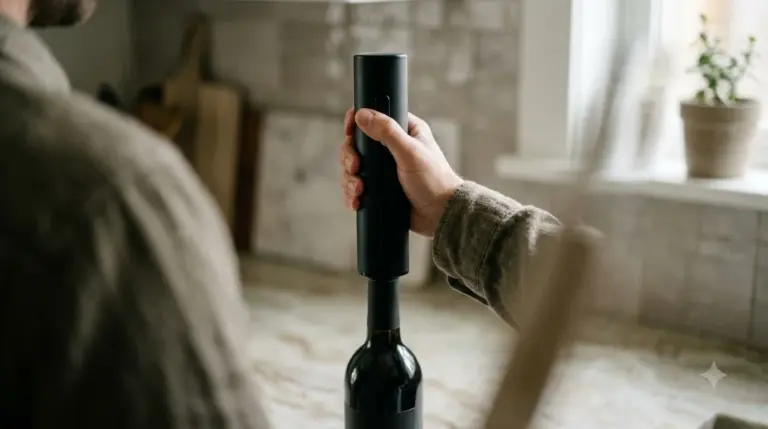
One major advantage is the push-button mechanism. A conventional corkscrew requires the user to position the spiral, turn it into the cork and apply sufficient force to remove the cork without breaking it. The Oster handles the mechanical movement internally. Once the opener is correctly positioned, the motor performs the extraction.
This arrangement can be particularly helpful for people who find twisting motions uncomfortable or have difficulty maintaining a firm grip. The soft-grip handle also makes the appliance easier to hold securely than a narrow metal corkscrew. It does not eliminate the need to stabilize the wine bottle, but it reduces the amount of manual turning involved.
The cordless design is another practical benefit. Because the opener operates away from its charging base, you can move it between the kitchen counter, dining table and serving area without dragging a power cord around. The base provides a consistent storage location, which is useful when you want the appliance available for regular use.
Owners also appreciate the included foil cutter. Removing the capsule before extracting a cork is an important part of preparing a wine bottle, and having a dedicated accessory avoids searching through a kitchen drawer for a separate cutting tool.
Convenience during dinner parties
For a gathering involving several bottles, an electric opener can make the serving routine more comfortable. Rather than repeatedly twisting a manual corkscrew, the host can use the same basic motion for each bottle. This is especially useful when opening a mixture of Cabernet Sauvignon, Chardonnay, Pinot Noir and sparkling-wine alternatives that use traditional cork closures.
Remember that an electric corkscrew is intended for conventional cork-sealed wine bottles. Sparkling wines require a different opening technique because their closures are secured against internal pressure. The Oster should not be used as a substitute for the proper method of removing a Champagne or sparkling-wine cork.
Positive feedback about ease of use
Customer feedback at major retailers frequently identifies ease of use as one of the product’s strongest advantages. Lowe’s customer-review summary highlights the convenience of quick bottle opening and notes that the appliance can be especially helpful for people with limited hand strength.
Best Buy feedback for an older Oster electric wine opener also identifies simple operation and battery performance as positive themes. However, those reviews concern a different listing and should not be treated as proof that every Oster model has identical performance.
The distinction matters because the convenience of an electric opener is only valuable if the battery and motor remain dependable. A product can be pleasant to use during its early months while still disappointing owners who expect several years of reliable operation.
Common Complaints
Battery performance and mechanical reliability are the main concerns appearing in customer feedback about Oster electric wine openers. Some owners report excellent initial operation, but others describe charging failures, reduced power and corks becoming trapped inside the mechanism.
The battery issue deserves particular attention. Because the opener relies on rechargeable power, declining battery capacity can eventually prevent it from completing a normal cork-removal cycle. Some owners report that their units stopped holding a charge after approximately 12-18 months, while others describe longer periods of satisfactory use.
Charging problems are also reported. A unit may appear to be positioned on its base but fail to establish a reliable electrical connection. Oster’s older operating instructions emphasize placing the opener firmly into the charging stand and ensuring that the charging contacts are properly engaged.
Mechanical problems create a different kind of inconvenience. Several customer accounts describe corks getting stuck in the corkscrew, the mechanism stopping partway through extraction or the motor becoming too weak to complete the operation. These problems can leave the bottle unopened and the appliance difficult to use until the cork is released.
Battery replacement is an important consideration
Unlike a manual corkscrew, a rechargeable electric opener depends on an internal power source that eventually loses capacity. Buyers should not assume that the battery is designed for straightforward replacement. The older Oster instruction manual explicitly says that the opener and charging unit contain no user-serviceable parts.
This matters because a motor that still works mechanically may become unusable when its battery no longer accepts or retains a charge. If a replacement battery is not available as a supported repair, the entire appliance may need replacing.
Mixed feedback on durability
Oster’s own product-page feedback includes both positive long-term experiences and reports of failures. Some owners say their openers have worked for years, while others describe problems after relatively short periods of use.
Lowe’s older 4207 listing provides another useful perspective. Its displayed review average is 2.9 out of 5 from 183 reviews, with customer comments mentioning charging problems, broken plastic components and inconsistent cork extraction. Those figures apply to that retailer’s specific listing, not necessarily the current silver model.
The most reasonable conclusion is that the Oster offers an appealing operating concept but has enough documented durability complaints to make warranty coverage and return policies important purchasing considerations. Buyers who prioritize repairability or long-term ownership may prefer a simpler manual opener.
Tip: Before relying on an Oster electric opener for a dinner party, make sure it is fully charged and test its operation beforehand. Keep a manual corkscrew available as a backup, especially if you plan to open several bottles.
Who Should Buy and Who Should Skip
The Oster electric wine opener makes the most sense for people who prioritize convenient cork removal over repairability and long-term mechanical simplicity. It is less attractive for buyers who want a dependable appliance with easily replaceable batteries or a design that can be maintained for many years.
For occasional wine drinkers, the cordless format can be convenient. You can keep the opener near your wine glasses and serving accessories, charge it between occasions and use the foil cutter whenever a traditional cork-sealed bottle is opened.
It can also be a practical household accessory for someone who finds manual corkscrews difficult to operate. The soft grip and powered extraction reduce the amount of repeated twisting and pulling required. This is the clearest reason to consider an electric model rather than choosing a conventional waiter’s corkscrew.
Good reasons to consider the Oster
Consider the Oster if you regularly open still wine at home and prefer a simple electrical mechanism over manual effort. Its push-button operation is straightforward, and the included foil cutter means the basic opening accessories come together in one package.
It is also worth considering if you already have a convenient location near an electrical outlet for the charging base. A dedicated storage location helps prevent the opener from becoming misplaced and makes it easier to maintain a regular charging routine.
People who host small gatherings may appreciate the cordless format, particularly when several conventional cork-sealed bottles are being served. A full charge provides a useful reserve according to Oster’s advertised 30-bottle capacity, although individual results can vary.
Reasons to choose something else
Skip the Oster if you strongly prefer products with replaceable batteries, easily sourced repair parts or a long service life supported by a straightforward maintenance system. The recurring battery and charging complaints make those priorities particularly relevant.
It may also be unnecessary if you open only one bottle every few weeks. A manual corkscrew does not need charging, takes up less counter space and can remain useful for many years with very little maintenance.
Frequent travelers and people who want a compact emergency opener should also consider alternatives. The Oster’s approximately 15-inch height makes it less convenient to pack than a small manual wine bottle opener. A wine bottle opener keychain offers a much smaller solution for occasional use away from home.
Finally, anyone who expects to use the opener for sparkling wine should select an appropriate sparkling-wine opening method instead. Electric corkscrews designed for standard wine closures are not intended to handle pressurized sparkling bottles.
How It Compares to Alternatives
The Oster sits in the convenience-focused category of wine accessories, where powered cork removal is the main selling point. Its closest practical alternatives are manual corkscrews and other electric openers, while separate wine-chilling appliances address a different part of the serving experience.
A manual waiter’s corkscrew is the simplest alternative. It requires more physical effort, but it has no rechargeable battery, charging stand or motor to fail. Its compact dimensions also make it easier to store in a kitchen drawer or carry when traveling.
A winged corkscrew offers another familiar option. Its side handles provide leverage as the spiral enters the cork, making it relatively straightforward for many users. However, it still requires a twisting action and a downward movement to extract the closure.
Electric openers versus manual corkscrews
The main advantage of the Oster is convenience. Pressing a switch is generally simpler than manually turning a spiral into a cork, especially when opening multiple bottles. The trade-off is dependence on electrical charging and internal components that cannot necessarily be repaired by the owner.
Manual corkscrews have a different advantage: simplicity. A good waiter-style opener can last for years without a battery or charging base. It also gives the user direct control over how the spiral enters the cork, which can be useful when dealing with older or fragile closures.
For everyday household use, the decision depends on how much value you place on reducing physical effort. If convenience is the priority, the Oster’s format is attractive. If durability, portability and straightforward maintenance matter more, a manual model is the safer choice.
Electric openers versus wine chillers
An electric opener and an electric wine chiller solve separate problems. The opener removes the closure, while a chiller helps maintain serving temperature after the bottle has been opened or brought to the table.
For example, a white Burgundy made primarily from Chardonnay is generally served around 50-55 F when full-bodied, while lighter whites are often served around 45-50 F. A chiller is therefore a useful companion for temperature-conscious serving, but it cannot replace a corkscrew.
Some Oster bundles have combined an electric opener with a stainless-steel wine chiller. The 4208 package is one example documented in Oster’s instruction manual. However, that bundle should not be confused with the silver 8207 model reviewed here, which lists the opener and foil cutter as its included accessories.
If keeping bottles at the right temperature is also a priority, explore an electric wine chiller or compare the options in our best electric wine chiller guide. For a broader overview of wine-serving equipment and other useful accessories, visit Accessory Brands.
Frequently Asked Questions
Can the Oster electric wine opener remove synthetic corks?
Performance can vary depending on the density, material and dimensions of the closure. Synthetic corks may create different resistance from natural cork, so avoid forcing the motor if extraction becomes difficult. The manufacturer does not publish a separate compatibility guarantee for every synthetic closure.
Can the Oster electric wine opener be used internationally?
The silver FPSTBW8207-S-AMZ specification identifies a 110-120-volt electrical rating. It should not automatically be assumed compatible with 220-240-volt outlets. International users should verify the power requirements of their exact model and charging equipment before connecting it to another electrical system.
Can the Oster opener remove a cork from a half-full bottle?
Yes, the amount of wine remaining in a conventional bottle does not change the basic cork-removal mechanism. The important consideration is keeping the bottle upright and stable while positioning the opener. The device is designed to extract the closure rather than measure or control the wine level.
Does the Oster electric opener work with screw-cap bottles?
No. A screw-cap bottle does not have a cork that needs to be extracted with a spiral mechanism. Remove its cap by hand using the normal opening motion. Applying an electric corkscrew to a screw-cap closure is unnecessary and could damage the packaging.
Can the Oster charging base be used as a universal charger?
No universal compatibility should be assumed. Oster’s operating instructions specify using the supplied charging unit and power cord. Different Oster models can have different electrical and physical specifications, so a charging base from another appliance should not be substituted without manufacturer confirmation.
The Oster electric wine opener offers an easy-to-understand solution for people who want to open conventional wine bottles with less manual effort. Its cordless design, soft-grip handle and included foil cutter make it convenient, but recurring reports of battery and mechanical problems deserve serious consideration. If you decide to buy one, verify the exact model, warranty and return conditions, and keep a manual corkscrew available as a dependable backup.
More in Wine Accessories
 Vinglace Wine Tumbler Review: A Glass-Lined Choice for Better SippingUpdated Nov 20, 2026
 ZWILLING Electric Wine Opener Review: Features and DrawbacksUpdated Nov 20, 2026
 Vinturi Electric Wine Opener Review for Easy UncorkingUpdated Nov 20, 2026
 Vinabon Wine Aerator Review for Easier, Cleaner Wine ServingUpdated Nov 20, 2026
 Vacu Vin Electric Wine Opener Review: Easy Cork Removal for Home Wine LoversUpdated Nov 20, 2026
 Rabbit Wine Accessories for Easier Home Wine ServiceUpdated Nov 20, 2026