

We may earn a commission when you buy through links on this page, at no extra cost to you. Learn more.
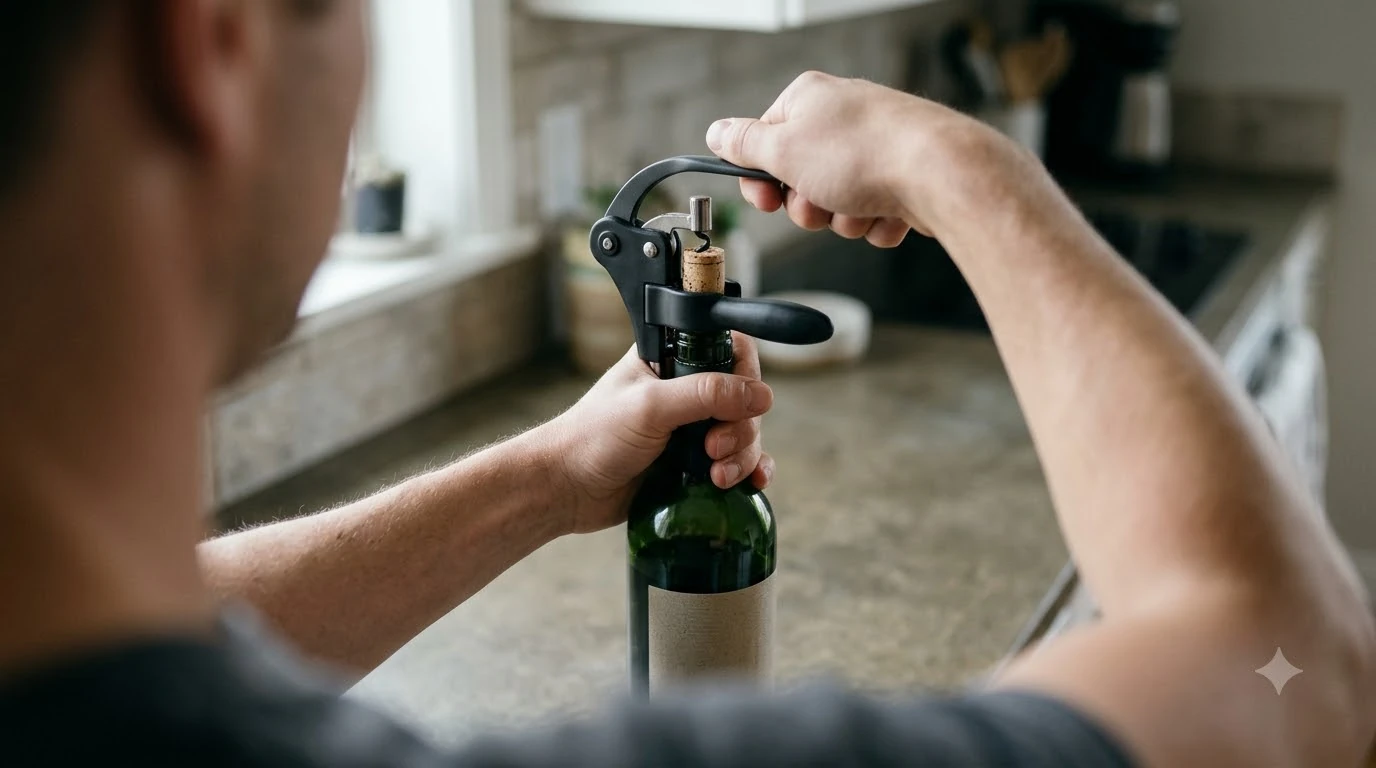
The oster corkscrew is a rechargeable electric wine opener designed to remove traditional wine corks with a push-button mechanism, making bottle opening easier than using a manual corkscrew. Its main attractions are cordless operation, a comfortable soft-grip handle, an included foil cutter, and a charging stand. However, recurring owner complaints about battery reliability and stuck corks make long-term durability an important consideration before buying.
Oster has offered several electric wine opener configurations, including silver and black versions, so identifying the exact model matters when comparing specifications and owner experiences. The Silver Electric Wine Opener, model FPSTBW8207-S-AMZ, provides a useful reference point for evaluating the design, charging requirements, accessories, and operating instructions. This review examines what the product does well, where it can disappoint, and which wine drinkers are better served by a different opening mechanism.
Specs and Key Features
The Oster Silver Electric Wine Opener is a cordless, rechargeable appliance built around a motorized corkscrew and a simple two-direction control switch. Its included charging base and foil cutter make it a convenient countertop accessory for households that regularly open still wine bottles.
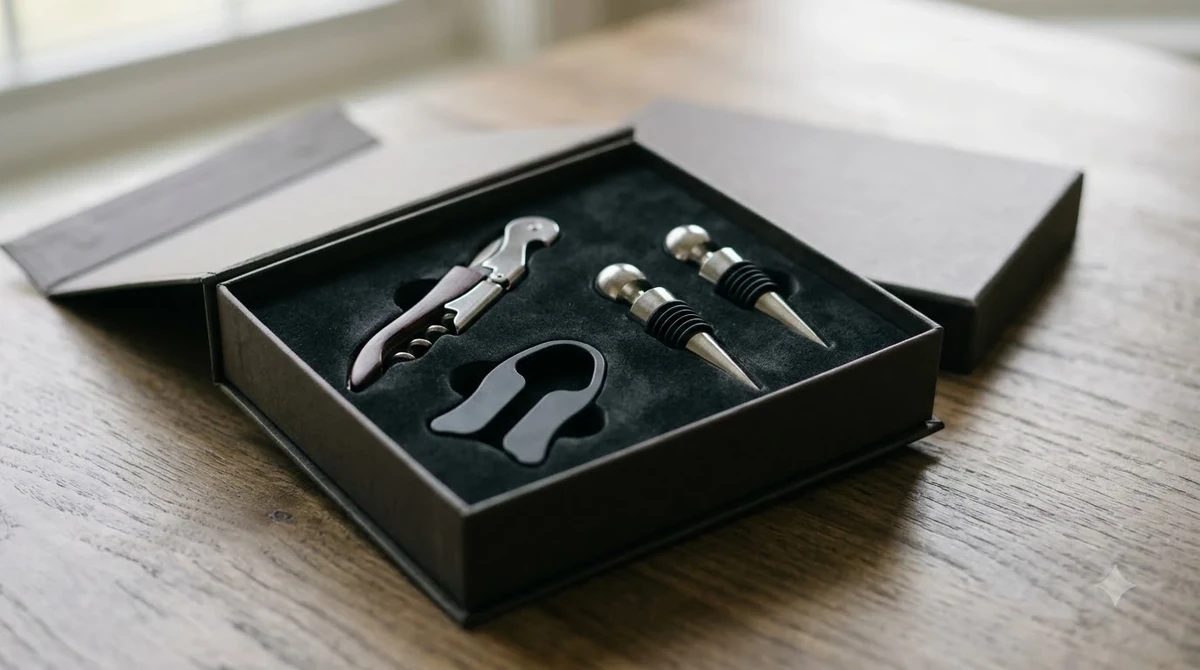
Oster lists model FPSTBW8207-S-AMZ as a silver electric opener with a soft-grip handle, rechargeable battery, and charging stand. Rather than requiring the user to twist a handle repeatedly, the motor drives the corkscrew into the cork and withdraws it from the bottle. A second switch operation releases the extracted cork from the spiral.
The physical design is intended for countertop storage rather than pocket or travel use. Oster lists dimensions of 5.51 x 14.96 x 5.32 inches and a weight of 2.1 pounds. The charging base occupies additional space, so buyers should consider the entire storage arrangement rather than the handheld unit alone.
| Specification | Oster Silver Electric Wine Opener |
|---|---|
| Product type | Rechargeable electric wine opener |
| Model number | FPSTBW8207-S-AMZ |
| Operation | Push-button electric mechanism |
| Battery capacity claim | Up to 30 bottles per charge |
| Charging time | Approximately 6-8 hours |
| Dimensions | 5.51 x 14.96 x 5.32 inches |
| Weight | 2.1 pounds |
| Power rating | 14.4 watts |
| Included accessories | Foil cutter and charging base |
| Handle | Soft-grip design |
| Warranty | 1-year limited warranty |
These specifications come from Oster’s product listing. One important distinction concerns bottle capacity: the product page advertises up to 30 openings per charge, while Oster’s older instruction manual for models 4207 and 4208 estimates approximately 40. These figures should not be treated as interchangeable guarantees because they refer to different product documentation and configurations.
The manufacturer’s product information is available on the Oster Silver Electric Wine Opener product page. Buyers should use the documentation matching their actual model rather than assuming that every Oster electric opener has identical specifications.
For a household that opens several bottles during a dinner party, cordless operation is particularly convenient. There is no need to position a manual lever or repeatedly rotate a handle. However, the charging base and rechargeable battery introduce maintenance requirements that a traditional corkscrew does not have.
What Owners Like
The strongest appeal of the Oster electric opener is its straightforward operation, particularly for people who find manual cork extraction uncomfortable. Its soft-grip handle, cordless design, and included foil cutter reduce the number of separate steps involved in opening a bottle.
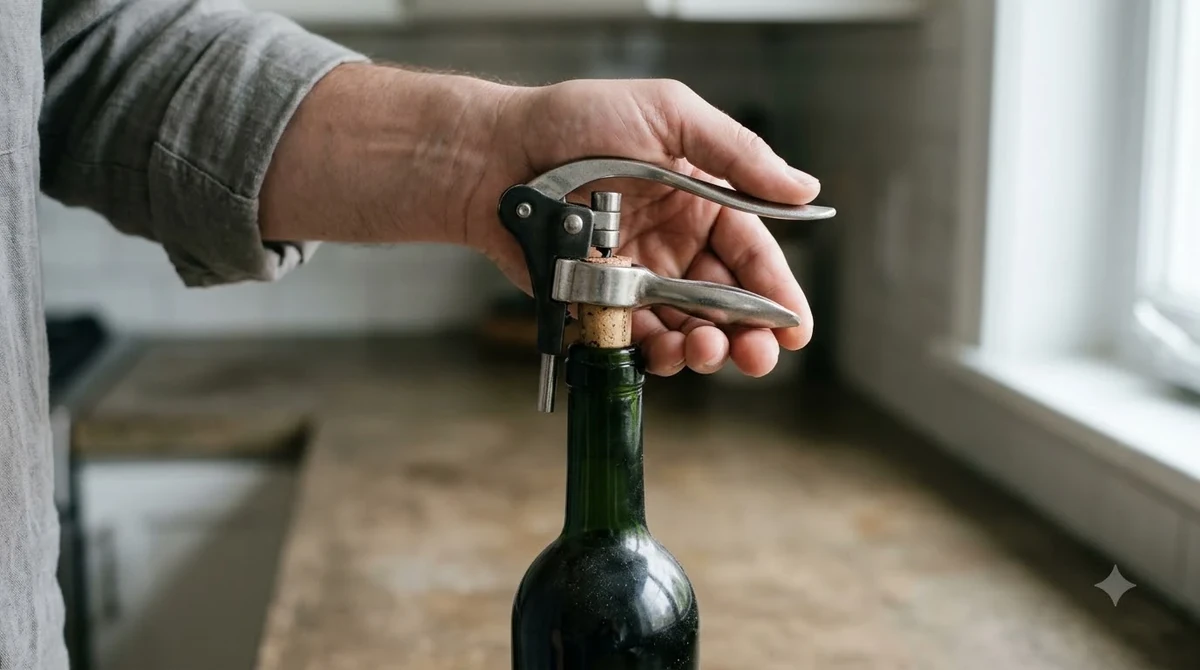
Owner feedback on electric Oster openers frequently highlights ease of use. Best Buy’s customer feedback for its black Oster electric wine opener identifies ease of operation and battery life among the positive features. Lowe’s customer feedback also includes reports from people who appreciated the appliance’s ability to open bottles without substantial manual effort.
This convenience can make a noticeable difference during entertaining. A host preparing several bottles for a dinner with friends does not need to repeatedly operate a traditional winged corkscrew or apply substantial pulling force. The motor performs the extraction, while the user primarily needs to position the appliance correctly and operate its switch.
Less physical effort
Manual corkscrews depend on leverage, twisting, or pulling. Depending on the cork’s condition, these actions can require considerable hand strength. The Oster electric mechanism replaces most of that physical work with a motorized extraction process.
The soft-grip handle also gives the user a comfortable surface to hold while the motor operates. This is a practical design feature rather than a decorative addition. A secure grip helps maintain alignment between the opener and bottle, which is important for successful cork removal.
Convenience during entertaining
The cordless format makes it possible to carry the opener from the kitchen counter to a serving area without bringing the charging cable along. That arrangement works well beside a dedicated wine station or a bar cart, where wine glasses, bottle stoppers, and serving accessories are kept together.
The included foil cutter is another useful addition. Wine bottle capsules can be awkward to remove with a knife, especially when the bottle is being opened quickly for guests. Having a dedicated cutting accessory simplifies preparation and helps keep the opening process consistent.
Simple two-direction operation
Unlike some complicated electric appliances, the traditional Oster design uses a straightforward switch with two operating directions. One direction extracts the cork, and the other releases it from the spiral. Once the user understands these two functions, the basic procedure is easy to repeat.
The design also avoids the repeated hand movements required by a manual opener. That can be useful for households where different people take turns serving wine and prefer a consistent opening process.
These advantages explain why electric openers remain appealing even to wine drinkers who own traditional corkscrews. The Oster model is particularly attractive when ease of operation matters more than portability, mechanical simplicity, or long-term battery independence.
Common Complaints
Battery reliability and mechanical failures are the most important concerns raised in Oster electric opener owner feedback. Reports include charging difficulties, mechanisms that stop extracting corks, and corks that become stuck inside the appliance.
Feedback on the Oster product page includes several owners describing units that stopped charging or lost sufficient power to extract corks after a period of use. Some reports describe problems after approximately one year, while others mention longer periods of satisfactory operation before the battery or mechanism failed.
These accounts do not establish a universal failure rate, but they reveal a pattern worth considering. A rechargeable appliance can be convenient while functioning correctly, yet its usefulness depends heavily on the condition of its battery, charging contacts, and internal motor.
Battery deterioration
Some owners report that their openers gradually lose the ability to complete a full extraction even after being left on the charging base. Others describe a unit that appears to charge but no longer has enough power to remove a cork.
This problem is particularly frustrating because the battery is an internal component rather than an easily replaceable household battery. Oster’s older instruction manual states that the opener and charging unit have no user-serviceable parts and warns against attempting to open them.
For a buyer expecting an accessory to last through many years of occasional wine service, the battery issue deserves attention. The convenience of electric operation should be weighed against the possibility that a battery problem could make the entire appliance unusable.
Stuck corks and extraction problems
Another recurring complaint involves corks that become trapped in the mechanism. If the opener does not complete its extraction or release cycle, the user may be left with an appliance that cannot be used normally until the cork is removed.
Oster’s manual also acknowledges that a small percentage of synthetic and undersized corks may cause operating problems. It specifically explains that these corks may need to be removed manually. This is a useful limitation to understand before using the opener on every bottle in a wine collection.
Inconsistent long-term experiences
Owner experiences are not entirely negative. Some buyers describe years of satisfactory operation, while others report failures within a relatively short period. The difference suggests that individual product condition, usage patterns, charging contact, and cork characteristics can influence the experience.
Lowe’s customer feedback also identifies concerns about batteries failing to retain a charge and corkscrew components becoming stuck or damaged. These are more consequential problems than minor cosmetic wear because they affect the product’s central purpose.
Anyone considering this model should pay attention to the warranty period, retailer return conditions, and availability of customer support. The original receipt is important because warranty service requires proof of purchase under the manufacturer’s documented warranty terms.
Who Should Buy and Who Should Skip
The Oster electric opener is best suited to households that prioritize convenient, low-effort cork extraction and have a convenient location for the charging base. It is less attractive to people who want a mechanically simple tool with no rechargeable battery or dependence on electrical components.
For someone who regularly serves Cabernet Sauvignon, Chardonnay, Pinot Noir, or sparkling wine, the main benefit is the ability to open suitable still-wine bottles with a simple switch. The opener does not improve the wine itself, but it can make the preparation process more convenient.
Good candidates for the Oster electric opener
First, consider households that frequently entertain. When several guests are sharing bottles over dinner, an electric mechanism can reduce repetitive twisting and pulling. The cordless design also makes it easier to move between the kitchen and serving area.
Second, consider people who find traditional corkscrews difficult to operate. The motorized mechanism reduces the physical effort required to extract a cork, while the soft-grip handle provides a comfortable holding surface.
Third, the Oster can appeal to buyers who prefer an organized wine station. The charging base gives the opener a designated storage location, and the foil cutter is included rather than requiring a separate purchase.
Who should choose another opener
People who value long-term mechanical simplicity may prefer a manual corkscrew. A traditional waiter-style opener or lever-operated design does not depend on battery charging and generally has fewer electrical components that can fail.
Frequent travelers should also consider a compact manual model. The Oster’s charging base and approximately 15-inch listed height make it less practical for packing than a small folding corkscrew.
Wine drinkers who regularly encounter fragile, old, or unusually shaped corks may also prefer a specialized opening tool. A traditional two-prong opener, for example, can be more appropriate for certain delicate corks because it works differently from a motorized spiral.
Buyers who expect a rechargeable accessory to remain functional indefinitely without battery replacement should be especially cautious. The reported charging complaints and the manufacturer’s non-serviceable construction are important limitations.
Tip: Keep a manual corkscrew available even if you primarily use an Oster electric opener. It provides a practical backup if the battery is depleted, the cork is unsuitable for the motorized mechanism, or the electric opener becomes stuck during service.
The most sensible purchase decision depends on how often the appliance will be used and how much value the household places on reduced physical effort. An occasional wine drinker may find a manual opener perfectly adequate, while someone opening multiple bottles during gatherings may appreciate the electric format more.
How It Compares to Alternatives
The Oster electric opener occupies the convenience-focused category of wine accessories, while manual waiter-style and lever-operated corkscrews emphasize mechanical simplicity. Choosing between them depends on opening frequency, cork condition, storage preferences, and willingness to maintain a rechargeable appliance.
One useful alternative is a rabbit-style lever corkscrew. Instead of using a motor, this design relies on a handle and lever arrangement to insert and withdraw the spiral. It offers a different approach to reducing the physical work involved in opening a bottle.
Oster electric versus rabbit-style corkscrews
The main difference is the operating mechanism. The Oster requires a charged battery and an appropriately positioned bottle. A rabbit-style opener uses mechanical leverage and does not require a charging station.
Both designs aim to make cork removal easier than a basic manual spiral. The Oster requires fewer deliberate hand movements, while a lever-operated model offers more direct mechanical control and avoids battery deterioration.
For buyers who prefer the lever approach, our best rabbit corkscrew guide provides a useful starting point for comparing that category.
Oster electric versus waiter-style corkscrews
A waiter’s corkscrew is compact, inexpensive to store, and widely used in restaurants. Its folding handle, spiral, and leverage point make it versatile, but operating it requires more coordination and hand movement than an electric opener.
The Oster is more convenient for someone who dislikes manual pulling. However, a waiter-style corkscrew does not need a charging base and can remain ready for use without battery maintenance.
Restaurant professionals may also prefer a manual tool because it is compact enough to carry in a pocket or apron. For a household countertop, the electric format may be more appealing, provided the owner accepts its charging requirements.
Oster electric versus two-prong openers
Two-prong cork extractors work by sliding two thin metal prongs between the cork and the bottle neck. They are often considered for older bottles with fragile corks that may crumble when penetrated by a conventional spiral.
The Oster’s motorized spiral is designed for more conventional extraction. It is not a dedicated solution for delicate corks that need specialized handling. Collectors opening older bottles should therefore consider keeping a suitable two-prong tool in their wine accessory collection.
For more comparisons across wine-opening equipment, our rabbit corkscrew reviews cover another major category of lever-operated wine accessories. Buyers can also explore broader accessory brands when comparing equipment for a home wine station.
Frequently Asked Questions
These additional details help clarify how the Oster fits into a wider home wine setup and what owners should understand before using it regularly.
Can an Oster electric opener open a bottle with a damaged cork?
It is not specifically designed to recover corks that are already crumbling or badly damaged. A damaged cork may break apart during extraction, leaving fragments in the bottle neck or on the spiral. A two-prong cork extractor may be a better option for certain fragile corks, although careful handling is still necessary.
Can an Oster electric opener be used with sparkling wine bottles?
No conventional corkscrew should be used to extract the mushroom-shaped stopper from a pressurized sparkling wine bottle. Champagne and other traditional sparkling wines have pressure-resistant closures that are removed using a controlled hand-opening method. Keep the bottle pointed away from people and avoid treating it like an ordinary still-wine bottle.
Does the Oster opener need to remain on its charging stand?
Oster’s instruction manual recommends returning the opener to its charging stand after use to protect the mechanism during storage. The stand also gives the appliance a designated location and helps maintain its readiness. Follow the charging instructions for the exact model rather than assuming that every Oster generation uses identical battery management.
Can an Oster electric opener be used on wine bottles with screw caps?
No cork extraction is necessary for a screw-cap bottle. These closures are designed to be unscrewed by hand, and applying a motorized corkscrew mechanism to them serves no useful purpose. Screw caps are commonly used for wines including New Zealand Sauvignon Blanc and many Australian Rieslings.
Does the Oster opener remove the need for a wine bottle stopper?
No. Opening a bottle and preserving unfinished wine are separate tasks. A stopper is still useful after pouring, particularly if the bottle will be stored in the refrigerator. For sparkling wines, a purpose-designed sparkling wine stopper is preferable because it is made to secure the bottle’s pressurized closure.
The Oster electric wine opener offers a convenient approach to everyday cork extraction, with cordless operation, a soft-grip handle, and an included foil cutter making it appealing for home entertaining. Its main drawback is uncertainty around long-term battery and mechanism reliability, so buyers should consider warranty coverage and keep a manual opener as backup. For people who prioritize convenience, it remains an interesting option, but those who value mechanical simplicity may be happier with a traditional lever or waiter-style corkscrew.
More in Wine Accessories
 Vinglace Wine Tumbler Review: A Glass-Lined Choice for Better SippingUpdated Nov 20, 2026
 ZWILLING Electric Wine Opener Review: Features and DrawbacksUpdated Nov 20, 2026
 Vinturi Electric Wine Opener Review for Easy UncorkingUpdated Nov 20, 2026
 Vinabon Wine Aerator Review for Easier, Cleaner Wine ServingUpdated Nov 20, 2026
 Vacu Vin Electric Wine Opener Review: Easy Cork Removal for Home Wine LoversUpdated Nov 20, 2026
 Rabbit Wine Accessories for Easier Home Wine ServiceUpdated Nov 20, 2026