

We may earn a commission when you buy through links on this page, at no extra cost to you. Learn more.
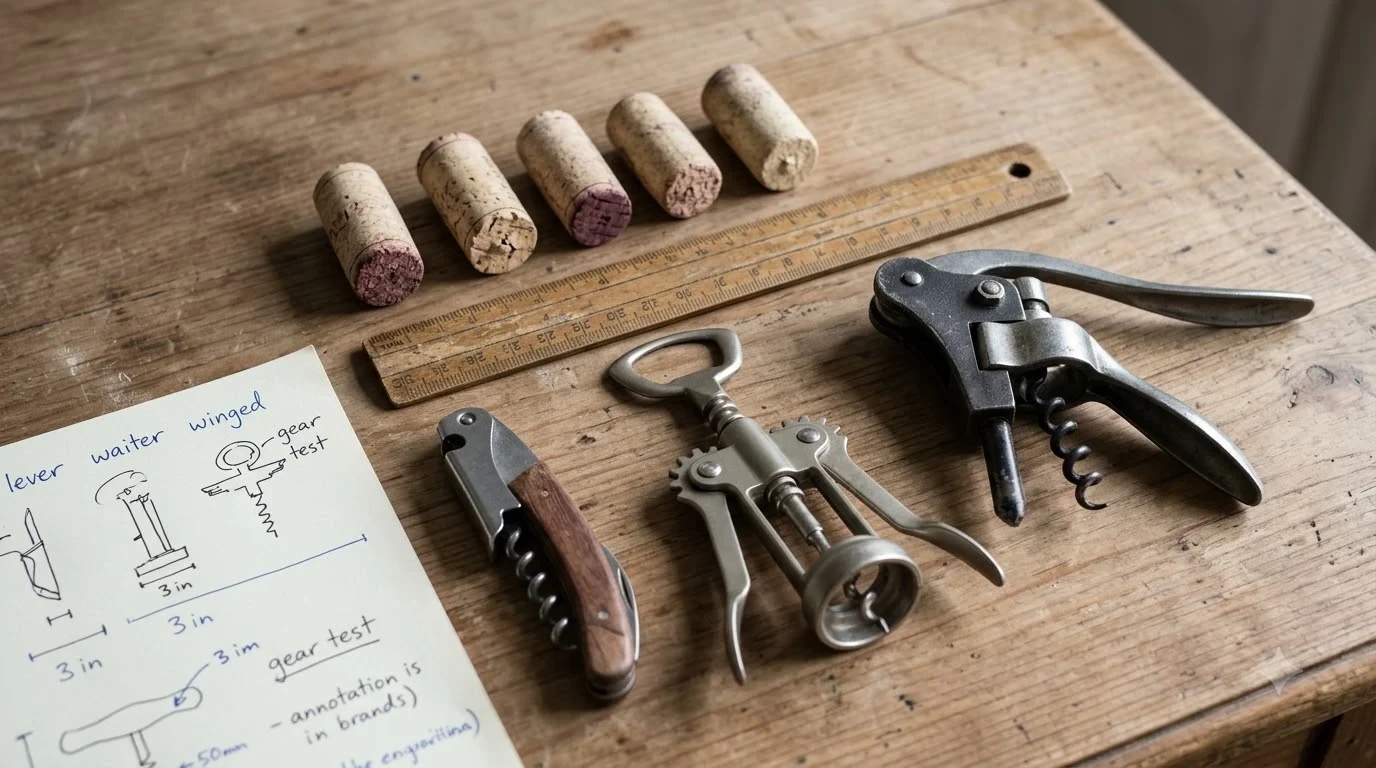
The best rabbit corkscrew reviews depend on how you open bottles: a rabbit-style lever corkscrew is the fastest choice for a steady stream of bottles, while a screwpull or winged model is easier on older or fragile corks, and a waiter’s friend suits anyone who wants a compact tool. Rabbit-style corkscrews are a type of lever opener. Two handles grip the bottle neck, the worm goes into the cork, and a lever pulls the cork out in one motion. Reviews look at how smoothly that motion works, how sturdy the handles feel, and whether the cork comes out intact.
A rabbit corkscrew is often the first tool people look up when they want to open wine faster, and the reviews reflect that. Most of them compare the rabbit with other mechanisms, because the right opener depends on the cork and the person doing the pulling. The sections below group the common corkscrew types by the situation each one suits, with the mechanics explained in plain terms. For the product line itself, see the best rabbit corkscrew guide.
Quick Comparison
Corkscrews differ in how much effort they take, how the cork is removed, and how easy they are to carry. Compare the types on those three points before weighing individual models.
| Type | How it works | Effort | Cork handling | Watch out for |
|---|---|---|---|---|
| Rabbit-style lever | Two handles grip the neck, a lever drives the worm | Low once set | Fast, can break older corks | Bulkier and usually costlier |
| Screwpull | A plastic spiral wraps the top and is turned out | Low | Gentle, keeps cork intact | Needs the spiral set straight |
| Winged | Side levers rise as the worm turns, then press down | Medium | Clean pull in one motion | Can be harder to learn |
| Waiter’s friend | Folding arm braces against the bottle lip | Medium to high | Good control with practice | Requires some technique |
| Electric opener | Motor drives the worm | Very low | Depends on the model | Needs power and charging |
Best for Fast Opening at Dinner Parties: Rabbit-Style Lever Corkscrews
A rabbit-style corkscrew is a lever opener. Its two handles grip the neck of the bottle, the worm goes into the cork as you press the lever down, and lifting the lever draws the cork out. The motion is quick once you have the rhythm, which is why many reviewers pick it for hosts who open several bottles in one evening.
The trade-off is bulk and cost. Wikipedia’s entry on the corkscrew describes the lever type as bulkier and usually more expensive than other designs, while still faster in use. Reviews that rate a rabbit model highly often mention a sturdy frame and smooth pivots, since loose parts make the lever feel uneven. Check that the worm is centered before pressing, because an off-center start can tear the cork.
Best for Older or Fragile Corks: Screwpull Openers
Screwpulls are built for the cork that tends to crumble. A plastic spiral wraps around the top of the cork and is turned out in one smooth motion, so the cork leaves the bottle with little strain. The design is common in restaurants and at home for bottles where a standard worm might split the cork.
The Wikipedia entry on the corkscrew explains that the spiral is Teflon-coated, which reduces friction so the cork comes out intact, and that the design was introduced in 1979 to make bottle opening more reliable. Reviewers note that the spiral has to be set straight before turning, and that a crooked start can still damage a soft cork. Take your time at the first turn and the screwpull does most of the work.
Best for Beginners: Winged Corkscrews
Winged corkscrews use two side levers that rise as the worm turns into the cork. Pressing the levers down draws the cork out in one motion. Reviewers like this design for beginners because the levers guide the pull, so the user does not have to hold the bottle steady while lifting the cork by hand.
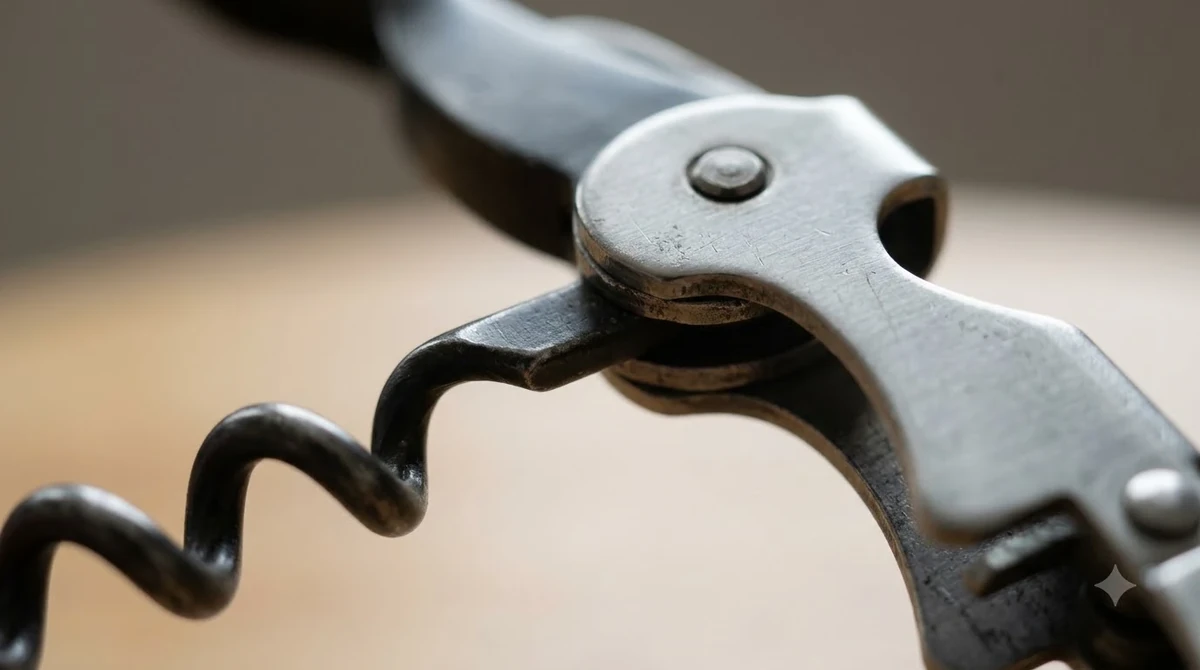
The most common version uses a rack and pinion to drive the motion. The learning curve is short, but reviews caution that the levers can be awkward to start on a wide-necked bottle, so practice on a cheap bottle before opening a special one. A well-built winged model feels stable in the hand and keeps the worm straight to the end.
Best for a Compact Carry Kit: Waiter’s Friend Corkscrews
A waiter’s friend is a folding corkscrew, similar in shape to a pocket knife. Its arm braces against the lip of the bottle, which gives leverage without a large frame. Many models include a bottle opener and a small blade for cutting foil, which makes them useful in a bag or a jacket pocket.
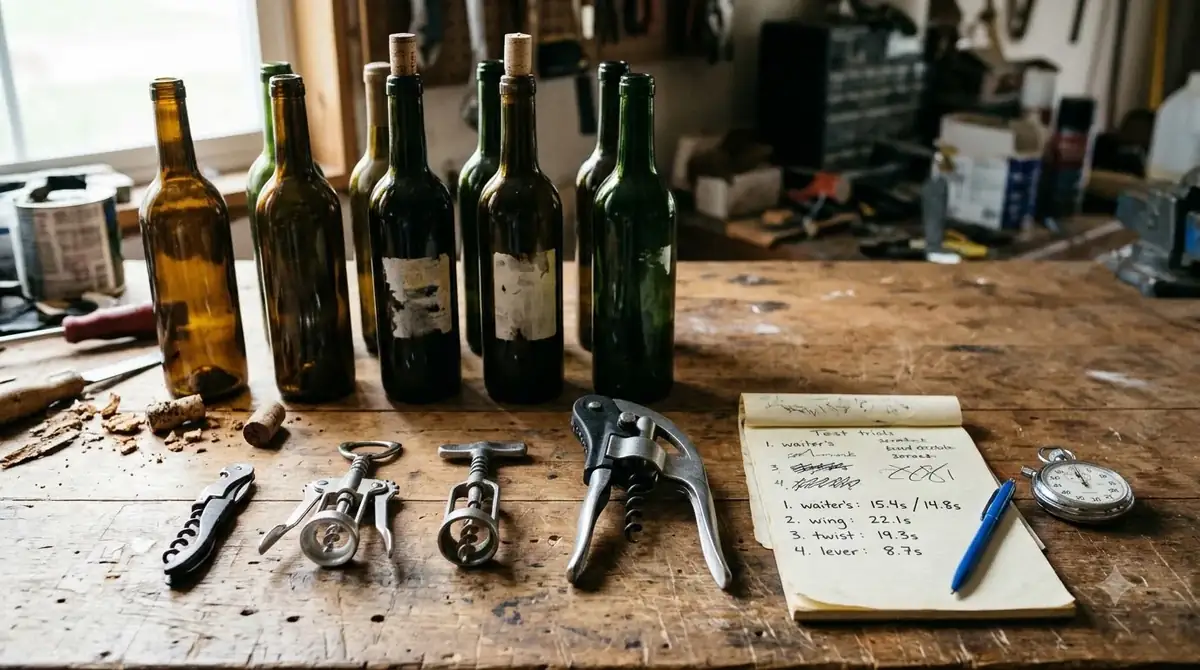
The design has a long history. According to Wikipedia, German inventor Karl Wienke conceived the folding design in 1882, and his 1883 U.S. patent called it the lever corkscrew, while the name “wine key” came from his surname. Reviews of modern versions point to a firm hinge and a comfortable grip as the features that matter most, and they note that the tool rewards practice with the lip-braced technique.
Using the lip-braced technique takes a few tries. Place the arm against the rim of the bottle rather than the glass, keep the worm centered over the cork, and pull in small steps instead of forcing the cork in one push. Once the cork begins to rise, slow down, since the last few millimeters are where older corks tend to crumble. A waiter’s friend also suits a bag or a jacket pocket because its folded frame stays compact when it is not in use.
Best for No-Effort Opening: Electric Openers
Electric openers use a motor to drive the worm into the cork and draw it out. They suit people with limited hand strength or anyone who opens many bottles in a row. Reviews praise how little effort they need, while noting that they need a charge or an outlet and cost more than manual tools.
Electric models are a different category from the mechanical types covered above, and the sources used for this guide do not compare them in detail. Check how the motor stops at the end of the cord, since a model that over-pulls can tear the cork. A manual rabbit or screwpull remains the simpler choice for occasional use.
How to Choose a Rabbit Corkscrew
Start with how often you open wine. A host who opens several bottles in an evening will value the speed of a rabbit-style lever. If your corks are old or crumble easily, a screwpull is gentler. Beginners often do well with a winged model, and anyone who carries a tool should look at a waiter’s friend. Last, check the build: a firm frame, smooth pivots, and a worm that stays centered are the points reviewers return to most often.
Tip: Hold the bottle steady on a flat surface and start the worm straight down the center of the cork. Stop when the worm is almost through, then finish the pull slowly so the cork does not break. For broader wine accessory options, see the ullo wine purifier reviews.
Frequently Asked Questions
Is a rabbit corkscrew faster than a waiter’s friend?
Usually, yes. A rabbit-style lever grips the neck and draws the cork in a few steady moves. A waiter’s friend takes more technique, although it is more compact and easier to carry.
Will a rabbit corkscrew damage an old cork?
It can, if the worm is not centered or the cork is already crumbling. A screwpull is usually gentler on older corks, since its spiral reduces friction. Start slowly with any opener when the cork looks fragile.
Is a rabbit-style corkscrew the same as a lever corkscrew?
Yes, in practice. The rabbit is a lever-style opener, and reviewers use the terms for the same two-handle design. Check the product listing for the exact model name before you buy.
Which corkscrew is best for beginners?
A winged corkscrew is often recommended for beginners, because its side levers guide the pull. A rabbit-style lever is also easy once you have the rhythm. Practice on an inexpensive bottle before opening a special one.
A rabbit corkscrew is a good choice when speed matters, and it pairs well with a screwpull or winged model for older corks. Match the opener to how you drink, check the build, and browse the Accessories Library for more tools.
More in Wine Accessories
 Coravin Vs Vacu Vin: Choose the Right Wine Saver for Your BottlesUpdated Nov 21, 2026
 Zwilling Wine Stopper Review: Preserve Open Bottles LongerUpdated Nov 21, 2026
 Wine Enthusiast Wine Preserver Review: Features, Benefits and LimitationsUpdated Nov 21, 2026
 Wine Enthusiast Wine Stopper: An Easier Way to Reseal Open BottlesUpdated Nov 21, 2026
 Vintorio Wine Opener: Two-Step Cork RemovalUpdated Nov 21, 2026
 Zwilling Wine Aerator Review: Aerate, Pour, and Seal With One ToolUpdated Nov 21, 2026