

We may earn a commission when you buy through links on this page, at no extra cost to you. Learn more.
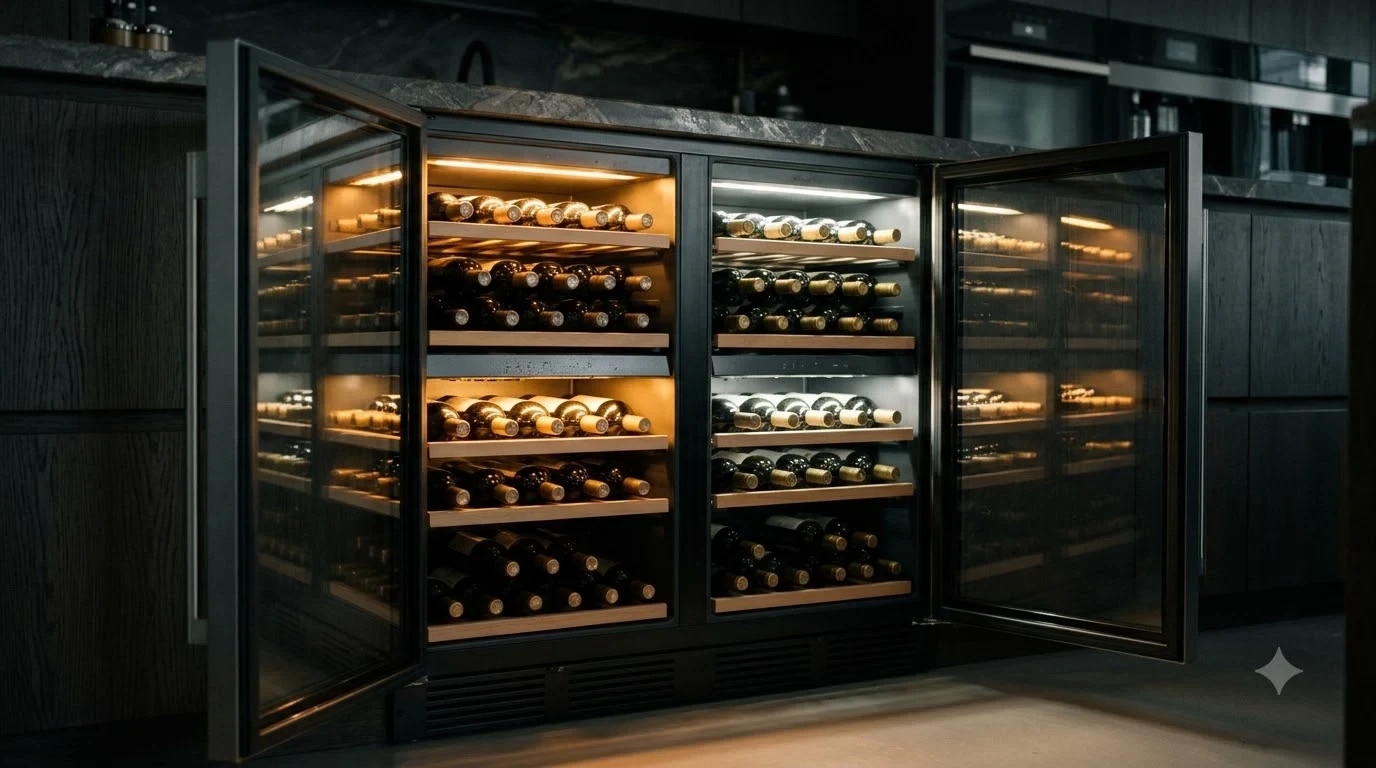
The Monogram wine column is a premium built-in wine refrigerator that offers 91-bottle storage, two independently controlled temperature zones, and customizable cabinetry for serious home wine collections. The ZIW241NBWII combines 13 full-extension shelves, UV-protective glass, activated carbon filtration, and four dedicated wine storage modes. Its biggest advantages are its integrated appearance and thoughtfully designed storage features, while its substantial installation requirements and separately purchased panels make it a better fit for planned luxury kitchens than casual wine storage.
A dedicated wine refrigerator can make a significant difference to how a collection is organized, stored, and presented. Monogram approaches this category with a tall, integrated appliance designed to look like part of the kitchen cabinetry rather than a conventional freestanding cooler. The 24-inch Wine Column is particularly interesting for homeowners who want separate storage environments for different wine styles without sacrificing a coordinated kitchen design. This review examines its specifications, practical advantages, limitations, and the details worth checking before committing to an installation.
Specs and Key Features of the Monogram Wine Column
The Monogram ZIW241NBWII combines a 91-bottle rated capacity with dual-zone cooling and a fully integrated installation format. Its defining features are the independently controlled compartments, full-extension walnut shelves, and panel-ready exterior.
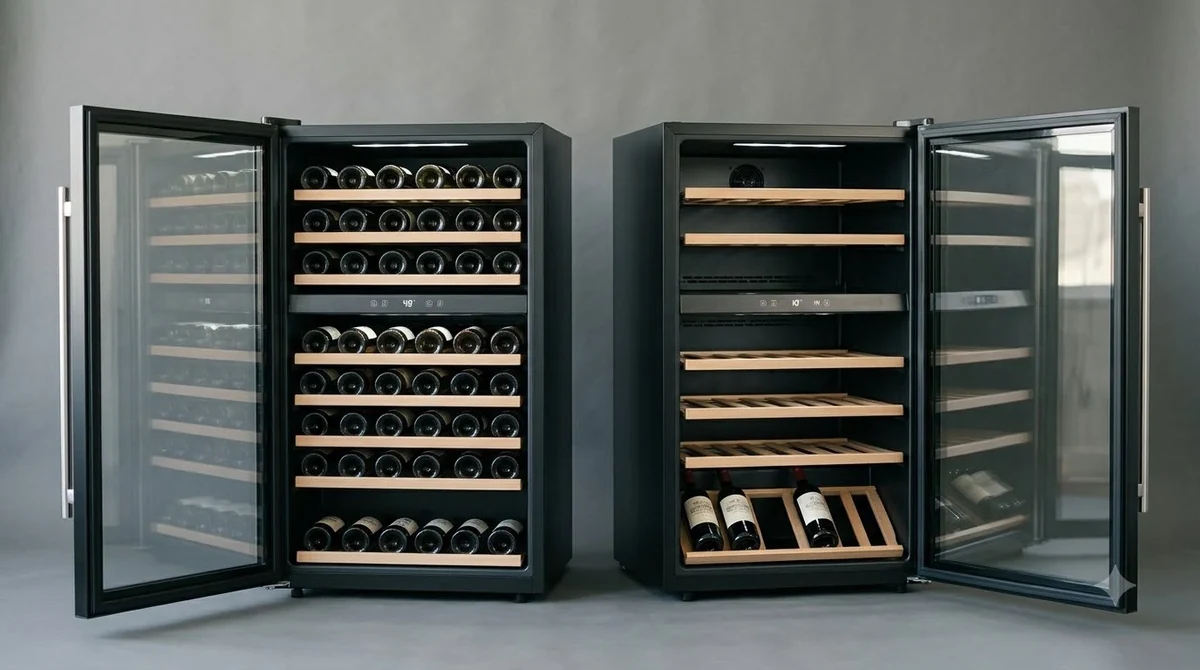
According to Monogram’s product information, the appliance has 13 full-extension shelves, including a dedicated display shelf, with dark walnut wood and aluminum-edged finishes. The two cooling compartments use separate evaporators to support independent temperature management. This arrangement is useful for households that regularly keep Cabernet Sauvignon, Pinot Noir, Chardonnay, Sauvignon Blanc, Champagne, and other wine styles available at different temperatures.
The four preset modes simplify everyday operation. Red mode is set to 61°F, Cellar mode to 54°F, White mode to 46°F, and Sparkling mode to 45°F. Owners can also adjust the selected compartment’s temperature rather than being restricted to the presets. This makes the appliance suitable for both short-term serving storage and longer-term collection organization.
| Specification | Monogram ZIW241NBWII |
|---|---|
| Appliance type | Integrated wine column |
| Nominal width | 24 inches |
| Overall height | 83 3/4 inches |
| Overall width | 23 3/4 inches |
| Depth excluding door panel | 24 inches |
| Rated bottle capacity | 91 standard 750 ml bottles |
| Temperature zones | 2 independently controlled zones |
| Storage shelves | 13 full-extension shelves |
| Display shelf | 1 dedicated display shelf |
| Red preset | 61°F |
| Cellar preset | 54°F |
| White preset | 46°F |
| Sparkling preset | 45°F |
| Electrical requirement | 115 V, 60 Hz, 15- or 20-amp circuit |
| Installation type | Built-in, panel-ready |
The published dimensions are especially important because this is not an undercounter appliance. Abt lists a recommended installation opening of approximately 84 inches high, 24 inches wide, and 25 inches deep. The finished appliance is approximately 83 3/4 inches tall, so the surrounding cabinetry needs to be designed around the specified installation clearances rather than an assumed standard refrigerator opening.
The exterior is another important consideration. The wine column is supplied in a panel-ready configuration, meaning buyers can coordinate it with surrounding cabinets or select a separately purchased stainless steel door panel. Monogram also offers Statement and Minimalist handle collections. These choices create considerable design flexibility, but they also mean that the complete finished appearance needs to be planned before installation.
For the full manufacturer specifications, see the official Monogram Wine Column product announcement.
What Owners Like About the Monogram Wine Column
The strongest reasons to consider this appliance are its collection capacity, flexible temperature management, and presentation-oriented interior. These are features that matter most to people who want their wine refrigerator to serve as permanent storage rather than simply a convenient place to chill a few bottles.
One particularly appealing feature is the two-zone arrangement. A household that regularly serves both red and white wines does not need to compromise on a single temperature setting. For example, the upper compartment can be configured for shorter-term white wine storage while the lower compartment is used for reds or cellar storage. The precise arrangement depends on the owner’s preferences and the temperature selected for each zone.
The four modes also provide a useful starting point. The 61°F Red preset is suitable for short-term storage of several red wine styles, including Merlot, Pinot Noir, and Cabernet Sauvignon. White mode at 46°F works for aromatic whites and rosé, while Sparkling mode at 45°F is convenient for Champagne, Cava, and Prosecco. Cellar mode at 54°F provides a more moderate environment for longer-term storage.
The full-extension shelves are another important practical feature. Wine collections are often difficult to organize when bottles are packed closely together, particularly when labels are difficult to see. Sliding shelves allow bottles to be accessed without repeatedly disturbing neighboring rows. Monogram uses dark walnut shelf fronts with aluminum edging, giving the interior a more furniture-like appearance than the wire shelving found in many basic wine coolers.
The dedicated display shelf is particularly attractive for entertaining. A household can position selected bottles for presentation and keep frequently served wines accessible, while the remaining shelves accommodate the wider collection. This arrangement can be useful for organizing a dinner party around different courses and wine pairings.
Protection features also deserve attention. The manufacturer specifies double UV-tempered glass, a low-vibration compressor design, and activated carbon filtration. UV exposure can damage wine over time, while unwanted odors and repeated disturbances are undesirable in a dedicated storage environment. These features address several practical concerns associated with keeping wine for extended periods.
The lighting is another design advantage. Four lighting settings allow owners to choose how prominently the bottles appear, and the ramp-up effect gradually illuminates the interior when the doors open. The ability to turn the lighting off is particularly useful for longer-term storage.
Smart connectivity adds convenience rather than being the central reason to purchase the appliance. Through the SmartHQ app, owners can remotely adjust settings and receive notifications, including a warning if a door is left ajar. That feature can be reassuring when the appliance contains bottles that are difficult or expensive to replace.
There is an important distinction between manufacturer-promoted advantages and verified owner satisfaction, however. The available Abt listing identifies the appliance’s principal features but does not provide an established collection of owner reviews. Consequently, these advantages should be understood as documented product characteristics rather than claims about universal customer experiences.
Common Complaints and Potential Drawbacks
The most significant disadvantages are the demanding installation requirements, the additional customization expenses, and the limitations of a fixed-capacity bottle layout. The Monogram Wine Column is a specialized luxury appliance, so its ownership considerations extend beyond its cooling performance.
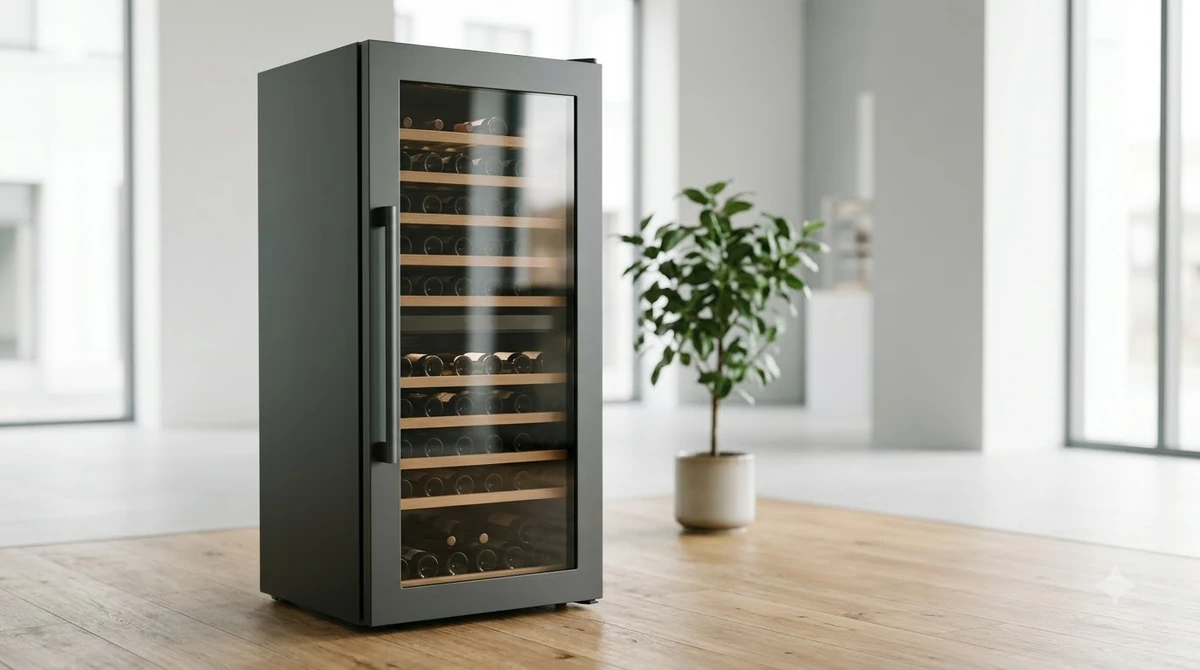
First, installation requires careful coordination with cabinetry. An approximately 84-inch-high opening and 25-inch recommended depth are substantial requirements. A standard 24-inch-wide cabinet opening may appear suitable at first, but the finished installation must account for the specified depth, electrical access, ventilation provisions, panel construction, and door clearance.
The panel-ready configuration also creates additional work. Buyers need to decide whether to use a stainless steel panel or a custom cabinet panel. Handles are separate considerations, too. Monogram’s installation specifications state that the custom door panel must not cover the glass pane and that its maximum total weight is 22 pounds. A custom panel also requires suitable preparation and mounting hardware.
This means the appliance is not necessarily a straightforward replacement for an existing freestanding wine refrigerator. A kitchen renovation or new cabinetry project is a more natural setting for this type of installation. Retrofitting an existing kitchen can require cabinet modifications and professional coordination.
The 91-bottle capacity also needs to be interpreted realistically. It refers to standard 750 ml bottles, not every possible bottle shape and size. Larger formats, including Magnums, may require removing shelves, reducing the total number of bottles that can be stored. Wide Champagne bottles and unusually shaped bottles can also make a tightly packed collection more difficult to organize.
There is also a practical distinction between having two temperature zones and having complete flexibility over every bottle. The appliance provides independent upper and lower compartment settings, not an individually adjustable temperature for each shelf. Owners with many different wine categories still need to organize the collection sensibly within the two available environments.
Filter replacement is another ongoing responsibility. The owner’s manual recommends replacing both activated carbon filters every six months. This is a straightforward maintenance task, but it is an additional recurring consideration that should be included in the ownership plan.
The premium integrated design may also be unnecessary for some households. Someone who owns 15 bottles and mainly buys inexpensive wines for weekend meals may receive more practical value from a smaller freestanding cooler. A tall wine column occupies substantial cabinet space and is designed around a much larger collection.
Finally, the available product listing does not establish a reliable pattern of actual owner complaints. It would be misleading to claim that owners consistently report a particular noise problem, cooling failure, or shelf defect without sufficient supporting reviews. Buyers should instead distinguish documented design limitations from unverified customer experiences and request current service information from the retailer before purchasing.
Who Should Buy the Monogram Wine Column and Who Should Skip It
The Monogram Wine Column is most appropriate for homeowners with a substantial collection, a dedicated location for a tall built-in appliance, and a clear preference for integrated kitchen design. It is less compelling for occasional wine drinkers or anyone who needs inexpensive, portable storage.
Buyers who should consider it include:
- Serious home collectors: A rated capacity of 91 standard bottles provides substantial room for a collection that includes wines intended for immediate consumption and bottles being held for future occasions.
- Households that serve different wine styles: The two independent zones allow red, white, and sparkling wines to be organized around different temperature preferences.
- Homeowners planning a luxury kitchen: The panel-ready exterior can be coordinated with cabinetry, making the appliance suitable for integrated kitchen designs.
- Frequent entertainers: The display shelf, interior lighting, and sliding racks make it easier to organize bottles for dinner parties and wine-focused gatherings.
- Collectors who value storage protection: UV-tempered glass, activated carbon filtration, and low-vibration compressor design are relevant features for a dedicated wine storage appliance.
Buyers who should skip it include:
- Casual wine drinkers: A collection of 10 to 20 bottles generally does not justify a tall, 91-bottle wine column.
- Renters: A permanent integrated installation is difficult to justify when the kitchen cabinetry may not belong to the occupant.
- Budget-conscious buyers: The custom panel, handle selection, installation work, and ongoing filter maintenance add complexity beyond the basic appliance purchase.
- People who need an undercounter cooler: This model is a tall column rather than a compact refrigerator designed to fit below a standard kitchen counter.
- Collectors with unusually large bottles: Removing shelves for larger formats reduces the advertised standard-bottle capacity.
Wine habits should also influence the decision. Someone who frequently opens Cabernet Sauvignon, Syrah, and other fuller-bodied reds may appreciate having a dedicated storage environment, while a household that mainly drinks Sauvignon Blanc, Riesling, and sparkling wine may prioritize the cooler preset settings. Neither preference makes the appliance automatically necessary, but both can help justify the separate zones.
Food and entertaining habits can provide another reason to organize a collection. A planned dinner featuring chicken in a Marsala sauce, for example, can benefit from having suitable red wine available at a convenient serving temperature. The chicken Marsala recipe offers a useful example of a meal that can be planned around wine service.
How It Compares to Alternative Wine Refrigerators
The Monogram Wine Column occupies a different category from compact freestanding wine coolers and traditional undercounter wine refrigerators. Its main distinction is the combination of tall integrated cabinetry, a 91-bottle capacity, and two independently controlled storage compartments.
A conventional freestanding wine cooler is generally easier to position because it does not require a matching cabinet front. It may also be a more sensible choice for renters, small households, and people who want to start with a modest collection. The tradeoff is that the appliance remains a visible piece of furniture rather than becoming part of the kitchen design.
An undercounter wine refrigerator offers another alternative. These appliances typically fit below a kitchen counter and can provide convenient access to frequently served bottles. They are particularly suitable for homeowners who want wine storage near food preparation or entertaining areas but do not have room for a tall column.
However, a smaller wine refrigerator may offer less capacity and fewer storage configurations. A household with 70 or 80 bottles may quickly find that a compact appliance is insufficient, especially when the collection contains multiple wine categories and bottle shapes.
The Monogram also has a different design emphasis from a simple dual-zone cooler. Its full-extension shelves, dedicated display shelf, integrated appearance, and lighting are designed to make the appliance part of the room’s visual presentation. Those features matter more in a custom kitchen than in a utility room or pantry.
| Comparison factor | Monogram Wine Column | Conventional wine cooler |
|---|---|---|
| Installation | Tall integrated built-in | Often freestanding or undercounter |
| Rated capacity | 91 standard bottles | Varies by model |
| Temperature arrangement | 2 independent zones | Single or dual zone |
| Cabinet customization | Panel-ready | Usually finished exterior |
| Shelf arrangement | 13 full-extension shelves | Varies by model |
| Display features | Dedicated display shelf and ramp-up LEDs | Depends on model |
| Installation flexibility | Requires tall cabinet opening | Generally more flexible |
Another consideration is whether two zones are actually necessary. If a household mostly drinks one type of wine, a single-zone refrigerator may be sufficient. A consistent storage temperature around 55°F is a common reference point for longer-term wine storage, and individual bottles can be brought to their preferred serving temperatures before opening.
By contrast, a two-zone refrigerator is convenient for households that frequently serve several wine styles without wanting to wait for bottles to chill or warm. The Monogram’s 46°F White and 61°F Red presets are especially useful as convenient short-term serving references, while its 54°F Cellar mode is designed for longer-term storage.
For a wider look at appliance categories and individual model evaluations, the wine refrigerator model reviews section provides a useful starting point for comparing different storage formats.
Installation, Warranty, and Long-Term Ownership
Installation planning is particularly important with the Monogram Wine Column because its dimensions and custom-panel requirements affect the surrounding kitchen. Buyers should confirm the cabinet opening, electrical supply, door swing, and final panel design before scheduling delivery.
The manufacturer’s specification sheet lists an overall height of 83 3/4 inches, a width of 23 3/4 inches, and a depth of 24 inches excluding the door panel. Abt lists a standard installation cutout of 84 inches high, 24 inches wide, and 25 inches deep. These measurements should be treated as installation planning information, not approximate suggestions.
The appliance requires a 115-volt, 60-Hz electrical supply and a 15- or 20-amp circuit. The manufacturer’s installation information recommends a properly grounded individual branch circuit. Electrical and cabinetry work should be coordinated with qualified professionals familiar with the appliance’s installation requirements.
Door configuration also deserves attention. Monogram provides left-hand and right-hand door swing options. The correct arrangement depends on the neighboring cabinets, walls, and the direction from which the owner will normally approach the wine column.
Custom panels introduce additional specifications. The manufacturer’s documentation sets a maximum panel weight of 22 pounds and requires the glass pane to remain visible. The panel and handle must be compatible with the mounting arrangement. These details should be discussed with the cabinetmaker before a finished panel is ordered.
Warranty coverage is another significant consideration. The owner’s manual describes two years of parts and labor coverage for qualifying manufacturing defects, five years of parts and labor coverage for the sealed refrigerating system, and additional parts coverage for that system from the sixth through twelfth years. During the final coverage period, service visits and labor charges are not included under that additional sealed-system parts provision.
Warranty details should be reviewed in the actual documentation supplied with the purchased appliance. Coverage can depend on the nature of the failure, the original purchase date, installation circumstances, and the applicable terms.
Monogram directs owners to its factory service centers or authorized Customer Care technicians for warranty service. Keeping the purchase receipt and recording the appliance’s model and serial numbers makes future service requests easier. The manual identifies the model and serial number label on the side wall beside the right pan in the refrigerator compartment.
Ongoing maintenance is relatively straightforward, although it should not be ignored. The carbon filters are recommended for replacement every six months. The appliance also has a filter replacement indicator, helping owners recognize when maintenance is due.
For cleaning, the owner’s manual recommends mild liquid detergent mixed with warm water and a soft cloth for glass and stainless steel surfaces. The door gasket should be cleaned every three months. Ventilation openings should remain clear, and the toe-kick grille should be cleaned periodically to help maintain airflow.
Tip: Before ordering the Monogram Wine Column, have the installer and cabinetmaker confirm the 84-inch installation height, 25-inch cutout depth, electrical requirements, door swing, and custom-panel weight. Resolving these details before delivery is considerably easier than modifying finished cabinetry afterward.
Frequently Asked Questions
Can the Monogram Wine Column be installed in a garage?
The appliance is designed as an integrated indoor wine refrigerator, not as a garage-ready or outdoor-rated unit. Temperature fluctuations in an unconditioned garage can make maintaining a stable storage environment more difficult. A climate-controlled interior location is the more appropriate installation choice.
Does the Monogram Wine Column have a Sabbath Mode?
Yes, the ZIW241 series includes Sabbath Mode. The owner’s manual explains that activating this mode disables display lighting and door-related alarms for the specified operating period. The controls use a combination of button presses to activate and deactivate the function.
Can the Monogram Wine Column store non-wine beverages?
Its shelves and temperature presets are designed around wine bottles rather than general beverage storage. Although other containers may physically fit in some positions, the appliance does not offer the flexible can and bottle organization associated with a dedicated beverage center. Buyers primarily interested in soda, beer, and bottled water should compare beverage refrigerators instead.
Can the Monogram Wine Column operate without Wi-Fi?
Yes. The appliance has physical touch controls for temperature adjustment, lighting, and other functions. Wi-Fi provides additional remote monitoring and connected features rather than being a requirement for basic refrigeration operation.
Where can owners find the replacement carbon filter?
The owner’s manual identifies replacement filter part number WR02X46471. The filters are located at the bottom rear of the two compartments. Owners should confirm compatibility with Monogram or an authorized parts supplier before ordering replacements.
The Monogram ZIW241NBWII is a thoughtfully specified wine column for homeowners who want substantial bottle capacity, two independent temperature zones, and a coordinated built-in appearance. Its 91-bottle capacity, walnut shelves, UV protection, and flexible storage modes make it an appealing option for a permanent home wine collection. However, the tall installation format, custom-panel requirements, and ongoing maintenance mean that it is best suited to a carefully planned kitchen project rather than a casual wine storage upgrade. Buyers who can accommodate its installation requirements and make full use of its capacity will find the feature set considerably more compelling.
More in Model Reviews
 Magic Chef 44 Bottle Wine Cooler Review for Flexible StorageUpdated Nov 21, 2026
 Whynter 164 Bottle Wine Cooler Review: Capacity, Features, and FitUpdated Nov 21, 2026
 Insignia NS WC16BK6 Review: Compact 16-Bottle Wine StorageUpdated Nov 21, 2026
 Wine Enthusiast Electric Blue Omega Review: Opening, Pouring, and Preserving Made EasierUpdated Nov 21, 2026
 Koolatron 20 Bottle Wine Cooler Review: Features, Fit, and PerformanceUpdated Nov 21, 2026
 NewAir AWC 330E Review for Home Wine StorageUpdated Nov 21, 2026