

We may earn a commission when you buy through links on this page, at no extra cost to you. Learn more.
The primary difference in monastrell vs tempranillo comes down to climate, ripeness, and savory profile: Monastrell is a late-ripening, full-bodied Mediterranean red packed with dark blackberry fruit, peppery spice, and meaty earthiness, while Tempranillo is an early-ripening northern Spanish grape offering brighter red cherry fruit, higher acidity, and classic leather-and-vanilla oak notes. Both varieties originate in Spain and build structured, age-worthy wines, yet they occupy opposite ends of the country’s vineyard map. Choosing between them depends on whether a meal calls for sun-drenched, high-alcohol richness or tangy, oak-aged complexity.
Spain’s red wine aisle revolves around a handful of native grapes, and few comparisons clarify Spanish wine styles faster than putting Monastrell next to Tempranillo. While both grapes produce dry, food-friendly reds with firm tannins, their ripening schedules, regional homes, and winemaking traditions create two distinct experiences in the glass. Exploring how these two varieties differ across body, flavor, origin, and cellar aging makes it much easier to pick the right bottle for dinner or understand other Wine vs Wine matchups.
Side-by-Side Comparison of Monastrell and Tempranillo
Monastrell typically delivers heavier body, darker fruit, and higher alcohol than Tempranillo, whereas Tempranillo counters with livelier acidity and more pronounced oak-driven spice. Reviewing their core structural numbers side by side highlights why each grape behaves so differently at the dinner table.
| Attribute | Monastrell (Mourvèdre) | Tempranillo (Tinto Fino) |
|---|---|---|
| Primary Spanish Regions | Jumilla, Yecla, Alicante, Almansa, Valencia | Rioja, Ribera del Duero, Toro, La Mancha |
| Ripening Timing | Late-ripening (needs sustained heat) | Early-ripening (from Spanish temprano) |
| Typical Body | Full | Medium-plus to Full |
| Tannin Level | Medium-plus to High | Medium to High (region-dependent) |
| Acidity | Medium-low to Medium | Medium to Medium-plus |
| Typical Alcohol (ABV) | 14% to 15.5% | 13% to 14.5% |
| Dominant Fruit Notes | Blackberry, black cherry, blueberry, prune | Red cherry, plum, raspberry, dried fig |
| Savory & Oak Notes | Black pepper, wild thyme, roasted meat, cocoa | Leather, tobacco leaf, vanilla, coconut, dill |
| Ideal Serving Temperature | 60–65°F | 55–62°F (cooler for young styles) |
These structural contrasts stem directly from how each vine handles heat and sun. According to Wine Enthusiast’s Mourvèdre varietal guide, Monastrell grows small, nearly black, thick-skinned berries that require intense warmth to ripen and accumulate high sugar levels, which frequently translate into alcohol readings above 14.5 percent. Once Monastrell reaches peak ripeness, its natural acidity drops rapidly, giving vineyard crews a narrow window to harvest before the fruit loses freshness.
Tempranillo follows the opposite calendar. Named after temprano, the Spanish word for early, it buds and ripens weeks ahead of late-season varieties, allowing growers in high-elevation northern valleys to pick grapes before autumn rains or early frosts arrive. Because those northern vineyards experience sharp temperature swings between hot afternoons and chilly nights, Tempranillo retains brighter natural acidity and generally finishes with slightly lower alcohol than southern Monastrell.
Flavor Profile, Aroma, and Mouthfeel
In the glass, Monastrell leans toward plush black fruit, dried Mediterranean herbs, and a distinctly gamey or char-like savory streak, while Tempranillo emphasizes tart red berries, dried fig, and sweet-savory barrel spices. Their mouthfeel also diverges, with Monastrell feeling denser and warmer on the mid-palate compared to Tempranillo’s brisker, more linear grip.
How Monastrell Tastes
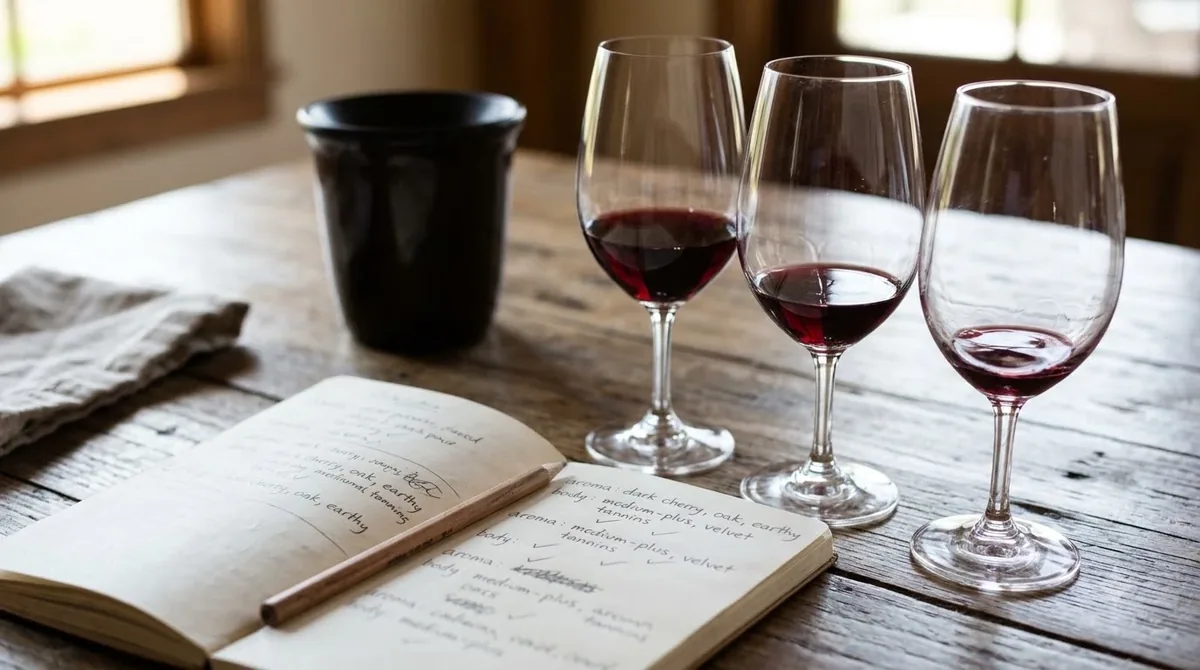
A young Monastrell pours a deep, nearly opaque ruby-purple hue and immediately announces its warm-climate origins on the nose. According to Monastrell España, the grape’s signature aromatic profile combines ripe cherry, blackberry, and plum with cracked black pepper, clove, licorice, and wild scrub herbs such as thyme, rosemary, and lavender. On the palate, the entry feels juicy and enveloping, followed by rounded yet firm tannins and an earthy, roasted-meat undertone that grows more pronounced as the wine opens up.
How Tempranillo Tastes
Tempranillo shows a brighter ruby color that shifts toward brick or rust-orange with bottle age, offering aromas of red cherry, raspberry, and plum rather than jammy black fruit. In youthful, unoaked styles, the wine tastes snappy and fresh with subtle notes of tomato leaf and dried herbs. Once aged in oak barrels, Tempranillo absorbs recognizable secondary flavors of vanilla, coconut, cedar, sweet tobacco, and worn leather, balancing its savory edge with mouthwatering acidity.
Tip: Look for regional synonyms on retail shelves when shopping outside the Spanish aisle. Monastrell is labeled as Mourvèdre in France and Mataro in Australia and parts of California, while Tempranillo appears as Tinto Fino in Ribera del Duero, Tinta de Toro in Toro, Cencibel in La Mancha, and Tinta Roriz or Aragonez in Portugal.
Key Wine Regions and Climate Differences
Monastrell thrives in the sun-baked, arid plateaus of southeastern Spain, whereas Tempranillo dominates the cooler, high-altitude river valleys of northern and central Iberia. Geography shapes almost every difference between these two grapes, from vineyard altitude to blending rules.
Under Spanish wine law, Monastrell serves as a primary permitted red grape across five southeastern Denominations of Origin: Jumilla, Yecla, Alicante, Almansa, and Valencia. In Jumilla and Yecla, unirrigated bush vines grow in stony, limestone-rich soils under relentless Mediterranean sunshine, producing muscular, deeply colored wines. Beyond Spain, the grape plays a foundational role in southern France’s Bandol appellation—where it is called Mourvèdre—and produces slightly softer, fruit-driven reds in California, Washington, Texas, and Australia’s Barossa Valley.
Tempranillo, by contrast, is the third most planted wine grape globally, with nearly 90 percent of its vineyard acreage inside Spain, according to Wine Enthusiast’s Tempranillo overview. In Rioja, Tempranillo accounts for 88 percent of red plantings and is routinely blended with small proportions of Garnacha, Graciano, and Mazuelo to layer perfume, acidity, and color. Further west along the Duero River in Ribera del Duero and Toro, vineyards sit between 2,300 and 3,600 feet above sea level, yielding darker, more tannic 100 percent varietal bottlings. Outside Iberia, Tempranillo has earned strong followings in Argentina’s Mendoza, Southern Oregon, Washington’s Walla Walla Valley, and the Texas High Plains, where its savory structure often draws comparisons to sangiovese vs tempranillo matchups.
Oak Aging and Spanish Label Classifications
Tempranillo is closely tied to Spain’s legally enforced barrel-and-bottle aging tiers, whereas Monastrell producers rely more heavily on stainless steel, concrete, or shorter French oak regimens to preserve ripe fruit. Reading the back or front label for aging terms reveals how much oak influence to expect before pulling the cork.
Across Rioja, Ribera del Duero, and other northern regions, winemakers classify Tempranillo by minimum total aging time and oak barrel duration before release:
- Joven: Released in its first or second year with little to no oak aging, highlighting bright red cherry and crisp acidity.
- Crianza: Aged for at least 2 years total, including a minimum of 1 year in oak barrels, balancing fresh fruit with gentle vanilla and spice.
- Reserva: Aged for at least 3 years total, with at least 1 year in oak barrels and the remainder in bottle, developing supple tannins alongside leather and dried fig notes.
- Gran Reserva: Reserved for standout vintages and aged at least 5 years total, including a minimum of 2 years in oak barrels, resulting in silky texture and complex tobacco, cedar, and savory earth flavors.
Barrel wood choice further separates the two grapes. Traditional Rioja producers have long favored American oak for Tempranillo, which infuses unmistakable aromas of sweet vanilla, dill, and toasted coconut, though many modern wineries now blend in French oak for subtler baking spice. In Jumilla and Yecla, top Monastrell winemakers generally avoid heavy new American oak because the grape’s high alcohol and dense dark fruit can turn cloying alongside sweet wood flavors. Instead, Monastrell is typically fermented in concrete or stainless steel and matured for 4 to 12 months in used French oak barrels, keeping its wild herb and black pepper character front and center.
Food Pairing: What to Serve With Monastrell vs Tempranillo
Monastrell pairs best with heavily seasoned, smoky, and fat-rich meats that tame its firm tannins and high alcohol, whereas Tempranillo’s brighter acidity makes it a natural partner for roasted lamb, tomato-based stews, and aged sheep’s milk cheeses. Matching the weight and cooking method of the dish to each wine’s structural strengths prevents either the food or the glass from overpowering the other.
Best Dishes for Monastrell
Because Monastrell brings full body, alcohol levels typically reaching 14.5 to 15.5 percent according to standard Spanish wine trade profiles, and pronounced peppery and roasted-meat notes, it thrives alongside bold, charred proteins. Fat and salt soften Monastrell’s medium-plus to high tannins, making grilled ribeye, braised beef short ribs, slow-smoked pork shoulder, and spiced lamb kebabs reliable matches. Dishes seasoned with rosemary, thyme, black pepper, or smoked paprika echo the grape’s natural Mediterranean herb profile, while rich mushroom ragouts and lentil stews give vegetarian cooks plenty of umami weight to stand up to the wine.
Best Dishes for Tempranillo
Tempranillo’s medium-plus acidity cuts cleanly through rich fats while harmonizing with savory, slightly tangy ingredients. Classic Spanish pairings include roast suckling lamb (lechazo), jamón ibérico, chorizo-studded bean stews, and aged Manchego cheese, where the wine’s leather and vanilla oak notes complement nutty, salted textures. Unlike ultra-heavy reds, a Crianza or Reserva Tempranillo also handles tomato sauces, roasted peppers, and grilled salmon or tuna steaks without clashing, much like the food-friendly balance explored in pinot noir vs tempranillo comparisons—though chili-heavy dishes should be avoided because heat amplifies alcohol and tannin grip.
Serving Temperature, Decanting, and Glassware
Serve Monastrell slightly warmer at 60–65°F after a 45- to 60-minute decant, while Tempranillo shines slightly cooler at 55–62°F with decanting times tailored to its oak classification. Proper temperature and aeration keep Monastrell’s high alcohol from tasting hot and allow Tempranillo’s layered barrel aromas to open cleanly.
Temperature control matters enormously for southeastern Spanish reds. When Monastrell is poured above 68°F, higher alcohol levels can dominate the nose and mask delicate thyme and blackberry aromatics; resting the bottle in a wine fridge at 60–65°F keeps the fruit crisp and the tannins supple. Young, full-bodied Monastrell bottlings from Jumilla or Bandol benefit from 45 to 60 minutes in a wide-bottomed decanter to soften youthful astringency.
Tempranillo requires a more nuanced approach based on bottle age. Wine Enthusiast recommends serving Tempranillo between 55°F and 60°F—cooler than many full-bodied reds—to highlight its natural acidity and red berry snap. Young Joven and Crianza bottles taste liveliest around 55–58°F with 20 to 30 minutes of air, while structured Ribera del Duero or Toro bottles gain smoothness after 45 to 60 minutes in a decanter. Fragile Gran Reserva bottles aged 10 years or longer should be poured at 60–62°F and decanted gently just before serving to separate fine sediment without dissipating delicate cedar and dried-fig aromatics. Both varieties perform best in large-bowled Bordeaux-style red wine glasses that concentrate complex spice and fruit aromas.
How to Choose Between Monastrell and Tempranillo
Choose Monastrell when you want a dark, full-throttle red packed with ripe black fruit, peppery warmth, and rustic Mediterranean character, and pick Tempranillo when you prefer brighter red-fruit acidity, refined oak spice, and versatile food pairing. Both grapes offer tremendous value across Spanish Denominations of Origin, so letting the occasion and menu guide the choice delivers the best results.
Reach for a bottle of Monastrell if your palate gravitates toward Zinfandel, Syrah, or Petite Sirah—a style overlap similar to tempranillo vs zinfandel comparisons—or if dinner features grilled steaks, barbecue ribs, or hearty winter braises. Look specifically for old-vine bottlings from Jumilla or Yecla when seeking concentrated blackberry and wild herb depth without heavy oak sweetness.
Reach for Tempranillo when hosting a multi-course dinner, serving tapas, or pairing wine with roasted poultry, pork tenderloin, lamb, or aged cheeses. Shoppers who enjoy subtle vanilla and silky, resolved tannins should choose a Rioja Reserva or Gran Reserva, while those wanting darker fruit intensity and firmer grip should look toward Ribera del Duero or Toro.
Frequently Asked Questions
Is Monastrell the exact same grape as Mourvèdre?
Yes, Monastrell and Mourvèdre are genetically identical names for the same ancient Spanish red grape variety. Ampelographers trace its origins to eastern Spain—likely near Valencia or Sagunto—before it spread north into France’s Rhône Valley and Provence as Mourvèdre and later to Australia and California under the name Mataro.
Which wine ages longer in the cellar, Monastrell or Tempranillo?
Age-worthy examples of both varieties can cellar for over a decade, though classic Rioja Gran Reserva Tempranillo is more widely released ready to drink after extended winery aging. Structured Monastrell—especially old-vine Jumilla and French Bandol—relies on dense tannins and extract to evolve in bottle, trading primary blackberry fruit for cured meat, truffle, and leather notes.
Why does Rioja Tempranillo sometimes taste like dill or coconut?
Those distinctive dill, coconut, and sweet vanilla notes come from aging Tempranillo in American white oak barrels rather than from the grape itself. American oak contains higher concentrations of aromatic oak lactones and vanillin than tighter-grained French oak, imparting a signature sweet-spice profile prized by traditional Rioja bodegas.
Are Monastrell and Tempranillo blended together in Spanish wines?
Yes, winemakers in central and southeastern Spain frequently blend the two varieties to combine their complementary strengths. In regions such as Almansa, Jumilla, and La Mancha, Tempranillo contributes bright red-cherry acidity and aromatics while Monastrell adds deep color, mid-palate weight, and firm tannic structure.
How long do opened bottles of Monastrell and Tempranillo stay fresh?
Once opened, re-corked bottles of either Monastrell or Tempranillo generally keep well for several days when stored upright in a refrigerator. Because Monastrell typically has higher alcohol and denser phenolic extract than a light Joven Tempranillo, full-bodied Monastrell bottles often hold their flavor longer, while older Gran Reserva wines fade much more quickly.
Comparing monastrell vs tempranillo showcases the remarkable range of Spain’s native wine heritage, spanning sun-drenched Mediterranean richness and high-altitude northern elegance. Keeping each grape’s acidity, tannin weight, and oak profile in mind makes matching the right Spanish red to any meal straightforward and rewarding.
More in Wine vs Wine
 Chenin Blanc vs Pinot Gris: Acidity, Body, and Pairing DifferencesUpdated Nov 20, 2026
 Chianti vs Lambrusco: How Tuscany and Emilia-Romagna Reds CompareUpdated Nov 20, 2026
 Chianti vs Primitivo: Key Differences in Taste, Body, and PairingUpdated Nov 20, 2026
 Chianti vs Rioja: Key Differences in Taste, Aging, and PairingUpdated Nov 20, 2026
 Chianti vs Shiraz: How Acidity, Body, and Food Pairings CompareUpdated Nov 20, 2026
 Chianti vs Syrah: Key Differences in Taste, Body, and Food PairingUpdated Nov 20, 2026