

We may earn a commission when you buy through links on this page, at no extra cost to you. Learn more.
The margaux wine region is the southernmost commune appellation in Bordeaux’s Haut-Médoc on France’s Left Bank, famed for perfumed, silk-textured red wines led by Cabernet Sauvignon. Spanning roughly 1,500 hectares (around 3,700 acres) just 25 kilometers north of the city of Bordeaux, it holds 21 of the 61 Grands Crus Classés from the 1855 classification, including First Growth Château Margaux. Unlike the muscular, high-tannin reds produced farther north in Pauillac or Saint-Estèphe, wines from this appellation balance structured longevity with floral aromatics, red and black currant fruit, and fine-grained tannins.
For collectors and curious drinkers exploring Wine Regions across France, Margaux stands apart as both an accessible entry point to Left Bank Bordeaux and a benchmark for aromatic grace. Officially recognized as an Appellation d’Origine Contrôlée (AOC) in 1954, the area is reserved exclusively for still red wines blended from classic Bordeaux varieties grown on ancient river gravel mounds.
Overview of the Margaux Wine Region
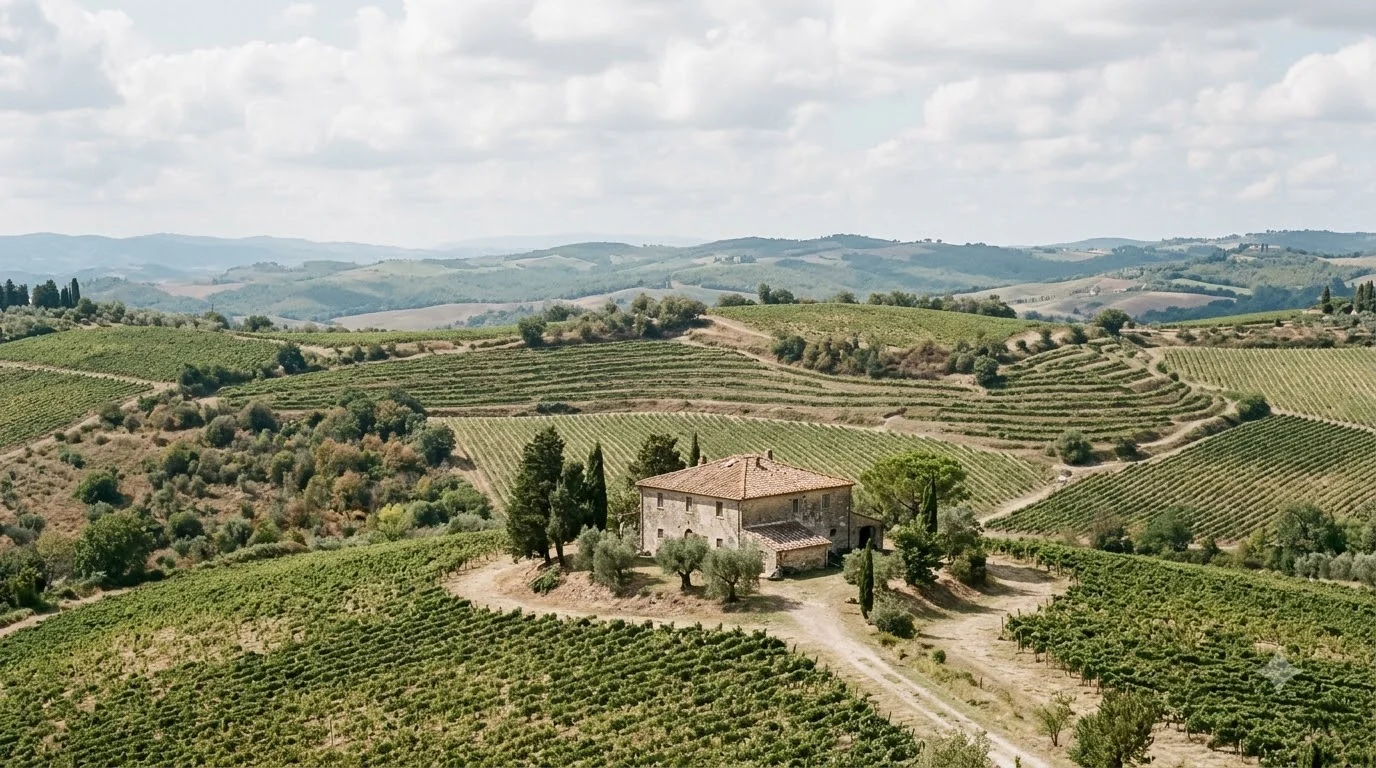
Positioned on the left bank of the Gironde estuary, the Maison du Vin de Margaux notes that the appellation’s 1,500-hectare vineyard footprint sits on gravelly rises shaped by ancient river systems. Because the Atlantic Ocean and the wide Gironde estuary moderate local temperatures, vines experience mild winters, warm summers, and gradual, even ripening across the growing season.
What truly defines the region’s character lies beneath the vine rows. Deep deposits of coarse and fine gravel provide rapid drainage during wet spells while absorbing daytime warmth and radiating it back to the grape clusters at night. Interwoven pockets of clay, limestone, and sand create subtle variations from plot to plot, giving winemakers diverse building blocks during harvest.
This mosaic of soils explains why the margaux wine region earned the highest concentration of classified estates in the Médoc during the 1855 Paris Exposition classification. Twenty-one Margaux châteaux—more than a third of the entire 61-estate list—received Grand Cru Classé status, spanning every tier from First Growth down to Fifth Growth. Even outside the 1855 hierarchy, numerous Cru Bourgeois and family-owned properties craft supple, expressive reds that reflect the same gravel-driven finesse.
Communes and Sub-Areas Within the Appellation
Although Margaux is a single AOC rather than a collection of separate sub-appellations, its vineyards span four distinct administrative communes: Margaux-Cantenac (formed by the 2017 merger of the historic communes of Margaux and Cantenac), Arsac, Labarde, and Soussans. Each village sits along the same spine of gravel ridges known locally as croupes, yet subtle shifts in gravel depth and clay content shape the personality of wines grown in each sector.
At the heart of the appellation, the joined villages of Margaux and Cantenac contain the deepest gravel terraces and the greatest density of classified growths. Wines grown on these central mounds typically show the classic Margaux signature of violet perfume, ripe blackcurrant, and fine, lacy tannins. Moving south into Labarde and inland toward Arsac, gravel mixes more freely with sand and clay, yielding styles that range from bright and red-fruited to slightly broader and plush.
To the north, Soussans borders the neighboring Haut-Médoc and Moulis-en-Médoc zones, where slightly heavier clay-limestone subsoils lend extra mid-palate weight and firm structure. Because many châteaux own vineyard parcels scattered across two or three communes, their final blends capture a cross-section of the entire appellation rather than a single micro-site.
| Commune | Location in AOC | Dominant Soil Profile | Typical Wine Character |
|---|---|---|---|
| Margaux-Cantenac | Central core along the Gironde | Deep coarse and fine river gravel over clay-limestone | Highly perfumed, floral, red and black currant, silky tannins |
| Soussans | Northern edge bordering Haut-Médoc | Gravel mixed with heavier clay and limestone | Fuller mid-palate weight, darker fruit, firmer grip |
| Labarde | Southern sector toward Macau | Gravel ridges alternating with sandy clay | Supple texture, bright red berry fruit, early charm |
| Arsac | Southwestern inland plateau | Lighter gravel over sand and clay | Aromatic lift, fresh acidity, approachable structure |
Key Grapes and Wine Styles
Every bottle labeled under the Margaux AOC is a dry red wine crafted from the classic Left Bank blend, with Cabernet Sauvignon serving as the structural backbone. According to the appellation’s winegrowers’ association, Cabernet Sauvignon accounts for roughly 60 percent of planted vineyard area, ripening last on the warm gravel ridges to deliver tight, refined tannins and long-term aging capacity.
Merlot occupies the second-largest share of the vineyards and appears in nearly every estate blend. Harvested earlier than Cabernet Sauvignon, Merlot brings plush red-plum fruit, mid-palate roundness, and deep color that soften Cabernet’s youthful edges. Cabernet Franc and Petit Verdot play smaller supporting roles: Cabernet Franc adds floral lift, raspberry freshness, and subtle herbal nuance, while late-ripening Petit Verdot acts like a dash of spice to deepen color and reinforce tannic grip. (While Carmenère and Malbec remain legally permitted under appellation rules, they are virtually absent from modern plantings.)
In the glass, young Margaux reds stand out for an aromatic profile led by violets, crushed rose petals, blackcurrant, and cedar from French oak barrel aging. Unlike the brooding, iron-fisted style found in northern Médoc communes, Margaux favors polish, harmony, and medium-to-full body. Over 10 to 25 years in bottle, primary berry notes evolve into savory layers of tobacco leaf, forest floor, leather, and truffle while retaining vibrant natural acidity. Compared with warmer Mediterranean zones such as the jumilla wine region or Atlantic-influenced Spanish appellations like the bierzo wine region, Margaux relies on cool maritime moderation and oak maturation to build quiet complexity rather than overt fruit weight.
Notable Producers in Margaux
No Left Bank appellation holds a deeper roster of historic estates, with 21 classified growths and dozens of respected Cru Bourgeois properties operating side by side. At the pinnacle sits Château Margaux, the appellation’s sole First Growth in the 1855 classification, whose 82 hectares of red vines produce a Grand Vin celebrated worldwide for its fragrance and longevity, alongside its renowned second wine, Pavillon Rouge.
Among the Second Growths, Château Palmer—located in Cantenac—is famous for planting an unusually high proportion of Merlot nearly equal to its Cabernet Sauvignon, creating a velvety, opulent expression that rivals First Growths in prestige. Fellow Second Growths Château Rauzan-Ségla, Château Rauzan-Gassies, Château Lascombes, Château Durfort-Vivens, and Château Brane-Cantenac each interpret the gravel plateau with distinct house philosophies, from biodynamic viticulture at Durfort-Vivens to rich, polished oak integration at Lascombes.
Third, Fourth, and Fifth Growth estates offer compelling benchmarks across the appellation. Third Growths Château d’Issan, Château Kirwan, Château Giscours, Château Malescot St-Exupéry, Château Cantenac Brown, and Château Ferrière demonstrate the range of Margaux’s communes, while Fourth Growth Château Marquis de Terme and Fifth Growths Château Dauzac and Château du Tertre anchor the southern reaches. Outside the 1855 list, estates such as Château Angludet, Château Paveil de Luze, and Château La Tour de Mons consistently earn praise from critics for delivering classic appellation typicity.
Visiting Tips for Wine Travelers
Located roughly 25 kilometers (about 35 to 45 minutes by car) northwest of central Bordeaux along the famous D2 “Route des Châteaux,” Margaux is one of the easiest Médoc appellations to explore. As reviewers and travel writers at Decanter note, almost every estate requires advance appointments for tours and tastings, so booking at least two to four weeks ahead—especially between May and October—is essential.
Cycling is one of the best ways to experience the flat-to-gently-rolling vineyard landscape. Local tourism routes such as La Boucle des Châteaux de Margaux cover 5 to 8.5 kilometers along quiet lanes linking grand estates, century-old parks, and village wine shops. In the center of Margaux village, the Maison du Vin de Margaux and independent merchants like La Cave d’Ulysse let visitors sample bottles across multiple properties in a single stop.
For dining and lodging, travelers can book lunch directly at estates that welcome guests—such as Au Marquis de Terme, La Table de Giscours, or even weekday estate lunches at Château Palmer—or stay overnight at renovated vineyard guesthouses like Château Dauzac and waterfront hotels along the Gironde estuary.
Tip: Serve Margaux red wines slightly cool at 60 to 65°F (16 to 18°C), and decant bottles younger than eight years old for one to two hours to let their floral aromatics open and their tannins soften.
How to Buy and Cellar Margaux Wines
Buying smart in the margaux wine region starts with understanding tiers and vintages rather than chasing only the most famous labels. While the 21 classified growths command collector attention, second wines produced by top châteaux—often made from younger vines or declassified barrels—offer genuine estate style and earlier drinkability. Similarly, Cru Bourgeois estates from strong Médoc vintages deliver classic Cabernet-Merlot structure without requiring two decades of patience.
Vintage variation plays a major role on Bordeaux’s Left Bank. Warm, balanced seasons such as 2015, 2016, 2018, 2019, 2020, and 2022 produced concentrated, aromatic Margaux wines built for long-term cellaring, whereas cooler or wetter years like 2014 and 2021 yielded lighter-framed, brisker reds ideal for drinking earlier in their life cycle. Just as understanding vintage and hillside exposure helps when exploring Italian coastal reds from the marche wine region, checking harvest conditions in Margaux prevents opening a tightly wound bottle too soon.
When storing Margaux at home, keep bottles on their sides in a dark, vibration-free space around 55°F (13°C) with steady humidity. Most classified growths hit their stride between 8 and 20 years after the vintage, while top estates in benchmark years continue evolving gracefully for three decades or more.
Frequently Asked Questions
What makes Margaux wine different from other Bordeaux regions?
Margaux is known for aromatic elegance, floral perfume, and silky tannins rather than sheer power. While northern Médoc neighbors like Pauillac and Saint-Estèphe produce heavier, more muscular reds, Margaux’s well-drained gravel mounds and southerly position yield polished, fragrant wines that balance immediate charm with multi-decade aging potential.
Are all wines from the Margaux appellation red?
Yes, under Appellation d’Origine Contrôlée regulations, the Margaux AOC is reserved exclusively for dry red wines made primarily from Cabernet Sauvignon, Merlot, Cabernet Franc, and Petit Verdot. A few local estates, including Château Margaux with its Pavillon Blanc, produce small quantities of dry white wine, which must be bottled under the broader Bordeaux AOC label rather than Margaux.
How long should you age a bottle of Margaux before drinking it?
Entry-level Margaux reds, Cru Bourgeois bottlings, and second wines typically drink well between 4 and 10 years after the vintage. Classified growths from top vintages usually need at least 8 to 12 years for their tannins to soften and their secondary cedar, leather, and truffle notes to emerge, and they can age for 25 years or longer.
What foods pair best with Margaux red wine?
Margaux’s refined tannins and vibrant acidity pair naturally with roasted lamb, grilled ribeye, duck breast, and braised beef dishes. Mature bottles also excel alongside earthy ingredients such as wild mushroom risotto, truffle-infused sauces, and aged hard cheeses like Comté or aged Gouda.
Whether you are planning a cycling route along the D2 vineyard road or selecting a classic Left Bank bottle for a special dinner, the margaux wine region rewards curiosity at every level. Its combination of deep gravel terroir, historic classified estates, and signature floral grace makes it one of Bordeaux’s most enduring benchmarks.
More in Wine Regions
 Willcox Wine Trail: Discover Arizona’s High-Elevation Wine CountryUpdated Nov 20, 2026
 Yakima Valley Wine Region: Find the Best Styles to TryUpdated Nov 20, 2026
 Vosne Romanee Wine Tasting: Identify Aromas and Choose Better PairingsUpdated Nov 20, 2026
 Yakima Valley Wine Festival: Find the Best Seasonal Wine EventsUpdated Nov 20, 2026
 Wales Vineyards: Discover Cool-Climate Wines and Where to VisitUpdated Nov 20, 2026
 Yountville Wine Festival: Discover Napa Wines and Local FoodUpdated Nov 20, 2026