

We may earn a commission when you buy through links on this page, at no extra cost to you. Learn more.
The best malvasia food pairing matches the wine’s specific sweetness and body to the weight of your dish—pair dry white styles with grilled seafood, roast poultry, and herb-driven pasta, while sweet or fortified bottles shine alongside blue cheese, foie gras, and nutty desserts. Because Malvasia is an ancient family of distinct grape varieties rather than a single style, bottles range from crisp and saline to rich, oxidized, and honeyed. Knowing whether your bottle is dry, sparkling, skin-contact, or fortified makes matching it at the dinner table effortless.
Walking into a wine shop looking for Malvasia can feel confusing at first because two bottles sharing the name might taste completely different. One might pour pale, floral, and bone-dry for Tuesday night shrimp scampi, while another pours deep mahogany and tastes of burnt caramel and walnuts after dinner. Understanding how the grape behaves across regions and winemaking styles turns that variety into an asset at the table.
What It Is
Malvasia is an ancient Mediterranean family of wine grapes—predominantly white-skinned, though a few red-skinned mutations exist—that spans Italy, Spain, Portugal, Greece, and Croatia. Rather than referring to a single uniform grape, the name covers dozens of genetically distinct sub-varieties that share a tendency toward generous stone fruit and floral aromatics.
Wine historians trace the name back to Monemvasia, a fortified medieval port in Greece’s Peloponnese peninsula from which sweet Mediterranean wines were shipped across Europe during the 13th and 14th centuries. As Venetian merchants and sailors carried cuttings along coastal trade routes, the vines adapted to volcanic islands, limestone hills, and mainland valleys. Each region eventually developed its own local clones and naming conventions, such as Malvasia Bianca, Malvasia Istriana, Malvasia delle Lipari, and Malvasia Fina.
Because these sub-varieties ripened reliably in warm climates and accumulated healthy sugar levels, winemakers used them for everything from crisp everyday table whites to long-lived sweet wines. Today, Decanter notes that Malvasia also appears in red blends—most notably Malvasia Nera alongside Negroamaro in southern Italy—as well as in Tuscany’s traditional Vin Santo. If you enjoy exploring broader Wine by Type, Malvasia offers one of the widest stylistic ranges under a single family banner.
Flavor and Styles
Across the board, Malvasia wines are prized for their expressive aromatics, leaning heavily into white peach, apricot, orange blossom, honey, and roasted almond. Their texture tends to be round and plush with moderate acidity, though regional climate and winemaking choices steer each bottle toward one of five main styles.
Dry still whites form the everyday backbone of modern Malvasia production, particularly in northern Italy, Croatia, and central Spain. These bottles show clean orchard fruit, wild herbs, white flowers, and a subtle saline or bitter-almond finish without residual sugar. In dry table wines made from sub-varieties like Malvasia Fina, Wine Folly highlights primary notes of white peach, green almond, basil, and seashell alongside medium-light body and medium-low acidity.
Skin-contact (amber) and sparkling styles showcase two opposite ends of texture. Extended maceration on the grape skins gives amber Malvasia a deeper golden-orange hue, gentle grip, and savory notes of dried apricot, bruised apple, and tea leaf. Meanwhile, lightly sparkling frizzante or spumante versions—popular in Emilia-Romagna and Piedmont—keep alcohol low and emphasize bright peach, rose petal, and crisp refreshment.
Passito and fortified dessert styles represent Malvasia’s historic claim to fame. In passito wines such as Sicily’s Malvasia delle Lipari, harvested bunches dry in the sun to concentrate sugars before fermentation, yielding viscous flavors of dried fig, rosemary honey, and candied citrus. On the Portuguese island of Madeira, Malvasia (known locally as Malmsey) is fortified and heated during aging to produce the island’s richest, sweetest style, layered with burnt caramel, black walnut, and orange peel.
Where It Grows
Malvasia thrives in warm, sun-drenched coastal and island vineyards where sea breezes temper summer heat and prevent fungal pressure on its tight grape clusters. Italy plants more Malvasia than any other country, with distinct regional identities stretching from Friuli-Venezia Giulia and Emilia-Romagna down to Puglia and Sicily’s Aeolian Islands.
Outside Italy, the Iberian Peninsula and Atlantic islands hold major stakes in the grape family. Portugal relies on Malvasia Fina in the Douro and Dão regions for aromatic white blends, while Madeira reserves its warmest, lowest-elevation coastal slopes for the Malvasia varieties used in Malmsey. Across the border in Spain, Malvasia appears in white Rioja blends—adding perfume and body to Viura—and thrives on the volcanic black soils of Lanzarote in the Canary Islands, where vines grow inside stone-walled hollows to shelter from Atlantic winds.
Along the eastern Adriatic, Croatia’s Istrian peninsula produces dry, mineral-driven whites from Malvazija Istarska, a local member of the family prized for fennel, quince, and subtle white-pepper notes. Greece continues to cultivate the grape in the Peloponnese under the PDO Monemvasia-Malvasia appellation, keeping its medieval sweet-wine heritage alive.
How to Serve
Serving Malvasia at the right temperature keeps its lush aromatics bright and prevents its naturally moderate acidity from feeling heavy on the palate. Because styles range from light sparkling bottles to oxidized fortified wines, temperature and glassware depend directly on what is inside the bottle.
Chill dry still and sparkling Malvasia thoroughly before pouring—aim for 45 to 50 degrees Fahrenheit for crisp dry whites and 40 to 45 degrees Fahrenheit for sparkling bottles. Pour these styles into a standard medium-bowled white wine glass so the floral and stone-fruit bouquet funnels toward the nose without warming up too quickly. Skip decanting young, dry, or sparkling bottles, as extra oxygen dulls their fresh blossom notes and dissipates delicate bubbles.
Rich, oxidized, or sweet expressions reward slightly warmer service so their complex nutty and honeyed layers can open up. Serve Malmsey Madeira and aged passito bottles between 55 and 60 degrees Fahrenheit in a smaller dessert wine or tulip-shaped glass. Unlike fragile table whites, fortified Malvasia is remarkably resilient once opened; a recorked bottle of Madeira stays fresh in a cool cupboard for months.
Tip: If a dry Malvasia tastes slightly muted straight out of a cold refrigerator, let it sit in the glass for ten minutes—a few degrees of warmth unlocks its signature white-peach and almond aromatics.
Food Pairing
Successful malvasia food pairing relies on matching the wine’s sweetness, texture, and aromatic weight to the richness and seasoning of your plate. Dry bottles love coastal seafood, poultry, and herbaceous dishes, while off-dry, skin-contact, and sweet versions handle spice, funk, and dessert effortlessly.
Start with dry white Malvasia when cooking Mediterranean seafood, fresh pasta, or light meats. Its round mouthfeel and subtle almond-and-herb edge complement grilled branzino, seared scallops, crab cakes, and spaghetti alla carbonara without overwhelming delicate proteins. In Lazio and central Italy, dry Malvasia blends are the classic table partner for creamy egg-and-cheese pastas and fried artichokes, cutting through richness with gentle fruit and salinity. If you are planning a multi-course dinner and also want a bright, savory red for roasted meats, compare how blaufrankisch food pairing brings peppery acidity to heavier dishes.
Reach for off-dry or skin-contact Malvasia when your menu features aromatic spices, sweet-savory glazes, or earthy ingredients. A touch of residual sugar cools down the heat in Thai coconut curries, Sichuan dishes, and Cajun jambalaya, while the grape’s peach and orange-blossom notes echo ginger, lemongrass, and roasted squash. Amber, skin-fermented Malvasia adds a light tannic grip that pairs wonderfully with roasted pork loin, wild mushroom risotto, and semi-hard sheep’s milk cheeses like pecorino or aged Manchego. For a similar textural approach with southern French whites, check out our guide to grenache blanc food pairing.
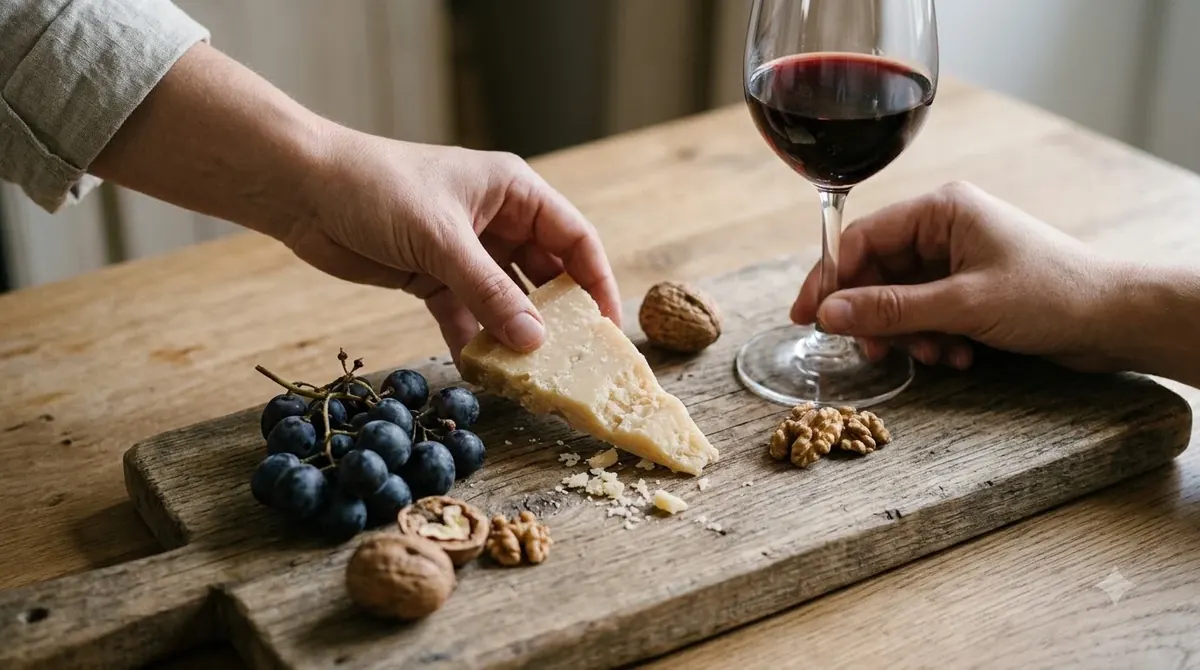
Save passito and Malmsey Madeira for salty, pungent cheeses, rich starters, or chocolate-and-nut desserts. The classic rule of pairing sweet wine with salty blue cheese—such as Gorgonzola Dolce, Roquefort, or Stilton—works brilliantly here because the wine’s honeyed fig flavors tame sharp saltiness. Malmsey Madeira also stands up to dark chocolate tarts, pecan pie, tiramisu, and seared foie gras thanks to its vibrant acidity and roasted walnut complexity. And if your feast includes hearty braised meats or game alongside your cheese course, a rustic bottle from our carignan food pairing rundown makes a natural red companion.
| Malvasia Style | Flavor Profile | Ideal Serving Temp | Best Food Pairings |
|---|---|---|---|
| Dry White (e.g., Malvasia Istriana, Lazio blends) | White peach, wild flowers, green almond, subtle saline finish | 45–50°F | Grilled sea bass, shrimp scampi, pasta carbonara, roast chicken with herbs |
| Sparkling / Frizzante (e.g., Emilia-Romagna, Piedmont) | Fresh apricot, rose petal, bright citrus, light effervescence | 40–45°F | Prosciutto and melon, fresh ricotta crostini, fruit tarts, soft goat cheese |
| Skin-Contact / Amber (e.g., Friuli, Slovenia) | Dried apricot, tea leaf, orange peel, gentle tannic grip | 50–55°F | Roast pork tenderloin, mushroom risotto, aged Manchego, spiced tagines |
| Off-Dry / Aromatic (e.g., California, New Mexico) | Ripe peach, lychee, honeysuckle, soft plush texture | 48–52°F | Thai green curry, Pad Thai, honey-glazed ham, jerk chicken |
| Passito & Malmsey Madeira (e.g., Lipari, Madeira) | Burnt caramel, dried fig, roasted walnut, rosemary honey | 55–60°F | Gorgonzola or Stilton, dark chocolate tart, pecan pie, seared foie gras |
How to Choose a Bottle
Because the word “Malvasia” appears on labels ranging from dry table wines to syrupy dessert bottles, checking three details on the front and back label saves you from surprises at dinner. Look first at the region, then the alcohol percentage, and finally any winemaking terms.
Check the region and sub-variety name to predict dryness. Bottles labeled Malvazija Istarska (from Croatia or Friuli), Bianco di Custoza, or Frascati are almost always dry and crisp. Conversely, labels reading Malvasia delle Lipari, Malvasia di Castelnuovo Don Bosco, or Malmsey Madeira indicate sweet or fortified dessert styles.
Scan the ABV and production cues for sweetness clues. Dry still Malvasia typically sits between 12 percent and 14 percent ABV, whereas sweet sparkling bottles from northern Italy often register around 5.5 percent to 7 percent ABV because fermentation stops early to preserve natural grape sugar. Fortified Malmsey Madeira jumps to 19 percent or 20 percent ABV, while words like “Passito,” “Dolce,” or “Amabile” confirm noticeable sweetness on the palate.
Frequently Asked Questions
Is Malvasia wine always sweet?
No, Malvasia is made in both completely dry and richly sweet styles depending on the region and winemaker. While historic versions like Malmsey Madeira and Sicilian passito are luscious dessert wines, modern bottles from Croatia, northern Italy, and Spain are typically fermented bone-dry for pairing with savory seafood and pasta.
What does dry Malvasia taste like?
Dry Malvasia offers generous aromatics of white peach, apricot, orange blossom, and fresh herbs paired with a round, medium-bodied palate. It generally has moderate acidity and finishes with a characteristic hint of green almond or coastal salinity rather than sharp citrus tartness.
Can you pair Malvasia with spicy food?
Yes, off-dry and aromatic styles of Malvasia are fantastic with spicy dishes like Thai curry, Sichuan stir-fries, and Cajun jambalaya. A slight touch of residual sweetness cools chili heat on the palate while the wine’s stone-fruit and floral notes complement ginger, garlic, and warm spices.
What is the difference between Malvasia and Malmsey?
Malmsey is the traditional English and Portuguese name for the richest, sweetest style of fortified Madeira wine made from Malvasia grapes. While standard Malvasia can be a light, unfortified table wine, Malmsey undergoes fortification with grape spirit and warm oxidative aging, resulting in deep flavors of burnt caramel, walnut, and dried fig.
Once you match the style in your glass to the flavors on your plate, Malvasia becomes one of the most adaptable wines you can bring to the table. Keep a dry bottle chilled for weeknight seafood and pasta, and save a passito or Malmsey Madeira for your next cheese board or chocolate dessert.
More in Wine Types & Grapes
 What Does Ruby Port Taste Like? Flavor Notes, Styles, and Serving TipsUpdated Nov 21, 2026
 What Does Ribolla Gialla Taste Like? Crisp White and Amber Styles ExplainedUpdated Nov 21, 2026
 What Does Semillon Taste Like? Flavor Profile, Styles & PairingsUpdated Nov 21, 2026
 What Does Scuppernong Taste Like? Flavor, Styles, and Pairing GuideUpdated Nov 21, 2026
 What Does Saperavi Taste Like? Flavors, Styles, and Pairing GuideUpdated Nov 21, 2026
 What Does Natural Wine Taste Like? Flavors, Styles, and Serving TipsUpdated Nov 21, 2026