

We may earn a commission when you buy through links on this page, at no extra cost to you. Learn more.
Carignan food pairing is easiest with grilled lamb, duck, sausages, and other savory dishes that can stand up to the wine’s dark fruit, lively acidity, and firm tannins. The grape’s range runs from medium-bodied, fruit-forward reds to concentrated old-vine wines with deeper structure. Match the bottle’s weight to the meal, use herbs and char to echo its savory notes, and avoid dishes that are very sweet or sharply acidic.
Carignan is a Mediterranean red grape with roots in Aragón, Spain, and a long history in southern France. Its reputation has changed as growers have focused on lower yields and older vines, so the name now covers more than one style. The pairings below start with the reliable choices and then show how to adapt a menu to the wine in the glass.
Understand Carignan’s Acidity, Tannin, and Savory Fruit
Carignan’s natural structure explains why it works so well with rich, savory food. Expect dark berries, black cherry, prune, herbs, and spice, supported by noticeable acidity and tannin; according to Vin de France, a representative French profile is medium-bodied, medium-high in acidity, medium in tannin, and 13.5 to 15 percent alcohol.
The exact balance depends on the vineyard and winemaking. The Inter Rhône wine body describes Carignan as highly productive, late-ripening, and naturally high in acidity, color, and tannin. On poor, dry hillside soils, the grape can produce wines with more structure and color. Vin de France notes that controlling yields can make the wine more concentrated and balanced, while carbonic maceration can soften its tannins and bring forward fruit. Old-vine examples can be powerful and full-bodied rather than merely rustic.
That range matters at the table. A lively, medium-bodied Carignan with juicy cherry and raspberry can sit beside roast chicken, pork, or grilled vegetables. A dense old-vine wine from Priorat or the Agly Valley in Roussillon is better suited to slow-cooked lamb, duck confit, or beef short ribs. For background on the grape’s structure, the Wine Enthusiast Carignan profile explains why acidity and tannin make it a useful blending partner as well as a distinctive varietal wine.
Pair Carignan with Grilled Lamb, Beef, and Charred Meats
Grilled and roasted meats are the most dependable partners for structured Carignan. The wine’s acidity refreshes the palate between bites, while its tannin meets the protein and browned edges of lamb, beef, and pork.
For lamb, try grilled chops with rosemary, garlic, and black pepper, or a butterflied leg with a crust of fennel seed and thyme. The meat’s savory richness and the grill’s smoky notes echo Carignan’s dark fruit and herbal character. A younger bottle can work with lamb kebabs or gyros, especially when the seasoning includes oregano, cumin, and charred onion. Choose a more concentrated, old-vine example for a slow-roasted shoulder or a deeply browned leg of lamb.
Beef works best when it is seared, grilled, or braised rather than served with a delicate preparation. Flat iron steak, tri-tip, skirt steak, grilled burgers, and short ribs all have enough flavor to stand alongside the wine. Salt and fat soften the sensation of tannin, so a little marbling, a salted crust, or a pan sauce made with stock can make a structured Carignan feel more balanced. Keep sweet barbecue glaze light; a dry rub with smoked paprika, coriander, black pepper, and garlic is a safer match than a sugary sauce.
Carignan can also pair with grilled sausages and pork ribs. Choose fennel sausage, garlic sausage, or mildly smoky kielbasa, then add mustard, sautéed peppers, or white beans. For barbecue, lean toward peppery, smoky, and savory flavors rather than heavy sweetness. If the bottle is especially firm, serve it with a fatty cut or a dish finished with olive oil instead of a very lean piece of meat.
Choose Duck, Pork, and Slow-Cooked Dishes
Duck, pork shoulder, and bean-based braises bring out Carignan’s earthy side. Their tender textures and savory cooking liquids are a good match for the grape’s dark fruit, herbal notes, and substantial acidity.
Duck confit is a classic choice, particularly with garlicky lentils or white beans. The crisp skin and rich meat soften tannin, while lentils add a gentle, earthy bridge to the wine. Decanter sommelier Daniel Illsley specifically recommends duck confit with garlicky lentils for mature Cariñena; the Decanter pairing recommendation is a strong starting point for a special dinner. For a younger Carignan, roast duck breast with a savory pan sauce, lentils, and roasted shallots is a simpler alternative.
Pork is equally adaptable. Roast pork loin with fennel, garlic, and rosemary suits a medium-bodied, fruit-led Carignan, while slow-cooked pork shoulder can handle a richer bottle. Pork belly, grilled ribs, and sausages provide enough fat to soften a firmer wine. Apples can be included as a side, but use roasted or sautéed fruit in modest amounts rather than a sweet apple glaze; the wine is dry, and very sweet accompaniments can make it seem harder and more acidic.
For cooler weather, serve Carignan with cassoulet, lamb-and-white-bean stew, beef daube, or a tomato-based sausage casserole. The slow-cooked meat, beans, stock, and herbs create layers that meet the wine’s structure without overwhelming its fruit. Add rosemary, thyme, bay leaf, paprika, or a little black olive. These flavors give the dish a Mediterranean profile that feels natural beside wines from Languedoc, Roussillon, or Priorat.
Serve Carignan with Vegetables, Beans, and Tomato Dishes
Carignan is not limited to meat, particularly when vegetables are roasted, grilled, or cooked with legumes. Smoky, earthy, and savory preparation gives the wine enough flavor to meet, while olive oil and beans help round out firmer tannins.
Start with grilled eggplant, roasted red peppers, mushrooms, onions, or zucchini dressed with olive oil, garlic, and thyme. Mushrooms are especially useful because their earthy flavor connects with the wine’s forest-floor and herbal notes. A platter of charred vegetables with chickpeas, olives, and a little smoked paprika works well with a fruit-forward Carignan. For a more structured bottle, add lentils or butter beans so the meal has more body.
Tomato dishes can be excellent, but the preparation needs attention. A long-simmered tomato and sausage sauce, baked pasta with roasted vegetables, or ratatouille-style stew has cooked-down fruit, savory herbs, and enough richness to stand up to Carignan. Raw tomato salad with sharp vinegar is less reliable because high-acid food can make a wine seem less fresh; choose a Carignan with equal or higher perceived acidity, and keep the dressing restrained. A tomato sauce with garlic, olive oil, and basil will usually be more harmonious than one dominated by vinegar or sugar.
Bean dishes offer another dependable route. White beans with rosemary, lentils with caramelized onions, or chickpeas with roasted peppers can stand in for meat while keeping the meal substantial. Add toasted breadcrumbs, grilled mushrooms, or a little aged cheese for more depth. Avoid turning the dish very hot with chile flakes: alcohol and tannin can amplify chili heat, so a moderately seasoned preparation is easier to pair than a fiery stew.
Match Carignan with Cheese, Charcuterie, and Snacks
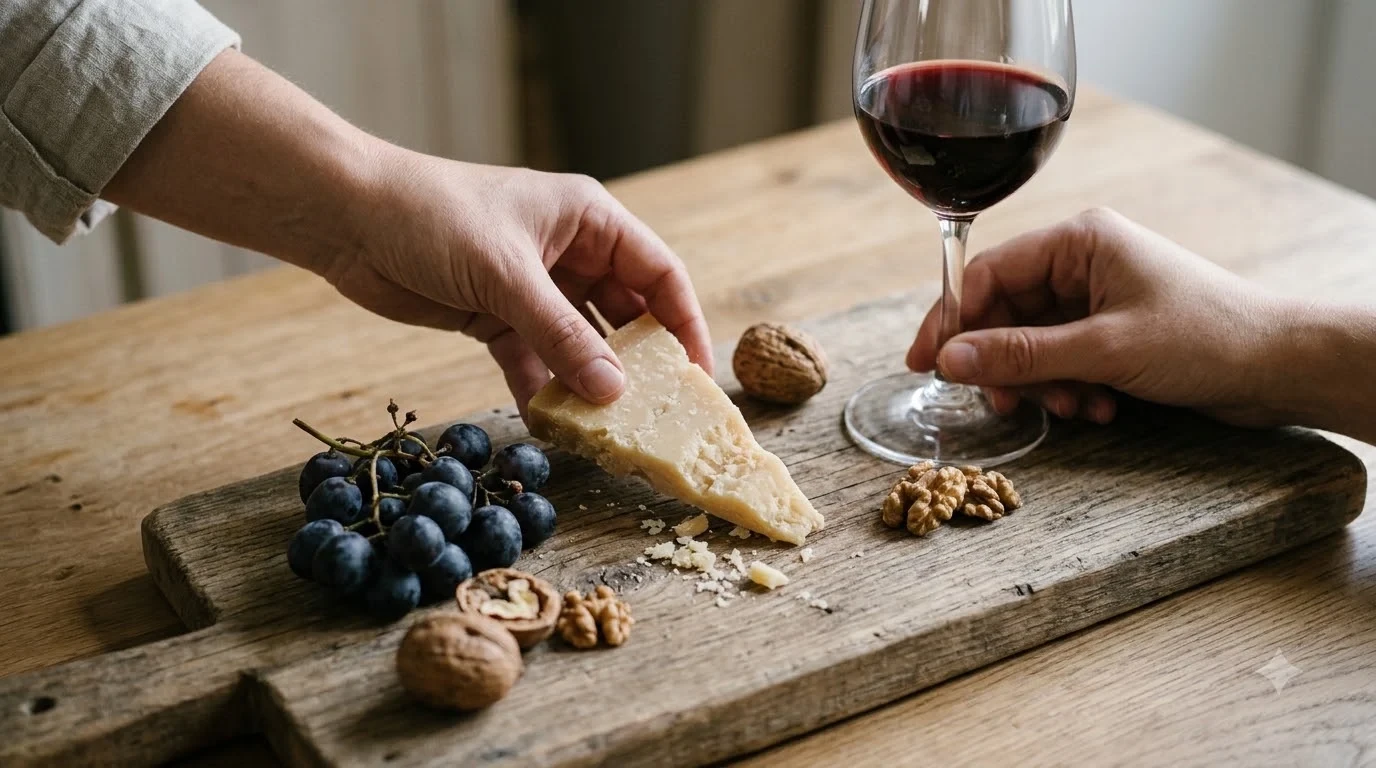
Carignan belongs naturally on a savory appetizer board, especially beside cured meats and firm cheeses. Salt and fat can soften the grape’s tannins, while the wine’s acidity cuts through rich bites and keeps the pairing from feeling heavy.
Choose saucisson, salami, fennel sausage, smoked ham, or mildly spicy chorizo. Add olives, roasted nuts, marinated artichokes, grilled bread, and roasted peppers to provide salty and herbal flavors. A younger, lighter Carignan is comfortable with a simple charcuterie board and a tortilla española. A more intense old-vine bottle can be served with rustic pâté, duck rillettes, or a warm sausage-and-bean dish. Keep very hot mustard and chili jam in small portions so the heat does not dominate the wine.
For cheese, start with aged Gouda, Manchego, aged sheep’s-milk cheese, or a firm mountain cheese. Their savory depth and fat can take the edge off tannin while matching the wine’s dark fruit. Avoid making a very pungent blue cheese the centerpiece: strong salt and intense flavors can overwhelm some Carignan, particularly a lighter one. A soft, creamy cheese can work as part of a mixed board, but a firm, nutty cheese is the more reliable anchor.
Cheese pairings are especially dependent on the bottle. A low-yield Priorat Carignan with concentrated fruit and firm tannins needs a richer cheese or cured meat than a fresh, fruit-forward southern French example. If the wine tastes particularly firm, add salted nuts, olive tapenade, or a slice of fatty salami rather than another strongly flavored cheese. The aim is to let the food soften the wine without hiding its fruit and spice.
Serve the Wine at the Right Temperature and Build the Menu
Serving temperature changes how Carignan’s fruit, alcohol, and tannins come across. A moderate chill can make a fruit-forward bottle feel brighter, while a concentrated old-vine wine benefits from a little more warmth to reveal its savory detail.
For a lighter, medium-bodied Carignan, aim for 55 to 60 degrees Fahrenheit. For a full-bodied, concentrated example, serve at 60 to 65 degrees. If the wine is warmer than that, its alcohol may seem more prominent and the fruit can feel heavy; if it is too cold, tannin can seem harder and the aromas less expressive. Put a bottle in the refrigerator briefly before serving if the room is warm, then pour a small taste and allow the glass to open up.
| Carignan style | Serving temperature | Food match |
|---|---|---|
| Fruit-forward, medium-bodied red | 55–60°F | Roast chicken, pork loin, grilled vegetables |
| Concentrated, full-bodied old-vine red | 60–65°F | Lamb shoulder, duck confit, beef short ribs |
| Carignan rosé | 45–50°F | Charcuterie, grilled peppers, picnic fare |
A young, concentrated red may benefit from 30 to 60 minutes in a decanter, especially if its tannins feel tight at first. A juicy, uncomplicated bottle usually needs only a few minutes in the glass. Use a standard 5-ounce pour and remember that a 750-milliliter bottle provides about five glasses, which makes it easy to plan a dinner for four or five people with a little left for a second taste.
Tip: When the bottle is firm and tannic, put salt, fat, and browned flavors on the plate: lamb chops with olive oil, sausage with white beans, or duck with lentils. When the wine is lighter and fruitier, keep the preparation simpler with roast chicken, grilled vegetables, or pork loin.
For a dinner with several courses, pour Carignan with the main dish rather than the most delicate starter. Begin with olives, roasted peppers, and a little sparkling rosé food pairing before moving to the red. If guests prefer a softer, rounder red, a Blaufränkisch food pairing can offer another way to work with savory dishes. For a white-wine alternative alongside herbs and vegetables, see Grenache Blanc food pairing, or browse Wine by Type to compare other styles for the menu.
Leftover Carignan can be kept in the refrigerator with the bottle closed and brought back toward serving temperature before the next meal. Most still wines are best enjoyed within 3 to 5 days after opening. Pair the remaining wine with the same general flavors that worked on the first night—roasted meat, beans, mushrooms, or aged cheese—rather than trying to make it fit a delicate fish dish.
Frequently Asked Questions
Is Carignan the same grape as Mazuelo?
Yes. Mazuelo is one of Carignan’s regional names in Spain, especially in Rioja, while Cariñena is used in Aragón and Samsó appears in parts of Catalonia. The name Carignane is also used in the United States, and Carignano is the Italian form.
Is Carignan used in Southern Rhône appellations?
Yes. Inter Rhône lists Carignan among the grape varieties found in Rhône appellations including Côtes du Rhône, Cairanne, Rasteau, Luberon, and Ventoux. It is used in both dry red and rosé wine styles in the region.
Does Carignan tolerate hot, dry growing conditions?
Yes. The vine is suited to hot, dry hillside sites and is notably resistant to drought and wind, although it needs a long, warm growing season because it ripens late. Its ability to handle these conditions helped it spread across Mediterranean wine regions.
Can old-vine Carignan be age-worthy?
Some concentrated old-vine examples can develop for years, gaining savory complexity and softer edges. Decanter describes a Priorat Cariñena from vines up to 100 years old, an example of the very old plantings that can produce especially concentrated wines.
Are there white versions of Carignan?
Rare white and gray-skinned mutations exist, often referred to as Carignan Blanc and Carignan Gris. They are much less common than the red grape and make distinctive wines with a different profile from the familiar dark-fruited red style.
Carignan is a versatile food wine once its structure is matched to the plate: grilled meat, duck, pork, beans, mushrooms, and aged cheeses are all strong starting points. Choose lighter dishes for fruit-forward bottles and richer, slower-cooked food for concentrated old-vine examples, then serve the wine slightly cool so its freshness stays in focus.
More in Wine Types & Grapes
 What Does Mourvèdre Taste Like? Flavor Profile, Regions, and PairingsUpdated Nov 20, 2026
 What Does Marsanne Taste Like? Flavors, Styles, and Food PairingsUpdated Nov 20, 2026
 What Does Malvasia Taste Like? Styles, Flavors, and Food PairingsUpdated Nov 20, 2026
 What Does Grenache Blanc Taste Like? Flavor Profile, Styles, and PairingsUpdated Nov 20, 2026
 What Does Garnacha Taste Like? Key Flavors, Styles, and Pairing TipsUpdated Nov 20, 2026
 What Does Fruit Wine Taste Like? A Complete Flavor and Style BreakdownUpdated Nov 20, 2026