

We may earn a commission when you buy through links on this page, at no extra cost to you. Learn more.
The lemberger grape is a dark-skinned red variety best known in Germany’s Württemberg region; the same grape is called Blaufränkisch in Austria and Kékfrankos in Hungary. Expect flavors that can range from sour cherry and blackberry to black pepper and green herbs, with lively acidity and tannins that vary by producer and ripeness. Its other names include Frankovka and Frankinja, so recognizing the grape rather than relying only on the label helps connect bottles from several Central European regions.
Lemberger is a rewarding choice for drinkers who like red wines with freshness as well as depth. A lighter, stainless-steel version can suit a casual meal, while a concentrated, oak-aged bottle can stand up to roast meat and richer dishes.
Lemberger’s Identity and Regional Names
Lemberger is the German name for the red grape known internationally as Blaufränkisch, a variety with roots in Central Europe and a particularly strong identity in Württemberg. Its several regional names do not refer to separate grapes: the same variety is called Blaufränkisch in Austria, Kékfrankos in Hungary, and Frankovka or Frankinja in parts of Central and southeastern Europe.
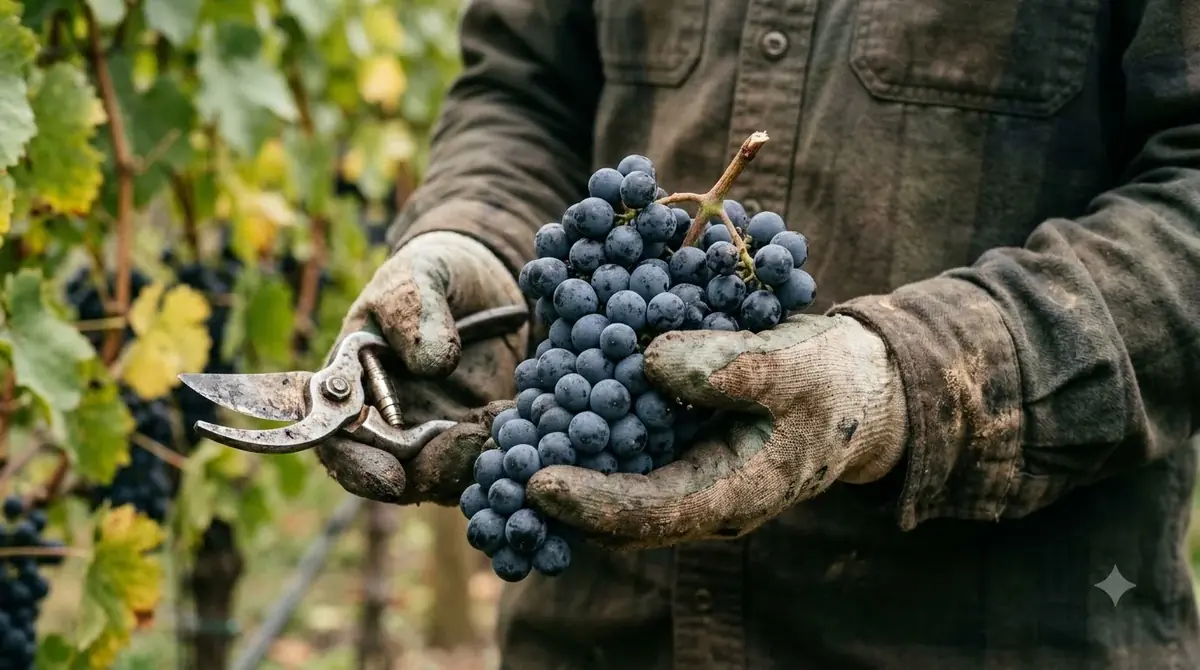
In Germany, the official classification name is Blauer Limberger, while Lemberger and Blaufränkisch are accepted synonyms for German wines made from the grape. Wines of Germany traces the variety to what is now northeastern Slovenia and says it reached Württemberg during the 19th century. The grape’s wider identity is a useful reminder that European wine labels often reflect local language and history as much as botanical difference.
The names usually point toward origin rather than a fixed recipe. A bottle labeled Lemberger is most likely German, especially from Württemberg; Blaufränkisch usually signals Austria, particularly Burgenland; and Kékfrankos points toward Hungary. Wine Enthusiast also identifies Frankovka in northern Croatia and western Slovakia and Frankinja in eastern Slovenia. The grape appears in both single-variety reds and regional blends, so the label may name a grape, a local wine, or a blend category.
For a broad overview of how grape names and wine styles fit together, the site’s Wine by Type resource can help place Lemberger among red wines, blends, and other styles. It is also useful to separate Lemberger from similarly named or similarly colored grapes: the name is not a synonym for Gamay, Pinot Noir, or another familiar red variety, even when a lighter expression may remind a drinker of one of them.
Württemberg: The German Home of Lemberger
Württemberg is the variety’s German stronghold, with vineyards concentrated along the Neckar River and around Stuttgart. The official Wines of Germany Lemberger profile lists 1,917 hectares in the country, including 1,757 hectares in Württemberg, where the grape accounts for about 16 percent of the region’s vineyard area.
The regional landscape helps explain the grape’s style. The VDP describes calcareous soils along the Neckar and around Stuttgart as a setting for powerful, spicy Lemberger wines. The broader Württemberg area also includes shell limestone and varied geological formations along the Neckar and its tributaries. These differences in site, slope, soil depth, and warmth give growers room to make wines with different levels of body and concentration rather than one uniform regional profile.
Lemberger is an early-budding but late-ripening variety, so it needs a long growing season and protection from cold winds. Wines of Germany notes that it favors warm, sheltered locations and deep, fertile loess-clay soils, and that it makes medium yields. The combination makes site selection important: a cool or exposed vineyard can struggle to ripen the fruit fully, while a warm, well-positioned site gives the grapes more time to develop flavor and tannin.
Its late harvest can bring both opportunity and risk. A long autumn may allow the berries to develop ripe dark-fruit character and mature tannins, but growers must manage the season carefully because early spring growth can expose shoots to frost. For this reason, producers do not simply plant Lemberger anywhere in the region; the variety benefits from favorable slopes, good exposure, and soils that support steady ripening.
Flavor, Acidity, Tannin, and Body
Lemberger typically combines dark-fruit flavors, refreshing acidity, and noticeable but variable tannin. Wines of Germany lists blackberry, sweet and sour cherry, plum, currant, gooseberry, elderberry, and cocoa among its aromas, with green bean or green pepper possible in more vegetal expressions.
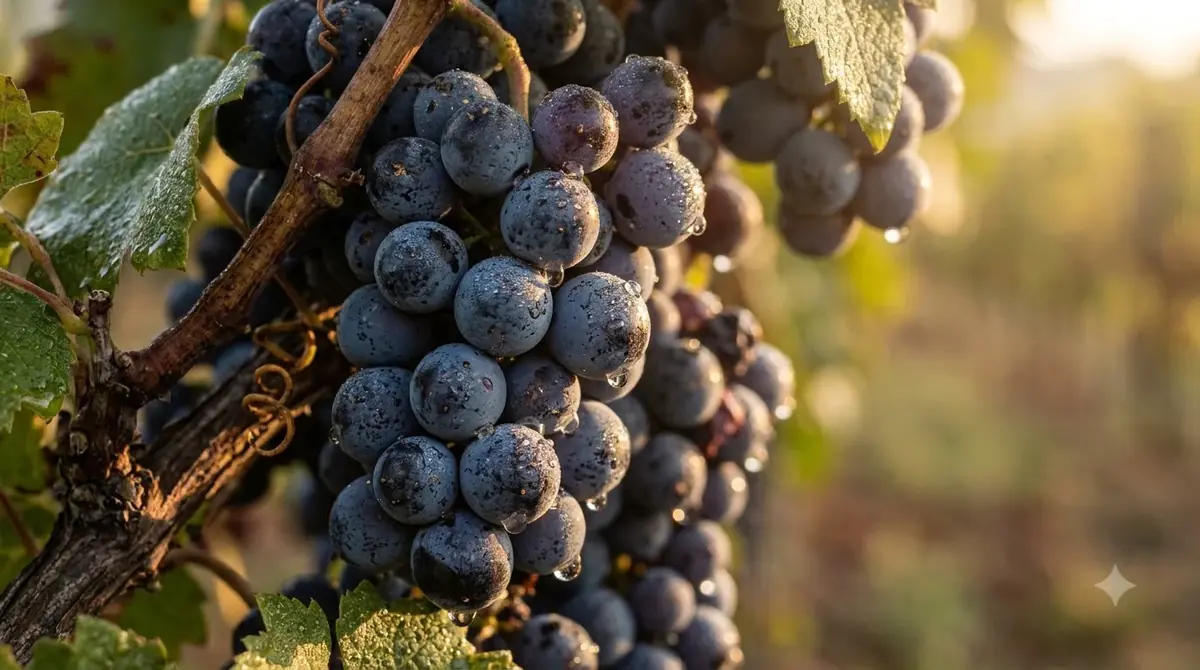
Many bottles show a spectrum rather than one dominant note. Cooler sites and vintages can emphasize tart cherry, blueberry, and pepper, while riper fruit and warmer conditions may bring darker plum, blackberry, and a broader texture. Wine Enthusiast describes Blaufränkisch as fairly full-bodied for a grape from temperate Central Europe, with dark fruit and pepper especially apparent in cooler conditions. These variations are a reason to pay attention to region and producer, not just the grape name.
Acidity is a key part of the wine’s personality. It helps Lemberger feel energetic even when its color is deep and its fruit is ripe, and it makes the grape useful at the table. Tannin can range from moderate and fine-grained in an easy-drinking bottling to firmer and more prominent in concentrated, later-harvested wines. That variation is why two Lembergers can feel quite different: one may drink like a supple, juicy red, while another has the grip and length to accompany a substantial meal.
Body also depends on harvest timing, extraction, oak, and the producer’s preferred style. A lighter version may show red and black berries with a fresh finish; a richer one can combine dark fruit with spice, cocoa, and a more drying finish. Neither profile is automatically more authentic. The best expression is one in which fruit, acidity, tannin, and any oak influence remain in balance.
Winemaking Choices: Fresh Fruit or Oak-Aged Structure
Winemakers can shape Lemberger from a fresh, fruit-led red into a deeper wine with more tannin and oak character. Stainless-steel fermentation and restrained extraction tend to preserve vivid berry notes, while longer skin contact and barrel maturation can add texture, spice, and a firmer frame.
Wine Enthusiast’s explanation of Blaufränkisch notes that wines made in stainless steel can resemble a fuller-bodied Gamay, while small new oak barrels add punch and may require a few years for the wine to regain its subtlety. Its guidance favors gentle handling and judicious oak for elegant results. In practical terms, oak should support the grape’s natural fruit and acidity, not bury them beneath toast, vanilla, or drying wood flavors.
German producers also make Lemberger in a range of ripeness and quality levels. Wines of Germany distinguishes lighter, fruity styles from later-harvest and selection wines that are richer in extract and tannin. Some German growers blend Lemberger with Trollinger, another Württemberg red grape; the label may say “Lemberger with Trollinger” or “Trollinger with Lemberger,” depending on which variety is present in the greater proportion. A small amount of Lemberger sparkling wine is also made, though it is considered a rarity.
Blending is not necessarily a shortcut or a sign that the grape cannot stand alone. Trollinger can make a blend more approachable and fruit-forward, while Lemberger contributes color, structure, and darker berry character. A single-variety bottling, by contrast, gives a clearer sense of the grape’s acidity, tannin, and site. Reading the variety proportions and the producer’s description can therefore be more informative than assuming every bottle labeled Lemberger will taste alike. Ageing potential depends on concentration and balance: structured examples with ripe fruit, sufficient acidity, and well-integrated tannin can develop for several years, while simple, light bottlings are generally best enjoyed while their primary fruit is lively. Decanting is optional for many young Lembergers, but a full-bodied bottle with firm tannin can benefit from 30 to 60 minutes of air before serving.
Blaufränkisch and Kékfrankos Across Central Europe
The same grape becomes a different regional experience in Austria and Hungary, where Blaufränkisch and Kékfrankos are important names. In Austria, Burgenland is the best-known home of Blaufränkisch; in Hungary, Kékfrankos is a leading red variety and a defining component of the country’s Bikavér, or “Bull’s Blood,” blends.
Burgenland’s subregions and soils contribute distinct expressions. Decanter describes Blaufränkisch sites with limestone, loam, schist, and sand, and notes that hillside vineyards can produce more tangy wines with higher acidity while warmer sandy sites near the lake can yield darker, more concentrated fruit. The region’s range includes lighter, fresh reds as well as middle-weight and more powerful bottlings, so the name Blaufränkisch alone does not guarantee one level of body or oak treatment.
In Hungary, Kékfrankos is often used as a blending grape rather than only as a single-variety wine. Decanter reports that it must make up at least 30 percent of Egri Bikavér and at least 45 percent of Szekszárdi Bikavér. Those percentages matter because the grape’s acidity and ability to reflect its site help give the blends freshness and identity. Bikavér usually contains at least four grape varieties, so it should not be mistaken for a synonym for pure Kékfrankos.
| Wine or region | How the grape appears | Specific figure |
|---|---|---|
| Württemberg, Germany | Lemberger, including single-variety wines and blends with Trollinger | 1,757 hectares; about 16% of regional vineyard area |
| Germany overall | Lemberger / Blauer Limberger | 1,917 hectares |
| Egri Bikavér, Hungary | Kékfrankos is a required blend component | At least 30% of the blend |
| Szekszárdi Bikavér, Hungary | Kékfrankos is a required blend component | At least 45% of the blend |
| Egri Bikavér ageing categories | Oak ageing requirements for Classicus, Superior, and Grand Superior | 6, 12, and 16 months, respectively |
These regional rules and styles explain why the grape is worth exploring under more than one name. A German Lemberger may emphasize Württemberg fruit and a particular local blend tradition; an Austrian Blaufränkisch may highlight Burgenland vineyard character; a Hungarian Kékfrankos may appear in a blend with its own regional requirements. For readers comparing German reds, Dornfelder offers another useful reference point: it is a separate variety, not a synonym for Lemberger, and its fruit profile and typical structure differ.
Food Pairings, Serving Temperature, and Storage
Lemberger’s acidity and moderate-to-firm tannin make it especially useful with savory food, particularly grilled meat, roast poultry, lamb, and dishes with browned or smoky flavors. The lighter style can work with snacks and grilled vegetables, while a concentrated, tannic version is better suited to richer meals such as Swabian onion roast or braised beef.
Wines of Germany specifically recommends lighter, fruity Lemberger with snacks and summer barbecues, and more tannic examples with country pâté, grilled dishes, roasted poultry, game, lamb, roast beef, feta, and mature mountain cheese. These matches make sense because protein and fat soften the impression of tannin, while the wine’s acidity refreshes the palate between bites. For a mixed grill, choose a fruit-forward bottle; for slow-cooked beef or lamb, reach for a more structured example with enough concentration to match the dish.
Serve a lighter Lemberger at about 55 to 60 degrees Fahrenheit, and a fuller, more structured bottle at 60 to 65 degrees Fahrenheit. A slight chill can keep the fruit lively in a lighter wine, but very cold temperatures can make a tannic red seem harder and mute its aromas. Pour about 5 ounces per glass; a standard 750-milliliter bottle yields roughly five such servings.
Think about the dish’s strongest ingredient before choosing a pairing. Salt and fat can soften tannin, so cured meats, grilled sausages, and hard cheeses often work well. Acidic accompaniments, such as a vinegar-forward slaw or tomato sauce, need a wine with equal or higher acidity; Lemberger’s freshness can help, but a very sharp dressing may still dominate a delicate bottle. Avoid pairing a high-alcohol, strongly tannic Lemberger with very hot chili dishes, because alcohol and tannin can intensify the sensation of heat. Oily fish is usually a poor match for a tannic red, so choose a less tannic wine for salmon or mackerel. Store unopened bottles on their sides in a cool, dark place near 55 degrees Fahrenheit, with stable temperature and limited vibration. After opening, reseal the bottle and refrigerate it; most still red wines keep their best character for about 3 to 5 days under refrigeration. Let the wine warm slightly in the glass if it comes straight from the refrigerator, and taste it before serving again to see whether its fruit and structure remain fresh.
Tip: For a simple pairing decision, match the wine’s weight to the food: serve a lighter Lemberger with grilled sausages or mushroom dishes, and reserve a firmer, oak-aged bottle for roast lamb, braised beef, or aged cheese.
Frequently Asked Questions
Questions about Lemberger often concern its Central European aliases, its origins in northeastern Slovenia, and its relationship to Blaufränkisch in Austria or Kékfrankos in Hungary. The answers below add useful context about its parentage, history, and wider cultivation.
Is Lemberger the same grape as Blaufränkisch?
Yes; they are regional names for the same variety. Its parentage has been identified as Blaue Zimmettraube crossed with Weißer Heunisch, according to findings cited by the German Wine Institute.
When was the grape documented in Austria?
Its presence in Austria is documented in the second half of the 18th century. That record predates its 19th-century spread into Württemberg, where the German name Lemberger became established.
How important is Kékfrankos in Hungary?
Kékfrankos holds the top position among Hungary’s red grape plantings, according to Decanter. Growers value its ability to retain acidity in warmer years as well as its capacity to reflect vineyard conditions.
Is Lemberger related to Gamay?
No; the grapes are distinct varieties. The comparison is about style only: a stainless-steel Blaufränkisch can remind some drinkers of a fuller-bodied Gamay, but that resemblance does not mean the grapes are related.
Is Lemberger grown in the United States?
Yes. It is grown in the Finger Lakes of New York, where the grape is often made in a mid-weight style with fleshy fruit, brisk acidity, and peppery spice. Its plantings there expanded after an initial introduction in the mid-1990s.
Lemberger rewards curiosity because its name, style, and regional expression change across Central Europe without changing the underlying grape. Start with a Württemberg bottling to understand the German tradition, then compare it with an Austrian Blaufränkisch or Hungarian Kékfrankos to see how place and winemaking shape the same variety.
More in Wine Types & Grapes
 Zinfandel Sugar Content: Dry Red vs. White Zinfandel GramsUpdated Nov 21, 2026
 Best Zinfandel Substitute Options for Sipping and CookingUpdated Nov 21, 2026
 Zweigelt Food Pairing: Best Dishes, Cheeses, and Serving TipsUpdated Nov 21, 2026
 Zinfandel Tannins Explained: How Structure Shapes Every BottleUpdated Nov 21, 2026
 Zinfandel Sweetness Level: Dry Red vs. Sweet White Zin ExplainedUpdated Nov 21, 2026
 Xinomavro Food Pairing: Best Dishes, Styles, and Serving TipsUpdated Nov 21, 2026