

We may earn a commission when you buy through links on this page, at no extra cost to you. Learn more.
J Lohr white wine is built around cool-climate Chardonnay from Monterey’s Arroyo Seco, with an off-dry Riesling and a crisp Sauvignon Blanc rounding out the range. The flagship Riverstone Chardonnay is a barrel-fermented wine at 14 percent alcohol, with a creamy texture and balanced acidity that suits seafood, roast chicken and rich sauces. Lighter, lower-alcohol styles such as the Bay Mist White Riesling handle spicy food better. Serve the full Chardonnays between 50 and 55 F so their fruit and oak stay in view.
If you have ever stood in a wine shop trying to choose between a buttery Chardonnay and a slightly sweet Riesling, this guide is for you. The J Lohr lineup covers dry oaked whites, a light off-dry Riesling and a Sauvignon Blanc, and each style suits different food and different serving temperatures. This guide sorts the range by origin, style, alcohol and sweetness, then matches each group with the dishes it handles best. For background on how producers organize their brands, the site’s Wine Brands section is a useful place to start.
Arroyo Seco and the Story Behind the Whites
The white wines come from Monterey County’s Arroyo Seco, a cool-climate appellation that shapes most of what ends up in the glass. Understanding the place explains much of the acidity, texture and fruit in the bottles that follow.
Arroyo Seco was officially established as an American Viticultural Area in 1983, and it sits in the middle of the Salinas Valley. The name refers to a seasonal river that cuts through the Santa Lucia Mountains. According to a trade profile of the winery, chilly breezes off nearby Monterey Bay, well-drained soils and intense fog give Chardonnay and Pinot Noir intense minerality, bright acidity and layered flavor. The winery’s white winemaker, Kristen Barnhisel, has said that valley winds give the vines a longer growing season and more complex fruit, which lets the white program focus on structure and texture.
The family’s history in the region goes back further than the appellation. Founder Jerry Lohr planted his first Chardonnay in Arroyo Seco in 1972, after roughly a decade of searching for the right site. The original 280 vineyard acres have long supplied the Riverstone Chardonnay, the brand’s best-selling white. Today the family farms more than 4,000 acres of estate vineyards across Monterey, Paso Robles and St. Helena, and both its vineyards and winery carry Certified California Sustainable status. The brand is widely known for its Paso Robles Cabernets, including the Seven Oaks bottling, but its white side has grown in recent years into a portfolio of its own.
Riverstone Chardonnay and the Flagship Style
Riverstone is the brand’s best-selling white and the most practical first bottle for anyone who wants to understand the house style. It is a full, barrel-fermented Chardonnay with a rich texture, balanced acidity and a long finish.
The name comes from the soil. The vines grow mostly on Elder loam soils underlain by riverstones that the Arroyo Seco River deposited over thousands of years, and that mix of sandy loam and cobblestones keeps vine growth and fruit in balance. The 2022 growing season had a typically cool spring, followed by foggy mornings and evenings and daytime highs in the 80s. Harvest ran from September 12 to October 18 that year.
In the cellar, the wine was barrel-fermented and stirred weekly by hand for seven to nine months in new to fifth-fill oak, using a blend of American, Hungarian and French barrels. About 72 percent of it went through malolactic fermentation in barrel, a step that converts sharper malic acid into softer lactic acid and gives the creamy, buttery texture the style is known for. According to the winery’s own notes for that bottling, the finished wine had 14.0 percent alcohol, a pH of 3.53, total acidity of 0.61 grams per 100 milliliters and residual sugar of 0.28 grams per 100 milliliters. That profile is dry, with medium acidity and enough body to hold up to rich sauces. The winery suggests pairing it with fresh seafood risotto, mussels in white wine sauce or chicken piccata. For a deeper sensory profile of the same wine, see our J Lohr Chardonnay tasting notes.
Arroyo Vista and October Night Chardonnays
Arroyo Vista and October Night both come from Arroyo Seco fruit, but they take Chardonnay in different directions. One leans toward tropical richness and a classic Burgundian feel, while the other is defined by the hours when its grapes are picked.
The 2024 Arroyo Vista is 100 percent Chardonnay from the Arroyo Seco appellation. The winery describes it as a textbook Monterey Chardonnay with tropical fruit and bright acidity, and the wine spends an average of 17 days in French oak barrels. The winemaker’s notes describe classic Burgundian methods, including primary and malolactic fermentation in barrel with weekly stirring of the lees during aging. Those methods account for the rich palate and the long, sweet oak finish. Wine Spectator gave it 91 points, and the winery says it is delicious now and can be cellared for up to five years. For the full vineyard and barrel details, the winery’s own page for the 2024 Arroyo Vista lays them out.
The blend relies mainly on one Chardonnay clone for its white floral and Meyer lemon character. Other clones add white nectarine and apricot flavors and texture, and another contributes wet stone aromas and a refreshing acidity. Trade coverage notes that Arroyo Vista shows more high-toned elegance than Riverstone, which reflects the variety of soil and clone types across the vineyards.
October Night is the other Chardonnay from Arroyo Seco fruit, and it takes its name from the time of day when the grapes come in. According to a trade profile of the brand, every grape for the wine is hand-picked and hand-sorted in the vineyard at night so the fruit keeps its maximum freshness. The result is a richly layered and beautifully balanced wine. Tasting it beside Riverstone or Arroyo Vista is a good way to see how picking time and clone choice change the same appellation.
Bay Mist Riesling and the Sauvignon Blanc Options
Bay Mist White Riesling is the brand’s off-dry white and the easiest bottle to recommend to someone who likes a touch of sweetness balanced by lively acidity. Sauvignon Blanc offers a crisper, lighter alternative for simpler meals.
The 2022 Bay Mist is 12 percent alcohol, which makes it one of the lighter whites in the lineup. The Wine.com listing for the 2022 Bay Mist describes aromas of honeysuckle, ripe pear, Meyer lemon and lychee, with flavors of ripe apple and pear, just a touch of residual sweetness and a light, natural spritz on the finish. The winemaker’s notes on that listing say the lower alcohol and bright acidity make the wine unusually food-friendly, and they point to Asian-fusion dishes and anything with a little heat as natural partners.
Sauvignon Blanc is the other crisp option in the range. A trade profile of the winery notes that the variety thrives in the region’s rugged coastal climate, and the brand lists an F&G Vineyard Sauvignon Blanc in its lineup. Riesling and Sauvignon Blanc both carry high acidity, which lets them handle a wider set of dishes than a rich Chardonnay can. The Riesling’s slight sweetness also softens the bite of spicy food.
The brand also makes a Late Harvest White Riesling, a dessert-style wine that belongs in a different category from the everyday whites. Serve it with fruit tarts or other desserts, and keep the wine at least as sweet as the dish. On its own, it reads as a bright, lightly sweet finish to a meal rather than a heavy glass.
Alcohol, Sweetness and Acidity Compared
Three measurements explain most of the differences between these wines: alcohol, residual sugar and acidity. The figures below come from the winery’s notes for the 2022 Riverstone and from the retailer listing for the 2022 Bay Mist, and they make the contrast easy to see.
| Wine (2022 vintage) | Alcohol | Residual sugar | Acidity | Style |
|---|---|---|---|---|
| Riverstone Chardonnay | 14.0% | 0.28 g/100 mL | 0.61 g/100 mL total, pH 3.53 | Dry, barrel-fermented |
| Bay Mist White Riesling | 12% | Not listed, touch of sweetness | Bright | Off-dry, light spritz |
The alcohol gap matters more than it looks on a label. A two-point difference between 14.0 and 12 percent is modest on paper, but alcohol and tannin tend to amplify chili heat. The Bay Mist therefore feels calmer beside a curry or a spicy noodle dish than the Riverstone would, which makes the lower-alcohol Riesling the better pick when the menu is built around heat.
Residual sugar is the other key figure. At 0.28 grams per 100 milliliters, the Riverstone tastes dry, while the Bay Mist’s sweetness comes from a touch of residual sugar that sits against bright acidity. The Riverstone’s total acidity falls in the medium range typical of Chardonnay, which is why it reads round rather than sharp. The Riesling’s brightness keeps it lively despite the sweetness. For a closer look at alcohol across the Chardonnay range, see our J Lohr Chardonnay alcohol content guide, and check the label on the bottle in your hand, since numbers can shift between vintages.
Serving Temperature and Storage
Serving temperature changes how much fruit, oak and texture you notice, so it deserves as much attention as the bottle itself. For most J Lohr whites, the target is cooler than room temperature but not ice cold.
| Style | Examples in this lineup | Serving temperature | Open bottle in the fridge |
|---|---|---|---|
| Full whites | Riverstone, Arroyo Vista | 50 to 55 F | 3 to 5 days |
| Sweet whites | Bay Mist, Late Harvest Riesling | 43 to 50 F | 3 to 5 days |
| Light whites | Sauvignon Blanc | 45 to 50 F | 3 to 5 days |
Full Chardonnay served at 50 to 55 F keeps its oak and creamy texture in view. Colder than that, the fruit and texture close down, and the wine can taste thin. Sweet whites like the Bay Mist show best a little cooler, between 43 and 50 F, so the sweetness reads as freshness rather than heaviness. Sauvignon Blanc sits in the light-white band, between 45 and 50 F.
Storage starts before the bottle is opened. Keep bottles on their side in a cool place near 55 F, away from light and temperature swings. Once opened, a still white holds for about three to five days in the refrigerator, so finish it within that window or move the remainder into a smaller container to limit its contact with air.
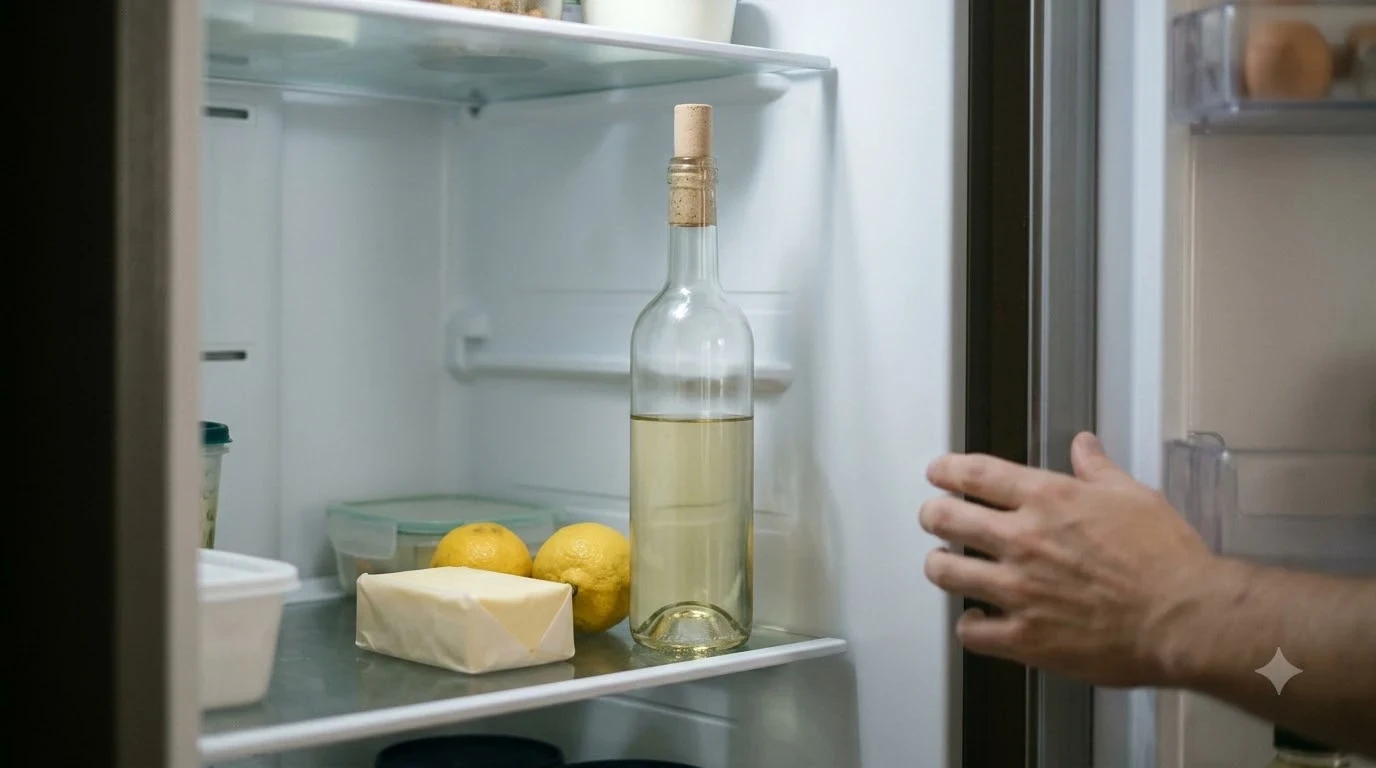
Tip: If a J Lohr Chardonnay has been sitting in the refrigerator, take it out 5 to 10 minutes before pouring. That short warm-up brings it into the 50 to 55 F range and lets the oak and texture come through.
Pairing J Lohr White Wines With Food
Matching weight, acidity and sweetness works better than pairing a dish to a grape name. The winery’s own suggestions line up closely with those principles, especially for the Chardonnays.
Riverstone works best with dishes that share its creamy, buttery texture, and the winery suggests mussels in white wine sauce, seafood risotto and chicken piccata. Those dishes give the wine’s medium acidity and oak something to balance against. Arroyo Vista covers a wider range of menus, with the winery recommending butternut squash soup, mussels in lemon-wine sauce, roast chicken with mushrooms, and lobster or crab with lemon butter.
Lemon-heavy sauces are the one place a medium-acid Chardonnay can feel flat, because acidic food needs a wine with equal or higher acidity. When the menu is built around a sharp lemon sauce or a tart vinaigrette, the Sauvignon Blanc is the safer choice. Its high acidity keeps pace with the acid in the food rather than fading behind it.
For spice and dessert, the rules tilt toward the Riesling. Asian-fusion dishes and anything with chili heat suit the 12 percent Bay Mist, and its touch of sweetness softens the burn. The Late Harvest White Riesling is the better match for dessert, because the wine should be at least as sweet as the dish it accompanies, and it shows best between 43 and 50 F.
Frequently Asked Questions
These answers cover certification, clones, cellaring, vintage weather, label terms and the Gesture tier.
Is Riverstone Chardonnay made with sustainable practices?
Riverstone carries the Certified California Sustainable logo. The winery says at least 85 percent of the grapes come from a certified sustainable vineyard, and the wine was made in a certified sustainable winery.
Which clones go into Riverstone Chardonnay?
The 2022 Riverstone blends ten Chardonnay clones, numbered 4, 5, 17, 76, 95, 96, 548, 809, Hyde-Wente and Mt Eden. The winery says each clone adds its own layer of flavor and texture to the final blend.
How long can you cellar Riverstone Chardonnay?
The winery says Riverstone is crafted to be enjoyed now and can be kept for up to five years from the vintage date. Cool, steady storage matters most during that window.
What was the 2024 vintage like for Arroyo Vista?
The 2024 vintage had a cool spring and summer, and September brought warmer weather that fully ripened the Chardonnay grapes. The winery says the cooler season and extended time on the vine gave a classic Arroyo Seco mix of fresh flavors, acidity and balanced texture.
How can you tell if a Riesling is dry from the label?
On German-style labels, “trocken” means dry, while “halbtrocken” or “feinherb” mark an off-dry style. A higher alcohol percentage on a Riesling label usually signals a drier wine.
Does J Lohr make white wines outside Monterey?
Yes. The Gesture tier includes a Viognier and an RVG blend of Roussanne, Viognier and Grenache Blanc, grown in Paso Robles. Those Rhône-style whites come from Gean Vineyard, which was planted in 2010 in the Adelaida District.
Taken together, the J Lohr white lineup gives you a dry, oaky Chardonnay for seafood and rich sauces, a lighter off-dry Riesling for spicy food, and a crisp Sauvignon Blanc for lemony dishes. Start with Riverstone for the classic style, then move to Arroyo Vista or October Night once you know how much oak you enjoy.
More in Wine Brands
 Underwood Wine Price: Compare Bottles, Cans, and Pack SizesUpdated Nov 21, 2026
 Zenato Wine Price: Compare Styles and Choose the Right BottleUpdated Nov 21, 2026
 Zuccardi Wine Price: Compare Bottles and Find the Right RangeUpdated Nov 21, 2026
 Yellow Tail Moscato Review: Taste, Sweetness and Serving TipsUpdated Nov 21, 2026
 Wolf Blass Yellow Label Review: Choose Your Best StyleUpdated Nov 21, 2026
 Wolffer Estate Rose Review: Choose the Right Bottle for Your TableUpdated Nov 21, 2026