

We may earn a commission when you buy through links on this page, at no extra cost to you. Learn more.
Learning how to pronounce verdejo is simple once you break it into three Castilian Spanish syllables: vehr-DAY-ho (IPA: /beɾˈðexo/). The stress lands squarely on the middle syllable, while the Spanish letter j softens into a gentle, breathy h sound rather than an English hard j or zh. In English-speaking wine shops and restaurants, saying “ver-DAY-ho” or “vurr-DAY-ho” sounds natural, clear, and accurate.
Seeing a Spanish wine label for the first time can trigger hesitation at a restaurant table or retail counter, especially when familiar letters follow unfamiliar phonetic rules. Verdejo has become Spain’s signature crisp white wine grape, yet plenty of casual wine drinkers still stumble over the j or confuse the name with a similarly spelled Portuguese variety. Mastering the pronunciation takes less than a minute and unlocks one of Europe’s brightest, most food-friendly white wines.
Breaking Down the Pronunciation
Verdejo follows standard Castilian Spanish phonetics, meaning every vowel stays pure and the consonant j produces a soft throat friction similar to an English h. Once you separate the word into ver-DE-jo, the rhythm falls naturally into place.
The first syllable, ver, uses a clean, short e sound like the vowel in “bet” or “red,” rather than the rounded American vowel in “bird.” In native Spanish speech, the initial v is pronounced softly, sitting somewhere between an English v and a gentle b. When speaking English, however, a standard English v—producing “ver” or a relaxed “vurr”—is completely normal and universally understood by sommeliers and merchants.
The second syllable, de, carries the primary vocal stress and rhymes with the English word “day,” though without a heavy diphthong glide at the end. Keep the vowel crisp and steady: “DAY.” Finally, the third syllable, jo, swaps the English j sound for a breathy, aspirated h paired with a clean, rounded “oh” vowel, sounding like “ho” in “hope.” In central and northern Spain, speakers give that j a slightly raspy back-of-the-throat friction, similar to the ch in Scottish “loch,” but a smooth English h works effortlessly in conversation.
Pronunciation anxiety is common across international wine lists, whether you are ordering a classic French Chardonnay, asking about a traditional British Claret, or deciphering sparkling wine labels marked Cuvée. Unlike French wine terms with silent final consonants, Spanish wine names are reliably phonetic once you know a few core rules: vowels never swallow into schwas, h is silent, and j always behaves like an h.
Tip: When ordering a glass at a tapas bar, pair the grape with its home region—”a glass of Rueda Verdejo” (rway-dah ver-DAY-ho)—to signal the exact crisp, dry style you want.
Verdejo vs. Verdelho: A Common Mix-Up
One of the biggest pronunciation traps on a wine list is mistaking Spanish Verdejo for Portuguese Verdelho, two distinct grapes whose names differ by a single letter. Though both share roots tied to the word for “green,” they belong to different Iberian countries and follow completely different phonetic rules.
| Feature | Verdejo | Verdelho |
|---|---|---|
| Country of Origin | Spain (primarily Rueda) | Portugal (Madeira and Douro) |
| Phonetic Pronunciation | ver-DAY-ho | ver-DELL-yoo (or ver-DAY-lyoo) |
| Key Consonant Rule | Spanish j sounds like a breathy h | Portuguese lh sounds like a soft ly (as in “million”) |
| Primary Wine Style | Crisp, aromatic, dry table white | Fortified Madeira (medium-dry) and dry table whites |
| Signature Tasting Notes | Lime, grapefruit, white peach, fennel, fresh grass | Smoky citrus, caramel, dried apricot, toasted nuts (in Madeira) |
In Portuguese, the consonant cluster lh creates a palatal lateral sound comparable to the lli in “million” or the ll in traditional Castilian Spanish. That turns Verdelho into “ver-DELL-yoo” or “ver-DAY-lyoo,” with no h sound at the end. According to Wine Folly’s guide to Verdejo, confusing the two grapes happens frequently because their spellings sit just one letter apart, yet the wines taste worlds apart in the glass.
Historically, Verdelho became famous on the Atlantic island of Madeira as one of the four noble grapes used for medium-dry fortified wines, though Portuguese winemakers also bottle dry unfortified versions in the Douro Valley and Alentejo. Verdejo, by contrast, is Spain’s flagship aromatic dry white grape. Checking whether the label says “Spain” or “Portugal” immediately tells you which pronunciation to use before you even read the fine print.
What Verdejo Wine Is
Verdejo is a native Spanish white wine grape celebrated for producing dry, high-acid, aromatic wines with bright citrus fruit and a subtle herbal edge. Wine critics often describe its profile as sitting right between the zesty, grassy snap of Sauvignon Blanc and the rounded, stone-fruit texture of Pinot Grigio.
The grape has grown in north-central Spain for roughly a thousand years, likely brought north from North Africa by Mozarabic settlers during the Middle Ages. For centuries, however, winemakers treated Verdejo very differently than they do today. Before modern temperature-controlled fermentation arrived in the 1970s, producers harvested the grapes late and aged the wine oxidatively in oak casks, creating nutty, golden, Sherry-like fortified wines that warmed locals through harsh Castilian winters.
Everything changed in the 1970s when Rioja producer Marqués de Riscal invested in Rueda with a vision of crafting a fresh, aromatic dry white wine. By harvesting at night to preserve acidity and fermenting in stainless steel tanks, modern winemakers unlocked Verdejo’s lively citrus and herbal aromatics. Today, reviewers at Wine Enthusiast and VinePair routinely highlight Verdejo as one of the most reliable everyday white wines in the broader world of wine styles.
Flavor Profile and Winemaking Styles
Young, unoaked Verdejo bursts with aromas of lime, Meyer lemon, grapefruit, white peach, and green melon, layered over signature notes of crushed fennel, fresh-cut grass, and white blossoms. On the palate, it feels crisp and energetic, finishing with a clean, slightly pithy or bitter almond note that keeps each sip refreshing rather than sugary.
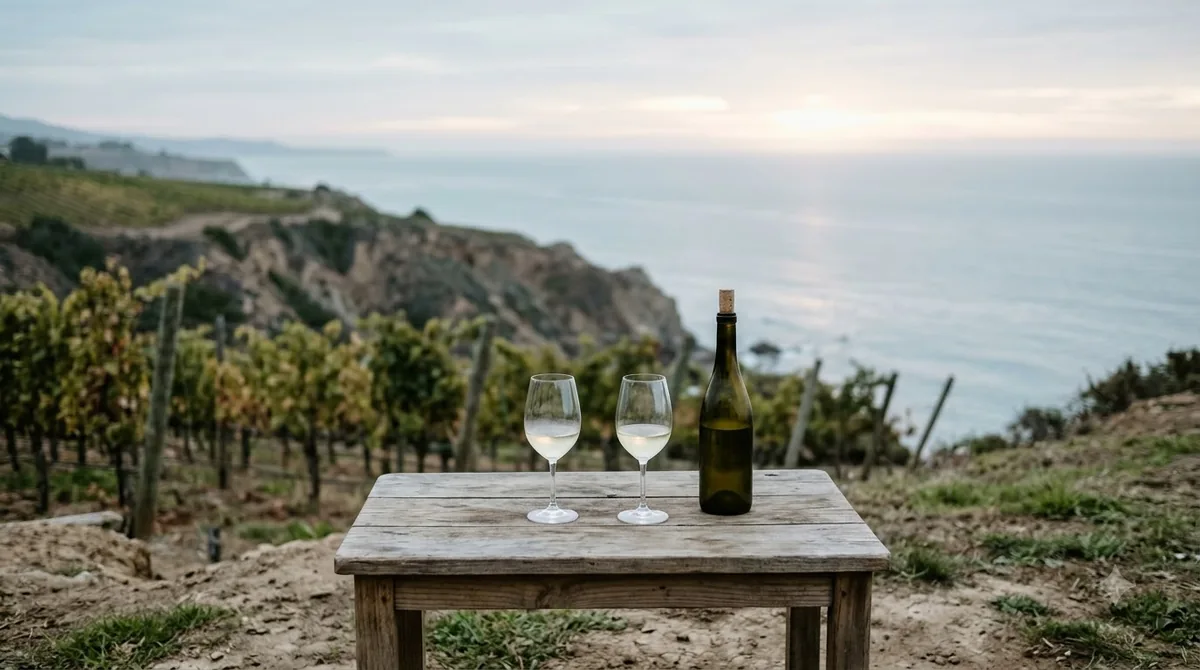
Most bottles sold in the United States are fermented in stainless steel or concrete vats to protect those delicate, volatile citrus and herbal aromas. According to VinePair’s guide to Rueda Verdejo, growers across the region harvest grapes at night when desert-like temperatures drop, preventing premature oxidation and locking in natural acidity. Many producers also leave the wine resting on its fine lees—the spent yeast cells left after fermentation—for several months, which adds a subtle creamy weight without masking the fruit.
A smaller, premium tier of Verdejo undergoes fermentation or aging in French or American oak barrels, often sourced from ancient bush vines that survived the phylloxera louse in sandy soils. Oak-aged expressions trade some of their overt lime and grassiness for richer notes of baked apple, toasted hazelnut, honey, brioche, and vanilla. Meanwhile, Spanish Denominación de Origen regulations allow Rueda producers to blend Verdejo with Sauvignon Blanc or Viura, though wines labeled “Rueda Verdejo” must contain at least 85 percent Verdejo, and most are 100 percent varietal.
Where Verdejo Grows
Almost all commercial Verdejo grows in Spain’s Castilla y León region, specifically within the Denominación de Origen (DO) Rueda, located about 100 miles northwest of Madrid along the Duero River basin. Rueda earned official DO status in 1980 as Castilla y León’s very first appellation, built squarely around the revival of Verdejo.
The landscape of Rueda looks starkly different from lush, rolling vineyard postcards. Sitting on a windswept plateau between 2,300 and 2,600 feet above sea level, the region endures freezing winters, brief springs, and scorching, arid summers with minimal rainfall. Vines dig deep into stony, alluvial gravel and sandy clay soils to survive, and the dramatic drop in temperature after sunset preserves the grapes’ crisp natural acidity.
Small pockets of pre-phylloxera Verdejo vines—some well over a century old—still thrive in Rueda’s deep sandy parcels, where the microscopic root louse cannot survive. Outside Rueda, modest plantings appear in neighboring Spanish appellations such as Toro, Tierra del Vino de Zamora, and Castilla-La Mancha, as well as experimental vineyards in Australia, though Rueda remains the undisputed benchmark for quality.
How to Serve and Pair Verdejo
Serve unoaked Verdejo well chilled, between 45°F and 50°F (7°C to 10°C), in a standard white wine glass to concentrate its citrus and herbal aromatics. Barrel-fermented or old-vine styles benefit from a slightly warmer serving temperature around 50°F to 55°F (10°C to 13°C), giving their creamy lees texture and toasted nut flavors room to open up.
At the dinner table, Verdejo acts much like a squeeze of fresh lemon or lime over a dish, cutting through richness while echoing fresh herbs. Classic Spanish pairings include grilled shrimp with garlic, fried calamari, salt cod croquettes, marinated olives, and young sheep’s milk cheeses like Manchego semicurado. Its bright acidity also stands up effortlessly to Mexican fish tacos with cilantro and lime, Vietnamese herb-packed spring rolls, Thai green papaya salad, and pesto pasta.
When shopping for a bottle, check the vintage date on the front or back label. Young, stainless-steel Verdejo tastes most vibrant within one to two years of harvest, when its lime zest and fennel notes are at their peak. If you spot a bottle labeled Fermentado en Barrica (barrel-fermented) or Viñas Viejas (old vines), it carries extra structure and can develop savory, honeyed complexity over three to five years in a cool cellar.
Frequently Asked Questions
Is the J in Verdejo silent?
No, the j in Verdejo is not silent; it is pronounced like a soft, breathy English h. In Spanish, the letter h is silent, whereas the letter j always produces an aspirated h sound, making the final syllable sound like “ho.”
Does Verdejo rhyme with “day-oh” or “day-ho”?
Verdejo ends with “day-ho” (ver-DAY-ho), with a clear breathy h sound starting the final syllable. Dropping the h sound turns it into “day-oh,” which skips the Spanish j consonant altogether.
Are Verdejo and Verdelho the same grape?
No, Verdejo and Verdelho are completely different grape varieties from neighboring countries. Verdejo (ver-DAY-ho) is a Spanish white grape grown mainly in Rueda for crisp, dry table wines, while Verdelho (ver-DELL-yoo) is a Portuguese grape best known for medium-dry fortified Madeira.
What does Verdejo taste like compared to Sauvignon Blanc?
Verdejo shares Sauvignon Blanc’s zesty citrus acidity and herbal freshness, featuring notes of lime, grapefruit, and crushed fennel. However, Verdejo typically feels slightly rounder and fuller on the palate with white peach, melon, and a subtle, refreshing almond-like finish.
Saying “ver-DAY-ho” with confidence takes the guesswork out of ordering one of Spain’s most rewarding white wines. Next time you spot a bottle from Rueda on a restaurant list or shop shelf, you can ask for it by name and enjoy its crisp citrus, herbal snap, and effortless versatility at the table.
More in Wine Types & Grapes
 Zinfandel Sugar Content: Dry Red vs. White Zinfandel GramsUpdated Nov 21, 2026
 Best Zinfandel Substitute Options for Sipping and CookingUpdated Nov 21, 2026
 Zweigelt Food Pairing: Best Dishes, Cheeses, and Serving TipsUpdated Nov 21, 2026
 Zinfandel Tannins Explained: How Structure Shapes Every BottleUpdated Nov 21, 2026
 Zinfandel Sweetness Level: Dry Red vs. Sweet White Zin ExplainedUpdated Nov 21, 2026
 Xinomavro Food Pairing: Best Dishes, Styles, and Serving TipsUpdated Nov 21, 2026