

We may earn a commission when you buy through links on this page, at no extra cost to you. Learn more.
How to pronounce grillo: say “GREE-lo,” with the emphasis on the first syllable and a clear, open ending. The name belongs to a traditional white wine grape from Sicily, Italy. Say the two syllables smoothly, keep the double L light rather than exaggerated, and finish with an Italian-style “oh” sound. Once you recognize the pronunciation, ordering a glass or asking about a bottle of Grillo becomes much easier.
Italian wine names can seem intimidating, particularly when a grape variety is unfamiliar outside its home region. Grillo is one of the easier names to learn, but a few details about its Italian sounds, spelling and wine history help you say it with greater confidence. Whether you encounter it on a restaurant wine list, a Sicilian bottle label or a tasting menu, this guide explains how to pronounce the name and understand the wine behind it.
The Correct Italian Pronunciation of Grillo
Grillo is pronounced “GREE-lo,” with the first syllable receiving the emphasis. The pronunciation is consistent across Italian wine references, although English-language guides sometimes represent the final vowel as “oh” to make the sound easier to understand.

Break the name into two parts: “GREE” and “lo.” Begin with a long, clear ee sound, similar to the vowel in the English word “green.” Follow it with a short, smooth second syllable. The finished sound should resemble GREE-loh rather than GRILL-oh or grih-LOW.
Wine Enthusiast gives the pronunciation as GREE-lo, while Wines of Sicily DOC also provides “gree-lo” as its guide. Jeremy Parzen’s Italian grape pronunciation project uses the slightly more detailed spelling “GREEL-loh” and features Sicilian winemaker Antonino Barraco saying the name. These references point toward the same practical pronunciation: stress the opening syllable and keep the ending light. You can also consult the Wines of Sicily grape pronunciation and tasting guide for its direct pronunciation reference.
For an American English speaker, the easiest way to remember the sound is to imagine saying “green” without its final N, followed immediately by “lo.” Avoid turning the first vowel into the short i sound heard in “grill.” The difference is important because “GREE” is the defining sound in the Italian pronunciation.
How to Break Down the Two Syllables
The easiest way to pronounce Grillo consistently is to practice each syllable separately before joining them. There are two syllables, GREE and lo, and the first carries the main stress.
Start with the opening syllable. Pronounce GREE with a clear, sustained ee vowel, similar to the vowel in “see.” Do not shorten it to the sound in “grip.” The opening should feel relaxed rather than clipped, and it should receive more emphasis than the ending.
Next, practice the second syllable. The Italian letter O generally has a more defined vowel quality than the reduced, almost silent ending found in many English words. Aim for a straightforward “lo,” with a rounded vowel. English speakers can approximate this with “loh,” without making the sound overly long.
Finally, combine the sounds without inserting a pause. Say GREE-loh in one smooth movement. The first syllable should be more prominent, but the second should remain audible and complete. Avoid saying GREE-LOW with a heavy emphasis on the final syllable.
A simple pronunciation practice routine
Try this three-step exercise before your next wine tasting:
- Say “GREE” three times, keeping the ee sound clear and consistent.
- Say “lo” three times, using a rounded, uncomplicated ending.
- Join the syllables and repeat “GREE-lo” five times at a natural speaking pace.
Once you can say the word comfortably, practice using it in a complete sentence: “Could I have a glass of Grillo from Sicily?” This helps the pronunciation feel natural in conversation instead of sounding like a word memorized for a language exercise.
Another useful exercise is to say the name alongside familiar Italian wine terms. For example, you might practice it with how to pronounce chardonnay as a contrast between a familiar international grape name and a traditional Sicilian variety.
Tip: Remember GREE-lo, not GRILL-oh. Give the first syllable the emphasis, pronounce both L sounds as one clear Italian-style L, and finish with a distinct O vowel.
Understanding the Double L and Italian Vowel Sounds
The double L in Grillo is another detail that can cause uncertainty for English speakers. In standard Italian pronunciation, a written double consonant is generally held longer than a single consonant, but it does not create a different English-style sound or a new syllable.
For practical wine-list pronunciation, the important point is to avoid treating the double L as an opportunity to add an extra syllable. Grillo remains a two-syllable word. Keep the tongue in the L position slightly longer than you might in an English word, then move smoothly into the final vowel.
There is also a distinction between Italian and English vowel habits. English speakers often reduce unstressed vowels, especially at the ends of words. Italian generally preserves clearer vowel sounds, which is why the final O in Grillo should not disappear into an indistinct sound.
It is helpful to distinguish between a pronunciation guide and a precise phonetic transcription. Written approximations such as GREE-lo and GREEL-loh are designed for ordinary readers, not professional linguists. They communicate the essential sounds without requiring knowledge of phonetic symbols.
You do not need to imitate every regional feature of a Sicilian accent to pronounce Grillo appropriately in an American restaurant. A clear first-syllable emphasis, a light L and a rounded ending will make the name readily recognizable. Consistency and intelligibility matter more than attempting an exaggerated accent.
What Grillo Means on an Italian Wine List
Grillo is the name of a white grape variety associated with Sicily, rather than simply a general Italian word for a particular wine style. When it appears on a wine list, it usually identifies a wine made primarily from this traditional Sicilian grape.
The variety has a significant connection to western Sicily and the production of Marsala, the island’s famous fortified wine. According to Wine Enthusiast, Grillo was historically used for Marsala before winemakers began exploring its potential as a dry, single-variety white. Producer Marco de Bartoli played an important role in that development when he began vinifying Grillo on its own as a dry wine in 1990.
Grillo’s history helps explain why the grape is worth recognizing. Sicily has a long tradition of growing native varieties, and Grillo represents the island’s ability to produce distinctive white wines alongside its better-known reds. It also demonstrates how a grape associated with fortified wine can become an important ingredient in modern dry wine production.
The grape is closely associated with Catarratto and Zibibbo. Wine Enthusiast identifies Grillo as a crossing of Catarratto and Moscato d’Alessandria, the latter also known as Zibibbo. These are separate grape names that can appear on Italian wine lists, so learning their pronunciation can make a Sicilian wine selection easier to understand.
For additional Italian wine vocabulary, compare Grillo with how to pronounce claret. Claret is a traditional term associated with red Bordeaux wine, whereas Grillo identifies a Sicilian white grape. Understanding that distinction helps prevent confusion when reading wine descriptions.
Where Grillo Comes From and How the Wine Tastes
Grillo is strongly associated with Sicily, particularly the western part of the island. The Trapani area is an important growing location, while Agrigento and Palermo are also associated with its cultivation.
Wine Enthusiast describes Grillo as one of the principal grapes in Sicily’s modern white wine movement. Its plantings increased considerably during the period discussed in the publication: the Sicilia DOC consortium reported approximately 16,000 acres in 2014 and nearly 20,000 acres in 2019. That growth reflects increasing interest in wines made from the island’s native varieties.
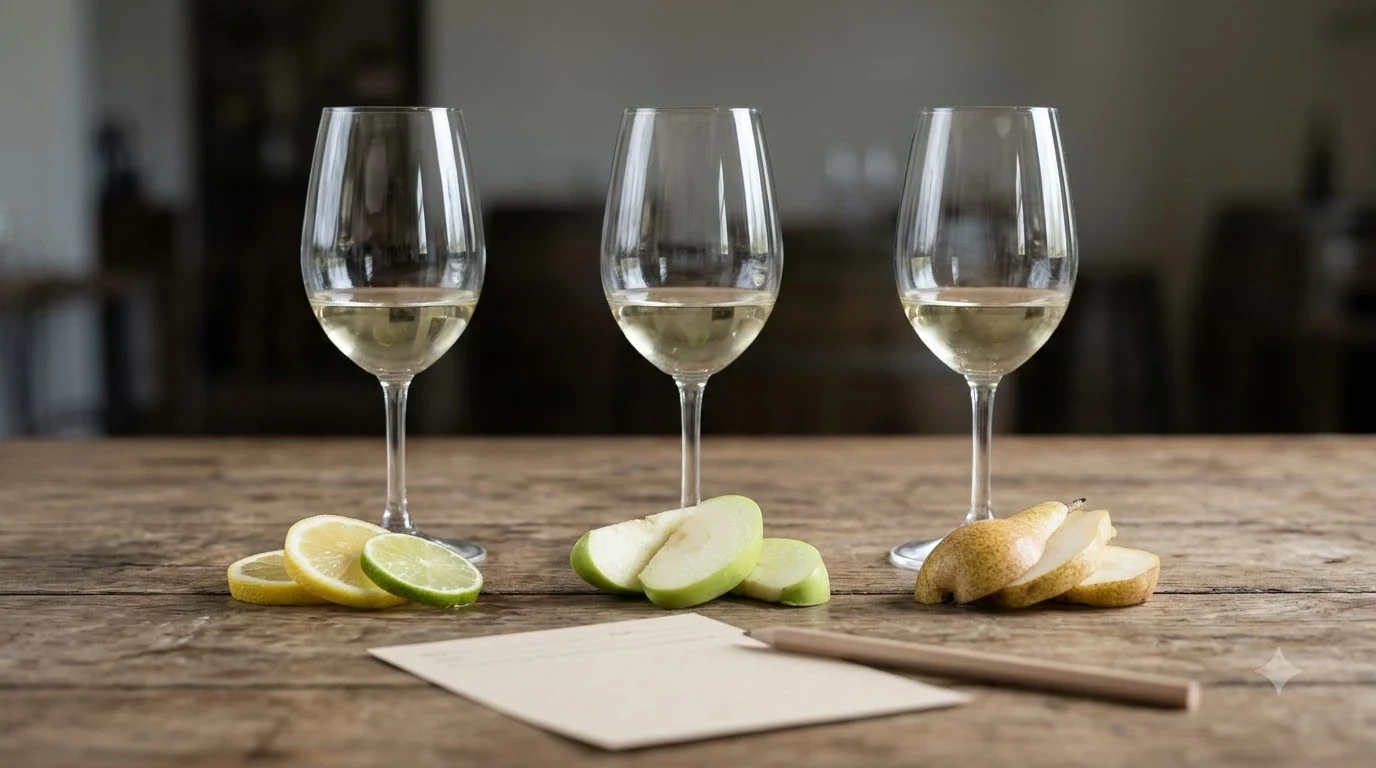
The taste depends on vineyard location and winemaking decisions. A lighter, freshly fermented Grillo can show grapefruit, fresh-cut grass, citrus blossom and refreshing acidity. Other expressions develop more pronounced fruit, herbal and mineral characteristics, giving the wine greater depth and a fuller texture.
Some producers use lees contact or barrel aging to create a richer style. These wines may show apple, peach, ripe citrus and spice, with additional texture compared with a straightforward stainless-steel-fermented bottling. Grillo grown near the sea can also express saline mineral notes that reflect its coastal surroundings.
The following table summarizes the main styles and characteristics described by Sicilian wine references. These are general examples rather than guaranteed tasting notes for every bottle.
| Grillo characteristic | Typical expression | Wine experience |
|---|---|---|
| Pronunciation | GREE-lo | Two syllables, first stressed |
| Country of origin | Italy | Traditional Sicilian grape |
| Important growing area | Trapani | Western Sicily |
| Other growing provinces | 2 | Agrigento and Palermo |
| Dry Grillo development | 1990 | Marco de Bartoli’s dry single-variety production |
| Grillo plantings in 2014 | 16,000 acres | Figure reported by the Sicilia DOC consortium |
| Grillo plantings in 2019 | Nearly 20,000 acres | Figure reported by the Sicilia DOC consortium |
| Common flavor notes | Grapefruit, peach, herbs | Fresh, aromatic and savory |
The most useful takeaway is that Grillo does not describe just one flavor profile. A light, citrus-driven bottle may work as an aperitif, while a fuller expression can accompany more substantial meals. The grape’s flexibility is part of what makes it interesting to wine drinkers exploring Sicily.
How to Order Grillo and Pair It With Food
Once you know how to pronounce Grillo, ordering it is straightforward. Ask for a glass of “GREE-lo” or say, “Do you have a Sicilian Grillo?” Both approaches communicate the name clearly without requiring an elaborate Italian accent.
Grillo is particularly suitable for seafood, grilled fish and vegetable dishes. Its acidity and aromatic character complement the freshness of seafood, while its savory qualities work well with Mediterranean ingredients such as olive oil, herbs, olives and capers.
Grilled swordfish is one of the grape’s traditional pairings. Wines of Sicily DOC highlights swordfish served with a briny relish containing capers, olives, almonds, herbs, peppers and olive oil. This combination works because the wine’s acidity refreshes the palate, while its fruit and savory character complement the grilled fish and seasoning.
Other suitable options include grilled shrimp, seafood appetizers, salmon sashimi, cucumber-fennel salad and seafood pasta. A fuller-bodied Grillo can also accompany roasted poultry and baked casseroles. For vegetarian meals, try vegetable-based pasta, grilled zucchini, roasted peppers or dishes featuring fresh herbs.
Serving temperature matters, too. A lighter Grillo generally benefits from being served around 45–50 degrees Fahrenheit, while a fuller-bodied white can be served closer to 50–55 degrees Fahrenheit. Avoid serving it so cold that its aromas become difficult to appreciate.
Grillo can also be a useful alternative for someone who normally orders Sauvignon Blanc or Pinot Grigio. The grape offers recognizable citrus freshness but can bring additional herbal, floral and saline characteristics. Its range of styles makes it a practical choice for diners who want to explore a native Italian grape without choosing an unfamiliar red wine.
Other Italian Wine Names Worth Learning
Grillo is a useful starting point for learning Italian wine pronunciation because it has only two syllables and a relatively uncomplicated sound. Other Sicilian grape names and Italian wine terms offer good practice once you have mastered it.
Start with Zibibbo, the alternative name for Moscato d’Alessandria. It is pronounced approximately zee-BEE-boh, with the first and second syllables receiving noticeable emphasis in the Sicilian and Italian pronunciation discussed by Jeremy Parzen. Although its spelling looks unfamiliar to English speakers, practicing it alongside Grillo makes the names easier to remember.
Catarratto is another important Sicilian white grape. Its pronunciation can be approximated as kah-tahr-RAHT-toh, with emphasis on the third syllable. The grape is sometimes called Lucido, a historic name recognized by the Sicilia DOC consortium. Catarratto also appears in discussions of Grillo’s origins and in Sicilian white wine blends.
Chardonnay is a more familiar international grape, but the pronunciation of Italian varieties can still be challenging when they appear together on a restaurant wine list. Exploring how to pronounce cuvee is another useful exercise because the term describes a particular wine or blend rather than a specific grape variety.
For a broader introduction to grape varieties, wine styles and regional categories, explore Wine by Type. Learning the difference between grape names, appellations and wine styles makes it easier to interpret unfamiliar labels and ask useful questions when choosing a bottle.
The best way to build confidence is to practice a few names at a time. Say Grillo, Zibibbo and Catarratto aloud, then use them in a sentence about the wines themselves. Recognizing the names in conversation will eventually feel just as natural as reading them on a label.
Frequently Asked Questions
Does Grillo mean cricket in Italian?
Yes. The Italian word “grillo” also means cricket, the small insect known for its chirping sound. In a wine context, however, Grillo refers to the Sicilian white grape variety. The shared spelling makes the name memorable, even though wine drinkers generally use it as a grape name.
Is Grillo an officially recognized Italian grape variety?
Yes. Grillo is a recognized wine grape used in Italian wine production, including wines carrying the Sicilia DOC designation. Its identity is distinct from the appellation itself: Grillo is the grape, while Sicilia DOC is a protected regional designation. This distinction matters when interpreting Italian wine labels.
Can Grillo be used to make sparkling wine?
Yes. Grillo is not restricted to still white wine production. Sicilian producers can also use the variety in sparkling wine styles. The resulting character depends on the producer’s winemaking choices, including fermentation and aging methods.
Is Grillo suitable for aging in a wine cellar?
Some carefully made Grillo wines can develop additional complexity with bottle age. Wine Enthusiast notes that serious examples have shown midterm aging potential. However, lighter, freshly made bottlings are generally intended to be enjoyed for their youthful freshness rather than prolonged cellaring.
Is Grillo grown outside Sicily?
Grillo is strongly identified with Sicily, although its cultivation is not necessarily limited to the island. Italian wine references also associate the variety with other southern Italian growing areas. Its strongest historical and commercial identity remains connected to Sicilian wine production.
Remember the simple pronunciation: GREE-lo, with the emphasis on the first syllable and a clear final vowel. Grillo is a distinctive Sicilian grape with a fascinating connection to Marsala and an increasingly visible role in dry white wine production. The next time you see it on a wine list, you can order it confidently and enjoy discovering what Sicily has to offer.
More in Wine Types & Grapes
 Zinfandel Sugar Content: Dry Red vs. White Zinfandel GramsUpdated Nov 21, 2026
 Best Zinfandel Substitute Options for Sipping and CookingUpdated Nov 21, 2026
 Zweigelt Food Pairing: Best Dishes, Cheeses, and Serving TipsUpdated Nov 21, 2026
 Zinfandel Tannins Explained: How Structure Shapes Every BottleUpdated Nov 21, 2026
 Zinfandel Sweetness Level: Dry Red vs. Sweet White Zin ExplainedUpdated Nov 21, 2026
 Xinomavro Food Pairing: Best Dishes, Styles, and Serving TipsUpdated Nov 21, 2026