

We may earn a commission when you buy through links on this page, at no extra cost to you. Learn more.
How to pronounce garnacha: say gar-NAH-cha, with three syllables and the emphasis on the middle syllable. The “ch” sounds like the ch in “church,” and the final “a” is pronounced clearly. Garnacha is the Spanish name for the red grape widely known as Grenache in France and in much of the English-speaking wine trade.
Seeing Garnacha on a Spanish wine label is a good reason to learn the word rather than substitute a guess. Once you know where the stress falls and how the consonants work, the name is easy to say at a wine shop, restaurant, or tasting. It also gives you a useful clue about the wine’s Spanish identity, even though the grape can produce several different styles.
How to Say Garnacha Correctly
The standard Spanish pronunciation is gar-NAH-cha, divided into three syllables: gar, na, and cha. Put the strongest emphasis on the second syllable, “NAH,” and give each vowel a clean sound rather than turning the word into an English-sounding mash of consonants.
The International Phonetic Alphabet transcription shown by SpanishDictionary.com is /ɡaɾˈnatʃa/. You do not need to memorize those symbols to pronounce the word well; they simply confirm the key details. The mark before “na” identifies the stressed syllable, while the final sound is the familiar “ch” found in “chat.” Both the Spain Spanish and Latin American entries on the SpanishDictionary pronunciation page show the same basic syllable pattern: gar-na-cha.
For an American English speaker, “gar-NAH-cha” is a practical approximation. Keep the first vowel open, like the “a” in “father,” and avoid making the last syllable sound like “ka.” The word should finish with “cha,” not “ca.” You can speak at a normal conversational pace; a clear middle-syllable stress matters more than trying to imitate every feature of a regional Spanish accent.
Break the Word Into Three Sounds
Breaking Garnacha into its three spoken parts makes it easier to remember. The first syllable starts with a hard G, the second carries the stress, and the final pair of letters creates a single “ch” sound.
Gar: Begin with a hard G, as in “go,” followed by a light r. In Spanish, the single r between vowels is usually a brief tap of the tongue against the ridge behind the upper front teeth. English speakers do not have to produce a perfect Spanish tap to be understood, and an ordinary light American r is acceptable in a wine conversation. Nah: This is the strongest part of the word. Keep the vowel broad and open, and let this syllable last slightly longer than the others. Saying “gar-NAH” slowly a few times helps establish the natural rhythm. Cha: Spanish “ch” is pronounced like the beginning and ending sound in “church,” not like a hard K. The final a is an open vowel, similar to the a in “father.” Put the pieces together smoothly: gar-NAH-cha.
Two common mispronunciations are “GAR-nuh-kuh” and “gar-NAH-kah.” The first puts the stress in the wrong place and weakens the clear Spanish vowels; the second replaces the “ch” with a K sound. Another mistake is to stretch the word into four syllables. Garnacha has three, and each one has a distinct job in the rhythm. A short practice sequence is to say “gar,” then “NAH-cha,” and finally the complete word without a pause.
Garnacha and Grenache Are the Same Grape
Garnacha and Grenache are two widely used names for the same grape variety. Garnacha is the Spanish name, while Grenache is the French name used on many labels and in international wine writing.
This naming difference is useful when comparing bottles from different countries. A Spanish red labeled Garnacha and a French red labeled Grenache may come from different regions and have different winemaking choices, but they are made from the same grape variety. Decanter identifies the Spanish name as Garnacha tinta and notes its particular presence in Rioja and Priorat, where it can add fruit and body to blends with Tempranillo. Foods and Wines from Spain traces the grape’s likely origins to Aragón and explains that international drinkers often encounter it under the French name Grenache. For a broader regional overview, read Foods and Wines from Spain’s overview of Garnacha.
The names also appear in regional spellings and related wine terms. In Catalonia, you may see Garnatxa, while French labels may use Grenache or Grenache Noir for the red version. These names reflect local languages and wine traditions; they are not instructions to pronounce Garnacha as “gren-atch.” Wine vocabulary can feel inconsistent because grape names travel across borders. A quick review of how to pronounce chardonnay offers another example of a familiar grape name that English speakers often adapt. The useful habit is to learn the pronunciation associated with the language on the label, then say it clearly without worrying about sounding native.
Read Garnacha Names on Wine Labels
Garnacha on a label usually identifies the grape, but the word may appear with another term that tells you more about its color or form. The most useful distinction for shoppers is between red Garnacha tinta and white Garnacha blanca.
Garnacha tinta refers to the red grape used for still red wines and rosado. It is the name you are most likely to see when a Spanish bottle is made in a red-wine style. Some labels shorten the name to Garnacha, especially when the context already makes the red style clear. The grape also appears in blends, where its fruit and relatively soft tannins can complement varieties such as Tempranillo or Cariñena.
Garnacha blanca is the white form, used for dry white wines and blends. Foods and Wines from Spain describes white Garnacha from Aragón and Catalonia, with Terra Alta especially associated with single-variety examples. Expect a different wine from the familiar red: white Garnacha can show citrus and peach, floral notes, a chalky or mineral impression, and a rounded texture. The pronunciation of Garnacha stays the same; “blanca” is an additional word, pronounced roughly BLAN-ka.
These distinctions matter because a grape name alone does not tell you whether the bottle is red, white, or rosé. For a wider overview of styles beyond this one variety, browse the site’s guide to Wine by Type. It helps put a bottle’s color and category alongside its grape name, region, and production style.
Spanish Regions Where Garnacha Is Grown
Garnacha is especially associated with northeastern Spain, but the grape appears in several distinct regions and can produce noticeably different wines. Aragón, Rioja, Priorat, Navarra, and Terra Alta are useful names to recognize when reading Spanish labels.
Aragón is central to Garnacha’s history and to its modern identity. Foods and Wines from Spain identifies Cariñena, Campo de Borja, Calatayud, and Somontano as important Garnacha-producing designations in the region. The same source reports approximately 4,400 hectares of Garnacha in DO Cariñena and almost 4,000 hectares in DO Campo de Borja. In Campo de Borja, it reports about 2,000 hectares of old-vine Garnacha, with vines between 30 and 50 years old. Calatayud offers another useful point of comparison: Garnacha represents 63 percent of its vineyards, and its Calatayud Superior category requires at least 85 percent Garnacha from vines at least 50 years old.
| Spanish region or designation | Reported Garnacha planting detail | What the detail tells you |
|---|---|---|
| DO Cariñena | About 4,400 hectares | A major Aragón source for red Garnacha |
| DO Campo de Borja | Almost 4,000 hectares in total; about 2,000 hectares of old vines aged 30–50 years | Old-vine examples are an important part of the region’s identity |
| DO Calatayud | About 2,000 hectares; 63% of vineyard area planted to Garnacha | Garnacha is a defining local variety |
| DO Terra Alta | About 1,400 hectares of Garnacha blanca, or 85% of Catalonia’s plantings of the white variety | A key region to seek out for white Garnacha |
The reported area figures come from Foods and Wines from Spain’s regional overview of Garnacha. They are regional planting measurements, not a ranking of wine quality, and they refer to different grape forms where noted. In particular, the Terra Alta figure is for Garnacha blanca, while the Cariñena, Campo de Borja, and Calatayud figures refer to red Garnacha. Priorat in Catalonia is another name to watch: Garnacha is an important historic variety there and may appear as a single-variety wine or as part of a blend. In Rioja, it often works alongside Tempranillo, adding body, fruit, and warmth. Navarra is known for Garnacha rosado as well as fresh young reds, while the Sierra de Gredos area west of Madrid is associated with aromatic, mineral-leaning wines from old vines.
Regional context helps you make sense of the word on the label: the same grape can be ripe and generous in one place, fresher and more restrained in another. Terra Alta is a particularly useful name if you are looking for white Garnacha; Aragón and Priorat are natural starting points for exploring red examples. Ask about the area as well as the grape, because that extra detail can reveal more about the wine’s style than the variety name alone.
Choose, Serve, and Pair Garnacha With Confidence
Knowing how to say Garnacha is most useful when you can also describe the style you want. The grape commonly gives red-fruited wines with flavors such as strawberry, raspberry, and cherry, often accompanied by white pepper or dried herbs.
Garnacha can be bottled on its own or blended, and its character shifts with climate, vineyard age, harvest decisions, and winemaking. Warmer sites and very ripe fruit can produce wines with higher alcohol and a fuller, more warming impression. Earlier-picked grapes or cooler sites may yield fresher wines with brighter fruit. A young, fruit-forward Spanish Garnacha may feel approachable on its own, while a more concentrated old-vine example from Priorat or Aragón can have greater depth and structure.
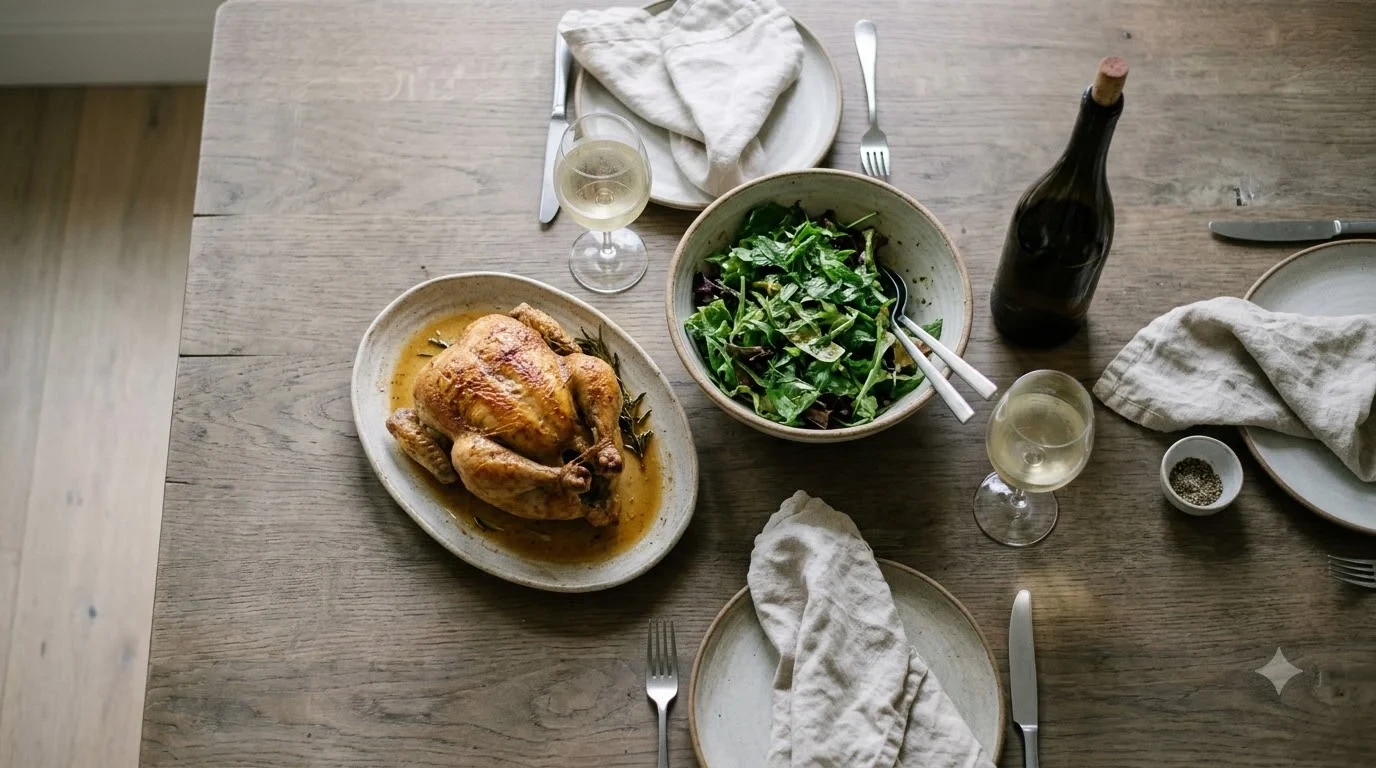
For food, consider the wine’s weight rather than matching every bottle to one national cuisine. Red Garnacha works well with roast chicken, grilled pork, lamb, sausages, roasted mushrooms, and dishes with smoky peppers. Its fruit can complement tomato-based foods, while its relatively soft tannins make it a sensible choice with many savory dishes. Salt and fat can soften tannin, which is helpful with grilled meats, aged cheeses, and dishes finished with olive oil. Be more careful with intense chili heat: alcohol and tannin can make chile seem hotter, so a high-alcohol Garnacha may feel aggressive beside very spicy food. For a chile-heavy dish, choose a lighter-bodied example with moderate alcohol, or switch to a wine with a little residual sweetness. Oily fish can also be difficult with tannic red wine; a white Garnacha or a different high-acid white may be a better fit.
Serve a lighter red Garnacha around 55–60°F, and fuller-bodied red examples closer to 60–65°F. White Garnacha is generally better served cool, with the exact temperature depending on its body and oak treatment. A standard wine pour is 5 ounces, and a 750-milliliter bottle gives about five such glasses. When shopping, read the full name and region together: a bottle labeled Garnacha from Campo de Borja is not automatically interchangeable in style with one from Priorat, just as a white Garnacha from Terra Alta is not a red wine. You can ask whether the wine is a single-variety bottling or a blend, whether it comes from old vines, and whether it was aged in oak. The guides to how to pronounce cuvee and how to pronounce claret cover two other terms that may appear alongside a grape or region name.
Tip: At a restaurant, say “gar-NAH-cha” and then ask whether the bottle is from Aragón, Priorat, Rioja, or Navarra. Naming the region helps the server understand the style you have in mind, and asking whether it is a red, rosado, or white wine clears up any ambiguity about the bottle.
Frequently Asked Questions
Does Garnacha have an accent mark in Spanish?
No. The standard spelling is Garnacha, without a written accent mark. Spanish spelling rules normally place the stress on the next-to-last syllable in words that end in a vowel, n, or s, which is why the stress falls naturally on “na” here.
Should I say “la Garnacha” or “el Garnacha”?
Use “la Garnacha” when speaking Spanish about the grape, because garnacha is a feminine noun. In English, simply saying “Garnacha” is natural, and you do not need to add a Spanish article when ordering a bottle.
How do you pronounce Garnacha Blanca?
Say it “gar-NAH-cha BLAN-ka.” Garnacha keeps its three-syllable pronunciation, and the c in blanca is a hard K sound because it comes before a. Blanca means “white” in Spanish, identifying the white form of the grape.
Why might a Spanish label use Garnatxa instead of Garnacha?
Garnatxa is a Catalan-language form of the grape name used in Catalonia. The spelling reflects the language of the region rather than a different wine variety, so it can refer to the same grape that is called Garnacha elsewhere in Spain.
Is Garnacha the same as Cannonau from Sardinia?
Cannonau is the Sardinian name for the same grape variety known as Garnacha in Spain and Grenache in France. The local name is closely tied to Sardinia’s wine identity, so a Cannonau label points to a regional expression rather than a separate grape.
Remember the middle-syllable stress and the “ch” sound, and Garnacha becomes an easy name to use with confidence. The next time you see it on a wine list, say “gar-NAH-cha,” then let the region and wine style guide your choice.
More in Wine Types & Grapes
 Zinfandel Sugar Content: Dry Red vs. White Zinfandel GramsUpdated Nov 21, 2026
 Best Zinfandel Substitute Options for Sipping and CookingUpdated Nov 21, 2026
 Zweigelt Food Pairing: Best Dishes, Cheeses, and Serving TipsUpdated Nov 21, 2026
 Zinfandel Tannins Explained: How Structure Shapes Every BottleUpdated Nov 21, 2026
 Zinfandel Sweetness Level: Dry Red vs. Sweet White Zin ExplainedUpdated Nov 21, 2026
 Xinomavro Food Pairing: Best Dishes, Styles, and Serving TipsUpdated Nov 21, 2026