

We may earn a commission when you buy through links on this page, at no extra cost to you. Learn more.
If you are wondering how to pronounce dolcetto, say “dohl-CHET-toh,” placing the stress on the middle syllable with a crisp “ch” sound rather than a soft “s.” In standard Italian phonetics, the letter “c” before an “e” or “i” always sounds like the “ch” in “cheese,” and the double “t” gets a slight, distinct pause. The word translates to “little sweet one,” yet the red wine made from this grape is almost always bone-dry.
Walking into a wine shop or scanning an Italian restaurant list can feel intimidating when unfamiliar vowel combinations and double consonants appear on the label. Once you learn the simple phonetic rhythm of this classic Piedmontese grape, you can order a bottle with total confidence.
Phonetic Breakdown and Common Mistakes
Mastering the Italian pronunciation comes down to three distinct syllables—dohl, CHET, and toh—with the emphasis landing squarely on the second beat. Unlike French wine names that often drop final consonants or blend vowels together, Italian words are pronounced almost exactly as they are spelled once you know a few basic letter rules.
The biggest stumbling block for English speakers is the letter “c” sitting right before the “e.” Because English words like “cellar” or “center” use a soft “s” sound, many shoppers instinctively say “dohl-SET-toh.” In Italian, however, a “c” followed by an “e” or “i” is always pronounced like the “ch” in “cherry” or “cello.” Keeping that hard “ch” sound is the single fastest way to sound like a seasoned Italian wine drinker.
Another subtle detail involves the double “t” in the final syllable. Native Italian speakers linger for a fraction of a second on double consonants, creating a clean, percussive break between “CHET” and “toh.” You do not need to exaggerate the pause when speaking American English, though avoiding a slurred “dohl-CHED-oh” keeps the word crisp and authentic. Ending with a clean, rounded “oh” sound—rather than trailing off into a weak “uh”—completes the pronunciation properly, much like learning how to pronounce chardonnay or how to pronounce claret with their respective French and English vowel endings.
| Term or Phrase | Phonetic Spelling | Stressed Syllable | Meaning or Context |
|---|---|---|---|
| Dolcetto | dohl-CHET-toh | CHET | The grape variety and base red wine |
| Dolcetto d’Alba | dohl-CHET-toh DAHL-bah | CHET / DAHL | Classic DOC wine from around the town of Alba |
| Dolcetto di Dogliani | dohl-CHET-toh dee dohl-YAH-nee | CHET / YAH | Structured, age-worthy DOCG expression |
| Dolcetto di Diano d’Alba | dohl-CHET-toh dee DYAH-noh DAHL-bah | CHET / DYAH / DAHL | Prestigious DOCG zone known for concentrated fruit |
| Dolcetto d’Ovada | dohl-CHET-toh doh-VAH-dah | CHET / VAH | Rich style from the southeastern Monferrato hills |
What It Is and Why the Name Is Misleading
Dolcetto is a black-skinned wine grape native to the Piedmont region of northwestern Italy, famous for producing deep purple, fruit-forward red wines meant for everyday drinking. Despite translating literally to “little sweet one,” the finished wine is almost always completely dry, with zero residual sugar.
Wine historians and regional growers point to two practical reasons behind the ironic name. First, the grapes themselves accumulate high levels of natural sugar on the vine and taste noticeably sweet when eaten fresh during harvest, especially compared to the mouth-puckering acidity of neighboring Piedmontese varieties. Second, local dialect roots suggest the name may also reference the low, rolling hills—known locally as dossetti—where the vines thrive.
In the hierarchy of Piedmont’s vineyards, Dolcetto serves as the reliable, early-ripening workhorse alongside Nebbiolo and Barbera. Because Nebbiolo requires prime sun-drenched slopes and years of cellar aging before it becomes approachable, winemakers historically planted Dolcetto on cooler, higher-elevation sites. It ripens weeks earlier than its famous neighbors and ferments quickly, giving local families and estates an affordable, vibrant red wine to enjoy while waiting for their flagship Barolo and Barbaresco bottles to mature. When browsing a broader guide to Wine by Type, Dolcetto sits squarely in the dry, medium-bodied red category.
Flavor Profile and Wine Styles
A glass of Dolcetto typically pours a striking, opaque ruby-purple color that can trick first-time drinkers into expecting a heavy, syrupy wine. On the palate, however, it reveals a vibrant medium body, lively dark fruit flavors, and a signature dry, slightly bitter finish reminiscent of crushed almonds or cocoa nibs.
According to Wine Folly’s varietal guide, primary tasting notes center on blackberry, black plum, and violet, layered with subtle accents of black pepper and unsweetened cocoa. Because the grape’s dark skins are rich in polyphenols, even brief contact during fermentation imparts noticeable tannins. At the same time, Dolcetto naturally carries lower acidity than Barbera or Sangiovese, creating a distinctive textural balance where plush, juicy fruit meets a firm, grippy close.
Winemakers generally craft Dolcetto in two main styles depending on the vineyard site and cellar approach:
- Fresh and Unoaked: The majority of bottlings are fermented and rested in stainless steel or neutral cement tanks for just a few months. These wines highlight pure brambly berry fruit, floral lift, and bright energy meant to be enjoyed young.
- Structured and Oak-Aged: Top vineyard selections—often labeled as Superiore or hailing from premier zones like Dogliani—may spend time in large oak casks. These expressions show deeper concentration, firmer tannins, and savory notes of leather, licorice, and forest floor.
Where It Grows
Piedmont in northwestern Italy remains the undisputed heartland of Dolcetto, accounting for the vast majority of global plantings across the hills of Cuneo and Alessandria. Within this historic landscape, the grape holds its own dedicated appellations rather than playing a minor blending role.
The best-known everyday label is Dolcetto d’Alba DOC, grown in the hills surrounding the truffle capital of Alba. Just to the south, Dogliani DOCG and Dolcetto di Diano d’Alba DOCG represent higher-tier designations where stricter yield limits and steeper hillsides yield darker, more structured reds capable of aging for several years. Further east in the Monferrato hills, Dolcetto d’Ovada DOCG produces fuller, earthier interpretations, while neighboring Liguria cultivates the exact same grape under the local synonym Ormeasco.
Outside northern Italy, small pockets of dedicated growers have planted Dolcetto in California—particularly in Napa Valley, Sonoma’s Russian River Valley, and Mendocino—as well as in Oregon and parts of Australia. New World versions tend to lean slightly riper and rounder on the mid-palate while preserving that telltale dry, herbal edge on the finish.
How to Serve Dolcetto
Serving Dolcetto at the right temperature makes a noticeable difference in how its fruit and tannins interact on your palate. As noted in Wine Enthusiast’s Dolcetto overview, the ideal serving window sits between 60 and 68 degrees Fahrenheit (16 to 20 degrees Celsius), just slightly below standard room temperature.
Chilling the bottle in the refrigerator for about 20 to 30 minutes before opening brings out the vibrant blackberry and violet aromatics while keeping the wine’s moderate tannins crisp and refreshing. If served too warm, the lower acidity can make the wine feel heavy, and the bitter-almond finish can turn overly astringent. A standard universal red wine glass with a medium tulip-shaped bowl works well, concentrating the floral perfume without overemphasizing alcohol.
Most entry-level Dolcetto d’Alba and Langhe Dolcetto bottles are built for immediate enjoyment within one to three years of the vintage date and require little more than a quick swirl in the glass. If you open a denser, younger bottling from Dogliani DOCG or a Superiore tier, giving the wine roughly 30 minutes of air in a decanter helps soften its youthful grip. Unlike a sparkling blend—where learning how to pronounce cuvee prepares you for delicate cellar-aged bubbles—Dolcetto rewards freshness and youthful energy.
Tip: Put your bottle of Dolcetto in the fridge for 25 minutes before dinner so it lands right around 60°F, keeping the dark berry fruit snappy and the tannic finish balanced.
Food Pairing and Choosing a Bottle
Dolcetto earned its reputation as Piedmont’s ultimate everyday table wine because its dry, savory finish cuts cleanly through rich, fatty, and umami-packed dishes without overpowering the plate. Because it lacks piercing high acidity, it pairs especially well with cooked, rounded tomato sauces, roasted garlic, and earthy vegetables rather than sharp, raw citrus or vinegar dressings.
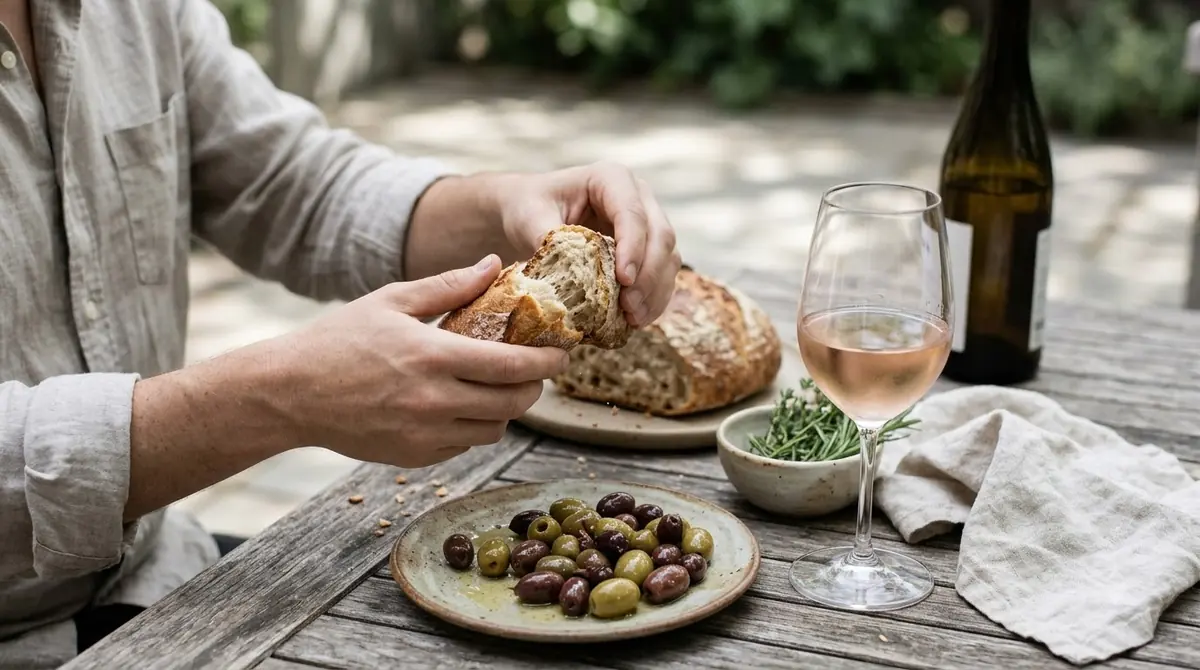
Classic regional pairings include antipasti boards loaded with prosciutto, salami, and aged cow’s milk cheeses, alongside wood-fired pizza, mushroom risotto, and tagliatelle tossed in a rich meat ragù. Grilled Italian sausages, herb-roasted chicken, and charred eggplant dishes also match naturally with the wine’s dark fruit and subtle black pepper spice.
When shopping for a bottle, check the front label for the vintage year and the specific appellation name. Aim for the most recent two or three vintages if you want a bright, juicy weeknight red from Dolcetto d’Alba or Langhe DOC. If you want more structure and depth for a hearty weekend meal, look for bottles labeled Dogliani DOCG, Diano d’Alba DOCG, or Dolcetto d’Ovada DOCG, and check the back label for alcohol levels around 12.5 to 13.5 percent ABV for a balanced, food-friendly pour.
Frequently Asked Questions
Is Dolcetto pronounced with a hard C or a CH sound?
Dolcetto is always pronounced with a “ch” sound, like “dohl-CHET-toh.” In Italian spelling rules, the letter “c” followed by an “e” or an “i” consistently makes a soft “ch” sound as in “cheese,” never an “s” sound.
Is Dolcetto a sweet red wine?
No, Dolcetto is almost always vinified as a completely dry red wine. Even though the Italian word translates to “little sweet one,” that nickname refers to the sweetness of the ripe grapes on the vine rather than sugar left in the finished bottle.
How do you pronounce Dolcetto d’Alba?
You pronounce Dolcetto d’Alba as “dohl-CHET-toh DAHL-bah.” The “d'” prefix attaches smoothly to “Alba,” shifting the second stress onto the first syllable of the town’s name.
How long can you age a bottle of Dolcetto?
Most everyday Dolcetto wines are best enjoyed young, typically within one to three years of harvest while their dark fruit and floral aromas are at their peak. Structured DOCG bottlings from Dogliani or Ovada can develop nicely in the cellar for five to eight years.
Now that you know how to say “dohl-CHET-toh” like a local in Piedmont, ordering this versatile Italian red is effortless. Pick up a recent vintage, give it a brief chill before pouring, and enjoy one of Italy’s most reliable food-friendly wines at your next dinner table.
More in Wine Types & Grapes
 Zinfandel Sugar Content: Dry Red vs. White Zinfandel GramsUpdated Nov 21, 2026
 Best Zinfandel Substitute Options for Sipping and CookingUpdated Nov 21, 2026
 Zweigelt Food Pairing: Best Dishes, Cheeses, and Serving TipsUpdated Nov 21, 2026
 Zinfandel Tannins Explained: How Structure Shapes Every BottleUpdated Nov 21, 2026
 Zinfandel Sweetness Level: Dry Red vs. Sweet White Zin ExplainedUpdated Nov 21, 2026
 Xinomavro Food Pairing: Best Dishes, Styles, and Serving TipsUpdated Nov 21, 2026