

We may earn a commission when you buy through links on this page, at no extra cost to you. Learn more.
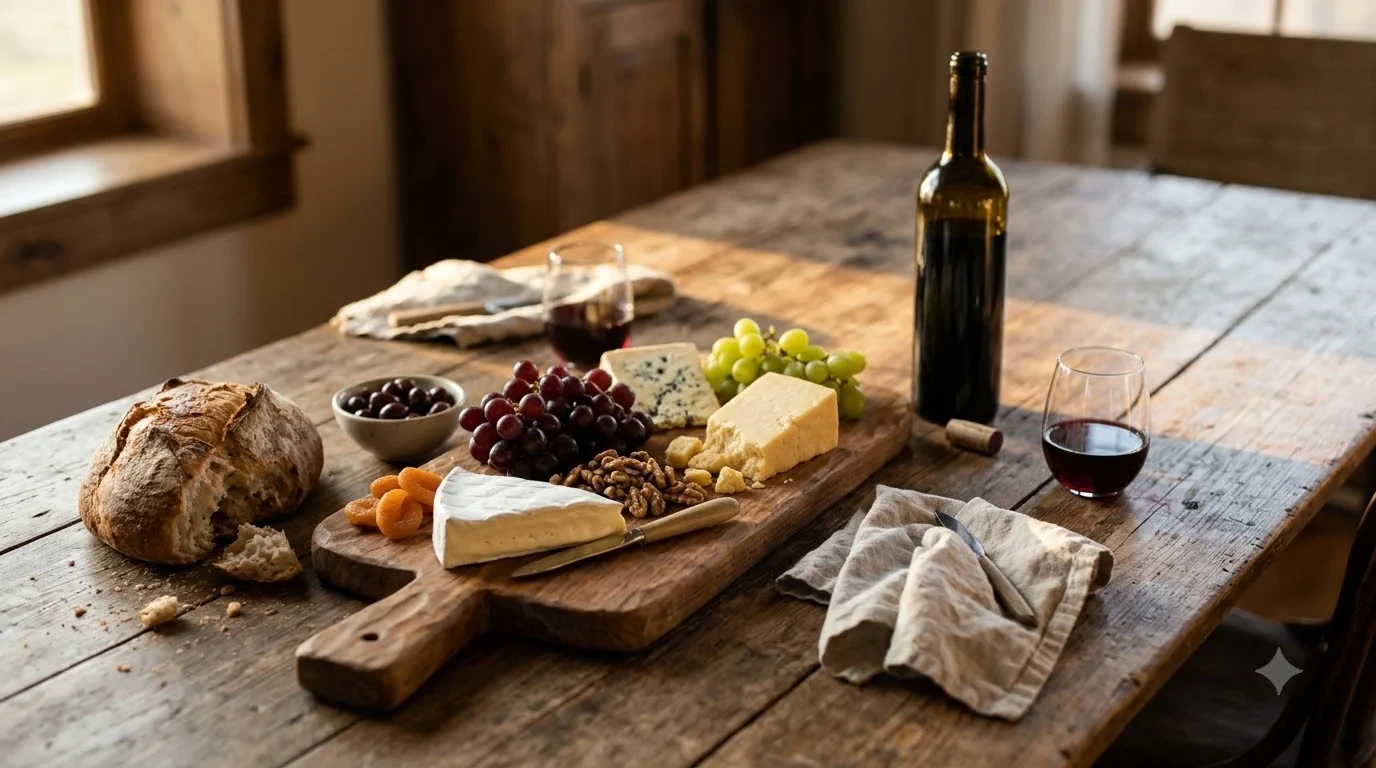
How to pair wine with cheese: match the wine’s body and intensity to the cheese, then balance acidity, salt, fat, sweetness, and texture. Fresh goat cheese usually works with high-acid Sauvignon Blanc, while Brie often suits Champagne or light Pinot Noir. Aged Cheddar can handle a fuller red, and salty blue cheese is a natural partner for sweet Port or Sauternes. Start with reliable combinations, then adjust for the cheese’s age and the other foods on the plate.
Wine and cheese pairing is less about memorizing rules than understanding how two foods affect each other. Cheese can make wine seem sharper, softer, fruitier, or more bitter; the right bottle keeps both parts enjoyable. Use these categories as a practical starting point for a snack, dinner course, or larger cheese board.
The Core Rules: Balance Intensity, Acidity, Fat, and Salt
The most dependable approach is to match the wine’s weight to the cheese’s strength, then look for a useful contrast or shared flavor. A delicate fresh cheese can disappear beside a powerful red, while a bold washed-rind cheese can overwhelm a light white.
Judge intensity before color. Consider whether the cheese is mild or pungent, fresh or aged, creamy or crumbly, and whether its flavor is mostly milky, tangy, nutty, earthy, smoky, or salty. Then choose a wine with a similar level of presence. A young goat cheese needs a different partner from dense, aged Pecorino. Regional matches use the same logic: Loire chèvre and Sancerre share a place and a fresh, herbal character.
Acidity refreshes the palate after rich cheese and stands up to tangy or salty flavors. Sauvignon Blanc and Riesling are high-acid choices; acidic food needs a wine with equal or higher acidity or the wine can seem flat. Salt and fat also change wine’s feel: they can soften tannin, helping a rich aged cheese work with Cabernet Sauvignon or Syrah. But tannic reds are poor partners for delicate fresh cheese, oily fish clashes with tannic reds, and chili heat can be amplified by alcohol and tannin. Sweetness is useful with salty blue cheese because it balances the savory bite.
Consider the whole bite, not just the cheese. Honey, fig jam, mustard, dried fruit, pickles, nuts, and charcuterie can shift a match: honey adds sweetness, cornichons add acidity, and walnuts reinforce nutty flavors. The aim is for neither the food nor the wine to dominate.
Fresh and Tangy Cheeses: Goat Cheese, Feta, and Ricotta
Fresh cheeses usually pair best with crisp, high-acid whites, dry rosé, or light, fruity reds. Their milk-forward flavor and delicate texture are easily overwhelmed, so aim for freshness rather than heavy oak or firm tannin.
For a classic match, serve a fresh chèvre log with Sauvignon Blanc, especially Sancerre or another Loire Valley example. The wine’s acidity echoes the cheese’s tang, while citrus and herbal notes keep the pairing lively. Crottin de Chavignol and Sancerre are a well-known regional combination. Young, unoaked Chenin Blanc or Albariño can also work, particularly with herbs, lemon zest, or cucumber. Wine Enthusiast’s wine-and-cheese guide groups chèvre, mozzarella, feta, and ricotta as fresh cheeses but varies its wine suggestions by salt and texture.
Feta is saltier and sharper than fresh goat cheese, so a wine with bright fruit or a little residual sweetness can soften its edges. Try dry or off-dry Riesling, Gewürztraminer, fruity Beaujolais, or crisp rosé with feta, tomatoes, olives, and oregano. Ricotta and fresh mozzarella need a gentler partner: Pinot Grigio, Soave, Muscadet, or light Chardonnay preserves their milky character. For burrata, choose enough acidity to refresh the palate after its creamy center.
Fresh cheese can also work with a slightly off-dry wine when the dish includes chili, fruit, or a sweet condiment. Keep the wine light and aromatic. Moscato may be too soft for a very tart chèvre by itself, but a chilled, modestly sweet style can suit fruit or honey. For more crisp-white ideas, see what cheese goes with white wine.
Soft-Ripened and Washed-Rind Cheeses: Brie, Camembert, and Époisses
Soft-ripened cheeses call for wines with freshness and enough flavor to meet their creaminess and aroma. Brie and Camembert are often excellent with traditional-method sparkling wine, Chablis, Chenin Blanc, or light red Pinot Noir.
Brie is buttery and mild when young, with mushroom notes that become more pronounced as it ripens. Brut Champagne or another dry traditional-method sparkling wine is a strong first choice: acidity and bubbles refresh the palate after the cheese’s rich paste. Dry, unoaked Chardonnay from Chablis or restrained Sauvignon Blanc can also work. A young, chalky Brie needs less wine intensity than a very ripe and aromatic one.
Camembert often has earthier, more concentrated character than mild Brie, especially with age. Loire Chenin Blanc, dry Riesling, or fresh Pinot Noir can meet its mushroom and vegetal notes without becoming heavy. Beaujolais is another useful red because its fruit and modest tannin support the cheese without taking over. For sparkling-specific combinations, see what cheese goes with Champagne.
Washed-rind cheeses such as Époisses, Taleggio, Munster, and Reblochon bring savory, meaty, sometimes pungent aromas. Try Alsace Gewürztraminer or Pinot Gris for aromatic lift, or Pinot Noir, Gamay, and Rioja for red options. Ripeness matters: a firm Brie is not the same pairing challenge as a very soft one. Decanter’s cheese guide recommends taking cheese out of the refrigerator 45 to 60 minutes before serving so aromas and texture can develop.
Semi-Hard and Aged Cheeses: Gouda, Cheddar, Manchego, and Parmesan
As cheese becomes firmer, saltier, and more concentrated with age, it can stand up to a wider range of wines. Nutty semi-hard styles work with textured whites and lighter reds, while deeply aged cheeses can handle structured reds, fortified wines, and sparkling wine.
Young Gouda, Havarti, and Gruyère are creamy and relatively mild, so try Chardonnay, Pinot Gris, or a medium-bodied white with texture. Gruyère’s hazelnut and brown-butter notes echo the toast and nut flavors of oaked Chardonnay. A crisp white also refreshes the palate with grilled cheese or French onion soup. For red, choose fruit-forward Gamay or Merlot rather than a heavily tannic Cabernet.
Aged Gouda develops caramel, toasted-nut, and savory notes. Cabernet Sauvignon, Syrah, and Malbec are useful options, especially when the cheese is served in small pieces; its salt and fat can soften the wine’s tannin. Aged Cheddar is bold, sharp, nutty, and often salty. It can work with Cabernet Sauvignon, Rioja, or Malbec, although high-acid Sauvignon Blanc also cuts through its richness. A younger, creamier Cheddar is often better with Merlot or another medium-bodied red.
Manchego is a sheep’s-milk cheese with a firm, nutty profile. Rioja is a natural regional match, while Amontillado Sherry brings similar nutty character and a dry finish. Parmesan and Pecorino are salty and savory; pair them with Sangiovese, Chianti Classico, Lambrusco, or sparkling wine. Dry Prosecco offers a pleasant contrast with Parmesan, particularly as an aperitif with olives or toasted nuts; explore more serving ideas in what to pair with Prosecco. Hard cheeses are flexible, but age still guides the choice: young, mild cheese can be overwhelmed by concentrated red, while mature Comté or Pecorino has enough savory depth for a complex bottle. Crumbly cheese can make a very dry red seem angular, while a richer wine may feel more balanced.
Blue Cheese and Sweet Wine: Match Salt With Sweetness
Blue cheese is a clear case for contrast: its salty, sharp, sometimes peppery flavor often works better with a wine that has noticeable sweetness. Port and Stilton, or Sauternes and Roquefort, remain classic pairings because sweetness balances savory intensity.
For a traditional match, serve Stilton with Ruby or Tawny Port. Ruby Port brings dark berry fruit, while Tawny Port adds dried fruit, caramel, and nutty notes. Roquefort, a salty sheep’s-milk blue, pairs beautifully with Sauternes or another botrytized dessert wine. Late-harvest Riesling offers a brighter, citrus-driven alternative. The wine should be sweet enough that the cheese does not make it taste sour or thin.
Not every blue is equally strong. Creamy Gorgonzola Dolce or Cambozola can pair with Moscato, off-dry Riesling, or fruity, low-tannin red. Firm Gorgonzola Piccante or sharp Danish Blue needs a more substantial wine, such as Port, Sauternes, Pedro Ximénez Sherry, or late-harvest Gewürztraminer. A bone-dry white may taste severe beside a very salty blue.
Sweetness should be judged in relation to the cheese, not by the label alone. An off-dry wine may be enough for a mild blue, but Roquefort often needs a richer dessert wine. Figs, dates, pear, and honey reinforce fruit flavors, while sour pickles can make a sweet wine seem less integrated. A restrained blue such as Fourme d’Ambert may even pair with Gamay or Pinot Noir, provided the red has fresh fruit and modest tannin.
Build a Cheese Board and Serve Every Pairing Well
A good board is easier to pair when it has a range of textures and intensities rather than several cheeses that taste alike. Three to five cheeses are usually enough for a small gathering, and two or three wine styles can cover the choices without opening a separate bottle for every cheese.
Choose one fresh cheese, one bloomy or washed-rind cheese, one semi-hard or aged cheese, and optionally one blue. For example, chèvre, Brie, aged Cheddar, and Stilton create four distinct pairing challenges: Sauvignon Blanc with chèvre, Champagne with Brie, Rioja with Cheddar, and Port with Stilton. To use fewer bottles, choose versatile Champagne, dry Riesling, Pinot Noir, or a medium-bodied red, and keep the cheeses within a compatible intensity range.
Temperature matters. Take cheese out of the refrigerator about 45 to 60 minutes before serving. Arrange the board from mild to strong: fresh mozzarella or chèvre, Brie or Camembert, Gruyère or aged Cheddar, then blue cheese. Offer separate knives where practical, especially for blue, and provide plain bread or neutral crackers between stronger bites. The wine temperatures below are useful starting points.
| Wine style | Serving temperature | Good cheese matches |
|---|---|---|
| Sparkling | 40–50°F | Brie, Parmesan, triple-cream cheese |
| Light whites and rosé | 45–50°F | Chèvre, feta, mozzarella |
| Full-bodied whites | 50–55°F | Gruyère, Gouda, washed-rind cheese |
| Light reds | 55–60°F | Brie, Camembert, mild blue |
| Full-bodied reds | 60–65°F | Aged Cheddar, aged Gouda, Manchego |
| Sweet whites | 43–50°F | Roquefort, Stilton, Gorgonzola |
Keep accompaniments deliberate: grapes, pear, dried apricots, toasted walnuts, almonds, honey, and fig preserves are useful in small amounts. Olives and cornichons bring salty or acidic accents, but should not dominate the cheese. Pour moderate tastes: a standard serving is 5 ounces, and a 750-milliliter bottle provides about five glasses. For several wines, start with the lightest and move toward fuller reds and sweet wines so guests can compare each sip before and after a bite. The Wine Q&A section can help with other wine fundamentals.
Tip: Taste the wine alone, take a bite of cheese, then taste the wine again. If it seems sour, bitter, or thin, adjust one variable: choose a fruitier or sweeter wine, add a higher-acid option, or move to a cheese with more fat and less pungency.
Frequently Asked Questions
These answers cover practical details that can make a pairing easier to plan and serve. Use them as guidelines, then adjust for the size of the gathering and the cheeses on the board.
Should red or white wine be served with cheese?
Both can work, but white wine is often the more flexible starting point because acidity and modest tannin suit many cheese styles. Dry Riesling, Sauvignon Blanc, and Champagne can move across several cheeses, while reds should be chosen by tannin level and intensity. Light Pinot Noir is more versatile with soft cheese than a highly tannic young Cabernet.
How much cheese should I serve per person?
For a cheese course after dinner, plan roughly 2 to 3 ounces per person. For a board that replaces a meal, a practical range is about 4 to 6 ounces per person, depending on bread, fruit, and other food. If the board is one part of a larger spread, scale the amount down.
Can I serve one wine with four different cheeses?
Yes, but select cheeses that share a compatible intensity. Dry sparkling wine or Riesling can work with fresh chèvre, young Brie, mild Gouda, and a restrained blue. A pungent washed-rind cheese or intensely salty Roquefort may need a second wine with more body or sweetness.
Should cheese be served straight from the refrigerator?
No. Cold cheese can seem firmer and less aromatic than it does at a suitable serving temperature. Soft cheeses such as Brie and Camembert particularly benefit from resting before serving, while aged Cheddar and Parmesan also show more aroma after losing their refrigerator chill.
What should I do if a pairing makes the wine taste bitter?
Try a lower-tannin wine, a fruitier style, or a cheese with more fat and less sharpness. Bitterness can also come from a pungent washed-rind cheese or an intense blue, so changing the order of tasting may help. Keep a separate knife for blue cheese so its flavor does not transfer to milder selections.
For reliable results, start with intensity and texture, then use acidity to refresh rich cheese and sweetness to balance salty blue styles. Keep the board varied, serve cheese after it has warmed slightly, and let each person discover a favorite combination. The best pairing is the one that makes both the wine and the cheese taste more complete.
More in Wine Basics
 Which Rose Is Best for Your Taste, Budget, and Food PairingsUpdated Nov 21, 2026
 Is Cheap Wine Bad? How to Find Bottles Worth DrinkingUpdated Nov 21, 2026
 What To Write On A Wine Gift Tag: Thoughtful Messages For Every OccasionUpdated Nov 21, 2026
 Which Wine Is Best For Weight Loss? Compare Lower-Calorie ChoicesUpdated Nov 21, 2026
 What Is The Best Wine For Mimosas? Choose Bubbly That Balances Orange JuiceUpdated Nov 20, 2026
 Which Prosecco Is Best for Your Taste and OccasionUpdated Nov 20, 2026