


We may earn a commission when you buy through links on this page, at no extra cost to you. Learn more.
Good wine pairing with cheese starts with matching intensity: light, fresh cheeses suit crisp white wines, while aged and salty cheeses suit fuller reds and sweet wines. Texture, fat, and saltiness matter as much as flavor, so a soft goat cheese and a hard aged cheddar call for very different bottles. Once you know the cheese’s strength, choosing the wine gets much easier.
Cheese is one of the most flexible foods to pair with wine, and also one of the easiest to get wrong. A mild cheese can be overpowered by a big red, while a sharp, salty cheese can make a delicate wine taste flat. This guide explains the logic behind wine pairing with cheese so you can build a board or a dinner plate without guessing.
Start With the Cheese Type, Not the Bottle
Most cheeses fall into a few broad groups, and each group responds to wine in a predictable way. Fresh cheeses are high in moisture and tend to taste bright and milky. Soft-ripened cheeses are creamy and often earthy. Semi-hard cheeses are firmer and nutty, while hard aged cheeses are concentrated, crystalline, and often salty. Blue cheeses add a strong mineral punch that stands up to very few dry wines.
Think of the cheese as the lead and the wine as the partner. Light, lively wines usually work best with light cheeses, and fuller wines are better with cheeses that have more fat, salt, or age. The table below gives a simple starting point.
| Cheese group | Examples | Wine styles that usually work |
|---|---|---|
| Fresh | Goat cheese (chèvre), burrata, mozzarella di bufala | Crisp, high-acid whites such as Sauvignon Blanc or Sancerre |
| Soft-ripened | Brie, Camembert | Light reds, sparkling wine, dry rosé |
| Semi-hard | Gruyère, Manchego, Gouda | Pinot Noir, Chardonnay, lightly oaked whites |
| Hard and aged | Aged cheddar, Parmigiano-Reggiano | Medium to full reds, nutty or oxidative whites |
| Blue | Roquefort, Gorgonzola, Stilton | Sweet or fortified wines, late-harvest styles |
White Wines for Fresh and Soft Cheeses
Fresh cheeses are mild and tangy, so they need a wine with enough acidity to keep pace. Wine Folly’s Sauvignon Blanc guide describes goat cheese with Sancerre as a classic combination, and the same guide recommends soft, flavorful cheeses such as warm goat cheese, burrata, and mozzarella di bufala with this style of wine. The page also notes that Sauvignon Blanc has high acidity and herbal, grassy aromas, which is why it cuts through creamy cheese so well.
The general rule is simple: the wine should be at least as fresh as the cheese. A bright, citrusy white lifts the flavor of a fresh cheese, while a heavy, oaked white can make it taste heavy. Dry sparkling wine is another reliable choice for soft and fresh cheeses because its acidity and bubbles clear the palate between bites.
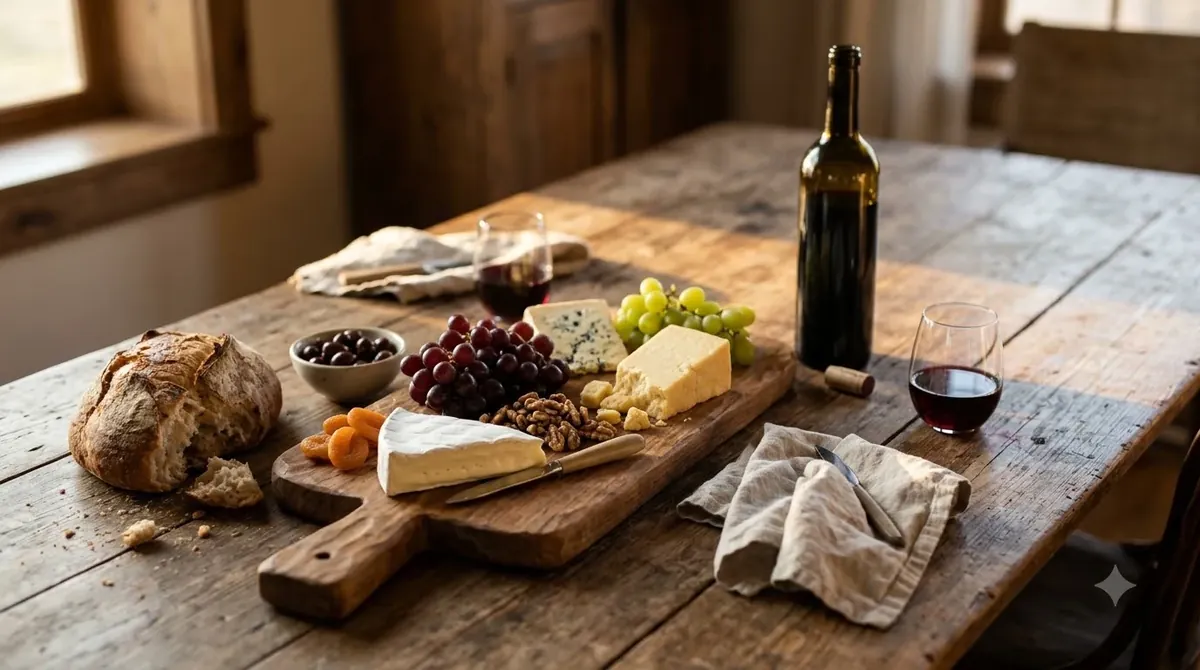
Red Wines for Semi-Hard and Aged Cheeses
Red wine with cheese is a good option when the cheese has more fat, salt, or age. Wine Folly describes Pinot Noir as a catch-all food pairing wine because it is light enough for delicate dishes yet complex enough for richer foods. Its tannins are low, and its acidity is high, so it works with cheeses that would clash with bigger, more tannic reds.
Pinot Noir is a practical choice for Gruyère, Gouda, and other semi-hard cheeses, where its red fruit and earthy notes match the nutty, savory flavors of the cheese. Serving temperature matters here too. Wine Folly recommends serving Pinot Noir slightly cooler than room temperature, around 55 to 60°F (12 to 15°C), which keeps the wine fresh and stops the alcohol from feeling heavy next to rich cheese.
For hard, aged cheeses such as aged cheddar or Parmigiano-Reggiano, a medium-bodied red with fruit and some structure usually works better than a light one. The cheese’s salt and crystal texture give the wine a lot to match, so the wine needs enough body to hold its ground.
Soft-ripened cheeses such as Brie and Camembert sit between the two groups above. Their edible rind and buttery interior mean they can handle a light red or a sparkling wine, and both styles keep the cheese from feeling too heavy. Sparkling wine is also useful at a party because it suits several cheeses on one board at once. When in doubt with a soft-ripened cheese, pick the wine with the brighter fruit and the higher acidity.
Sweet Wines and Blue Cheese
Blue cheese is the hardest category to match. Its sharp, salty, mineral flavor can make dry red wine taste metallic or bitter. Sweet wines solve this problem. A late-harvest white, a dessert wine, or a fortified style such as Port balances the saltiness and softens the blue mold flavor.
Dried fruit, honey, and nuts also work well on the same board. A small serving of sweet wine with blue cheese is often more satisfying than a dry red, and it turns a simple cheese plate into a finished dessert course. If you prefer dry wine, choose a light, fruity red and serve only a small piece of blue cheese at a time.
Tip: Pair one wine with one cheese first. Once you know which combination you like, add a second cheese to the board.
When you build a board for several guests, pick two or three cheeses that differ in texture and strength rather than three that are all similar. A fresh cheese, a semi-hard cheese, and one aged or blue cheese cover most of the range. Add a few crisp crackers, sliced apple or pear, and a small bowl of nuts or honey. The fruit and nuts echo the fruit notes in the wine, which helps the pairings feel connected instead of random.
How to Serve Wine and Cheese Together
Serving details can change how a pairing tastes. Cheese tastes milder when it is cold, so let firm cheeses sit out for a short time before serving to bring out their aroma. Keep soft cheeses at a cool room temperature and wrap them loosely until serving. Red wine is usually best a little cooler than room temperature, and white wine is best well chilled but not ice cold, since very cold wine can hide its aromas.
Plan the order of tasting too. Start with the lightest wine and the freshest cheese, then move to richer cheeses and fuller wines. Water and plain crackers or bread help reset the palate between pairings. Serve moderate portions, and keep the focus on enjoying the food and the company.
Frequently Asked Questions
What is the best wine to serve with cheese?
There is no single best wine. A crisp white such as Sauvignon Blanc suits fresh goat cheese, Pinot Noir suits semi-hard cheeses like Gruyère, and a sweet or fortified wine is a common match for blue cheese.
Is red or white wine better with cheese?
It depends on the cheese. White wine usually works better with fresh and soft cheeses because of its bright acidity. Red wine often suits firmer, aged cheeses that have more fat and salt.
What wine goes best with cheddar?
Aged cheddar pairs well with medium-bodied reds, which have enough structure to match its sharp, salty flavor. Mild cheddar is more flexible and can work with lighter reds or a dry white with good acidity.
Should wine be served cold with cheese?
White wine is best well chilled, and red wine is usually best slightly cooler than room temperature. Pinot Noir is often served around 55 to 60°F (12 to 15°C) for this reason.

Wine pairing with cheese is easiest when you match intensity first and then choose flavors that complement each other. Start with a simple two-cheese board and one white and one red. Once you know what you enjoy, you can explore more combinations. For more pairing ideas, see the wine pairing guide, or try a richer match such as wine pairing with lamb for a heartier meal.
More in Food & Wine Pairing
 Risotto With White Wine Recipe: Make a Creamy Dinner at HomeUpdated Nov 20, 2026
 Wassail With Wine Recipe for a Festive Spiced Holiday DrinkUpdated Nov 20, 2026
 Spritz Veneziano Recipe: Make a Classic Venetian Aperitivo at HomeUpdated Nov 20, 2026
 Summer Wine Punch Recipe for Easy Homemade EntertainingUpdated Nov 20, 2026
 Bishop Recipe: How to Make a Bright, Citrus-Forward Red Wine CocktailUpdated Nov 20, 2026
 Wine Cupcakes Recipe: Bake Rich Chocolate Cupcakes at HomeUpdated Nov 20, 2026