

We may earn a commission when you buy through links on this page, at no extra cost to you. Learn more.
To learn how to chill wine in the freezer, place the bottle in the freezer for approximately 20–25 minutes, using a timer to prevent it from freezing. For faster results, wrap the bottle in a wet paper towel or thin damp kitchen towel before placing it inside. Sparkling wines need shorter chilling periods and extra attention because pressure from carbon dioxide increases the risk of a displaced cork or broken glass. Remove the bottle promptly and serve it at the appropriate temperature for its style.
Forgetting to refrigerate wine before dinner happens easily, especially when guests arrive unexpectedly or plans change. Fortunately, a household freezer can help bring a warm bottle down to a more enjoyable serving temperature without requiring hours of preparation. The key is to understand how long different wines need, how to speed up cooling, and why leaving a bottle unattended creates problems. A few simple precautions make the freezer a useful backup rather than a source of broken glass and wasted wine.
How Long to Chill Wine in the Freezer
A typical 750 ml bottle of wine needs approximately 20–25 minutes in the freezer for a noticeable cooling effect, although the starting temperature, bottle shape, and wine style influence the result. Decanter’s Matt Walls suggests 22 minutes for lightly chilled wine and 28 minutes for fully chilled wine in its advice on chilling wine in the freezer.
These times provide practical starting points rather than guarantees. A bottle taken from a cool pantry will need less time than one sitting in a warm kitchen. Similarly, a wine that needs only a slight temperature adjustment should not receive the same treatment as a bottle that starts near room temperature.
For a standard 750 ml bottle starting around 70°F, begin with a 15-minute timer if you want to check the progress early. If the bottle still feels warmer than your intended serving temperature, continue in short intervals. A wet towel can shorten the process, so avoid automatically applying the full chilling time recommended for an uncovered bottle.
The freezer cools the outside of the glass first. The wine inside takes longer to respond because the liquid has to lose heat through the bottle wall. This explains why the glass may feel cold while the center of the wine remains warmer than expected.
For everyday planning, these approximate intervals provide a useful starting point:
| Wine or chilling method | Approximate freezer time | Important consideration |
|---|---|---|
| Still white wine | 20–25 minutes | Check early if using a wet towel. |
| Rosé | 20–25 minutes | Aim for a refreshing rather than icy temperature. |
| Light red wine | 15–20 minutes | Remove before it becomes excessively cold. |
| Full-bodied red wine | 10–15 minutes | Usually needs only a modest temperature reduction. |
| Sparkling wine | About 20 minutes maximum as a cautious starting point | Monitor closely because of bottle pressure. |
| Wet-towel method | About 10–15 minutes | Cooling can happen faster than with dry glass. |
The table gives approximate working intervals, not fixed guarantees for every bottle or freezer. A household freezer typically operates near 0°F, but actual performance varies. Bottle thickness, fill level, freezer temperature, and how frequently the door opens all affect the cooling rate.
For the most dependable result, use a kitchen thermometer or wine thermometer instead of relying entirely on touch. If you do not have one, start checking at the earlier end of the suggested interval. It is easier to give wine another few minutes of cooling than to deal with a bottle that has started freezing.
How to Use the Wet Paper Towel Method
The wet paper towel method is one of the easiest ways to speed up freezer chilling. A damp layer around the bottle helps improve heat transfer and can reduce the time needed compared with placing a dry bottle directly in the freezer.
Begin with a clean, intact 750 ml bottle. Remove any decorative packaging or thick outer sleeve that might prevent the damp material from contacting the glass. Run two or three sheets of paper towel under cold tap water, then gently squeeze away excess water. The paper should be thoroughly damp without dripping heavily.
Wrap the wet towels around the bottle’s body, covering as much of the glass as practical. Leave the neck and closure accessible so you can identify the bottle and remove it easily. Place the bottle horizontally or upright on a stable freezer shelf, away from food packages that could knock it over.
Set a timer for approximately 10 minutes. This is a useful initial interval for the wet-towel technique, although some bottles will require additional time. When the timer sounds, remove the bottle and assess its temperature. If necessary, return it for another three to five minutes.
Do not assume that the wet-towel technique makes freezing impossible. The bottle is still exposed to freezer temperatures, and the wine can still freeze if left unattended. A damp covering changes the rate of cooling, not the underlying freezing risk.
Why damp towels help
Air is a relatively poor conductor of heat compared with water. A damp paper covering creates more consistent contact between the bottle’s surface and a cooling medium than the air surrounding an uncovered bottle. As the moisture loses heat, it helps draw warmth away from the glass.
This is also why an ice-water bath can outperform freezer air. Water surrounds more of the bottle’s surface and transfers heat more effectively than air pockets around a glass container. The freezer remains convenient because it requires no bucket, ice supply, or additional preparation.
For a similar approach using household materials and no ice bucket, see how to chill wine without ice. The method is especially useful when refrigerator space is limited and you need a bottle ready for an upcoming meal.
Tip: Put a phone timer on for 10 minutes before placing the damp-wrapped bottle in the freezer. Do not rely on remembering it later, particularly when preparing dinner or entertaining guests.
Why Wine Bottles Can Break in the Freezer
The biggest danger of freezer chilling is leaving the bottle inside until the wine begins to freeze. Wine contains a substantial amount of water, and water expands as it turns into ice. Inside a sealed glass bottle, that expansion can create enough pressure to dislodge the cork, damage the closure, or crack the glass.
This is not limited to inexpensive table wine. Any sealed bottle containing liquid can experience problems if its contents freeze sufficiently. Even if the glass survives, a displaced cork can allow air to enter, increasing oxidation and potentially damaging the wine’s freshness and flavor.
Wine Enthusiast explains that freezing can push a cork partly or completely out of the bottle and can cause the glass to crack. Its guide to chilling wine safely recommends setting a 30-minute timer rather than leaving wine unattended. A shorter initial timer is a sensible precaution, particularly when using wet towels.
Glass damage also creates a practical safety problem. Broken wine bottles can leave small fragments inside a freezer, sometimes hidden beneath frozen food or ice trays. Wine that leaks from a damaged bottle can freeze into a sticky layer, making cleanup more difficult.
What happens when a cork moves?
A cork that has moved upward or become partially dislodged may indicate that pressure has developed inside the bottle. This is particularly concerning if the wine has begun to freeze. Do not push the cork back into place while the bottle is still frozen or under pressure.
Allow the bottle to warm gradually in a safe, controlled location if it has partially frozen. Keep it away from people and handle it carefully. If the glass is cracked, leaking, or visibly damaged, avoid drinking the wine because glass fragments may have entered the liquid.
Does wine lose its quality if it freezes?
Freezing does not automatically mean that every drop of wine becomes undrinkable. However, the quality of a bottle can suffer if its closure is compromised or its contents undergo repeated temperature changes. Oxygen exposure is especially problematic because it can dull fruit aromas and change the wine’s flavor.
A bottle that has frozen solid is not a normal chilling result. Even if it appears intact after thawing, examine the closure and glass carefully. Wine that has leaked or been exposed to air should not be treated as though it were an unopened, properly stored bottle.
For a closer explanation of the risks and long-term storage considerations, read can you store wine in the freezer. Short-term cooling and long-term wine storage are two different purposes, and a freezer is not a suitable substitute for a stable wine-storage environment.
How to Chill Champagne, Prosecco, and Other Sparkling Wines
Sparkling wine requires more caution than still wine because carbon dioxide is dissolved under pressure inside the sealed bottle. Champagne, Prosecco, Cava, and Crémant all contain bubbles, so an unattended bottle in the freezer presents an increased risk of a cork being pushed out or glass breaking.
If you must use the freezer, begin with a short interval of approximately 10–15 minutes and check the bottle carefully. Decanter notes that around 20 minutes can help chill Champagne, but the bottle needs close attention. For a safer approach, use an ice-water bath and monitor the temperature.
There is a reason sparkling wine is usually served colder than most still wines. Lower temperatures help retain dissolved carbon dioxide, preserving the lively bubbles that define the style. Champagne and Cava also benefit from careful temperature control because excessive warmth can make their bubbles seem less controlled.
For everyday sparkling wines, the following serving ranges provide practical targets:
- Prosecco: Approximately 40–50°F for a refreshing, lively pour.
- Champagne: Approximately 40–50°F, with more complex vintage bottles often served toward the warmer end.
- Cava: Approximately 40–50°F, depending on the wine’s body and complexity.
- Crémant: Approximately 40–50°F, with slightly warmer service possible for richer examples.
Use extra care with sparkling bottles that have a traditional cork and wire cage. Keep the bottle pointed away from faces when opening, and avoid shaking it or exposing it to sudden temperature changes.
For parties, an ice bucket is generally more convenient than relying on the freezer. It lets you keep several bottles ready for service without repeatedly opening the freezer or worrying about a forgotten bottle. Keep the sparkling wine submerged in the chilled water and ice, and replenish the ice when needed.
Another useful practice is to chill sparkling wine in the refrigerator ahead of time. A bottle that starts cold needs much less emergency cooling than one taken directly from a warm kitchen cupboard.
Best Serving Temperatures for Different Wine Styles
Chilling wine is not simply about making every bottle as cold as possible. The correct serving temperature depends on the wine’s body, acidity, tannin, sweetness, and structure. Light whites and sparkling wines generally benefit from colder service, while fuller reds need more warmth to show their aromas and texture.
According to Wine Enthusiast’s serving guidance, sparkling wines generally suit 40–50°F, while fuller-bodied reds are best around 60–65°F. These ranges help explain why one bottle may need a longer refrigerator rest than another, even when both begin at the same temperature.
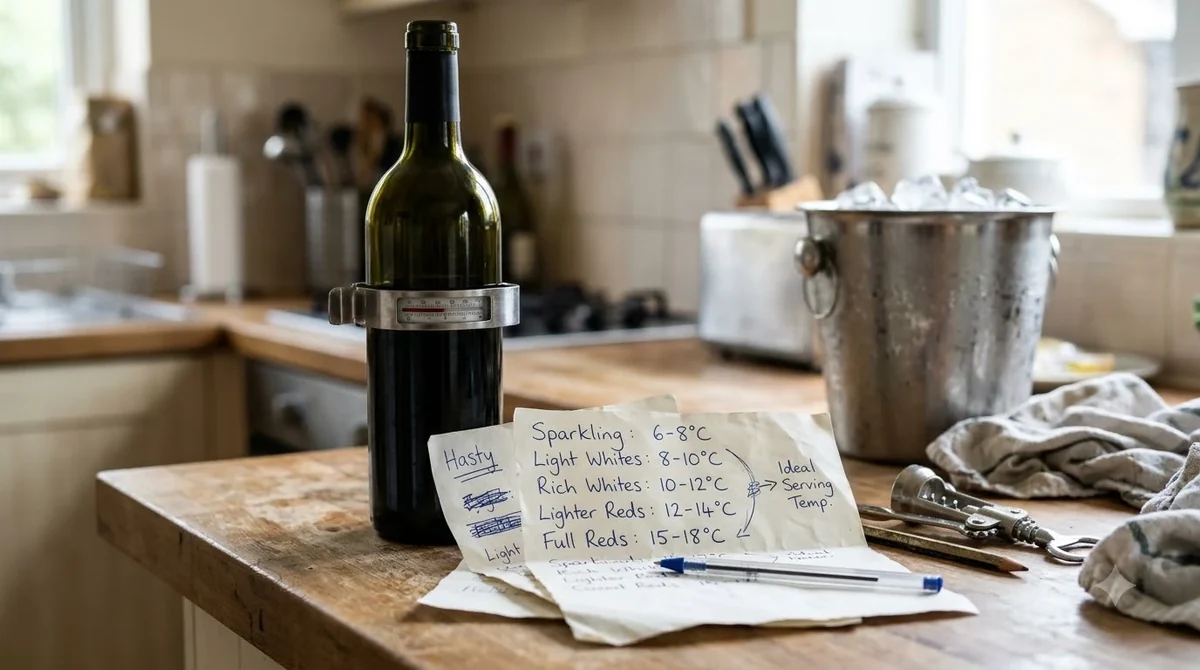
Use these practical temperature targets when deciding how far to chill a bottle:
- Sparkling wine: 40–50°F.
- Light-bodied white wine: 45–50°F.
- Rosé: 45–50°F for a crisp, refreshing style.
- Full-bodied white wine: 50–55°F.
- Light-bodied red wine: 55–60°F.
- Full-bodied red wine: 60–65°F.
- Sweet white wine: 43–50°F.
These temperatures are targets for serving, not instructions to keep every bottle in the freezer until it reaches the lowest possible temperature. A lightly chilled Sauvignon Blanc may be ready well before a bottle of Chardonnay that needs a slightly warmer serving temperature.
White wines and rosé
Sauvignon Blanc, Pinot Grigio, and other light-bodied whites generally benefit from a temperature around 45–50°F. Their acidity and fresh fruit character are particularly appealing when the wine is cool without being icy. Rosé can also be served in this range, especially when it has a crisp, lighter profile.
Fuller whites, including many Chardonnays, are better around 50–55°F. Serving them too cold can mute their aromas and reduce the impression of texture. If a bottle has been in the freezer longer than necessary, let it warm gradually before serving rather than pouring it at an excessively cold temperature.
Red wines
Red wine does not have to be served at room temperature. Light-bodied Pinot Noir and similar wines can benefit from a short period of cooling, particularly in a warm dining room. Aim for approximately 55–60°F rather than refrigerator-cold temperatures.
Full-bodied wines such as Cabernet Sauvignon, Syrah, and many structured Merlot wines generally suit 60–65°F. Their tannins and body need more warmth to express their character. If a red bottle has been sitting in a warm kitchen, a brief refrigerator rest may be more appropriate than an extended freezer session.
If you are preparing a lighter red for dinner, our guide on how to chill red wine explains how to cool it without suppressing its fruit and aroma.
Freezer vs. Ice Bath vs. Refrigerator
The freezer is convenient, but it is not always the fastest or safest way to cool a bottle. An ice-water bath can bring wine down to serving temperature more efficiently because water surrounds the glass and transfers heat more effectively than freezer air. A refrigerator is the best option when you have enough preparation time.
According to Decanter, an ice bath with approximately equal parts ice and water can chill a bottle in about 15 minutes when salt is added and the bottle is submerged to the neck. This can be more efficient than leaving the bottle in the freezer, particularly when you need a dependable result for dinner.
Using an ice-water bath
Choose a large bucket, stockpot, or clean container that can hold the bottle upright or at a slight angle. Add approximately equal amounts of ice and cold water. The water should surround most of the bottle rather than leaving large sections exposed to air.
Add table salt if you need to accelerate cooling. Salt lowers the freezing point of the water, allowing the ice-water mixture to become colder. Stir the bath occasionally to distribute the cold water evenly, and make sure the bottle is submerged sufficiently to cool the wine consistently.
For a standard 750 ml bottle, approximately 15 minutes is a useful target for a salted ice-water bath. Check the wine’s temperature before serving, especially if you are cooling a full-bodied white or light red that should not be excessively cold.
Using the refrigerator
The refrigerator is more forgiving because it cools wine gradually. Wine Enthusiast identifies approximately 35–40°F as a typical refrigerator operating range and recommends planning ahead rather than relying on the freezer for every bottle.
Light white wines may need around 1–2 hours, while fuller whites often need less. Red wines can also benefit from refrigeration before service. A light red may need approximately 45–60 minutes, whereas a full-bodied red may need only around 25 minutes, depending on its starting temperature.
For a dinner party, placing bottles in the refrigerator several hours before guests arrive is a simple way to avoid emergency cooling. You can then remove each bottle shortly before serving and allow it to approach its ideal temperature naturally.
Each method has a different advantage:
- Freezer: Convenient for approximately 10–25 minutes of closely monitored emergency cooling.
- Salted ice-water bath: A strong option when a bottle needs to cool quickly, often around 15 minutes.
- Refrigerator: Best for gradual, controlled cooling when you have one or more hours available.
Choose the method that matches your available time rather than automatically selecting the coldest option. A wine served at its appropriate temperature generally provides a better experience than one that has been rushed into an icy state.
Common Freezer-Chilling Mistakes to Avoid
Most freezer-chilling problems come from using too much time, failing to set a timer, or treating every wine style the same way. A little preparation prevents the most common mistakes and makes it easier to serve wine at the right temperature.
The first mistake is leaving a bottle in the freezer while preparing other parts of a meal. A 20-minute cooling session can easily become an hour when the kitchen gets busy. Always set a timer before doing anything else.
The second mistake is assuming that all bottles cool at the same speed. A thick glass bottle may respond differently from a lighter bottle, and a sparkling wine needs more careful attention than a still white. Starting with shorter intervals gives you more control.
Another common mistake is serving wine straight from the freezer without considering the style. A Sauvignon Blanc can benefit from a cool pour, but a Cabernet Sauvignon served near freezing will lose much of its aromatic expression. Check the intended serving range rather than aiming for the coldest possible bottle.
Do not use a damaged bottle
Never place a bottle with a cracked neck, damaged base, or compromised closure into the freezer. Temperature changes and expanding frozen liquid can make existing weaknesses more serious. Inspect the glass before cooling, especially if the bottle has been stored in a crowded refrigerator or freezer.
Do not confuse cooling with long-term storage
The freezer is intended for temporary cooling, not for storing wine for days or weeks. Repeated freezing and thawing can affect the bottle’s closure and condition. Wine should generally be stored in a stable, cool environment near 55°F, away from direct sunlight and significant temperature fluctuations.
For opened bottles, refrigeration is usually the better choice. Still wines commonly remain enjoyable for approximately three to five days when properly closed and refrigerated, while sparkling wines generally have a shorter window of around one to three days. These are approximate freshness guidelines, not guarantees.
Another mistake is using ice cubes in a glass when you want to preserve the original wine’s concentration. Ice will cool the wine, but melting water dilutes its flavor. Frozen grapes or reusable chilling stones offer alternatives when you need to cool an individual serving without adding water.
Finally, do not assume that a cold bottle is ready simply because the outside feels cold. A thermometer provides a more reliable indication of the wine’s temperature. With practice, you can use shorter freezer intervals and avoid unnecessary overcooling.
Frequently Asked Questions
Can you leave wine in the freezer overnight?
No. Leaving wine in the freezer overnight can cause the liquid to freeze and expand inside the sealed bottle. This may push out the cork, damage the closure, or crack the glass. Use the freezer only for short, monitored cooling sessions.
Can you chill an opened bottle of wine in the freezer?
You can briefly cool an opened bottle, but it should be securely resealed first and monitored carefully. An opened bottle has already been exposed to oxygen, so keeping it refrigerated is generally a better way to preserve its remaining freshness. Avoid leaving it in the freezer long enough for the wine to freeze.
Should you shake a wine bottle to make it cool faster?
No. Shaking is unnecessary and especially unsuitable for sparkling wine, where agitation can increase foaming and make opening more difficult. Gentle rotation in an ice-water bath can help circulate the cooling water around a bottle, but there is no need to shake the wine itself.
Can you put wine in the freezer after it has been opened?
Brief cooling is possible if the bottle is securely closed, but freezing is not a suitable preservation method for opened wine. Air in the bottle and exposure to oxygen can affect freshness even when the wine is cold. A refrigerator with a suitable closure is a more practical choice for keeping an unfinished bottle.
What should you do if wine accidentally freezes?
If the glass is intact, allow the bottle to thaw gradually in a cool, protected place without applying direct heat. Once thawed, inspect the closure and bottle carefully for leaks, cracks, or signs of damage. If the glass has broken or wine has leaked through a damaged closure, discard it rather than risking glass fragments.
Knowing how to chill wine in the freezer makes it easier to prepare a bottle when you have forgotten to refrigerate it ahead of time. Start with a short timer, use a damp towel when appropriate, and pay particular attention to sparkling wines. For the best results, match the cooling time to the wine’s intended serving temperature and choose a refrigerator or salted ice-water bath whenever you have the opportunity.
More in Wine Basics
 Which Rose Is Best for Your Taste, Budget, and Food PairingsUpdated Nov 21, 2026
 Is Cheap Wine Bad? How to Find Bottles Worth DrinkingUpdated Nov 21, 2026
 What To Write On A Wine Gift Tag: Thoughtful Messages For Every OccasionUpdated Nov 21, 2026
 Which Wine Is Best For Weight Loss? Compare Lower-Calorie ChoicesUpdated Nov 21, 2026
 What Is The Best Wine For Mimosas? Choose Bubbly That Balances Orange JuiceUpdated Nov 20, 2026
 Which Prosecco Is Best for Your Taste and OccasionUpdated Nov 20, 2026