


We may earn a commission when you buy through links on this page, at no extra cost to you. Learn more.
Hardys wine is made by the Hardy Wine Company, an Australian producer whose history goes back to 1853 in Old Reynella, South Australia, and whose label covers a wide range of regions and price levels. The company grew out of the Thomas Hardy family’s vineyards and later became part of a larger group of brands. Today the name appears across several Australian wine regions, including the Barossa, Clare Valley, McLaren Vale and Margaret River, so the best way to choose a bottle is to look at the region and style rather than the name alone.
This guide covers where Hardys came from, which regions and styles sit behind the name, how to serve the wines and how to choose a bottle for a dinner, a gift or an everyday glass. It is written for buyers who know the name from a supermarket shelf and want to understand what sits behind it.
Where Hardys Wine Started
The company dates its roots to 1853, when the business began at Old Reynella in South Australia under the name Thomas Hardy and Sons. Thomas Hardy arrived in South Australia in 1850 at the age of 20, and the family built its reputation on the vineyards and winery it developed in the state. The company later took the name The Hardy Wine Company, and it eventually changed its corporate name to Vinarchy.
Over time the business expanded well beyond its original base. It bought the Tintara Vineyard Company, built a bottling plant at Mile End and opened a flour mill in McLaren Vale. Vineyards were established in Padthaway in South Australia in 1968, and the company’s interests reached Houghton in Western Australia. That spread is why the Hardys name now covers wines from several distinct growing areas.
The Regions Behind the Hardys Name
Australia’s wine regions differ a great deal in climate and soil, and that difference shows in the glass. The Hardys range draws on several of them, so a bottle’s region is one of the most useful clues to its style. The table below sets out the main regions and what each one tends to contribute to a wine.
| Region | Typical contribution | Common style |
|---|---|---|
| Barossa | Warm, sunny climate with ripe fruit | Full-bodied reds |
| Clare Valley | Cooler nights and good acidity | Structured reds and dry whites |
| McLaren Vale | Mediterranean-style climate, close to the coast | Rich, fruit-driven reds |
| Margaret River | Maritime climate in Western Australia | Balanced whites and reds |
| Padthaway | Cool-climate fruit from South Australia | Fresh whites and lighter reds |
| Marlborough | Cool climate known for aromatic whites | Bright, aromatic whites |
The table is a general guide to how these regions are usually described, not a tasting note for any one bottle. The company’s wines are made across several of these areas, so the label will tell you which region a given bottle comes from, and that is the detail to check before you buy.
Brands Under the Hardys Umbrella
The company’s wines are sold under several names, and the Hardys label is only part of the picture. The group’s portfolio includes Jacob’s Creek, Houghton, Banrock Station, Echo Falls, Leasingham, St Hallett, Tatachilla and Grant Burge, among others. Each of these brands has its own style and price point, so a buyer who likes one bottle should not assume every bottle from the group will taste the same.
Reading a group portfolio like this takes a little patience. A buyer who remembers a bottle they enjoyed can look for the same producer name on the back label, and the wine’s region and grape type will often match its style closely enough to repeat the choice. When a bottle disappoints, the region is the first thing to change, since a warm-climate red and a cool-climate red from the same company can feel very different in the glass.
That range explains why Hardys can cover a supermarket shelf and a more considered gift at the same time. When you compare two bottles, look at the region, the grape variety and the producer name on the back label, because they tell you far more than the brand alone. The wine brands guide on this site is a useful place to compare the major names and see how they are positioned.
How to Serve Hardys Wine
Serving temperature changes how a wine tastes, and the same is true for Australian whites and reds. Whites are generally best served cool, while reds are enjoyed slightly below room temperature. A short time in the refrigerator for a red, or a little longer for a white, is a sensible approach for most everyday bottles.
Use a standard wine glass with a bowl large enough to hold a moderate pour. Once a bottle is opened, recork it, store it in a cool place and finish it within a few days for most reds and within a couple of days for lighter whites. Fuller reds from warm regions can hold up a little longer, but the fruit tends to fade over time in any opened bottle.
Food Pairings for Hardys Wine
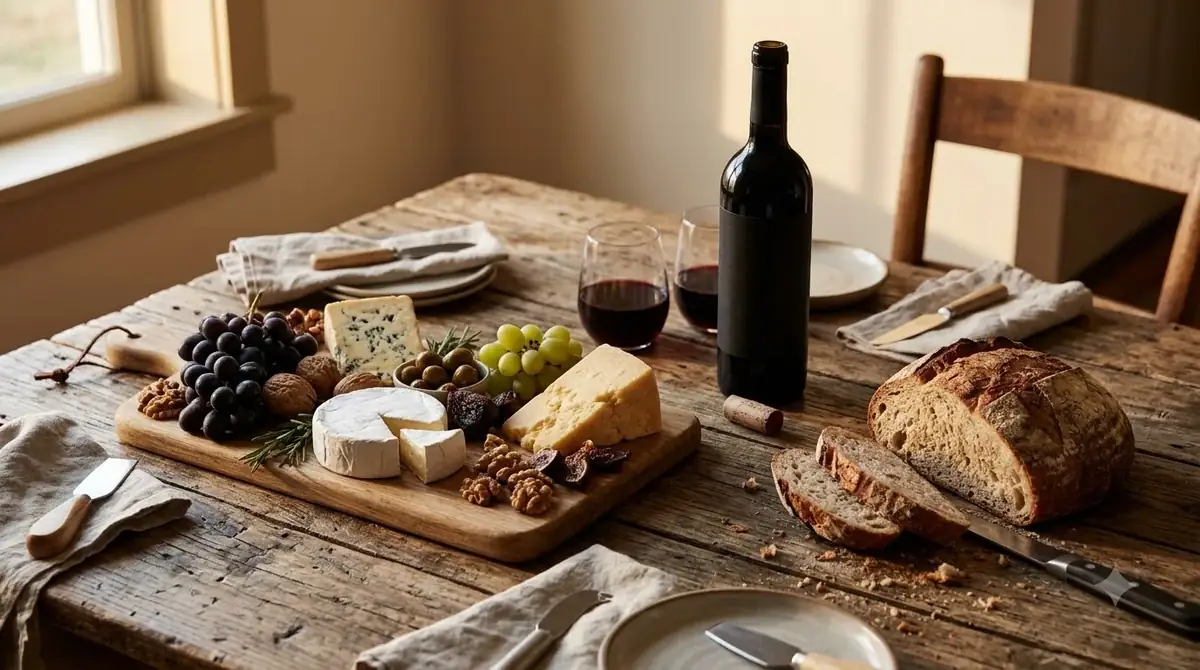
Match the style of the wine to the food. A full-bodied red from a warm region such as the Barossa pairs with grilled meats, roast lamb and hearty pasta dishes, because the wine has enough structure to match the richness. A structured red from the Clare Valley can also suit roast beef and mushroom dishes.
Dry whites from cooler regions such as Clare Valley and Margaret River are good with seafood, salads and poultry. Aromatic whites from Marlborough suit lighter dishes with citrus, herbs and goat cheese. When in doubt, pair a crisp white with simple seafood and a fuller red with meat, since those combinations work for most buyers.
How to Choose a Hardys Bottle
Start with the occasion and the food. For a weeknight dinner, a reliable everyday bottle from a familiar region is the simplest choice. For a dinner party or a gift, look for a bottle with a clearer regional identity and a producer story you can point to. For a light lunch, a dry white from a cooler region is usually easier to match than a heavy red.
It also helps to compare styles within the same region. Two reds from the same area can differ in oak use, ripeness and price, so read the back label and any producer notes before you decide. If you want to see how an Australian red differs from a more estate-focused European wine, the Antinori red wine guide offers a useful contrast, and the Aveleda wine guide covers a different family-run producer for a second comparison.
Frequently Asked Questions
When was Hardys founded?
The company traces its roots to 1853, when the business began at Old Reynella in South Australia under the name Thomas Hardy and Sons. It later became The Hardy Wine Company and eventually adopted the name Vinarchy.
Which regions does Hardys use?
Hardys draws on several Australian regions, including the Barossa, Clare Valley, McLaren Vale, Margaret River, Padthaway and Marlborough. The region on the label is the best guide to the style of a particular bottle.
Is Hardys the same as Jacob’s Creek?
No. Jacob’s Creek is one of several brands in the same group of wine companies, alongside Hardys, Houghton, Banrock Station and others. Each brand has its own style and positioning, so check the label before you assume two bottles will taste alike.
How should I serve a Hardys red?
Serve a red slightly below room temperature in a standard wine glass. A short time in the refrigerator before pouring helps keep the wine from tasting heavy in a warm room.
Hardys wine gives buyers a wide choice across Australian regions, from warm-climate reds to cool-climate whites. Use the region and style on the label to match the bottle to the meal, serve it at a suitable temperature and compare it with other producers in the wine brands guide. For the company’s history and its brand structure, read the Hardy Wine Company entry on Wikipedia.
More in Wine Brands
 Underwood Wine Price: Compare Bottles, Cans, and Pack SizesUpdated Nov 21, 2026
 Zenato Wine Price: Compare Styles and Choose the Right BottleUpdated Nov 21, 2026
 Zuccardi Wine Price: Compare Bottles and Find the Right RangeUpdated Nov 21, 2026
 Yellow Tail Moscato Review: Taste, Sweetness and Serving TipsUpdated Nov 21, 2026
 Wolf Blass Yellow Label Review: Choose Your Best StyleUpdated Nov 21, 2026
 Wolffer Estate Rose Review: Choose the Right Bottle for Your TableUpdated Nov 21, 2026