

We may earn a commission when you buy through links on this page, at no extra cost to you. Learn more.
Antinori red wine comes from a Florentine family house whose best-known reds are Tignanello, Solaia and its Chianti Classico wines, mostly built on Sangiovese with Bordeaux varieties blended in. The producer’s estates span Tuscany and other Italian regions, and its red range runs from everyday Chianti Classico to the Super-Tuscan blends that helped make the category famous. Knowing which estate made a bottle tells you more about its style than the label alone.
This guide walks through the red wines the Antinori family is best known for, how those wines are made, and how to serve and pair them. It is written for buyers who see the name on a shop shelf and want to know what sits behind it.
The family and the estates behind the red wines
The Antinori company is based in Florence and traces its history back to 1385, when a family member joined the Florentine winemakers’ guild. Over the centuries the family built a portfolio of estates, and the company now lists properties such as Antinori nel Chianti Classico, Tenuta Guado al Tasso, Badia a Passignano, La Braccesca and Fattoria Aldobrandesca on its own website. Each estate has its own soil, altitude and climate, and that is why two Antinori reds can taste quite different.
The Tignanello vineyard, a plot of about 47 hectares acquired in 1900, sits within the Santa Cristina estate, and the wine made there is one of the best-known reds in Italy. Badia a Passignano, bought in 1987, is a large estate of about 325 hectares around a historic abbey, and it produces Chianti Classico Riserva wines. Tenuta Guado al Tasso, in the Bolgheri area, is a much larger holding of around 900 hectares and sits on the coast rather than in the Chianti hills.

Tignanello: the wine that changed Tuscan red
Tignanello is the wine most people mean when they say Antinori red wine. Since 1982 it has been a blend of roughly 85% Sangiovese, 10% Cabernet Sauvignon and 5% Cabernet Franc. The first vintage dates to 1971 and was released in 1974, and the wine is often credited with helping launch the “Super-Tuscan” movement, in which producers blended international grapes into Italian reds.
The blend matters for how you drink it. The Sangiovese gives red cherry and savoury herb notes with bright acidity, while the Cabernet adds structure and a firmer finish. Tignanello is a wine that rewards a little patience, so it suits a meal with some weight behind it rather than a quick glass before dinner.
| Wine | Main grape character | Where it fits |
|---|---|---|
| Tignanello | Mostly Sangiovese with Cabernet Sauvignon and Cabernet Franc | Structured red for a rich meal or a special dinner |
| Solaia | Cabernet Sauvignon-led blend with Cabernet Franc and Sangiovese | Deeper, more concentrated red for grilled or roasted dishes |
| Chianti Classico Riserva | Sangiovese from the Chianti Classico zone | Classic Tuscan red with pasta, tomato and game |
Solaia and the Cabernet-led style
Solaia is the other red that buyers hear about often. It was released in 1978, and in its early years it was made from about 80% Cabernet Sauvignon and 20% Cabernet Franc. The current blend is roughly 75% Cabernet Sauvignon, 5% Cabernet Franc and 20% Sangiovese, which gives it a more Bordeaux-leaning character while keeping a Tuscan backbone.
Solaia comes from a small vineyard next to Tignanello in the Chianti Classico area, so the two wines share a landscape but not a recipe. If you enjoy a firm, dark-fruited red with real structure, Solaia is the bottle to look for. If you prefer a lighter, brighter red, a Sangiovese-based Chianti Classico will feel closer to what you expect from Tuscany.
Chianti Classico and Sangiovese at the core
Sangiovese is the grape behind most of Antinori’s Tuscan reds, and it is the base of Chianti. Wine Folly’s Sangiovese guide describes its typical flavours as cherry, roasted tomato, sweet balsamic, oregano and espresso, with bone-dry body, medium-high tannins and medium-high acidity. The grape takes on different expressions depending on where it grows, which is why an estate’s soil and altitude matter.
Antinori produces Chianti Classico Riserva wines, including ones from the Badia a Passignano estate. Sangiovese-based Chianti Classico of this kind usually reads as a classic Tuscan red, with fresh cherry, dried herbs and firm tannins that soften with time. These are the bottles to choose for everyday Italian food, from tomato sauces to grilled meats.
How to serve Antinori red wine
Serving temperature changes how the wine tastes. Wine Folly gives a serving range of 60–68°F (15–20°C) for Sangiovese, and it recommends decanting the wine for about 30 minutes before pouring. A short decant lets the wine open up and softens the tannins, which is useful for the bigger Tignanello and Solaia blends.
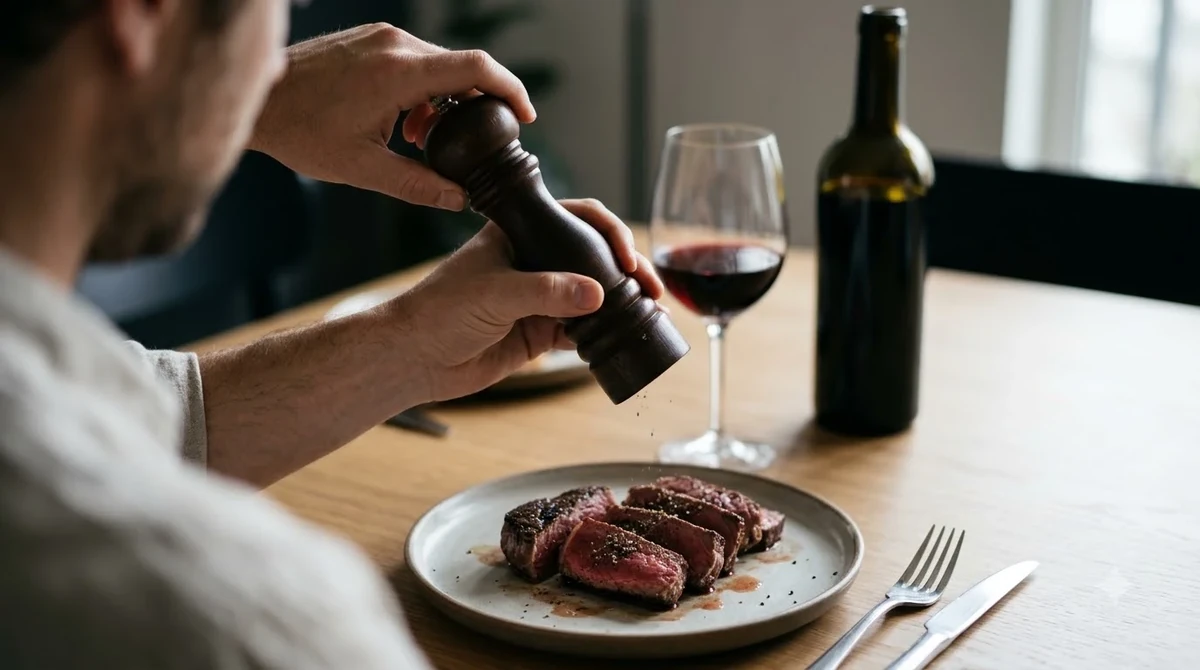
Use a large red wine glass so the aromas can gather, and pour a modest amount so the wine has room to breathe. Keep the bottle out of direct sunlight and away from a warm stove, since heat can dull fresh fruit flavours in a wine that is meant to be bright.
Food pairing with Antinori reds
Sangiovese’s high acidity makes it a natural match for tomato, red pepper and herb-driven dishes. Wine Folly points to its suitability for grilled foods and vegetable dishes as well. A plate of pasta with tomato sauce, a roast with rosemary, or a board of aged cheese all suit a Chianti Classico Riserva.
The Cabernet-heavy Solaia and the Tignanello blend handle richer foods with more fat and char. Think grilled steak, roast lamb or mushroom dishes. Matching the wine to the sauce, rather than the protein alone, usually gives the better result.
How to choose the right Antinori red for you
Start with the style you want rather than the label. If you like a fresh, savoury red that goes with everyday food, look at the Chianti Classico wines from the Tuscan estates. They are built around Sangiovese and tend to be the most versatile at the table. If you want a deeper, more concentrated wine for a special meal, the Super-Tuscan blends such as Tignanello and Solaia are the more ambitious choices, with their Cabernet backbone and longer development in the glass.
Check the back label for the estate name and the vintage, since the same family brand can produce several reds from different sites. A bottle from a hillside estate in the Chianti Classico zone will not taste like one from the coastal Bolgheri area, even though both carry the Antinori name. Buying from a reputable retailer that stores wine properly also matters, because heat damage in shipping or on a shop shelf can flatten the fruit in any red.
When you compare Antinori with other producers, a useful pattern is to set a family house against a single estate. Antinori spreads its reds across many properties, so the style you enjoy may depend on which estate it came from. Reading the producer’s own description of each estate is the quickest way to understand the range.
Frequently Asked Questions
What is the most famous Antinori red wine?
Tignanello is the wine most often named. It is a blend of mostly Sangiovese with Cabernet Sauvignon and Cabernet Franc, and it is widely credited with helping launch the Super-Tuscan style.
Is Solaia a Sangiovese wine?
Not mainly. Solaia is led by Cabernet Sauvignon, with Cabernet Franc and a smaller share of Sangiovese in the current blend. Its character is more Bordeaux-like than a typical Chianti.
Should Antinori red wine be decanted?
A short decant helps, especially for bigger reds. Wine Folly suggests about 30 minutes for Sangiovese, which lets the aromas open and softens the tannins.
Which Antinori red suits a weeknight meal?
A Chianti Classico style is the easiest fit for everyday cooking, especially tomato-based pasta and grilled dishes. Save the Super-Tuscan blends for richer meals.
Antinori red wine covers a wide range, from the Sangiovese-based Chianti Classico wines to the Cabernet-led Super-Tuscan blends. Start with the estate and the grape, then pick the style that fits your meal. For more on the wider brand family, see wine brands, and compare with Bertani wine from another Italian producer.
More in Wine Brands
 Underwood Wine Price: Compare Bottles, Cans, and Pack SizesUpdated Nov 21, 2026
 Zenato Wine Price: Compare Styles and Choose the Right BottleUpdated Nov 21, 2026
 Zuccardi Wine Price: Compare Bottles and Find the Right RangeUpdated Nov 21, 2026
 Yellow Tail Moscato Review: Taste, Sweetness and Serving TipsUpdated Nov 21, 2026
 Wolf Blass Yellow Label Review: Choose Your Best StyleUpdated Nov 21, 2026
 Wolffer Estate Rose Review: Choose the Right Bottle for Your TableUpdated Nov 21, 2026