

We may earn a commission when you buy through links on this page, at no extra cost to you. Learn more.
The gros manseng grape is a white variety native to the Pyrenean foothills of Southwest France, prized for the high acidity it keeps even at full ripeness. Its heartland is around Jurançon near Pau, where it makes dry, citrus-driven whites and can also produce sweet late-harvest wines. You will also find it in blends from Pacherenc du Vic-Bilh and Côtes de Gascogne. Its crisp backbone makes it an easy match for seafood, herbs and light cream sauces.
If you have picked up a Jurançon Sec or a Côtes de Gascogne white and wondered which grape was in the glass, there is a good chance it was gros manseng. The variety rarely gets the attention lavished on Chardonnay or Sauvignon Blanc, but it has a distinctive personality that is easy to recognize once you know what to look for. This guide covers where the grape comes from, how it tastes in dry and sweet styles, why its acidity matters so much, how it behaves in the vineyard and winery, and how to serve and pair it at home. If you want to compare it with other whites afterward, browse Wine by Type.
Where the gros manseng grape comes from
The grape is native to the Pyrenean foothills of Southwest France, and its history is bound up with one appellation and one town. Most of its story plays out around Jurançon, close to Pau in the Béarn province.
Wine with Seth reports that the Manseng name appears in Occitan-language records from 1562, and that a written distinction between Petit and Gros Manseng was first recorded in 1783. The Jurançon appellation was established in 1936 for sweet wines, while the dry style that now defines the grape came much later. According to the same source, Jurançon Sec, the dry appellation most associated with gros manseng, was not officially recognized until 1975.
Cellar Tours adds useful context on how the wine world changed around the grape. Before dry styles took off in the early 1900s, most iconic wines, Champagne included, carried some residual sugar, so few growers in the nineteenth century saw a reason to make a dry gros manseng. Phylloxera and shifting tastes then wiped out much of the demand for sweet wine at the end of the 1800s, and many vineyards were never replanted. Many estates in the area are still run by the descendants of families who first planted vines in the 17th century, a continuity that helps explain why local traditions have held on. The Cellar Tours profile of the grape is a good starting point if you want the producer-side story.
Flavor and aroma of dry gros manseng wine
Dry versions tend to be bright and aromatic, with citrus and stone fruit up front and a floral lift behind them. The fresh finish is the detail most drinkers remember.
In a typical dry bottle, expect grapefruit, lemon zest and white peach on the nose, with apricot and quince underneath. Floral notes such as acacia and honeysuckle are common, and some examples show a light touch of white pepper. The juice is naturally grey-gold, so the finished wine often looks deeply golden even when the skins have little contact with the juice. The overall impression is more zesty than soft, which is why many people compare it with a crisp, fruit-forward Sauvignon Blanc.
Harvest timing shifts the profile considerably. Wine with Seth notes that picking at a potential alcohol of about 11.5 to 12 percent yields lighter, more floral wines, while picking later, at roughly 12.5 to 13.5 percent, produces richer and more powerful expressions with mango, pineapple and passion fruit. Body also varies. Cellar Tours describes the dry style as running from aromatic, relatively light whites to richly textured wines that imitate Burgundy, so one bottle can taste delicate while another feels opulent. For specific bottles to try, see our gros manseng wine guide.
The sweet side of the grape is different. When gros manseng is dried on the vine, a process called passerillage, rather than relying on botrytis, the wine develops honeyed fruit and candied citrus, and its acidity keeps those sweet flavors from feeling heavy. Wine with Seth points out that sweet styles are more typically associated with the smaller-berried petit manseng, so late-harvest gros manseng is less common and is often valued for freshness as much as for sugar.
Why acidity defines the grape
Acidity is the trait that separates gros manseng from many other southwestern whites. The grape keeps its freshness even at high ripeness, which is unusual among white varieties.
Cellar Tours highlights the grape’s ability to hold good acidity at high levels of phenolic ripeness, noting that few grapes manage that balance. Growers can wait for a later harvest to build flavor without losing the crisp backbone that makes the wine lively. That combination is the core of the variety’s appeal, and it explains why many winemakers treat acidity as the main selling point rather than something to soften.
In practical terms, a dry gros manseng sits at the high end of the acidity scale used in most wine guides, alongside Sauvignon Blanc and Riesling, while offering more texture and fruit depth. Compared with the neutral airen grape common in Spain, it is far more expressive. Acidity also makes food pairing easier. Acidic dishes call for a wine that is at least as acidic, so a lemony sauce, a vinaigrette or a squeeze of lime will not flatten the glass. The same freshness cuts through richness, which is why creamy chicken and veal in white-wine sauces suit the style so well.
Growing the grape in the vineyard
In the vineyard, gros manseng is a late-season variety that rewards patient growers. It needs a long, dry and warm finish to the year, and its recent history shows how close the grape came to disappearing.
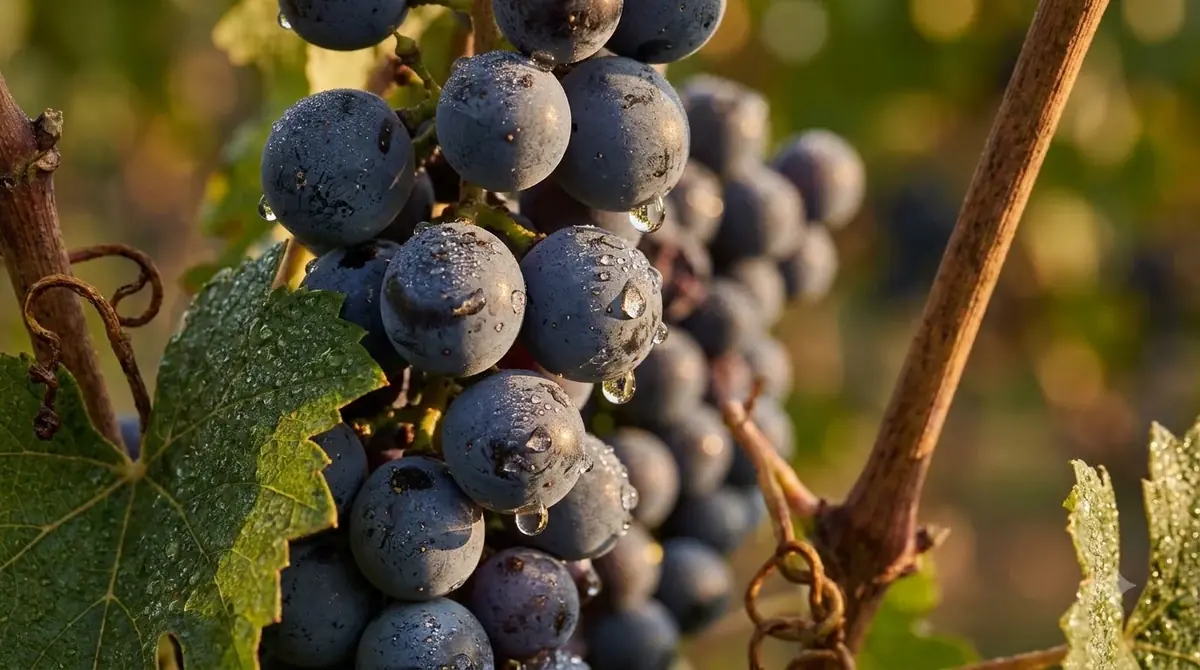
Gros manseng buds early but ripens late, so it depends on a long stretch of dry, warm weather in autumn. Cellar Tours notes that the soils of the zone are often calcareous, which can supply enough moisture through the summer. The berries are large and thick-skinned, and growers value the variety because it performs well in the vineyard. Cellar Tours also observes that the northeastern part of Jurançon, where clay-limestone soils are common, produces wines that are more structured and take longer to reveal their charms, while sandstone, clay and sand dominate in the south.
The grape’s recent past is a story of decline and comeback. Wine with Seth reports that the variety had fallen to just 58 hectares by 1958, after phylloxera and rural depopulation hit the region hard. Plantings recovered from the 1960s and 1970s as demand for dry white wine grew, and the same source puts French plantings at approximately 2,800 hectares. For a grape that was once close to being pulled out entirely, that is a remarkable turnaround. Cellar Tours tells a similar story, describing a moment in the 1950s when permanent extinction seemed possible before a small group of growers pushed the grape back into the spotlight as a dry style.
Winemaking choices that shape the glass
Pressing and fermentation decide much of the final style. Winemakers protect the wine from the grape’s own thick skins and keep fermentation cool so the aromas and acidity stay sharp.
Cellar Tours reports broad agreement that skin contact, even limited, does little good for dry whites made from gros manseng. The skins are rich in polyphenols that can add bitter astringency when the fruit is handled roughly. For that reason, growers often press the grapes almost as soon as they arrive, using a hydraulic press that releases juice gently. The juice is then chilled to protect it from oxidation and to let solids settle, and sulfur dioxide may be added at this stage or during pressing.
Most producers ferment in stainless steel at low temperatures to protect primary fruit aromas. Malolactic fermentation is generally avoided, since the grape’s vibrant acidity is the point of the wine. Wine with Seth describes the same approach as standard practice, noting that cool stainless steel fermentation helps preserve aromatics and acidity. You can read the full WineWiki entry for gros manseng for more on the cellar side.
A younger generation of winemakers, many of them in the biodynamic camp, is experimenting with fermentation in concrete eggs, barrels and amphorae. Some age wines on fine lees to add richness and texture. Cellar Tours adds that the grape can handle a high degree of barrel aging, but 100 percent new oak can overwhelm it. Those choices explain why two bottles from the same grape can taste so different on the table.
Serving, pairing and storing at home
Dry gros manseng shows its best slightly cooler than a light red, and sweet late-harvest styles belong colder still. Matching the wine’s acidity and sweetness to the dish does most of the work.
A common guideline is to serve lighter dry bottles at 45 to 50 F and fuller, barrel-aged examples at 50 to 55 F. Cold temperatures mute aromas, while a wine that is too warm tastes soft and loses the lift that makes it refreshing. Sweet late-harvest wines do best at 43 to 50 F. The table below summarizes the three main styles and where each one fits at the table.
| Style | Typical character | Serving temperature | Pairing ideas |
|---|---|---|---|
| Early-harvest dry (11.5 to 12% ABV) | Floral, citrus, light and fresh | 45 to 50 F | Grilled sea bass, asparagus with vinaigrette |
| Later-harvest dry (12.5 to 13.5% ABV) | Tropical fruit, fuller texture | 50 to 55 F | Roast chicken with herbs, scallops in citrus butter |
| Late-harvest sweet | Honeyed apricot, candied citrus | 43 to 50 F | Foie gras, Roquefort, apricot tart |
The pairing logic follows the acidity rule. A citrus butter sauce or a lemony fish needs an equally bright wine, so dry gros manseng works well with scallops and sea bass. For dessert, the wine should be at least as sweet as the dish, which is why a late-harvest style goes with apricot tart while a dry white tastes thin beside it. Spicy food needs a little extra care. Chili heat feels sharper when alcohol is high, so choose a lower-alcohol, early-harvest bottle for a curry or a chili-spiked dish.
Tip: Plan on about five glasses per 750 ml bottle, since a standard pour is about 5 ounces. That makes it easy to estimate how many bottles a dinner party needs.
Store unopened bottles on their side in a cool place near 55 F, away from heat and light, so the corks stay moist. Serve dry styles chilled and pour them while they still show their citrus lift.
Frequently Asked Questions
Is gros manseng the same grape as petit manseng?
No, although the two are closely related. DNA analysis shows that gros manseng is a natural offspring of petit manseng, and both sit within the wider Traminer family of grapes. Confusion between them is real, since a DNA analysis in Australia found that vines sold as petit manseng for decades were in fact gros manseng.
How does its ripening timing compare with other grapes?
Wine with Seth reports that gros manseng buds at about the same time as Chasselas, the benchmark variety, but ripens roughly four weeks later. That long gap gives growers a window to pick at different ripeness levels, which is how the same grape can produce both lighter and richer dry wines.
Which vineyard disease is gros manseng prone to?
Cellar Tours notes that the grape is susceptible to oidium, a fungal disease that appears in wet weather. Growers may need to spray with Bordeaux mixture, a copper sulfate preparation, to avoid losing yield in damp years.
Where else is gros manseng permitted in France?
Wine with Seth lists the grape as a key permitted variety in Pacherenc du Vic-Bilh, an appellation established in 1948 that also allows petit manseng and petit courbu. It is also permitted in Irouléguy, Saint-Mont and the Côtes de Gascogne IGP. Decanter notes that the Côtes de Gascogne IGP covers over 13,500 hectares, with most of its production being dry whites built around gros manseng, ugni blanc and colombard.
How long does an opened bottle stay good?
An opened still white such as dry gros manseng generally holds for about three to five days in the refrigerator, while sparkling wine lasts only about one to three days. Keep the bottle sealed with a stopper and chilled to slow oxidation.
Gros manseng rewards drinkers who want fresh, expressive whites with real backbone. Start with a dry Jurançon Sec or a Côtes de Gascogne blend, then try a later-harvest bottle to see how ripeness changes the glass. Chilled to the right temperature and matched to food with some acidity, it is one of the most rewarding whites from Southwest France.
More in Wine Types & Grapes
 What Does Ruby Port Taste Like? Flavor Notes, Styles, and Serving TipsUpdated Nov 21, 2026
 What Does Ribolla Gialla Taste Like? Crisp White and Amber Styles ExplainedUpdated Nov 21, 2026
 What Does Semillon Taste Like? Flavor Profile, Styles & PairingsUpdated Nov 21, 2026
 What Does Scuppernong Taste Like? Flavor, Styles, and Pairing GuideUpdated Nov 21, 2026
 What Does Saperavi Taste Like? Flavors, Styles, and Pairing GuideUpdated Nov 21, 2026
 What Does Natural Wine Taste Like? Flavors, Styles, and Serving TipsUpdated Nov 21, 2026