

We may earn a commission when you buy through links on this page, at no extra cost to you. Learn more.
gros manseng wine is a high-acid white wine from Southwest France that can be made in both crisp, dry styles and richly sweet versions. Its most familiar expressions come from Jurançon, where the grape brings citrus, orchard-fruit and tropical notes with a lively finish. Look for Jurançon Sec when you want a dry white, or a sweet Jurançon bottling when you want concentrated fruit balanced by acidity. The grape also appears in other Southwest French wines, so the region and wording on the label help set expectations.
Gros Manseng suits drinkers who like aromatic whites with more texture than a very lean aperitif wine. It can feel bright and brisk, but ripe fruit, lees aging and late harvesting can give it breadth. Understanding the grape, the appellation and the harvest style makes it easier to choose a bottle for dinner or dessert.
What Gros Manseng Wine Tastes Like
The typical profile is fresh and aromatic, with high acidity supporting citrus, white fruit and a hint of tropical character. Dry examples are usually the easiest place to start: the fruit is clear, the finish is lively, and the texture can range from light to full without losing freshness.
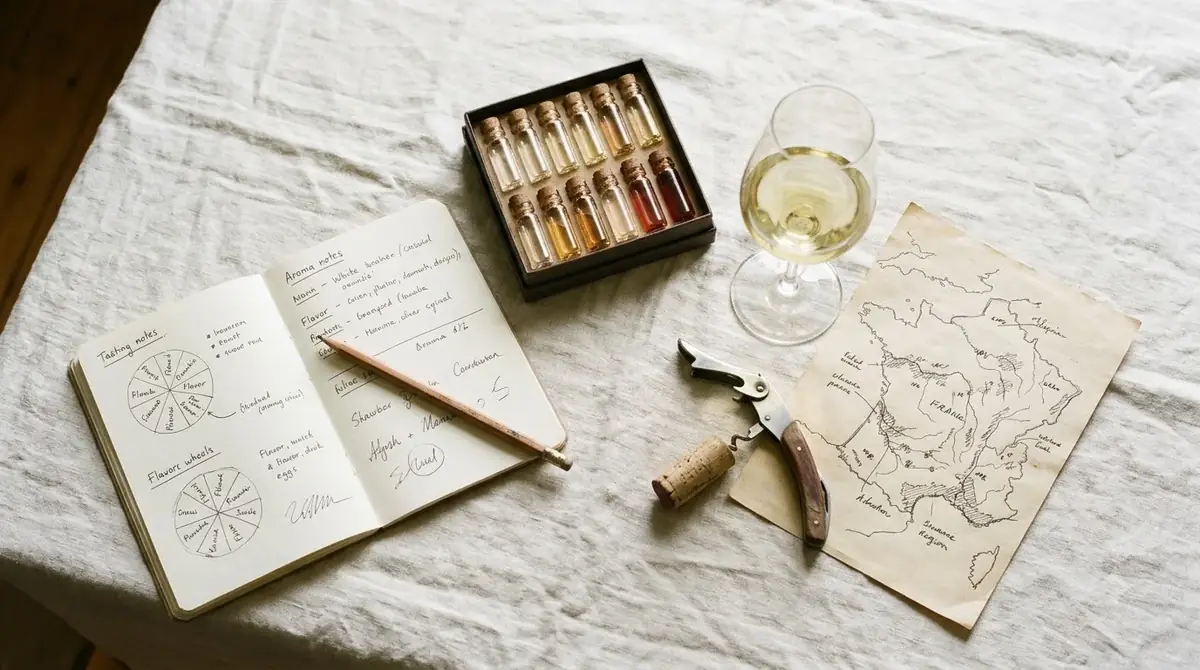
On the nose, expect grapefruit, lemon, lime peel, green apple, pear, white peach or quince. Riper bottlings may show pineapple, kiwi, passion fruit or a touch of honey, while some add white flowers, fennel, fresh herbs, green hazelnut or a peppery edge. The mix changes with picking date, vineyard site, ripeness and cellar choices. A cool, citrus-led example can feel nervy; a riper wine may lean toward stone fruit and tropical fruit while retaining firm acidity.
On the palate, Gros Manseng often combines energetic acidity with a rounded center. It is not a tannic grape, so its structure comes from acidity, alcohol, fruit concentration and sometimes lees contact rather than the drying grip associated with Cabernet Sauvignon or Syrah. Stainless-steel wines can seem direct and crisp, while wines kept on their lees may feel broader and more persistent. A dry 2024 Clos de la Vierge Gros Manseng from Lionel Osmin & Cie was described by Wine Enthusiast as rich, with spice, citrus, kiwi, lychee and a light honey note.
Sweetness is not fixed by the grape name: Gros Manseng can be picked for dry wine or left longer so the berries concentrate sugar, while acidity helps keep sweeter examples lively. It is useful to distinguish it from Petit Manseng, its close regional partner. Gros Manseng has larger berries and is generally more generous and fruit-forward; Petit Manseng is smaller-berried, more concentrated and particularly associated with intense sweet wines. The varieties can be blended, but they are not synonyms. For a closer look at vine traits, see our profile of the Gros Manseng grape.
Dry and Sweet Styles: What the Label Tells You
Gros Manseng can produce dry, off-dry and sweet white wines, with harvest timing doing much of the work in setting the style. In Jurançon, the word “Sec” identifies the dry expression; the appellation also makes sweet wines whose acidity balances their natural sugar.
For dry wine, growers aim to bring the grapes in when the fruit is ripe but still fresh, avoiding excessive sugar while retaining aromatic intensity. Jurançon Sec is often led by Gros Manseng, sometimes with Petit Manseng or other local grapes in the blend. The result can be brisk, with lemon and grapefruit, or fuller and more textured, with quince, pineapple, spice and a mineral or savory edge. Sweet versions come from later-picked grapes that have more time to concentrate sugar, giving a richer palate without losing the variety’s trademark acidity.
The Jurançon protected designation of origin sets specific analytical limits for its two broad styles. These figures apply to Jurançon PDO wines, not universally to every wine made from Gros Manseng.
| Jurançon style | Fermentable sugar | Alcohol rule | Maximum yield |
|---|---|---|---|
| Jurançon Sec | No more than 4 grams per liter | At least 11.5 percent natural alcohol; no more than 14 percent total alcohol after enrichment | 66 hectoliters per hectare |
| Jurançon with fermentable sugars | More than 40 grams per liter | At least 14 percent natural alcohol | 44 hectoliters per hectare |
The official Jurançon PDO specification explains why the two styles drink so differently. A dry Jurançon Sec is a table white for seafood, poultry and savory dishes; a sweet Jurançon is better treated as a dessert wine or a deliberate partner for salty, rich foods. The acidity is the common thread: it keeps the dry wines lively and stops the sweet wines from feeling syrupy. Outside Jurançon, Gros Manseng is also used in Pacherenc du Vic-Bilh and Saint-Mont, two other Southwest appellations with their own regional expressions. Our explainers on what Petit Manseng is and whether Petit Manseng is sweet or dry clarify why variety name alone does not tell the whole sweetness story.
Where Gros Manseng Grows in Southwest France
Jurançon is the best-known home for Gros Manseng, in the foothills of the Pyrenees southwest of Pau. Its vineyards occupy hilly ground across 25 municipalities in the Pyrénées-Atlantiques, where Atlantic influence and mountain weather help preserve acidity as grapes ripen.
Three zones help explain differences between Jurançon vineyards. Chapelle de Rousse lies to the northeast and is associated with puddingstone, a hard mix of pebbles and calcareous cement. Monein, to the west, has more varied soils with a strong molasse influence and is the most widely planted zone described by Decanter. Lasseube, farther south, is smaller and sandier. South-facing amphitheaters and slopes give many sites good exposure, while the Pyrenees shape local airflow and temperature patterns.
The official Jurançon specification describes about 1,200 millimeters of annual rainfall and roughly 1,900 hours of sunshine. Warm, dry foehn winds from the south can blow in spring and autumn, drying the air and raising temperatures. That combination matters for a grape that needs time to ripen but benefits from retaining freshness; it helps the region make both bright dry whites and late-harvest wines with concentrated sweetness.
Gros Manseng is also associated with Pacherenc du Vic-Bilh and Saint-Mont, two other Southwest appellations where it contributes to dry and sweet white wines. Those regional names can be useful when shopping: Jurançon points you toward the Pyrenean foothills, while the other appellations offer their own regional expressions. Decanter describes Gros Manseng as the reliable, fruit-forward workhorse of Jurançon, in contrast with Petit Manseng’s greater concentration. That is a practical distinction, not a quality ranking: Gros Manseng brings generosity and aromatic fruit, while Petit Manseng can add intensity and concentration to blends.
How Growers and Winemakers Shape the Wine
Gros Manseng needs a careful balance between ripeness and acidity, so growers pay attention to the condition of the berries rather than relying on the calendar alone. In Jurançon, the harvest can extend into October even for dry whites, and the appellation specification requires manual harvesting.
At Clos Lapeyre, the producer says its dry Jurançon harvest often begins no earlier than October 5 to 10, depending on the grapes’ appearance, skin thickness and taste. The fruit is destemmed and pressed, the juice is settled, and fermentation takes place with indigenous yeasts in stainless-steel vats over three to four weeks. The wine then spends six months on its lees in stainless steel. This is one producer’s method, not a mandatory recipe for the grape.
That cellar method helps explain the style. Stainless steel keeps the fruit profile clear and avoids obvious oak flavor, while lees contact can lend a smoother texture and extra persistence. The Clos Lapeyre bottling is made from 100 percent Gros Manseng, comes from vines cultivated at about 400 meters, and is described with citrus, white fruit and green hazelnut notes. The producer’s Clos Lapeyre Jurançon Sec description provides a concrete example of a single-variety approach. Other producers may blend Gros Manseng with Petit Manseng or local grapes, or age part of a cuvée in barrels. A barrel-fermented blend may feel rounder and more layered, while a stainless-steel version may emphasize citrus, herbs and a clean finish.
Tip: When choosing a dry Gros Manseng, look for “Jurançon Sec” for the classic Pyrenean expression. If the label names a single variety, confirm whether it is 100 percent Gros Manseng or a blend, because Petit Manseng and other local grapes can change the wine’s weight and aromatic profile.
Food Pairings for Dry and Sweet Gros Manseng
High acidity makes dry Gros Manseng a natural partner for foods with freshness, salt or richness. Think shellfish, grilled fish, roast chicken, goat cheese and dishes seasoned with aromatic herbs or spices rather than heavy sauces.
For a crisp dry wine, try oysters, mussels, shrimp, scallops or simply grilled white fish with lemon. The acidity refreshes the palate between bites, while citrus and white-fruit flavors work with the gentle sweetness of seafood. Fish prepared with curry, saffron, ginger or fennel can also suit the grape: its ripe fruit and aromatic character can meet those flavors without requiring oak or tannin. Clos Lapeyre specifically recommends shellfish and fish prepared with curry or saffron, as well as fresh goat or sheep cheese.
Cheese and charcuterie are useful options for a less formal pairing. Fresh goat cheese, young sheep’s-milk cheese, air-dried ham and dry sausage bring salt and savory flavor that complement a dry, citrus-led wine. For a richer version with lees texture, roast poultry, pork tenderloin or a creamy vegetable dish can offer enough substance without overpowering the acidity. Avoid making a delicate, lightly textured wine compete with a very sweet glaze or an intensely smoky preparation.
Sweet Gros Manseng calls for a different approach. Match the wine’s sweetness to the dish: a sweet Jurançon should be at least as sweet as the dessert, or the wine can taste thin and sour by comparison. Apricot tart, poached pear, mango, pineapple, baked apple and lightly spiced fruit desserts are sensible matches. Salty blue cheese or a rich savory dish can also create a pleasing sweet-salty contrast, especially when the wine has enough acidity to refresh the palate. Be cautious with very hot chili, since alcohol can make chili heat feel more intense; aromatic spice is a better choice than searing heat.
How to Buy, Serve and Store Gros Manseng
Start with the style you need, then use the appellation and producer details to narrow the choice. “Jurançon Sec” is the clearest signal for a dry white, while a sweet Jurançon is better suited to dessert or a salty, rich pairing. A bottle from Pacherenc du Vic-Bilh or Saint-Mont may also contain Gros Manseng, but the stated grape mix helps if varietal character is your priority.
For a fresh, citrus-driven dry wine, choose a recent bottling and plan to drink it while its fruit is vivid. A more concentrated or lees-aged wine can have enough structure to develop for a few years, but do not assume every dry bottle is built for long cellaring. Sweet Jurançon has a different balance: residual sugar and high acidity can support longer development, so a serious late-harvest bottle may be worth keeping. Producer style, harvest conditions and storage matter more than the grape name alone.
Serve a lean, crisp dry Gros Manseng at about 45 to 50 degrees Fahrenheit. A fuller, lees-aged dry version can be served around 50 to 55 degrees, so its fruit and texture are not muted; sweet whites are generally best around 43 to 50 degrees. If the bottle is too cold, give it a few minutes in the glass. As it warms, aromas of pear, citrus, quince, flowers or honey become easier to identify.
Use a standard five-ounce pour in a white-wine glass with enough room to swirl. A 750-milliliter bottle gives about five such glasses, useful when planning dinner for four or five people. Keep unopened bottles on their sides in a cool, dark place near 55 degrees Fahrenheit, away from vibration and sharp temperature changes. After opening, close the bottle and refrigerate it; most still wines hold their best qualities for about three to five days, although a delicate aromatic wine is often most expressive during the first couple of days. To compare this grape with other styles, browse our broader Wine by Type reference.
Frequently Asked Questions
These quick answers cover practical details that are easy to miss when comparing a grape name with a regional wine label. The main distinction remains the same: Gros Manseng can be dry or sweet, and appellation wording helps identify the style.
Can sweet Jurançon age for decades?
Yes. The Jurançon PDO specification notes that wines with fermentable sugars can become more complex over several decades. With age, their aromas can shift toward dried fruit and spices rather than the fresher fruit and floral notes of youth.
What does passerillage mean?
Passerillage is the drying of grapes on the vine after they reach ripeness, concentrating sugars and flavors as water is lost from the berries. In Jurançon, dry foehn winds can help this process; it is different from relying on noble rot to concentrate grapes.
Are Jurançon grapes harvested by hand?
Yes. The Jurançon PDO specification says grapes for its wines are harvested manually. It also specifies successive selections for wines other than those labeled “Sec,” reflecting the care required for some sweet-wine harvests.
How densely are vines planted in Jurançon?
The Jurançon specification sets a minimum planting density of 4,000 vines per hectare for covered vineyard parcels. The rule does not apply to terraced plots, where the terrain requires a different arrangement.
How many glasses are in a standard bottle?
A standard 750-milliliter bottle contains about five five-ounce pours. That is a practical planning measure for a meal, though smaller tasting pours will stretch the bottle further.
Gros Manseng is a flexible white grape, but its signature is the combination of aromatic fruit and high acidity. Choose Jurançon Sec for a lively dry white, or a sweet Jurançon when you want richness kept in balance by freshness. Once you know the style and region, the grape is easier to match with the food and occasion.
More in Wine Types & Grapes
 Zinfandel Sugar Content: Dry Red vs. White Zinfandel GramsUpdated Nov 21, 2026
 Best Zinfandel Substitute Options for Sipping and CookingUpdated Nov 21, 2026
 Zweigelt Food Pairing: Best Dishes, Cheeses, and Serving TipsUpdated Nov 21, 2026
 Zinfandel Tannins Explained: How Structure Shapes Every BottleUpdated Nov 21, 2026
 Zinfandel Sweetness Level: Dry Red vs. Sweet White Zin ExplainedUpdated Nov 21, 2026
 Xinomavro Food Pairing: Best Dishes, Styles, and Serving TipsUpdated Nov 21, 2026