

We may earn a commission when you buy through links on this page, at no extra cost to you. Learn more.
Gewurztraminer carbs typically range from about 3 to 6 grams per 5-ounce glass, although sweeter and late-harvest versions can contain considerably more. The main factors are residual sugar, fermentation style, and serving size. Dry Gewürztraminer generally contains fewer carbohydrates than off-dry or sweet versions, while alcohol contributes additional calories without adding carbohydrates.
Gewürztraminer is a distinctive white wine recognized for its fragrant aromas of lychee, rose petals, tropical fruit, and spice. Its aromatic intensity can make even relatively dry examples seem sweet, which sometimes creates confusion about their actual carbohydrate content. Understanding the difference between perceived sweetness and residual sugar makes it easier to estimate what is in your glass, compare bottles, and choose a style that suits your preferences.
How Many Carbs Are in a Glass of Gewürztraminer?
A standard 5-ounce serving of Gewürztraminer generally provides approximately 3 to 6 grams of carbohydrates, depending on its sweetness. Dry examples tend toward the lower end, while off-dry and sweeter bottles can contain more because they retain additional grape sugar after fermentation.
For comparison, Wine.com estimates approximately 3 grams of carbohydrates in a 5-ounce serving of dry white wine. Its reference figures also show 9 grams for off-dry Riesling Kabinett and 19 grams for sweet Moscato d’Asti. These figures illustrate how strongly wine style and sweetness can influence carbohydrate content, even among white wines.
Gewürztraminer does not have one fixed nutritional value. The grape variety itself does not determine the final carbohydrate count. Winemaking decisions, particularly how much sugar remains after fermentation, have a substantial effect.
Consider two examples from Weck, an Alsace producer. One Gewürztraminer lists 16 grams of natural residual sugar per liter, while another lists 35 grams per liter. These figures represent the sugar concentration in the wine, not the total carbohydrate count in a glass.
To understand the difference, convert the residual sugar concentration into the amount found in a typical serving. A 5-ounce glass contains approximately 0.148 liters of wine. Multiplying the concentration by that volume gives a useful estimate of the sugar contributed by residual sugar alone.
| Wine example or style | Residual sugar | Sugar in 5 oz |
|---|---|---|
| Dry reference example | 2.5 g/L | 0.4 g |
| Weck Gewürztraminer | 16 g/L | 2.4 g |
| Weck Grand Cru Goldert | 35 g/L | 5.2 g |
| Off-dry reference range | 4–12 g/L | 0.6–1.8 g |
| Medium-sweet reference range | 12–45 g/L | 1.8–6.7 g |
Figures are approximate. Residual sugar is not identical to total carbohydrates, and the dry reference example is based on Wine.com’s general dry-wine illustration rather than a specific Gewürztraminer bottle. The Weck figures are calculated from the producer’s published residual sugar concentrations.
The practical takeaway is that a dry 5-ounce glass may contain only a few grams of carbohydrates, while a noticeably sweeter example can contribute more. For a useful estimate, start with the wine’s sweetness category and serving size rather than assuming every bottle made from the same grape has identical nutritional information.
Why Dry and Sweet Gewürztraminer Have Different Carbohydrate Counts
The difference between dry and sweet Gewürztraminer comes primarily from fermentation and residual sugar. During fermentation, yeast converts grape sugar into alcohol. When fermentation finishes with little sugar remaining, the wine is dry; when more sugar remains, the finished wine tastes sweeter and generally contains more carbohydrates.
Gewürztraminer is naturally capable of developing substantial sugar concentrations in the vineyard. This characteristic allows winemakers to produce wines across a broad sweetness spectrum, from dry table wines to rich late-harvest bottlings.
Alsace, in northeastern France, is particularly associated with the variety. The region’s wines can display pronounced aromas of lychee, mango, pineapple, rose, and spices. According to the Alsace wine industry’s description of Gewürztraminer, these wines are typically full-bodied, richly aromatic, and supported by a freshness that is less pronounced than in many other Alsace whites.
Dry Gewürztraminer
Dry Gewürztraminer contains relatively little residual sugar because most fermentable grape sugar has been converted into alcohol. Its floral and tropical aromas can nevertheless create a sweet impression without a correspondingly high sugar concentration.
A dry bottle is generally the more suitable starting point for someone comparing lower-carbohydrate white wine styles. A useful general reference is approximately 3 grams of carbohydrates per 5-ounce serving for dry white wine, although an individual Gewürztraminer may differ.
Off-Dry Gewürztraminer
Off-dry Gewürztraminer retains some residual sugar and often has a gentle sweetness alongside its characteristic fruit and spice aromas. Berry Bros. & Rudd describes a common off-dry reference range of approximately 4 to 12 grams of residual sugar per liter.
At that concentration, a 5-ounce glass contains approximately 0.6 to 1.8 grams of residual sugar. Total carbohydrates can be somewhat higher because residual sugar is only one component of the wine’s carbohydrate content.
Sweet and Late-Harvest Gewürztraminer
Sweet Gewürztraminer can contain substantially more residual sugar, especially when grapes are harvested late and have developed high natural sugar concentrations. Vendanges Tardives and Sélection de Grains Nobles are two Alsace designations associated with particularly concentrated late-harvest styles.
These wines often have concentrated flavors of honey, ripe tropical fruit, dried apricot, and candied citrus. Their sweetness makes them very different from ordinary dry table wine, and their carbohydrate content can be considerably higher.
The distinction matters because two bottles bearing the same grape name can have very different nutritional profiles. Sweetness is a more useful starting point for carbohydrate estimates than the variety name alone.
How Residual Sugar Determines Gewürztraminer Carbs
Residual sugar is the amount of grape sugar left in wine after fermentation. It is normally expressed in grams per liter, abbreviated g/L, and provides a practical way to compare the sweetness of different Gewürztraminer bottles.
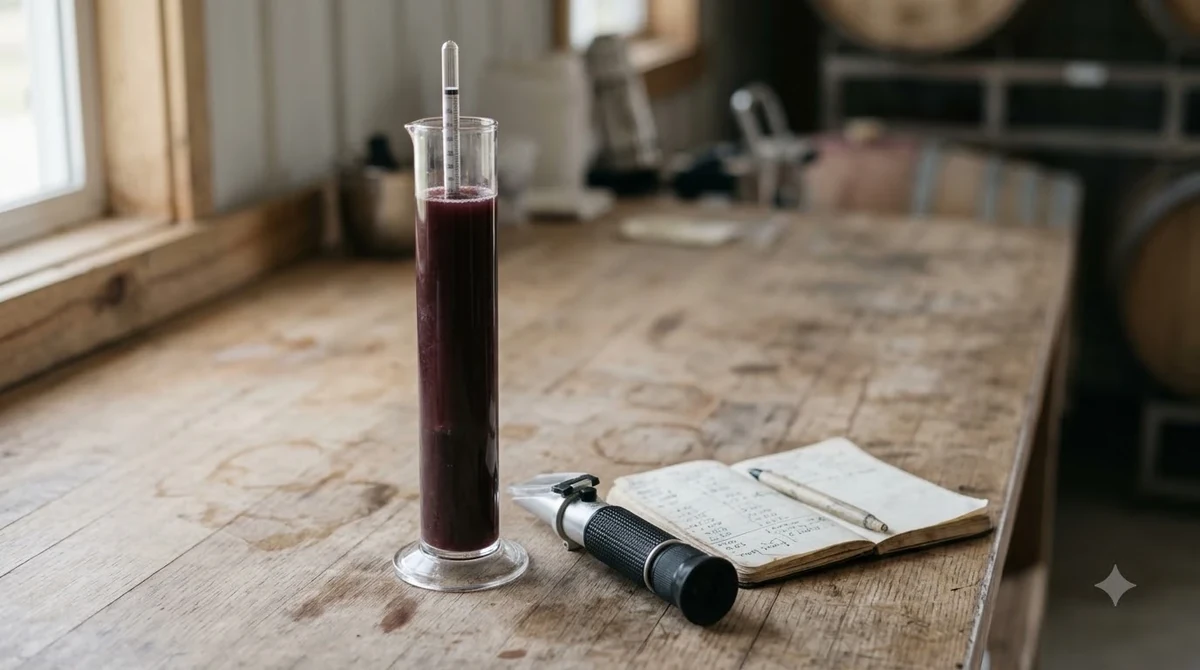
For a standard 5-ounce serving, the conversion is straightforward: multiply the residual sugar concentration in grams per liter by approximately 0.148. This estimates how many grams of residual sugar are present in the glass.
For example, a wine containing 16 g/L of residual sugar provides approximately 2.4 grams of residual sugar in a 5-ounce glass. A wine containing 35 g/L provides approximately 5.2 grams in the same serving.
These calculations are useful because they replace vague descriptions such as slightly sweet or richly fruity with measurable information. They also show why serving size matters: a larger glass contains proportionally more sugar from the same bottle.
However, residual sugar should not be confused with total carbohydrates. Wine contains other compounds, and the nutritional carbohydrate figure may not equal the sugar calculation. A residual sugar measurement is therefore an important clue, not a complete nutrition label.
Understanding Sweetness Categories
General wine sweetness classifications provide another way to interpret residual sugar. Wine.com uses the following approximate categories in its educational nutrition guide:
- Bone dry: 0–1 g/L residual sugar.
- Dry: 1–4 g/L.
- Off-dry: 4–12 g/L.
- Medium sweet: 12–45 g/L.
- Sweet: 45–120 g/L.
- Dessert: 120 g/L or more.
These are useful general reference categories, not universal legal definitions for every wine region. A producer may also describe sweetness using local terminology that does not correspond exactly to another region’s classification.
Tip: If a producer publishes residual sugar in g/L, multiply that number by 0.148 to estimate the grams of residual sugar in a 5-ounce glass. Remember that the result represents sugar, not necessarily the complete carbohydrate count.
A producer example helps demonstrate the calculation. Weck’s Gewürztraminer Grand Cru Goldert lists 35 grams of natural residual sugar per liter and 13% alcohol. That translates to approximately 5.2 grams of residual sugar in a standard glass, before accounting for other carbohydrate components.
Another Weck Gewürztraminer lists 16 grams per liter and 13.5% alcohol. Its equivalent 5-ounce serving contains approximately 2.4 grams of residual sugar. Both wines are from the same producer and grape variety, yet their sugar concentrations differ considerably.
How Serving Size Changes the Carbohydrate Count
Even when a bottle has a consistent nutritional profile, the number of carbohydrates in a glass changes with the amount poured. A standard 5-ounce serving is a useful reference, but restaurant pours and home servings are not always that size.
For practical estimates, a 750-milliliter bottle contains approximately five 5-ounce servings. A 6-ounce pour contains 20% more wine than a standard serving, while a 9-ounce pour contains 80% more.
The following calculations use a representative estimate of 4 grams of total carbohydrates per 5-ounce serving. This is an illustrative planning figure within the general range discussed for Gewürztraminer, not a laboratory measurement for every bottle.
| Serving size | Approximate volume | Estimated carbohydrates |
|---|---|---|
| 3 oz | 89 ml | 2.4 g |
| 5 oz | 148 ml | 4 g |
| 6 oz | 177 ml | 4.8 g |
| 8 oz | 237 ml | 6.4 g |
| 9 oz | 266 ml | 7.2 g |
| 750 ml bottle | 750 ml | 20.3 g |
The figures are proportional estimates based on the same assumed carbohydrate concentration. They are not independent measurements or guaranteed nutritional values for a specific wine.
Calculating Carbohydrates for a Full Bottle
To estimate the carbohydrate content of an entire bottle, multiply the amount in a standard 5-ounce serving by approximately five. Using the illustrative 4-gram estimate, a 750-milliliter bottle would contain about 20 grams of carbohydrates.
A bottle with higher residual sugar may contain considerably more. For example, a sweet Gewürztraminer cannot reliably be assigned the same bottle estimate as a dry example. The sugar concentration needs to be considered separately.
It is also useful to distinguish the bottle’s total contents from the amount actually poured. Someone sharing a bottle among five people will consume approximately one standard serving each, while two people dividing the same bottle will each receive approximately 12.7 ounces.
That difference makes portion size one of the easiest variables to understand when comparing wine consumption. A large pour of a relatively dry wine can contain more carbohydrates than a small pour of a sweeter example.
How to Choose Gewürztraminer With Fewer Carbs
Choosing a lower-carbohydrate Gewürztraminer starts with identifying its sweetness level. Dry and lightly off-dry versions generally have less residual sugar than medium-sweet, sweet, and late-harvest bottlings.
Start with the producer’s tasting description and technical information. Words such as dry, sec, and trocken can help identify wines intended to have little residual sweetness, although terminology differs by region. Descriptions such as sweet, moelleux, vendanges tardives, and sélection de grains nobles suggest styles that may contain considerably more sugar.
Alsace is a useful region to explore because it produces Gewürztraminer in several different styles. Some bottles emphasize aromatic freshness and a relatively dry finish, while others have a more pronounced sweetness and richer texture.
Producer information can also provide specific numbers. The Weck examples demonstrate why it is useful to compare residual sugar concentrations rather than relying entirely on the grape name or front-label description.
Questions to Ask When Comparing Bottles
- Is the wine described as dry, off-dry, or sweet?
- Does the producer publish residual sugar in g/L?
- Is the wine an ordinary table wine or a late-harvest bottling?
- What is the alcohol percentage?
- Is the serving size being compared consistent?
Alcohol percentage deserves attention, but for a different reason. A higher alcohol level can increase calories without necessarily increasing carbohydrate content. A 13.5% Gewürztraminer is not automatically higher in carbohydrates than a 12% bottle if its residual sugar is lower.
For additional comparisons, readers can explore dry red wine carbs to understand how dry red wines compare with aromatic whites. The same principle applies: the grape variety and color alone do not determine carbohydrate content.
Another useful comparison is moscato carbs. Moscato is frequently made in sweeter styles, so its carbohydrate estimates can be substantially higher than those of a dry Gewürztraminer.
Alcohol, Calories, and Gewürztraminer Nutrition
Carbohydrates and calories are related but separate nutritional measurements. Gewürztraminer contains calories from both alcohol and carbohydrates, so a dry wine can still have a relatively substantial calorie count despite having little residual sugar.
Alcohol is particularly important because it contributes approximately 7 calories per gram. Wine.com’s educational reference estimates that a 5-ounce serving of dry wine at 13.5% alcohol contains approximately 120 calories and 3 grams of carbohydrates.
The same reference estimates approximately 8 additional calories in a 5-ounce serving for each percentage-point increase in alcohol, although actual values depend on the wine and serving size. This explains why alcohol strength can matter more to total calories than small differences in residual sugar.
For Gewürztraminer, alcohol levels can vary between producers and styles. Weck’s published examples include one wine at 13% alcohol and another at 13.5%. These differences affect the potential calorie contribution from alcohol, but residual sugar remains a separate consideration when estimating carbohydrates.
Does Sweetness Always Mean More Calories?
In general, wines with more residual sugar contain more carbohydrate-derived calories. However, two wines with different sweetness levels can also have different alcohol concentrations, which makes direct calorie comparisons more complicated.
A sweeter Gewürztraminer with lower alcohol may not have the same total calorie difference as its sugar concentration alone suggests. Likewise, a dry wine with higher alcohol can provide more calories than a lighter-bodied wine with slightly more residual sugar.
The most useful approach is to evaluate alcohol and sugar independently. Residual sugar helps estimate carbohydrates, while alcohol percentage provides a clue to the wine’s alcohol-derived calories.
Serving temperature and food pairings do not materially change the wine’s carbohydrate content. Gewürztraminer is commonly served lightly chilled, and a temperature around 45–50°F works well for many lighter white wine styles, while fuller examples may benefit from slightly warmer service.
Its aromatic character also makes it suitable for flavorful food. Alsace Gewürztraminer is traditionally paired with spicy Asian dishes, Indian curries, Moroccan seasonings, and strong cheeses such as Munster. These combinations illustrate how the wine’s fruitiness and texture can work alongside pronounced food flavors.
Readers interested in comparing wine styles and their characteristics can also explore Wine by Type, which provides a broader introduction to the differences between red, white, rosé, sparkling, and other wine categories.
Frequently Asked Questions
Does Gewürztraminer contain gluten?
Traditional Gewürztraminer is made from fermented grapes and is not inherently a gluten-containing beverage. The grape fermentation process does not require wheat, barley, or rye. However, production practices and added ingredients can vary between products.
Is Gewürztraminer considered a dessert wine?
Not necessarily. Ordinary Alsace Gewürztraminer is produced in dry, off-dry, and sweeter styles and can accompany a full meal. Vendanges Tardives and Sélection de Grains Nobles are more concentrated late-harvest categories that are particularly associated with dessert-style sweetness.
What does the word Gewürztraminer mean?
The name is commonly translated as spicy Traminer. It reflects the variety’s aromatic character rather than the presence of added spices. Its distinctive perfume comes from the grape itself, including floral, tropical fruit, and spice-like aromas.
Can Gewürztraminer be made into sparkling wine?
Yes. Gewürztraminer can be used in sparkling wine production, including sparkling styles made in Alsace. Crémant d’Alsace is a regional sparkling wine category with regulated production requirements, and its grape composition differs according to the permitted varieties and style.
Does Gewürztraminer change its carbohydrate content as it ages?
Residual sugar does not normally disappear simply because a finished wine spends time aging in the bottle. Its aromatic profile and flavor balance can evolve, with mature examples developing notes such as honey, nuts, and dried fruit. These sensory changes should not be mistaken for a corresponding increase in carbohydrate content.
Gewürztraminer carbs depend mainly on residual sugar and serving size, making dry and off-dry bottles useful starting points for comparing different styles. A standard 5-ounce glass generally provides a few grams of carbohydrates, while sweeter and late-harvest examples can contain considerably more. Comparing producer information, alcohol percentage, and actual pour size gives a clearer picture than relying on the grape variety alone.
More in Wine Types & Grapes
 What Does Ruby Port Taste Like? Flavor Notes, Styles, and Serving TipsUpdated Nov 21, 2026
 What Does Ribolla Gialla Taste Like? Crisp White and Amber Styles ExplainedUpdated Nov 21, 2026
 What Does Semillon Taste Like? Flavor Profile, Styles & PairingsUpdated Nov 21, 2026
 What Does Scuppernong Taste Like? Flavor, Styles, and Pairing GuideUpdated Nov 21, 2026
 What Does Saperavi Taste Like? Flavors, Styles, and Pairing GuideUpdated Nov 21, 2026
 What Does Natural Wine Taste Like? Flavors, Styles, and Serving TipsUpdated Nov 21, 2026