


We may earn a commission when you buy through links on this page, at no extra cost to you. Learn more.
For a standard 5-ounce pour, dry red wine carbs usually total about 3 to 4 grams. A representative nutrition listing puts a 5-ounce dry red at 3 grams of total carbohydrate and less than 1 gram of sugar. The exact figure varies with the wine, serving size, and the way a nutrition database counts carbohydrate.
Red wine is not carbohydrate-free, but a dry style generally contains a small amount in a measured glass. The key is to separate residual sugar, which affects sweetness, from total carbohydrate, which is the broader nutrition figure. Once those terms and the pour size are clear, it becomes easier to compare Cabernet Sauvignon, Pinot Noir, Merlot, and other reds without assuming that darker color or a fuller body means more sugar.
How Many Dry Red Wine Carbs Are in a Glass?
A standard 5-ounce glass of dry red wine usually contains around 3 to 4 grams of total carbohydrates, with sugar often below 1 gram. Wine.com lists a representative 5-fluid-ounce red at 3 grams of carbohydrate, 0.3 gram of sugar, 120 calories, and 13.5% alcohol by volume; a USDA-linked red table wine entry works out to about 3.8 grams of carbohydrate for the same serving size.

Those figures are estimates, not a guarantee for every bottle. The Wine.com figure describes a typical dry red example, while the USDA-linked record is a generic red table wine entry rather than a chemical analysis of the bottle on a store shelf. The two figures still give a practical range: use about 3 to 4 grams as a starting point for a measured 5-ounce glass, then allow for variation in the producer’s style and the wine’s remaining sugar.
There is an important distinction between total carbohydrate and sugar. In the generic red table wine record, the carbohydrate figure is 2.61 grams per 100 grams of wine, while reported sugars account for 0.62 gram per 100 grams. Scaled to a 5-ounce portion weighing about 147 grams, that is approximately 3.8 grams of total carbohydrate and 0.9 gram of sugar. These values do not conflict: sugar is one part of the overall carbohydrate figure, not a second amount to add on top.
For a quick comparison, keep the serving fixed. A 5-ounce pour of a typical dry red is a better benchmark than a casual glass filled to different heights, because a large restaurant pour can contain noticeably more wine than the standard reference serving.
How Fermentation and Residual Sugar Shape the Count
Dryness describes how much grape sugar remains after fermentation, not whether a wine has absolutely no carbohydrates. Yeast converts grape sugars into alcohol; when fermentation finishes, only a small residue may remain, while a fermentation stopped earlier can leave a noticeably sweeter wine.
Residual sugar, commonly shortened to RS, is measured in grams per liter. Decanter explains that the European still-wine category for dry includes wines with up to 4 grams per liter, although acidity can allow some wines with higher RS to taste dry under the applicable rules. At 4 grams per liter, a 5-ounce glass contains about 0.6 gram of residual sugar, because 5 ounces is roughly 0.148 liter. That calculation explains why a glass can contain less than a gram of sugar while still showing a larger total-carbohydrate number in a nutrition database.
The Australian Wine Research Institute (AWRI) also treats measured sugar as one input in wine energy calculations, separate from organic acids and glycerol. Its guidance gives a typical available-carbohydrate input of 0.1 gram per 100 grams for dry red wine below 4 grams per liter of residual sugar; that figure is a calculation input for energy labeling, not a universal total-carbohydrate result for every red wine. The distinction matters because a technical estimate of fermentable sugar and a broad nutrition database’s total-carbohydrate field are not necessarily measuring the same thing.
For more detail on what remains after fermentation, read Decanter’s explanation of residual sugar. The practical takeaway is straightforward: a wine described as dry usually has little residual sugar, but “dry” does not mean zero sugar, zero carbohydrate, or zero calories.
Red Grape Varieties and Wine Styles
Grape variety can shape a red wine’s flavor, body, acidity, and tannin, but the variety name alone does not establish its carbohydrate count. A dry Pinot Noir, Merlot, Cabernet Sauvignon, or Syrah will generally sit in the same broad low-carb neighborhood when each is poured at 5 ounces; sweetness and serving size matter more than whether the wine is pale ruby or deeply colored.
Cabernet Sauvignon is typically high in tannin, while Merlot has medium, softer tannin and Pinot Noir tends to have low-to-medium tannin with high acidity. Syrah can have medium-plus to high tannin. Those differences explain why the wines feel different in the mouth, but tannin is not a reliable shortcut for estimating grams of carbohydrate. A structured Cabernet from Napa Valley is not automatically sweeter than a lighter Pinot Noir from Oregon or Burgundy.
Style is more useful than grape shorthand. A dry red blend that finishes fermentation can remain low in residual sugar even if it tastes ripe and full. A fruit-forward red can seem sweet because of ripe berry aromas, oak-derived vanilla notes, or a smooth texture without actually having a high RS reading. Conversely, a wine labeled semi-sweet or made with sugar left after fermentation can carry more carbohydrate than a dry red, even if its color and body look similar.
Comparisons across colors follow the same rule. A 5-ounce dry white often has a similar broad carbohydrate range to a dry red, so the separate guide to dry white wine carbs is useful when deciding between a red and a white. Sweet styles are a different category: check the explanation of is Moscato sweet or dry before treating a Moscato as interchangeable with a dry table wine.
Serving Size Changes the Arithmetic
The amount in the glass is one of the easiest variables to control. If a 5-ounce serving contains about 3.8 grams of carbohydrate, a smaller pour contains less and a larger pour contains more in direct proportion; the wine itself has not changed, only the amount being counted.
The table below scales the generic red table wine figure of 2.61 grams per 100 grams to common pours, using the 147-gram weight listed for a 5-ounce serving. The values are rounded to one decimal place, so treat them as reference estimates rather than bottle-specific laboratory results.
| Pour size | Approximate total carbs | How to read it |
|---|---|---|
| 2.5 fl oz | 1.9 g | Half of a 5-ounce pour |
| 5 fl oz | 3.8 g | Standard reference glass |
| 6 fl oz | 4.6 g | A modestly larger pour |
| 8 fl oz | 6.1 g | A generous home or restaurant pour |
| 750 ml bottle | About 19.5 g | Approximately five 150 ml servings |
A 750-milliliter bottle contains just over 25 fluid ounces. The AWRI’s example uses five 150-milliliter servings per 750-milliliter package, which is a practical way to divide a bottle; at roughly 3.9 grams per 150-milliliter serving, the bottle comes to about 19.5 grams using the generic red-wine estimate. A bottle shared by five people therefore gives each person about one serving, while two people splitting it evenly would each receive well over two standard 5-ounce glasses.
Glassware can make this calculation less obvious. A wide-bowled red-wine glass may hold far more than 5 ounces without looking full, and a free-pour at home can easily creep from 5 to 6 or 8 ounces. Measuring a pour once with a kitchen measuring cup gives a useful visual reference for future servings; after that, the shape of the glass is less likely to disguise the actual volume.
Alcohol, Calories, and Carbohydrates Are Different Measures
Carbohydrates are only one part of wine’s nutrition profile. Alcohol contributes most of the calories in many dry reds, so a higher-alcohol bottle can deliver more energy even when its carbohydrate count is similar to a lower-alcohol wine.
For example, Wine.com’s representative dry red is listed at 13.5% alcohol by volume, 120 calories, and 3 grams of carbohydrate per 5-ounce serving. The site’s broad comparison gives a bold red such as Zinfandel at 15% alcohol and about 135 calories per 5 ounces, while the carbohydrate estimate remains around 3 grams. That illustrates why calories and carbs should not be treated as interchangeable numbers: alcohol can change the calorie total without producing a matching increase in carbohydrate.
Alcohol percentage is not a dependable carbohydrate calculator by itself. Fermentation turns grape sugar into alcohol, so ripeness, the initial sugar level, fermentation choices, and any sugar remaining at bottling all influence the finished wine. A higher alcohol level may reflect riper grapes and more sugar converted during fermentation, but it does not prove that the finished wine has more residual sugar or total carbohydrate. Look at ABV as an alcohol measure and dryness or nutrition information as separate clues.
The AWRI’s overview of wine energy calculations explains that alcohol, available carbohydrate, organic acids, and glycerol are distinct inputs. The institute notes that dry and semi-dry wines in its calculation guidance span 0 to 12 grams per liter of sugar and 7% to 15% alcohol by volume. That broad range is another reason not to infer carbohydrate grams from ABV alone.
How to Choose a Dry Red and Compare Labels
Start by choosing a genuinely dry style, then compare similar serving sizes. Pinot Noir, Cabernet Sauvignon, Merlot, and Syrah can all be made dry, so a grape name is less informative than the wine’s sweetness, alcohol level, and the producer’s nutrition details. Words such as dry, sec, or trocken may help, but labeling conventions differ by country and wine category. For still wines, the common European dry threshold is up to 4 grams per liter under the standard rule; acidity can affect how sweetness is perceived and how some thresholds are applied. Sparkling-wine terms are a separate scale: Brut Nature, Extra Brut, Brut, Extra Dry, Dry, Demi-Sec, and Doux do not follow the same intuitive order as everyday English. For a still red, the word “dry” is more relevant than a sparkling designation.
Do not rely on tasting language alone. Black cherry, plum, cocoa, ripe strawberry, or vanilla can make a red seem sweet even when the residual sugar is low. High acidity may make a wine taste fresher, and oak can add sweet-smelling aromas without adding grape sugar. When the nutrition number is not published, a practical estimate for a dry red remains 3 to 4 grams of total carbs per 5-ounce pour, not a promise that every bottle lands at the same value. When you are comparing red with rosé, remember that rosé can range from bone-dry to distinctly sweet, depending on the wine. The guide to is rosé sweet or dry explains why color does not determine sweetness. The broader Wine by Type overview can also help distinguish still reds, whites, rosés, sparkling wines, and dessert styles before comparing their nutrition estimates.
Tip: For a consistent comparison, use the same pour size for every wine. A 5-ounce glass of dry red is a much more useful benchmark than comparing an accurately measured 5-ounce Pinot Noir with an oversized 8-ounce Cabernet pour.
For a bottle-specific figure, look for a nutrition panel or producer-published technical information that states serving size and carbohydrate units. Check whether the number is total carbohydrate, sugar, or residual sugar; grams per liter cannot be compared directly with grams per glass. If a producer gives only RS in g/L, multiply that number by the serving volume in liters to estimate the residual sugar in the pour, not the full total-carbohydrate figure.
Frequently Asked Questions
These quick answers cover common points about 5-ounce pours, 750-milliliter bottles, and dry red styles such as Pinot Noir and Cabernet Sauvignon.
Does a dry red wine contain zero residual sugar?
No. “Dry” is a category for a low level of remaining sugar, not a guarantee that every sugar molecule has disappeared. At a residual-sugar level of 4 grams per liter, a full 750-milliliter bottle would contain about 3 grams of residual sugar in total.
Does aging a red wine in oak add carbohydrates?
Oak aging can add aromas associated with vanilla, toast, clove, and baking spice, but those aromas do not mean the wine has gained the same amount of grape sugar. Slow oxygen exposure through a barrel can also soften the wine’s texture over time, a change that does not remove or add meaningful carbohydrate.
Does red wine contain dietary fiber?
The USDA-linked generic red table wine entry reports 0 grams of dietary fiber per 100 grams. That means the carbohydrate estimate in the entry is not reduced by a fiber value, unlike some plant foods whose total carbohydrate includes a meaningful amount of fiber.
Do tannins count as carbohydrates?
No. Tannins are phenolic compounds associated with the drying, gripping sensation in wines such as Cabernet Sauvignon and young Syrah; they are not counted as dietary carbohydrate. A more tannic red is not automatically higher in carbs than a softer red.
Does decanting change the carbohydrate amount?
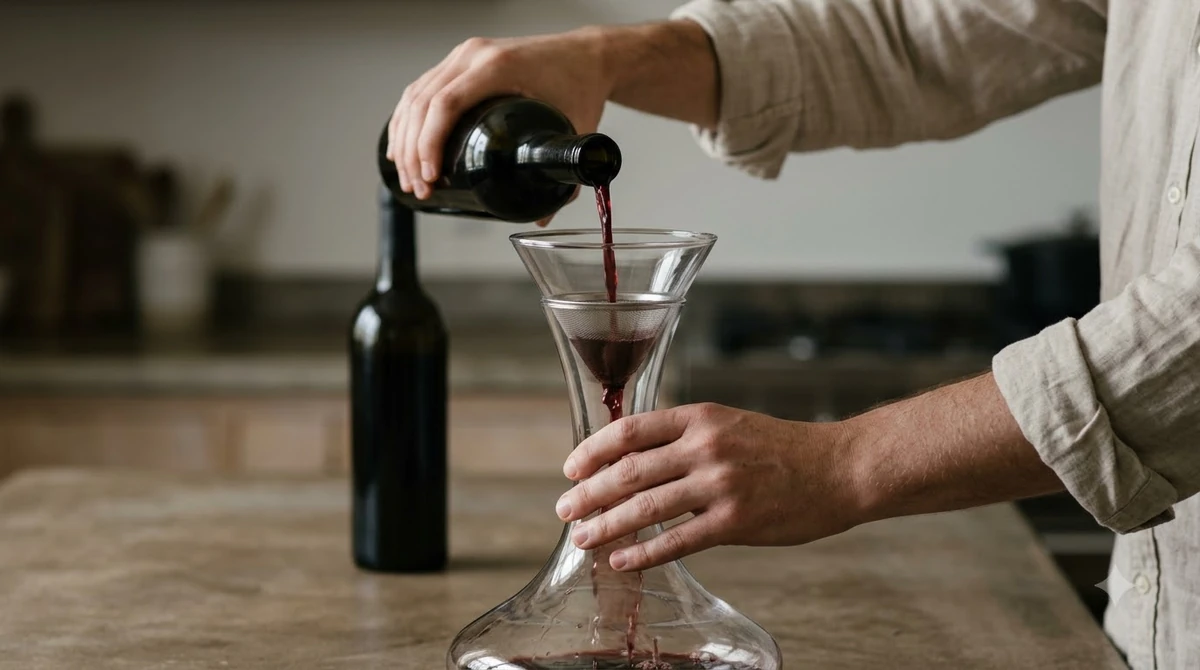
No. Pouring a young, full-bodied red into a decanter for 30 to 60 minutes can expose it to oxygen and change how its aromas and texture show, but it does not remove a meaningful amount of carbohydrate. The grams you count are determined by the wine and the volume poured, not by whether the wine has been decanted.
For most dry reds, a measured 5-ounce glass is a sensible estimate of about 3 to 4 grams of total carbohydrate, with less than a gram often coming from sugar. Compare the same serving size, distinguish residual sugar from total carbs, and treat generic nutrition figures as estimates rather than exact values for every bottle.
More in Wine Types & Grapes
 Zinfandel Sugar Content: Dry Red vs. White Zinfandel GramsUpdated Nov 21, 2026
 Best Zinfandel Substitute Options for Sipping and CookingUpdated Nov 21, 2026
 Zweigelt Food Pairing: Best Dishes, Cheeses, and Serving TipsUpdated Nov 21, 2026
 Zinfandel Tannins Explained: How Structure Shapes Every BottleUpdated Nov 21, 2026
 Zinfandel Sweetness Level: Dry Red vs. Sweet White Zin ExplainedUpdated Nov 21, 2026
 Xinomavro Food Pairing: Best Dishes, Styles, and Serving TipsUpdated Nov 21, 2026