

We may earn a commission when you buy through links on this page, at no extra cost to you. Learn more.
Georges Duboeuf wine is made by a négociant company founded in 1964 by Georges Duboeuf, the merchant known for popularizing Beaujolais and the annual Beaujolais Nouveau release. Its wines are recognized by their colorful flower labels, and the Beaujolais style is built on the Gamay grape, which gives light to medium-bodied reds with bright fruit and low tannin.
This guide covers who Georges Duboeuf was, how the company works, what its Beaujolais-style reds taste like and how to serve, pair and choose a bottle. It draws on the company history and the regional grape guide, so you can judge whether the style suits your table.
Who Georges Duboeuf was and how the company started
According to Wikipedia, Georges Duboeuf became a négociant in 1964, when he founded Les Vins Georges Duboeuf after a growers’ syndicate he had formed fell apart. Duboeuf, who lived from 1933 to 2020, was a French wine merchant nicknamed the king of Beaujolais. He was born near Chaintré, in the Pouilly-Fuissé appellation, which shows that his roots were in the Mâconnais as well as Beaujolais.
A négociant buys grapes or wine from many growers and blends and bottles it under its own label. That model lets the company offer a consistent house style across many vintages and regions, rather than relying on one estate. The same entry notes that the company produces more than 2.5 million cases of wine each year, which places it among the larger producers of French wine sold abroad.
Beaujolais Nouveau and the flower label
Duboeuf is widely credited with making Beaujolais Nouveau a yearly event. The wine is released shortly after harvest, and its fresh, fruity style is meant to be drunk young. According to the Wikipedia entry, Duboeuf was almost single-handedly responsible for popularizing that annual release, which helped put Beaujolais on wine lists far beyond France.
The company’s labels are easy to spot because they use colorful flower images and a distinctive insignia. That design choice is part of the brand’s identity and helps shoppers find the wines on crowded shelves. The labels are a useful visual cue, but the region, the vintage and the cru name on the back label tell you more about the style in the glass.
| Detail | What to know |
|---|---|
| Founded | 1964, as Les Vins Georges Duboeuf |
| Founder | Georges Duboeuf (1933 to 2020) |
| Known for | Beaujolais and Beaujolais Nouveau |
| Leadership | Control passed to his son, Franck Duboeuf, in 2018 |
| Label | Colorful flower images and insignia |
What Beaujolais tastes like
Beaujolais is a French region just south of Bourgogne, and its reds are made mainly from the Gamay grape. According to Wine Folly’s Beaujolais guide, most Beaujolais is a simple, rustic red, while the 10 Crus offer exceptional quality. The guide lists primary flavors of pomegranate, blackberry bramble and violet, with a dry, medium-light body, low tannins and medium-high acidity.
That profile makes Beaujolais one of the more approachable reds in the French repertoire. It is light enough for a warm evening, yet has enough acidity to pair with food. The Gamay character is fruit-forward but not sweet, and the wine’s freshness is what most drinkers notice first.
Not every bottle with this name will be a Beaujolais, so the appellation on the label is the best guide to the style you are buying. Check the region before comparing two bottles, since a wine from one commune can taste quite different from another.
Alcohol content and the label
Wine Folly gives 10 to 11.5 percent ABV as the typical range for Beaujolais, which is lower than many Cabernet-based reds. The guide also notes that the wines can be cellared for five to ten years, though most everyday bottles are meant to be drunk within a year or two of release.
The company’s own website could not be reached for this article, so the exact ABV for any bottle should be read on its back label. Duboeuf wines come from many regions and vintages, and the alcohol level can differ from one cuvée to the next. Use the grape range as an estimate, and the label as the final word.
Tip: If you want a lighter red for a warm evening, a Beaujolais from the list above is a sensible choice. Compare the ABV printed on the bottle before you pour for a larger group.
How to serve and pair Georges Duboeuf Beaujolais
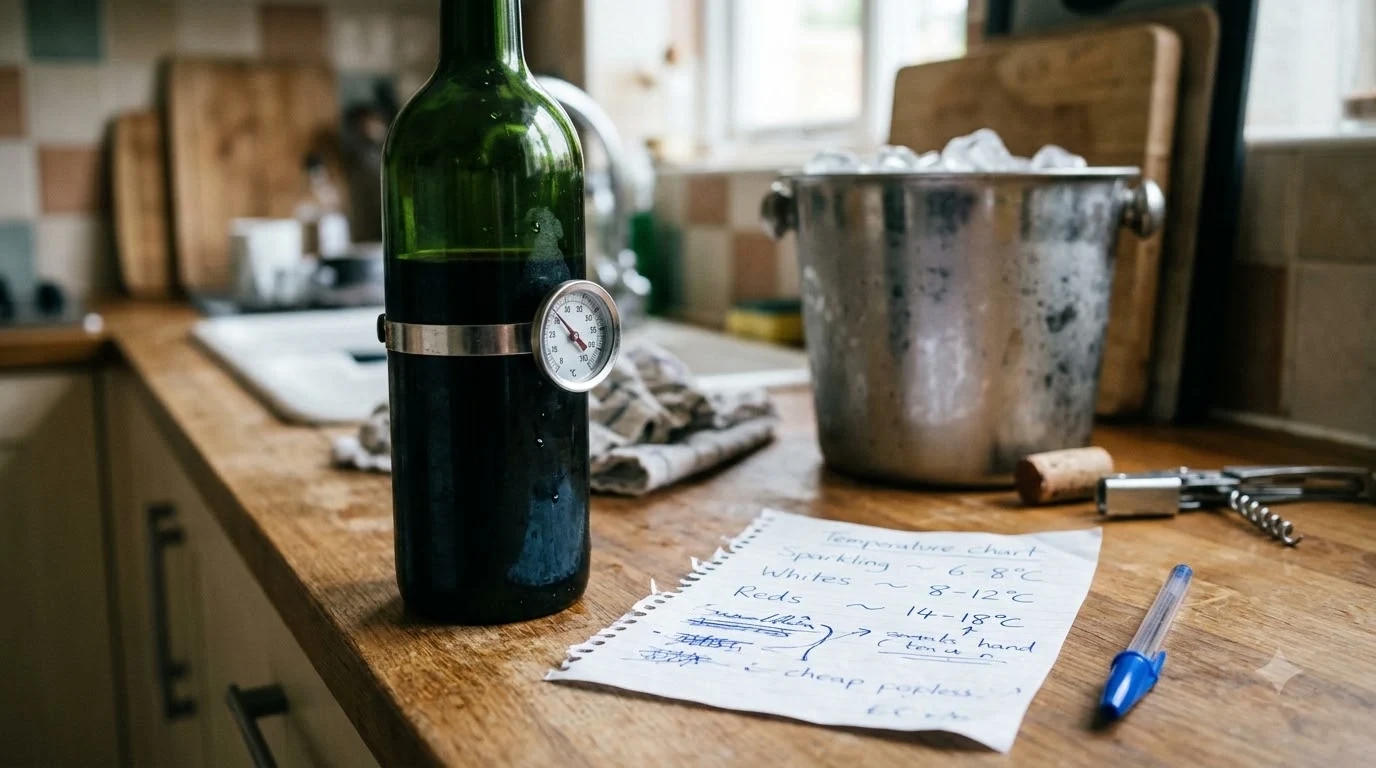
Wine Folly recommends serving Beaujolais at 55 to 60°F (12 to 15°C), a little cooler than most reds. Serving it slightly chilled brings out the fruit and keeps the wine feeling fresh. A standard red wine glass works well, and decanting is not needed for most bottles.
The guide suggests Beaujolais pairs well with a wide range of dishes because of its acidity and low tannin. It can match grilled beef, barbecue and even cedar-planked salmon, and it is a reliable choice for charcuterie, roast chicken and mushroom dishes. Light, fruit-driven reds like this one work with many casual meals, so it is an easy wine to bring to a dinner.
For more context on other popular brands, read our 14 Hands red wine and 19 Crimes red guides, which compare everyday reds from different producers. The 19 Crimes white wine guide covers the white side of the comparison, and the wine brands hub lists more labels to explore.
Who Georges Duboeuf wine suits
Duboeuf’s Beaujolais-style reds suit drinkers who want a light, fruity red with food flexibility. They are a good fit for casual dinners, picnics and warm-weather meals, and for anyone who finds full-bodied reds too heavy. The Beaujolais Nouveau tradition also makes the brand a natural choice for a seasonal tasting in late autumn.
The style may be less suited to shoppers who want a big, oak-driven red for a long cellar or a special occasion. Those buyers should look at the crus and the producer’s older vintages. For a richer wine, choosing a single cru from Beaujolais or a different appellation within the portfolio is a better route than expecting the house style to change.
How to choose a bottle
Start with the region on the label. A Beaujolais or Beaujolais-Villages is usually the lightest option, while a named cru often offers more depth and structure. Next, check the vintage. Young Beaujolais shows its best fruit in the first year or two, so a recent release is usually the better buy unless the bottle is from a cru known for aging.
Finally, match the wine to the meal. For a simple lunch or a picnic, a chilled Beaujolais is hard to beat. For a dinner with roast poultry or mushrooms, a cru with a little more body makes a good partner. Reading the back label and comparing two or three options will show which style suits you best.
Frequently Asked Questions
Who was Georges Duboeuf?
According to Wikipedia, Georges Duboeuf (1933 to 2020) was a French wine merchant who founded his company in 1964 and is known for popularizing Beaujolais Nouveau. He is nicknamed the king of Beaujolais.
What grape is used in Beaujolais?
Beaujolais reds are made mainly from Gamay. Wine Folly describes the style as fruit-forward with low tannins and medium-high acidity.
How should I serve Georges Duboeuf Beaujolais?
Wine Folly recommends 55 to 60°F (12 to 15°C). Serve it a little cooler than most reds to keep the fruit lively.
How much alcohol is in Beaujolais?
Wine Folly lists 10 to 11.5 percent ABV as the typical range for Beaujolais. Check the label of the bottle you are buying for the exact figure.
Georges Duboeuf wine offers a light, food-friendly red with a clear history behind it. Check the region and the vintage on the label, serve the wine slightly cool and match it to the meal. Enjoy it responsibly.
More in Wine Brands
 Underwood Wine Price: Compare Bottles, Cans, and Pack SizesUpdated Nov 21, 2026
 Zenato Wine Price: Compare Styles and Choose the Right BottleUpdated Nov 21, 2026
 Zuccardi Wine Price: Compare Bottles and Find the Right RangeUpdated Nov 21, 2026
 Yellow Tail Moscato Review: Taste, Sweetness and Serving TipsUpdated Nov 21, 2026
 Wolf Blass Yellow Label Review: Choose Your Best StyleUpdated Nov 21, 2026
 Wolffer Estate Rose Review: Choose the Right Bottle for Your TableUpdated Nov 21, 2026