

We may earn a commission when you buy through links on this page, at no extra cost to you. Learn more.
gamay tasting notes typically feature juicy red cherry, raspberry, strawberry, and cranberry, supported by bright acidity, low tannin, and a light to medium-light body. Depending on the vineyard and winemaking, the wine may also show violet, peony, black pepper, fresh herbs, or a stony, earthy note. Carbonic maceration can add banana and bubble-gum aromas, while more structured Beaujolais bottlings tend toward darker fruit, savory spice, and a firmer finish.
Gamay is best known as the red grape of Beaujolais in eastern France, but its range is wider than its cheerful, easy-drinking reputation suggests. Learning to separate the grape’s natural character from the effects of place and fermentation makes it easier to recognize a bottle, understand its quality, and choose the right food to serve alongside it.
The Core Gamay Aroma and Flavor Profile
The classic Gamay profile is fresh, vivid, and red-fruited, with cherry, raspberry, strawberry, and sometimes cranberry at the center. Floral notes such as violet and peony can sit above the fruit, while pepper, herbs, or a faint earthy impression add detail without making the wine feel heavy.
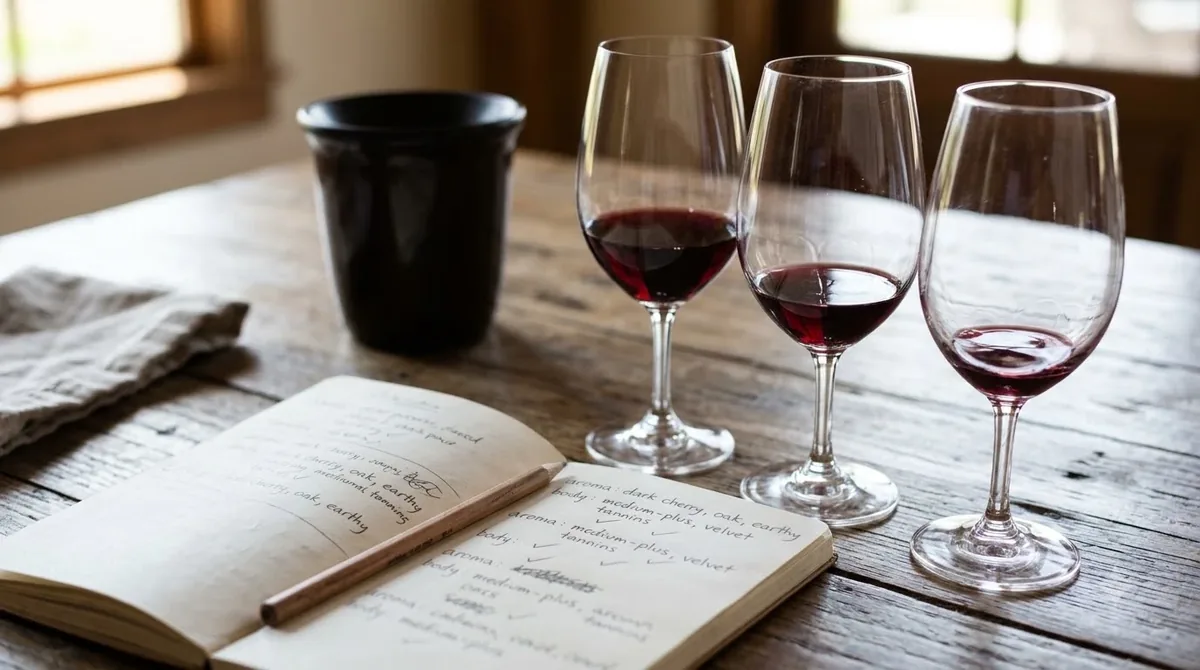
Start with the fruit rather than searching for a long list of secondary aromas. In a straightforward young Beaujolais, look for ripe red cherry, crushed strawberry, raspberry, and a little red currant. The fruit often feels crisp and juicy rather than jammy. Black cherry or blackberry can appear as ripeness and concentration increase, especially in wines from more serious sites. The Beaujolais wine council’s Gamay profile also identifies wild strawberry, blackberry, and black cherry among the variety’s characteristic aromas, alongside occasional peppery and floral notes.
Floral character is often easiest to notice after the first impression of fruit has settled. Violet can suggest a cool, lifted perfume; peony is softer and more fragrant. A little black pepper, dried herb, or leafy nuance may follow. Some wines also show a stony or earthy impression, particularly when the fruit is less overt and the wine has more structure. These notes are not a checklist that every bottle must satisfy: Gamay changes with ripeness, vineyard conditions, and cellar technique.
On the palate, expect a dry red with lively freshness and a relatively gentle grip. The fruit tends to carry through from the nose, while acidity gives the wine energy and makes the finish feel clean. Simple versions may finish quickly with cherry and raspberry; concentrated examples can leave a longer impression of dark berries, flowers, spice, or mineral-like savoriness. A young wine may seem almost crunchy, like biting into a tart red berry, while a riper one can feel rounder without becoming truly heavy.
Acidity, Tannin, Body, and Finish
Gamay is usually light to medium-light in body, high in acidity, and low in tannin compared with many familiar red grapes. That combination explains its refreshing feel: the wine can have enough flavor for a meal without the firm, drying grip associated with Cabernet Sauvignon or Petit Verdot.
Acidity is one of the most reliable clues. It makes saliva gather along the sides of the mouth and keeps the fruit tasting fresh rather than broad or sweet. This is useful at the table because acidic dishes generally need a wine with equal or greater acidity; Gamay can work with tomato, vinaigrette, and other bright ingredients when the dish is not much sharper than the wine.
Tannin is present but commonly modest. Instead of a pronounced drying sensation across the gums, the texture is more likely to feel soft, fine, or gently chalky. This makes Gamay a useful contrast to the firmer structure of petit verdot tasting notes, where assertive tannin is a defining feature. For another red with supple fruit and a generally softer impression, compare grenache tasting notes; Grenache can be fuller and warmer, while Gamay usually feels more brisk and compact.
Body and finish depend on more than the grape alone. A fresh, early-drinking Beaujolais may feel light, with a quick finish and bright berry flavor. A cru wine from a strong site can have more mid-palate weight, firmer but still moderate tannin, and a longer savory finish. Alcohol can also affect the impression of body: a lower-alcohol wine may feel especially nimble, while a riper bottling can seem broader. The best description is often not simply “light,” but “light on its feet, with enough concentration to stay interesting.”
How Winemaking Shapes Gamay’s Aromas
Gamay’s fruit-forward character is partly shaped by fermentation, especially the use of carbonic or semi-carbonic maceration in Beaujolais. These methods can emphasize vivid fruit and soft texture, while more conventional extraction often gives the wine greater structure and a less confectionary aromatic profile.
In whole-cluster carbonic maceration, intact bunches are placed in a carbon-dioxide-rich environment, allowing fermentation to begin inside individual berries before the grapes are crushed. The technique can produce aromas of banana, bubble gum, kirsch, and candied fruit alongside strawberry and cherry. These notes are especially associated with Beaujolais Nouveau and other wines made for early enjoyment. They are fermentation signatures, not evidence that flavoring has been added. Decanter’s Gamay profile likewise links carbonic maceration with the banana-and-bubble-gum side of the grape’s aromatic range.
Semi-carbonic maceration is common in Beaujolais. Whole bunches are placed in a vat, and the weight of the fruit helps crush grapes at the bottom; juice fermentation and intracellular fermentation then take place together. The Beaujolais regional profile describes this process as a way to generate intense fruit and supple tannins. The balance depends on the length of maceration, temperature, the proportion of whole clusters, and how much extraction the winemaker seeks.
Not every Gamay is made in the same way. A producer aiming for a bright, immediately accessible red may favor a short, fruit-focused fermentation and early bottling. A producer seeking a more structured wine may use a longer maceration, more traditional fermentation, or aging in tank or wood. Those choices can bring out darker berries, savory herbs, spice, and a firmer texture. As with Pinot Noir, the goal is not automatically more extraction or oak; the right approach depends on the fruit and the intended style.
Beaujolais Crus and Regional Expressions
Beaujolais is Gamay’s central home, and the wines range from uncomplicated, juicy reds to structured bottles with meaningful aging potential. The region’s ten crus provide the clearest place to explore that difference, with named villages and varied soils giving the grape distinct expressions.
The ten Beaujolais crus are Saint-Amour, Juliénas, Chénas, Chiroubles, Régnié, Brouilly, Côte-de-Brouilly, Moulin-à-Vent, Fleurie, and Morgon. According to the Société des alcools du Québec’s regional overview, these cru communes account for about 10 percent of Beaujolais vineyard area; the same overview identifies Moulin-à-Vent, Fleurie, and Morgon among the crus best suited to aging.
Broadly, many lighter examples emphasize perfume, fresh red fruit, and a delicate texture, while more structured wines can show darker fruit, more obvious earth or mineral character, and firmer tannins. Fleurie is often associated with fragrant, supple Gamay; Moulin-à-Vent and Morgon are frequently selected by drinkers looking for deeper concentration and a more ageworthy profile. Treat those descriptions as orientation rather than strict rules. A lighter vintage or a gentle hand in the cellar can make a structured cru feel surprisingly graceful.
Soil and landscape help explain the range. Granite is especially associated with northern Beaujolais, while the region also includes schist and other geological formations. The Beaujolais wine council notes that Gamay has an affinity for granite but can adapt to different settings. A bottle’s label may name Beaujolais, Beaujolais-Villages, or one of the crus; these designations tell you something about origin and rules, but tasting the wine is still the best way to identify its actual weight and flavor. For a different French benchmark built around freshness and site, sancerre tasting notes can help clarify how acidity and mineral impressions show up in a white wine rather than a red.
Serving, Cellaring, and Choosing a Bottle
Gamay is usually most expressive when served slightly cool, not warm like a full-bodied red and not icy like a crisp white. A modest chill keeps the berry fruit lively, preserves the wine’s freshness, and makes low-tannin texture feel especially refreshing.
For most light-bodied Gamay, aim for about 55–60°F. Beaujolais Nouveau can be served cooler, around 52–54°F, while Beaujolais-Villages and cru wines are commonly served around 55–57°F. If the bottle has been stored at room temperature, place it in the refrigerator for a short period before serving, then pour and allow it to warm gradually in the glass. Excessive cold can mute aroma and make acidity seem sharper, so avoid serving it straight from a very cold refrigerator.
| Style or handling point | Useful guide | What it means |
|---|---|---|
| Typical alcohol profile | 10–11.5% ABV | Wine Folly’s Gamay profile gives this range as a general reference; individual bottles vary. |
| Light red serving range | 55–60°F | A good starting point for most fresh, light-bodied Gamay. |
| Beaujolais Nouveau | 52–54°F | Serve cool to keep its bright, primary fruit refreshing. |
| Villages and cru wines | 55–57°F | A slightly warmer pour helps more detailed aromas show. |
| Decanting | About 30 minutes | Useful for a structured bottle that seems closed or firm at first. |
| General cellar window | 3–5 years | A broad guide for many styles; ageworthy crus can develop beyond it. |
Most simple Beaujolais and Nouveau are made to enjoy young, while stronger cru bottlings can develop additional savory and earthy complexity. Wine Folly gives a general three-to-five-year cellar window for Gamay and recommends about 30 minutes of decanting. Those are starting points rather than deadlines: a fresh, uncomplicated wine rarely benefits from long aging, while a structured Morgon or Moulin-à-Vent may reward more time. If a bottle tastes tight when first opened, give it a little air and check whether the fruit and texture become more open.
When choosing a bottle, begin with the occasion. For a picnic, casual dinner, or an aperitif, look for a youthful Beaujolais or Beaujolais-Villages with red-fruit emphasis. For roast meat or a meal with richer sauces, a cru such as Morgon or Moulin-à-Vent may offer more depth. The label’s appellation, producer, and vintage provide useful context, and a shop’s description can help distinguish a light, fruit-forward style from a more structured one. More broadly, the Wine by Type overview can help place Gamay alongside other red grapes and wine styles.
Food Pairing With Gamay
Gamay’s bright acidity, modest tannin, and fresh fruit make it a flexible food wine, especially with poultry, pork, charcuterie, mushrooms, and dishes that have some salt or acidity. Its lighter frame can suit foods that might overwhelm a heavier red, while its fruit keeps it satisfying with savory flavors.
Start with classic pairings from Beaujolais and nearby Lyon: roast chicken, pork sausages, ham, terrines, pâté, and charcuterie. Salt and fat soften the perception of tannin, which suits a wine whose tannins are already gentle. The acidity also helps refresh the palate between bites of richer food. For a simple meal, try a chilled glass with roast chicken, lentils, grilled pork, or a mushroom tart. The wine’s red-fruit character complements browned meat without requiring a heavy sauce.
Gamay can also work with dishes often paired with white wine. Its fresh acidity is useful with tomato-based recipes, herb-roasted vegetables, and some preparations of salmon or tuna, provided the dish does not have an intense oily or fishy character. Avoid pairing it with very tannic, heavily charred meat preparations if the wine is especially delicate; the smoke and char can overwhelm its fruit. For sharper dishes, match the food’s acidity with a wine that tastes equally bright rather than choosing a soft, flat bottle.
Be careful with chili heat. Alcohol and tannin can make spicy food feel hotter, so a lower-alcohol, fruit-forward Gamay is generally a better starting point than a powerful, oak-heavy red, but very hot chili sauces can still dominate the wine. Sweetness also matters: a dish with noticeable sweetness needs a wine at least as sweet to avoid making the wine taste sour. For dessert, choose a genuinely sweet wine rather than assuming a dry Gamay will work simply because it has ripe berry aromas.
Tip: Serve Gamay lightly cool with roast chicken, charcuterie, or pork, then compare the first sip with a bite of food. If the wine tastes sharper after the bite, the dish may be more acidic than the wine; add a little fat or salt, or choose a brighter bottle.
Frequently Asked Questions
These answers clarify common questions about Gamay’s origins, geographic range, and appellation names. They add a little historical and regional context to the tasting profile described above.
Is Gamay related to Pinot Noir?
Yes. Gamay noir à jus blanc is a natural cross between Pinot Noir and Gouais Blanc. That parentage does not make it a lighter clone of Pinot Noir; Gamay is a distinct grape with its own growing habits and characteristic profile.
Is Gamay grown outside Beaujolais?
Yes. The Loire Valley and Switzerland are established growing areas, and Ontario producers also make notable Gamay. The grape has a smaller presence in these places than in Beaujolais, but local conditions can give it a different balance of fruit, freshness, and structure.
Can Gamay be made as rosé?
Yes. The Beaujolais and Beaujolais-Villages appellations include rosé wines made from Gamay. These wines retain the grape’s fresh-fruit character while offering a lighter-colored, often brisk style.
What does Bourgogne-Gamay mean on a label?
Bourgogne-Gamay is an appellation created in 2011 for wines made with grapes grown exclusively in the Beaujolais crus. It gives consumers a Burgundy appellation name while identifying Gamay from that defined source area.
Why did Gamay become associated so strongly with Beaujolais?
A historical turning point came in 1395, when Philip the Bold, Duke of Burgundy, ordered Gamay vines removed from Burgundy in favor of Pinot Noir. The grape became concentrated farther south in Beaujolais, where it found conditions well suited to its character.
Gamay is easy to recognize once you look for its combination of red berries, floral lift, bright acidity, and restrained tannin. Start with a fresh Beaujolais, then compare it with a cru bottling to see how site and winemaking can add depth without losing the grape’s lively character.
More in Wine Types & Grapes
 Zinfandel Sugar Content: Dry Red vs. White Zinfandel GramsUpdated Nov 21, 2026
 Best Zinfandel Substitute Options for Sipping and CookingUpdated Nov 21, 2026
 Zweigelt Food Pairing: Best Dishes, Cheeses, and Serving TipsUpdated Nov 21, 2026
 Zinfandel Tannins Explained: How Structure Shapes Every BottleUpdated Nov 21, 2026
 Zinfandel Sweetness Level: Dry Red vs. Sweet White Zin ExplainedUpdated Nov 21, 2026
 Xinomavro Food Pairing: Best Dishes, Styles, and Serving TipsUpdated Nov 21, 2026