

We may earn a commission when you buy through links on this page, at no extra cost to you. Learn more.
petit verdot tasting notes typically feature concentrated blackberry, plum, violet, dark spice, and firm tannins, carried by fresh acidity and a deep, inky color. The wine is typically full-bodied and dry, with a dense, structured palate rather than a soft, easygoing texture. In Bordeaux it often appears as a small but influential part of a blend, while warmer regions bottle it on its own with more frequency.
Petit Verdot can seem powerful even before the first sip: its nearly opaque color and floral-spice aromas signal a wine with presence. Learning to separate fruit, floral, herbal, oak, and structural details makes the grape easier to recognize, whether it is poured as a single-variety red or tucked into a Cabernet-led blend.
Primary Aromas and Flavor Notes
Expect dark fruit, violet, and peppery spice to lead a typical Petit Verdot profile. Blackberry, black plum, and cassis are common fruit references, while licorice, cocoa, coffee, and dried herbs add savory depth.
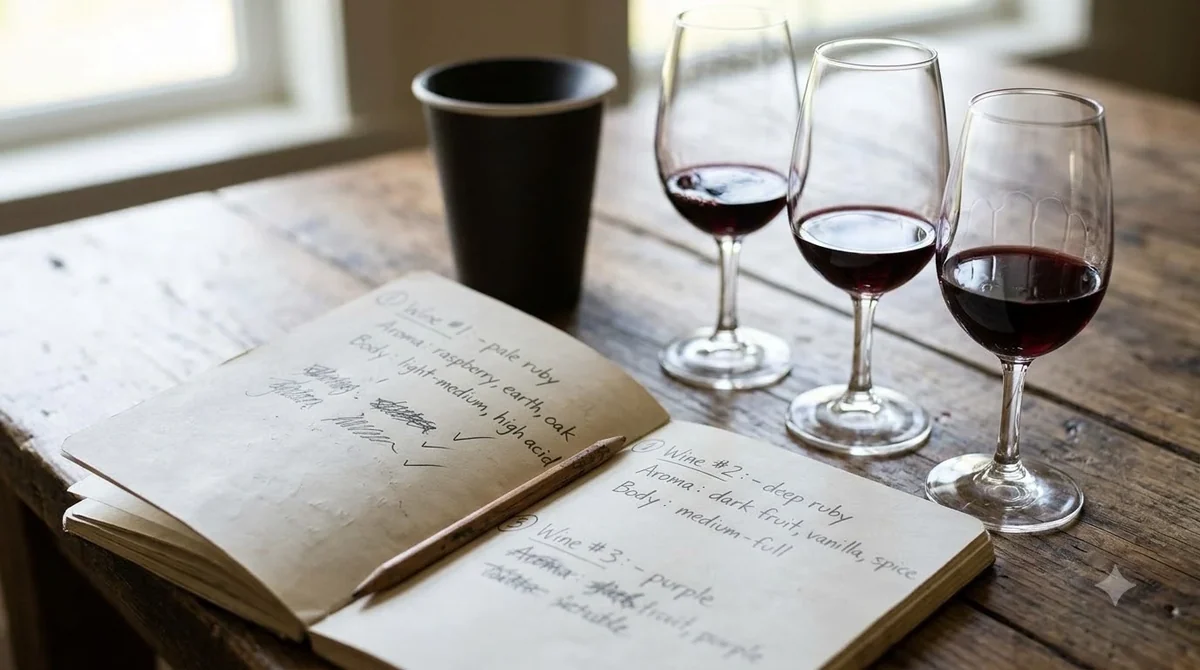
On the nose, ripe blackberry may come across as fresh or cooked depending on the wine’s ripeness and warmth. Black plum often gives a rounder, more generous impression, while cassis brings a sharper black-currant edge. Some examples add blueberry, dark cherry, or a faint graphite-like scent. These are useful descriptors, not a fixed checklist: one bottle may emphasize fruit and violet, another may show more pepper, licorice, or earthy character.
Floral notes are an important part of Petit Verdot’s identity. Violet can appear as a clear perfume above the darker fruit, sometimes joined by dried flowers as the wine develops. Cocoa and coffee can arise from the grape’s concentrated character and from oak maturation; they should not automatically be mistaken for sweetness. Licorice, black pepper, sage, and other dried-herb nuances can make the finish smell more savory than fruity.
With bottle age, the fresh fruit profile often shifts toward dried flowers, leather, and mocha. Decanter also identifies graphite and dried herbs among the grape’s common descriptors, while Wine Enthusiast notes that leather and mocha can emerge with age. A mature bottle may therefore feel less like a bowl of fresh berries and more like dark fruit layered with earthy, floral, and roasted notes.
Body, Acidity, Tannin, and Finish
Petit Verdot is generally full-bodied, deeply colored, and high in tannin, with acidity that helps keep its concentration from feeling flat. Its defining texture is firm and gripping, especially in young examples made from fully ripe fruit.
Tannin is the most obvious structural feature. It can dry the gums and leave a firm sensation along the cheeks, while the wine’s dark fruit provides weight through the middle of the palate. The grape’s small, thick-skinned berries contribute to that concentration and dark color. In a blend, the tannin may make the wine feel more tightly framed; as a varietal bottling, it can be the main event and needs enough fruit to balance its grip.
Acidity is often lively enough to keep the finish energetic. It does not necessarily make Petit Verdot taste light: a wine can be powerful and full-bodied while still finishing with a fresh line. Alcohol varies by climate and producer, so avoid assuming that every bottle has the same warmth. A ripe warm-climate example may feel broader and more generous, while a cooler-site wine may show a firmer, more angular outline.
The finish is usually persistent, with black fruit, spice, and a drying tannic echo. Look for whether the fruit remains present after the first wave of grip. When dark fruit, acidity, and tannin stay in proportion, the finish feels structured rather than harsh. If tannin dominates and the fruit drops away quickly, the wine may need time, air, or food to show better balance.
Petit Verdot in Bordeaux Blends and Varietal Bottles
In Bordeaux, Petit Verdot is traditionally a supporting grape that adds color, tannin, spice, and aromatic depth to blends led by Cabernet Sauvignon or Merlot. Single-variety bottlings show the grape’s full weight and floral-dark-fruit character without the softening influence of other grapes.
The grape is especially associated with the Médoc and Bordeaux’s Left Bank, where its structure can reinforce Cabernet Sauvignon. The Bordeaux wine organization’s Petit Verdot profile reports that the grape represents about 1.3% of the region’s red-variety plantings, a small share that helps explain why it is more often encountered as a blending component than as the main grape. Even a modest proportion can change the impression of a finished wine by deepening its color, increasing tannic structure, and adding spicy notes.
Decanter describes Petit Verdot as a powerful contributor to Bordeaux-inspired blends and notes that it is more often blended than bottled alone, although varietal wines are increasingly made in some New World regions. The actual percentage varies by estate and vintage; there is no single standard blend formula. A small amount can be perceptible, so a wine does not need to be majority Petit Verdot to show its signature firmness or spice.
Varietal Petit Verdot is easier to find in warmer wine regions where the grape can ripen reliably. Australia, California, and other parts of the United States are among the places where producers explore it as a stand-alone red; Wine Enthusiast also lists Argentina, Chile, Italy, Portugal, and South Africa among its growing regions. These bottles tend to make the grape’s dark fruit, floral aromas, and assertive tannin more immediately obvious.
Growing Conditions and Regional Style
Petit Verdot ripens late, so the length and warmth of the growing season strongly influence its style. Bordeaux remains its historic reference point, but warmer regions can produce riper, more generous varietal wines with a different balance of fruit and tannin.
The grape’s late harvest timing is a key reason it can be difficult to grow in cooler or unsettled seasons. If autumn weather turns before the berries reach full maturity, the fruit may retain green, hard edges and the wine can feel less integrated. Decanter’s grape guide notes that the variety needs favorable conditions to develop properly; Wine Enthusiast similarly describes it as late-ripening and points to warmer environments as increasingly favorable for its cultivation.
Within Bordeaux, the Left Bank and Médoc are especially associated with Petit Verdot. The Bordeaux wine body also identifies the warm, well-watered soils of Graves as a place where the variety can perform well. Its relatively small plantings do not mean it lacks influence: in the right vintage, the grape contributes concentrated color, firm tannin, and spicy aromatics to blends built around more widely planted varieties.
Outside France, Petit Verdot has a foothold in Australia and California, along with other American states, and is also grown in places such as Tuscany’s Maremma, Chile, and Peru. Regional style is not determined by country alone. A warmer site can push the fruit toward ripe plum, blackberry, and a rounder palate; a cooler or less successful harvest can leave more pronounced firmness and less expressive fruit. Producer decisions about harvest timing, extraction, and oak will also shape the final impression. When comparing bottles, look at the region and whether the wine is varietal or blended. A Bordeaux red with a small Petit Verdot component is likely to show the grape as one layer among Cabernet, Merlot, and other varieties. A bottle labeled Petit Verdot from a warm region will usually give a clearer view of its individual aromas and tannin, although style still varies by producer.
How to Taste and Serve Petit Verdot
Serve Petit Verdot at about 60–65°F, using a standard 5-ounce pour so the wine has room to release its aromas. A young, concentrated bottle can benefit from 30–60 minutes of air, especially when its tannins initially feel tight.
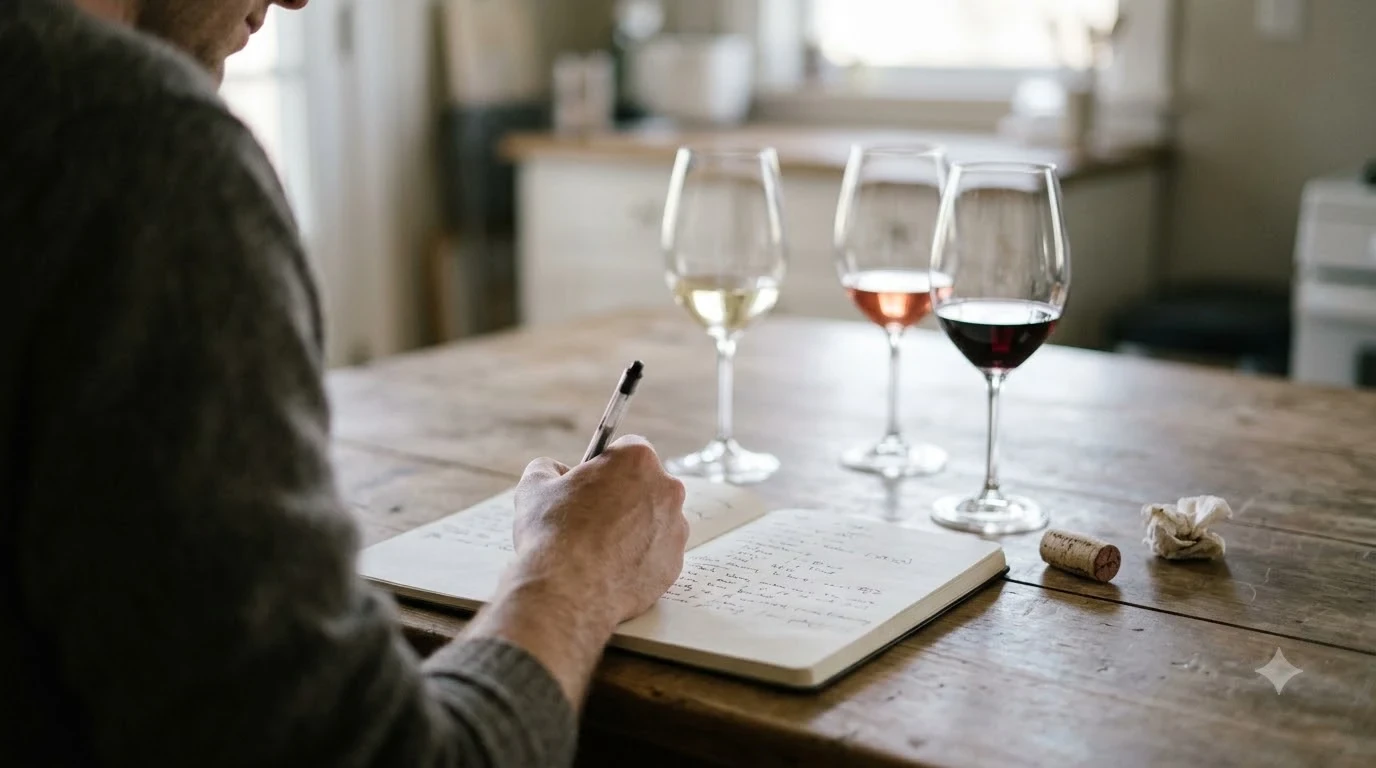
Begin by looking at the color against a white background. Petit Verdot is often intensely saturated, with a deep ruby to purple-black appearance that can seem nearly opaque at the center of the glass. Swirl gently and smell before taking a sip: identify the main dark-fruit note first, then look for violet, pepper, licorice, cocoa, or dried herbs. Naming the strongest two or three aromas is more useful than trying to detect every possible descriptor.
On the palate, assess the order of sensations. Does fruit arrive first, followed by tannin, or does grip dominate from the start? Notice whether acidity refreshes the finish and whether the flavor persists after swallowing. A balanced example should feel substantial without being hollow or aggressively drying. If the wine seems closed or angular, give it time in the glass before deciding that the structure is out of balance.
Decanting is most useful for a young, full-bodied example with firm tannins. Start with 30 minutes of air and extend toward 60 minutes if the wine remains reticent; a long decant is not automatically better. Older bottles may need gentler handling because extended exposure can make delicate aged aromas fade. Pour a small taste after opening, then decide whether the wine needs air rather than following a rigid schedule.
| Tasting detail | Typical guideline | Why it helps |
|---|---|---|
| Serving temperature | 60–65°F | Keeps a full-bodied red expressive without serving it too warm |
| Standard pour | 5 oz | Leaves room in the glass to swirl and smell |
| Initial aeration for a young, firm bottle | 30–60 minutes | Can soften the first impression of tight tannin and release aromas |
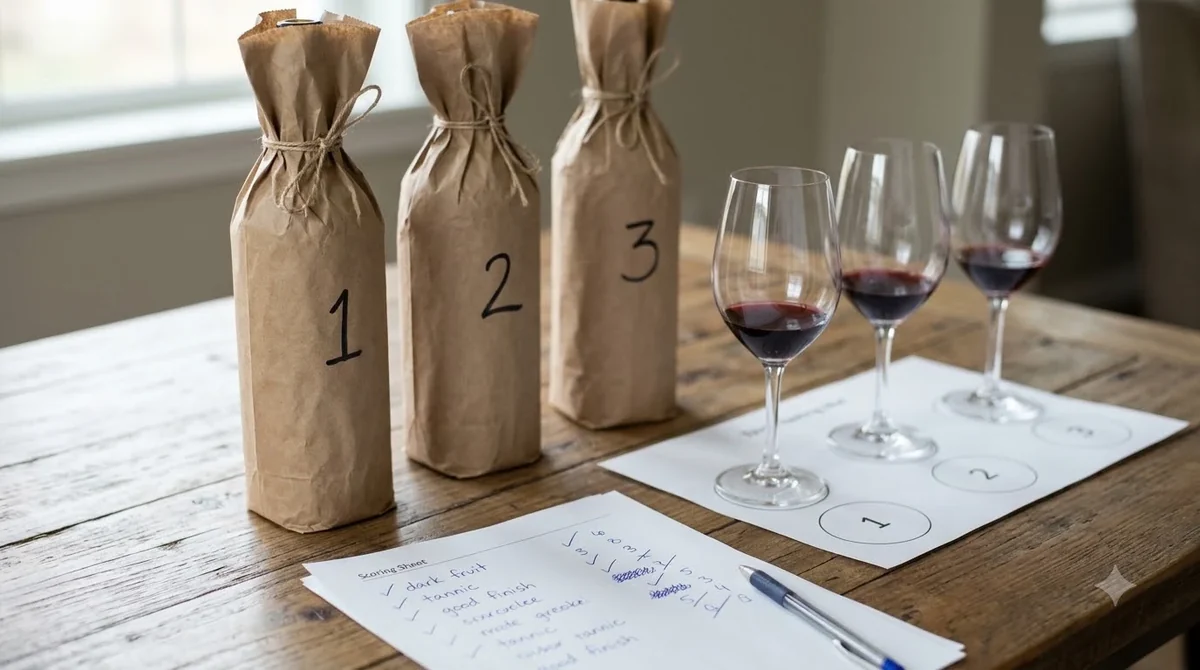
Tip: For a focused tasting, use a 5-ounce pour in a large red-wine glass and taste once immediately after opening, then again after 30 minutes. Compare how the violet, dark fruit, and tannin change as the wine gets air.
Food Pairings for Firm, Dark-Fruited Red Wine
Petit Verdot’s firm tannins and dark fruit work best with savory dishes that have enough protein, fat, or roasted flavor to meet the wine’s structure. Beef, lamb, grilled pork, game, and aged hard cheeses are natural starting points.
Grilled steak, braised short ribs, and roast beef can soften the wine’s tannic edge while matching its depth. The browning on seared meat adds roasted flavors that echo cocoa, coffee, and savory spice in the wine. Lamb chops with rosemary or thyme are another strong match: the herbs connect with the grape’s dried-herb notes, while the meat has enough flavor to stand up to a concentrated red.
For pork, choose preparations with browned edges or richer sauces, such as roast pork shoulder, pork belly, or grilled sausages. Hard cheeses such as aged cheddar or Manchego can also work because salt and fat soften the perception of tannin. A simple cheese board can include firm, aged styles, crusty bread, and black olives; avoid making very delicate cheeses the center of the pairing, since the wine can overwhelm them.
Choose sauces carefully. Peppercorn, mushroom, rosemary, and reduced red-wine sauces generally suit the grape’s savory character. Sweet glazes can make a dry red taste more bitter or austere, so keep sweetness restrained. Chili heat can also become more intense beside alcoholic, tannic wine; for spicy food, reduce the chili or choose a softer, lower-tannin red. Oily fish is usually a poor match for a tannic red, so choose a lighter, higher-acid wine for salmon or tuna instead. For a broader comparison of full-bodied reds, read these tempranillo tasting notes and grenache tasting notes. Petit Verdot is generally firmer than many Grenache bottlings, while Tempranillo can overlap in dark fruit and savory character but varies widely with region and oak treatment. For a contrasting white-wine profile alongside seafood, these Sancerre tasting notes offer a useful reference point; the broader Wine by Type collection can help compare styles.
Frequently Asked Questions
The grape’s pronunciation, historical names, and connection to the Pyrenees add useful context beyond its aroma and structure.
How do you pronounce Petit Verdot?
In English wine settings, it is commonly pronounced “puh-TEE vair-DOH.” The final syllable is often softened rather than sharply stressed, and the grape name is written as two words.
What does the name Petit Verdot mean?
The French name is commonly translated as “little green.” It refers to the variety’s reputation for struggling to ripen fully in Bordeaux’s cooler or less favorable seasons, rather than describing the color of a finished ripe wine.
Does Petit Verdot have any other names?
Wine references list several synonyms, including Bouton, Carmelin, Lambruesquet Noir, Heran, Petit Verdau, and Verdot Rouge. Names can vary across historical records and wine-growing regions, so the label “Petit Verdot” is the clearest term for shoppers.
Where is Petit Verdot believed to have originated?
The grape is associated with southwestern France. Bordeaux’s wine organization notes a Pyrenean connection and records the historical name lambrusquet for the variety in that area.
Can Petit Verdot be made into a dessert wine?
Although it is best known as a dry red grape, Wine Enthusiast notes that Petit Verdot grapes can also be found in dessert wines. That is a less familiar use than its role in Bordeaux-style red blends or full-bodied varietal bottlings.
Petit Verdot is worth recognizing for its combination of dark fruit, violet, spice, fresh acidity, and firm tannin. Try it first beside grilled or roasted meat, then compare a Bordeaux blend with a varietal bottling to see how much the grape’s structure and aroma can change with its role in the wine.
More in Wine Types & Grapes
 Zinfandel Sugar Content: Dry Red vs. White Zinfandel GramsUpdated Nov 21, 2026
 Best Zinfandel Substitute Options for Sipping and CookingUpdated Nov 21, 2026
 Zweigelt Food Pairing: Best Dishes, Cheeses, and Serving TipsUpdated Nov 21, 2026
 Zinfandel Tannins Explained: How Structure Shapes Every BottleUpdated Nov 21, 2026
 Zinfandel Sweetness Level: Dry Red vs. Sweet White Zin ExplainedUpdated Nov 21, 2026
 Xinomavro Food Pairing: Best Dishes, Styles, and Serving TipsUpdated Nov 21, 2026