

We may earn a commission when you buy through links on this page, at no extra cost to you. Learn more.
fre white wine is California wine that is fully fermented first, then dealcoholized to leave less than 0.5% alcohol by volume. The range includes white varietals such as Chardonnay, Sauvignon Blanc, Pinot Grigio, and Moscato, each with a different balance of fruit, acidity, and sweetness. Choose by flavor and food pairing rather than expecting every bottle to taste the same. FRE retains a wine-based character, although removing alcohol changes some of the weight and aroma.
FRE is a familiar choice for people who want a wine-style drink at the table while keeping alcohol very low. Its white wines cover crisp, citrus-led options as well as softer, fruitier styles. The best starting point is to understand what is in the bottle, how the process works, and how each varietal behaves with food.
What Fre White Wine Is
FRE white wine is made from fermented wine rather than simply bottled grape juice. The grapes are harvested and vinified in the usual way; after fermentation, the finished wine goes through a dealcoholization process that reduces its alcohol to below 0.5% ABV. That distinction matters because fermentation creates wine aromas, acidity, and flavor compounds before the alcohol is removed.
The white lineup includes four familiar grape styles: Chardonnay, Sauvignon Blanc, Pinot Grigio, and Moscato. They do not serve the same purpose: Chardonnay has a richer apple-and-citrus profile, Sauvignon Blanc leans toward green notes and tropical fruit, Pinot Grigio is light and crisp, and Moscato is aromatic and sweet. FRE describes marine-influenced California sites for Chardonnay and warmer inland valleys for Moscato, matching the range’s different fruit profiles.
It helps to separate alcohol-removed wine from alternatives built from grape juice, tea, botanicals, or other ingredients that never begin as fully fermented wine. FRE starts with wine and removes alcohol afterward, so the finished drink retains elements of its original varietal identity. That gives the bottle a clear place at a wine-focused meal, even though its alcohol level and texture differ from a conventional bottling. Readers comparing alcohol-removed labels can also see the site’s overview of Sutter Home FRE wine and browse the wider Wine Brands section.
How the Alcohol-Removal Process Works
FRE makes its wines with traditional winemaking methods before using spinning-cone technology and vacuum distillation to remove alcohol. The process is designed to separate delicate aromas from the wine first, remove ethanol from the remaining liquid, and then bring the components back together in a balanced finished drink.

In the producer’s description, the wine enters a spinning-cone column and spreads into a thin film as rotating cones create centrifugal force. Nitrogen moves through the column to collect volatile aroma compounds while helping protect them from oxidation. The liquid then goes through a later stage at a higher temperature to remove alcohol, and the captured aroma essence is recombined with the dealcoholized wine. FRE also says unfermented varietal grape juice is blended back in to replace some lost volume.
This sequence explains why alcohol-removed wine is not identical to its alcoholic counterpart. Alcohol contributes to body, texture, and aroma release, so removing it can make the drink feel lighter and change how long aromas linger. Spinning-cone processing aims to preserve more of the wine’s character, but the result is not exactly the same as wine with its original alcohol intact.
Other producers may use methods such as reverse osmosis or vacuum distillation alone. Decanter’s explanation of dealcoholization describes spinning-cone processing as a series of separations and recombinations that help restore a balance of sugar, acidity, weight, texture, and flavor. For a clear overview of FRE’s own sequence, read the producer’s description of its spinning-cone winemaking process.
Fre White Wine Styles and Flavor Profiles
The best way to choose among FRE’s white wines is to match the grape variety with the flavor profile and level of sweetness you enjoy. Chardonnay and Sauvignon Blanc suit different palates, while Pinot Grigio and Moscato offer two more distinct directions.
Chardonnay is the more rounded style, with a deep golden color, tropical aromas, creamy apple flavors, crisp citrus notes, and a tart finish. It works with seafood, mild cheeses, salads, and pasta. The producer offers it in a 750-milliliter bottle and 187-milliliter bottles sold in four-packs. Sauvignon Blanc is brighter and more herbaceous, with green grass, passion fruit, mango, lively acidity, and a slightly dry finish. Try it with goat cheese, pesto chicken, or grilled fish.
Pinot Grigio is light-bodied and crisp, with lychee and stone-fruit aromas, apple and pear flavors, fresh acidity, and a smooth finish. It is a natural fit for feta, salty pasta sauces, grilled white fish, and lighter salads. Moscato is the sweet, floral option, with rose-petal and peach aromas and creamy fruit flavors. Choose it for fruit desserts, mild cheeses, or gently spiced food rather than dishes that call for a dry, sharp white.
These notes are guideposts, not a guarantee that every palate will read the wine identically. Temperature, food, and time after opening can change what stands out. Compare two styles at similar temperatures and alongside the same food to make their differences easier to identify. If you are choosing for a group, a dry Pinot Grigio and a fruitier Moscato cover two distinct preferences; Sauvignon Blanc and Chardonnay fill in the middle with herbaceous and rounded profiles.
Alcohol Content, Nutrition, and Bottle Sizes
FRE’s white wines are listed at less than 0.5% alcohol by volume, not 0.0%. That is a very low level, but it is not the same claim as absolutely zero alcohol. Anyone who needs to avoid alcohol completely should treat the distinction seriously and look for a product specifically labeled 0.0% rather than assuming that “alcohol-removed” means no alcohol remains.
The brand’s individual product pages list nutrition information using an 8-ounce serving. The figures below are the values published for the four white styles, so compare like with like rather than assuming each number describes a traditional 5-ounce wine pour.
| FRE white style | Alcohol by volume | Calories per 8 oz. | Carbohydrates per 8 oz. | Juice percentage listed |
|---|---|---|---|---|
| Chardonnay | Under 0.5% | 70 | 19 g | 23% |
| Sauvignon Blanc | Under 0.5% | 80 | 19 g | 5% |
| Pinot Grigio | Under 0.5% | 60 | 15 g | 10% |
| Moscato | Under 0.5% | 90 | 25 g | 27% |
The figures show that lower alcohol does not mean every style has the same nutrition profile. Pinot Grigio has the lowest calories and carbohydrates per 8-ounce serving in this group, while Moscato has the highest; juice percentages also vary by varietal. FRE lists Chardonnay in 750-milliliter bottles and 187-milliliter bottles sold in a four-pack, but do not assume every white style is available in both formats.
Tip: Compare the nutrition figures using the same serving size. FRE’s product pages use 8 ounces, while a typical wine pour is about 5 ounces, so the published calories and carbohydrates are not per standard wine glass.
“Under 0.5% ABV” is a ceiling, not a guarantee of zero. If you need to avoid alcohol completely, confirm that a product meets your specific requirements instead of relying on a broad category name. The site’s guide to FRE wine alcohol content explains the distinction in more detail.
Serving Temperature and Storage
Serve FRE whites chilled, but avoid making every bottle ice-cold. A temperature around 45–50°F works well for lighter white styles such as Sauvignon Blanc and Pinot Grigio, while a fuller Chardonnay can show more aroma around 50–55°F; sweet Moscato is also enjoyable well chilled, around 43–50°F.
For a simple routine, refrigerate the bottle for a few hours before serving, then pour a small taste. If the wine seems muted, let it sit in the glass for several minutes rather than warming the entire bottle. A wine that is too cold can seem less aromatic and less expressive, while a warmer serving temperature can make sweetness and fruit seem more prominent. Small adjustments are enough; there is no need for special equipment beyond a refrigerator and a basic thermometer if you want precision.
Use ordinary white-wine glasses and pour a modest amount so the wine has room to release its aromas. A 5-ounce pour is a practical standard for still wine. For a tasting flight, start with Pinot Grigio, move to Sauvignon Blanc and Chardonnay, and finish with Moscato; moving from lighter, drier profiles toward the sweeter style helps keep the fruitier wine from affecting your impression of the earlier pours.
FRE recommends storing bottles upright in a cool, dark place. Once opened, refrigerate the bottle and enjoy it within 1–2 days for the freshest flavor. Close it firmly between pours and avoid leaving it on a sunny counter or beside a warm stove. FRE whites are best treated as fresh, ready-to-drink bottles rather than wines intended for years of cellar aging. For a party, chill the unopened bottles in advance and keep the serving bottle in an ice bucket between pours instead of letting it warm on the table.
Food Pairings for Each White Style
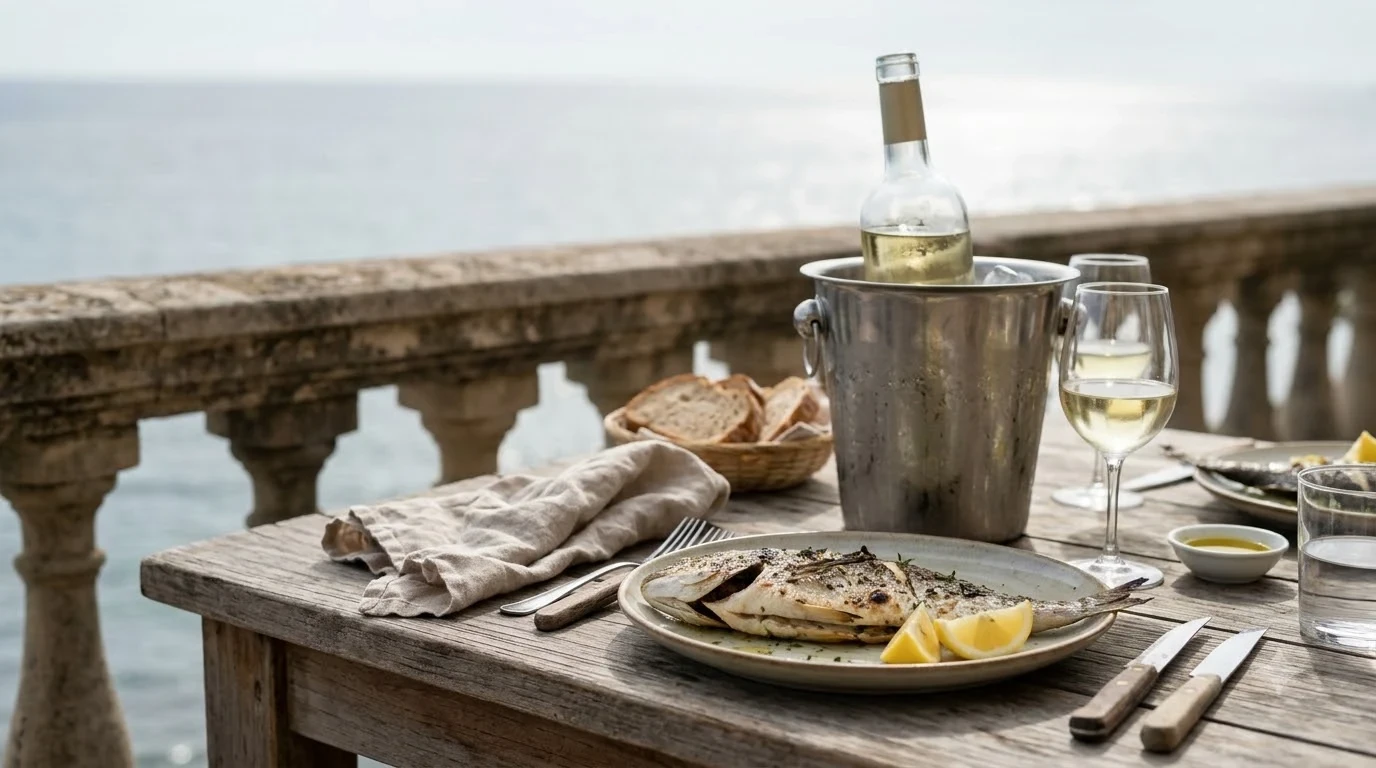
Pair FRE white wines by considering sweetness, acidity, body, and the weight of the dish. The producer’s own suggestions are a practical starting point: seafood and pasta for Chardonnay, goat cheese and grilled fish for Sauvignon Blanc, salty sauces and white fish for Pinot Grigio, and fruit desserts or mildly spicy food for Moscato.
For Chardonnay, try grilled shrimp, baked cod, roast chicken, creamy pasta, or salad with mild cheese. Apple and citrus notes work with gentle richness, while the tart finish refreshes the palate. For Sauvignon Blanc, choose fresh herbs and bright ingredients such as goat cheese, pesto chicken, grilled fish, asparagus, or lemony pasta. Sauvignon Blanc’s naturally high acidity suits foods with a similarly tart edge; with a sharp vinaigrette, choose a wine with equal or higher acidity so the wine does not taste flat.
For Pinot Grigio, match the light body with grilled white fish, shrimp, feta, pasta with a salty olive or caper sauce, and vegetable dishes. Salty ingredients can make its apple and pear fruit seem more pronounced. For Moscato, use the sweetness as part of the pairing: try fruit tarts, poached pears, peach desserts, mild cheeses, or gently spiced Indian and Asian dishes. A useful rule is to choose a wine at least as sweet as the dessert; otherwise, the wine can seem sour or thin beside the food. Very hot chili can still overwhelm a delicate white, so choose mildly spiced food rather than a dish built around intense heat.
Pairing rules for nonalcoholic whites are similar to those for conventional white wine, although they are not always a perfect one-to-one match. Wine Enthusiast’s guide to pairing non-alcoholic wines with food discusses seafood, cheese, and appetizers. For a multi-course meal, start with Pinot Grigio and a light seafood dish, move to Sauvignon Blanc for herb-driven food, choose Chardonnay for a richer pasta or chicken course, and save Moscato for fruit dessert.
Frequently Asked Questions
These quick answers cover practical questions about ingredients, serving formats, and ways to use the wines beyond a straight pour.
Is FRE white wine vegan and gluten-free?
FRE states in its brand FAQ that its wines are vegan and gluten-free. People with strict ingredient or production requirements should still review the information on the specific bottle and contact the producer if they need confirmation about a particular release.
Can FRE white wine be used in a spritzer?
Yes. Pour FRE Pinot Grigio or Sauvignon Blanc over ice and add chilled sparkling water, a strip of lemon peel, or a few cucumber slices for a simple spritzer. Add the sparkling water just before serving so the drink keeps its fizz.
How many standard glasses are in a 750-milliliter bottle?
A 750-milliliter bottle contains about five 5-ounce pours. Actual servings depend on the glass and the person pouring, so a bottle may provide more smaller tasting pours or fewer generous glasses.
Can FRE white wine be used for cooking?
It can be used in dishes that call for white wine, such as a light pan sauce or risotto, with the understanding that its fruit and sweetness may differ from a dry cooking wine. Add a little at a time and taste as you go, especially when using Moscato, which is noticeably sweeter than the dry white styles.
Does FRE make a sparkling wine as well?
Yes. FRE also lists an Alcohol-Removed Sparkling Brut as a separate expression from its still white varietals. Choose that bottling when bubbles are important to a toast or celebration, and choose Chardonnay, Sauvignon Blanc, Pinot Grigio, or Moscato when you want a still white wine style.
FRE white wine offers several distinct options, from crisp Pinot Grigio and Sauvignon Blanc to rounder Chardonnay and sweet Moscato. Start with the flavor profile that suits your meal, serve it well chilled, and remember that “under 0.5% ABV” is not the same as 0.0%. With those details in mind, it is easier to choose a bottle that fits the occasion and the food on the table.
More in Wine Brands
 Underwood Wine Price: Compare Bottles, Cans, and Pack SizesUpdated Nov 21, 2026
 Zenato Wine Price: Compare Styles and Choose the Right BottleUpdated Nov 21, 2026
 Zuccardi Wine Price: Compare Bottles and Find the Right RangeUpdated Nov 21, 2026
 Yellow Tail Moscato Review: Taste, Sweetness and Serving TipsUpdated Nov 21, 2026
 Wolf Blass Yellow Label Review: Choose Your Best StyleUpdated Nov 21, 2026
 Wolffer Estate Rose Review: Choose the Right Bottle for Your TableUpdated Nov 21, 2026